What Cars Run On E85 Fuel

What Cars Run On E85 Fuel? Full Compatible Vehicle List

It’s a question many drivers have: what cars can actually use E85 fuel? You see those pumps at the gas station, often with bright yellow handles or signs, and wonder if your car is one of them. Maybe you’re curious about the cost savings, the environmental benefits, or just want to know if you have more options than you thought.

It can feel a bit confusing, as not every car on the road is built for this special blend of gasoline and ethanol.

The truth is, using the wrong fuel can cause serious problems for your engine. But if your car is designed for it, E85 can be a great choice. We’re going to break down exactly what E85 is, which vehicles are compatible, and what you need to know to make sure you’re fueling up correctly and safely.

Let’s clear up the confusion about E85.

E85 fuel is a blend of 85% ethanol and 15% gasoline. Only Flex Fuel Vehicles (FFVs) are designed to safely use E85. Most standard gasoline cars cannot run on E85 fuel. Compatibility depends on the vehicle’s fuel system and engine controls being specifically engineered for higher ethanol content.

What Exactly Is E85 Fuel?

E85 is a type of fuel that’s different from the regular gasoline you might be used to. It’s a mix of ethanol and gasoline. The “85” in E85 tells you the percentage of ethanol in the blend.

So, it’s 85% ethanol and 15% gasoline. This is a much higher amount of ethanol than you find in regular gasoline, which usually has only about 10% ethanol (often called E10).

Ethanol is a type of alcohol. It can be made from different plants, like corn or sugarcane. In the United States, corn is the most common source for making ethanol for fuel.

This is why E85 is sometimes called “flex fuel” or “flex fuel E85.” It’s called flex fuel because it can run on different blends of ethanol and gasoline.

Regular gasoline engines are not built to handle such a high concentration of ethanol. Ethanol can be corrosive to certain materials like rubber and plastic. It can also absorb water.

So, if a car isn’t designed for it, E85 can damage the fuel lines, fuel injectors, and other parts of the fuel system. This is why only specific types of vehicles can use E85.

The gasoline in the E85 blend acts as a starter fluid for the engine. It helps the engine start, especially in cold weather. Ethanol itself burns cleaner than gasoline, which is one of the reasons people are interested in it for environmental reasons.

It can also produce more power in some engines. But again, the key is the engine must be designed for it.

What Exactly Is E85 Fuel?

Curious about Common Car Questions? We've got more info in this linked article. Are There More Motorcycle Accidents Than Car Accidents?

Flex Fuel Vehicles (FFVs): The Key to E85 Compatibility

The magic word when it comes to E85 is “Flex Fuel Vehicle,” or FFV. This is the only type of car that can safely and effectively use E85 fuel. If your car is not an FFV, you should absolutely not try to fill it with E85.

Doing so can lead to expensive repairs and damage to your engine and fuel system.

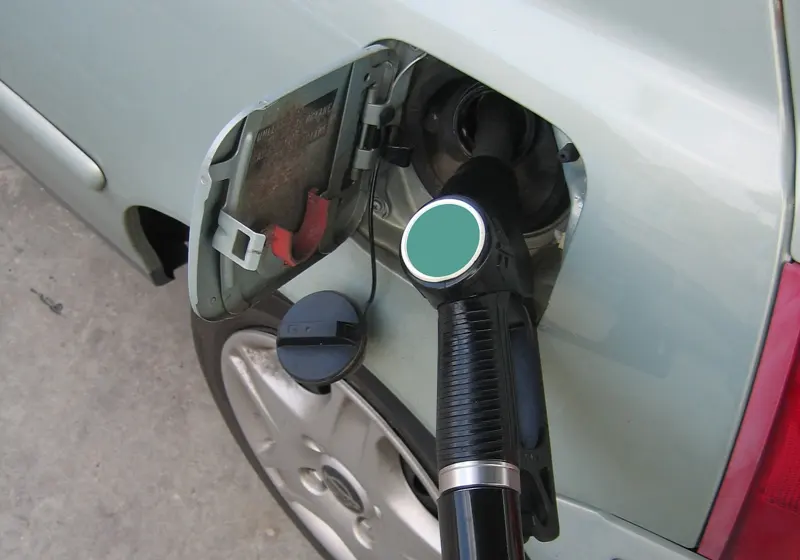
So, how do you know if your car is an FFV? The easiest way is to look for specific labels. Many FFVs have a yellow or red cap on the fuel filler neck that will say “E85” or “Flex Fuel.” Sometimes, you’ll see a sticker on the fuel door or inside the gas tank door that also indicates E85 compatibility.

Another way is to check your car’s owner’s manual. It will clearly state if the vehicle is a Flex Fuel Vehicle and can use E85. You can also often find this information by looking up your car’s make, model, and year in the vehicle’s VIN (Vehicle Identification Number) or through online databases that list FFVs.

These vehicles have special parts that can handle the higher ethanol content. This includes fuel injectors, fuel lines, fuel pumps, and seals made from ethanol-resistant materials. More importantly, FFVs have sensors that detect the ethanol blend in the fuel.

The car’s computer (ECU) then adjusts the engine’s timing and fuel mixture to run optimally on whatever blend it’s using, whether it’s pure gasoline, E85, or anything in between.

This advanced computer control is what makes FFVs so flexible. They can switch seamlessly between different fuel blends without you even noticing. This is a huge advantage because the percentage of ethanol in E85 can actually vary slightly depending on the season and region.

The car’s system handles these changes automatically.

Find out more about Common Car Questions by exploring this related topic. Should You Wax A Car After Ceramic Coating? Do This Instead

How to Identify a Flex Fuel Vehicle

Figuring out if your car is a Flex Fuel Vehicle is not as hard as it might seem. There are a few key places to look. Think of it like a treasure hunt for a small symbol that tells you your car has a special superpower for fuel!

1. Check the Fuel Cap: This is often the most obvious place. Look for a label on or near your gas cap.

It might say “E85 Compatible” or “Flex Fuel.” Sometimes it’s just a symbol that looks like a leaf or has the letters “FFV.” The color of the cap itself can sometimes be a clue, often being yellow or red on FFVs.

2. Look for Exterior Badges or Stickers: Many car manufacturers will put a badge on the outside of the vehicle, often on the back, that says “Flex Fuel” or “FFV.” You might also find a sticker on the inside of the driver’s side doorjamb or on the fuel filler door. These are clear indicators that your car is ready for E85.

3. Consult Your Owner’s Manual: This is your car’s instruction book. If you still have it, flip through the sections on fuel and maintenance.

It will explicitly state whether your vehicle can use E85. If you don’t have the physical manual, you can usually find a digital version on the manufacturer’s website by searching for your car’s specific model and year.

4. Search Online Databases: Many websites allow you to enter your car’s make, model, and year to see if it’s an FFV. You can also look up your car’s Vehicle Identification Number (VIN).

The VIN contains a wealth of information about your car, including its specifications and whether it’s a Flex Fuel model. Government agencies like the Department of Energy sometimes provide lists of FFVs.

5. Observe Dashboard Lights: While less common for identification, some FFVs might have a specific fuel gauge or dashboard light that indicates they are running on a flex fuel blend. However, this is more for when you are actively using E85, not for initial identification.

If you’ve checked all these places and can’t find any confirmation, it’s safest to assume your car is not a Flex Fuel Vehicle. It’s always better to be cautious when it comes to fuel types. Using the wrong fuel can cause more problems than it’s worth.

Quick Check: Is My Car E85 Ready?

Fuel Cap: Look for “E85” or “Flex Fuel” labels.

Door Stickers: Check the driver’s doorjamb or fuel door.

Owner’s Manual: Find the fuel section for details.

Manufacturer Website: Look up your model’s specs online.

If unsure, assume NO. Stick to regular gasoline.

Need to understand more about Common Car Questions? This post might help you. What Happens If You Scratch A Leased Car? Know Your Options

A Personal Story: The Time I Almost Used the Wrong Fuel

I remember one scorching summer day a few years back. I was on a long road trip, trying to find a gas station on a lonely stretch of highway. My fuel light had just come on, and I was getting a little anxious.

I finally spotted a station in the distance, a welcome sight indeed.

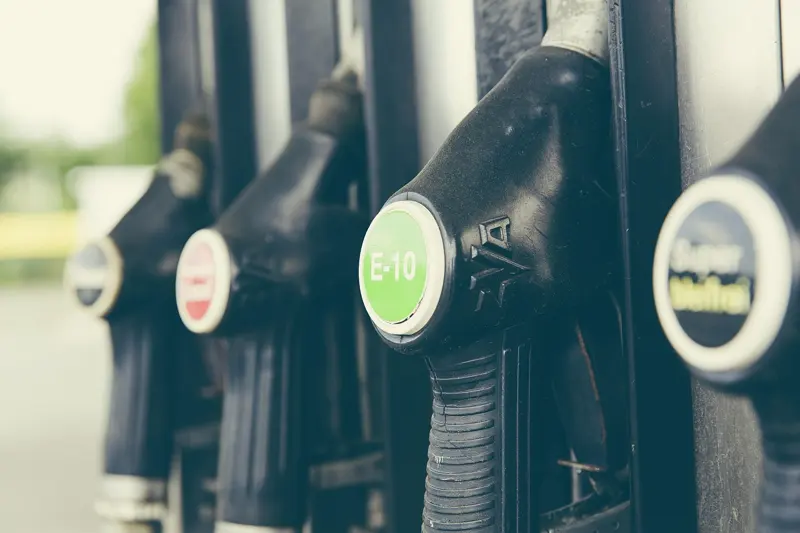
As I pulled up to the pumps, I saw them – those bright yellow handles. I had heard about E85 fuel before, and I knew it was cheaper than regular unleaded. My car was an older sedan, and I honestly wasn’t sure if it was a Flex Fuel Vehicle or not.

I just knew it ran on gasoline.

My brain, however, was focused on saving money. I thought, “It’s fuel, right? How different can it be?” I almost, almost, put that yellow-handled nozzle in my car.

Thankfully, right as I was about to squeeze the trigger, I saw a tiny sticker on my gas door I’d never paid much attention to before. It said, in small print, “For use with unleaded gasoline only.”

My heart did a little jump. That was a close call! I immediately pulled away from the E85 pump and went to the regular unleaded.

That experience taught me a valuable lesson about being absolutely sure before fueling up. The small savings just weren’t worth the risk of a major engine repair. Always check for that “Flex Fuel” label!

Common Car Makes and Models That Offer Flex Fuel Options

Over the years, many American car manufacturers have produced Flex Fuel Vehicles. This was partly driven by government mandates and incentives to promote alternative fuels. While not every model from these brands is an FFV, the option has been widely available, especially in popular truck and SUV segments.

General Motors (Chevrolet, GMC, Buick, Cadillac): GM has been a big proponent of Flex Fuel. Many of their pickup trucks (like the Chevrolet Silverado and GMC Sierra), SUVs (like the Chevrolet Tahoe and GMC Yukon), and even some sedans and crossovers have been offered as FFVs. Models like the Chevrolet Impala, Malibu, and Equinox have had FFV versions in various years.

It’s common to find FFV options on their V6 and V8 engines.

Ford Motor Company (Ford, Lincoln): Ford also widely offers FFV technology. Their F-150 pickup truck has been a common FFV for years. Many of their SUVs, such as the Ford Explorer, Expedition, and Escape, have also been available with FFV capabilities.

Even some of their cars, like the Ford Fusion, have had FFV variants in certain model years.

Stellantis (formerly Fiat Chrysler Automobiles – Dodge, Chrysler, Jeep, Ram): While perhaps not as ubiquitous as with GM and Ford, Stellantis brands have also offered FFVs. Dodge Ram trucks (now Ram trucks) have frequently been equipped with FFV technology. You might also find it on some Jeep Grand Cherokees, Dodge Durangos, and Chrysler Pacifica minivans in specific configurations.

Toyota and Honda: While Toyota and Honda are known for their fuel efficiency and hybrid technology, they have offered Flex Fuel options in the U.S. market, though sometimes less frequently than the domestic automakers. Some models like the Toyota Camry and certain Honda CR-V or Pilot models have had FFV variants in specific years.

It’s worth checking the individual specifications for these vehicles.

Note on Years and Trims: It’s important to remember that FFV capability is usually tied to specific model years and trim levels. A 2010 Ford F-150 might be an FFV, but a 2010 Ford Focus likely would not be. The engine size can also be a factor; often, larger engines (V6, V8) were more commonly made into FFVs, though smaller engines have also been equipped with the technology.

Key Takeaway: If you are looking to buy a new or used car and are interested in using E85, specifically look for the “Flex Fuel” or “FFV” badging and verify with the owner’s manual or VIN. Don’t assume a model is an FFV just because it’s made by one of these manufacturers.

Interested in more about Common Car Questions? Here's an article you might find helpful. What Are The Plastic Screws On Bumpers Called?

Flex Fuel Model Examples (Check Specific Years!)

Chevrolet/GMC

  • Silverado / Sierra (Trucks)
  • Tahoe / Yukon (SUVs)
  • Equinox (Crossover)

Ford

  • F-150 (Truck)
  • Explorer / Expedition (SUVs)
  • Escape (Crossover)

Dodge/Ram/Jeep

  • Ram 1500 (Truck)
  • Durango (SUV)
  • Jeep Grand Cherokee (SUV)

What Happens If You Put E85 in a Non-Flex Fuel Car?

This is the big question, and the answer is not good. Putting E85 fuel into a vehicle that is not designed for it is a recipe for disaster. It’s like trying to feed your cat dog food; it just won’t end well for the cat (or in this case, your car).

Immediate Damage: The high ethanol content in E85 can start to eat away at the rubber and plastic components within a standard gasoline engine’s fuel system. This includes fuel lines, seals, gaskets, and even parts of the fuel pump. These parts are not made to withstand the corrosive nature of concentrated ethanol.

Fuel System Failure: As these parts degrade, they can start to leak. Leaks in the fuel system are incredibly dangerous, as gasoline is highly flammable. A fuel leak could lead to a fire.

Beyond leaks, the degraded components can break apart, sending small pieces into the fuel injectors, clogging them.

Engine Performance Issues: Even if immediate leaks don’t occur, the engine’s computer is not calibrated to handle E85. It will likely run very poorly. You might experience rough idling, stalling, reduced power, and the check engine light will almost certainly illuminate.

The engine might run too lean (not enough fuel) or too rich, neither of which is good.

Long-Term Problems: Over time, the damage can become extensive. You could be looking at replacing fuel lines, fuel pumps, fuel injectors, and potentially even internal engine components if the fuel mixture is significantly off. The cost of these repairs can easily run into thousands of dollars.

It’s Not Just About Running Out of Gas: Some people might think, “What’s the worst that could happen? It just won’t run.” But it’s far more serious than that. It’s about causing chemical and mechanical damage that can be permanent if not addressed.

It’s crucial to stick to the fuel type recommended by your car’s manufacturer.

What if I Made a Mistake?: If you accidentally put E85 in your non-FFV, stop driving the car immediately. Do not start the engine. You will need to have the fuel tank drained and flushed, and potentially have the fuel system inspected for damage.

It’s best to call a tow truck and take it to a trusted mechanic.

Expand your knowledge about Common Car Questions with this article. What Is a Homelink System in a Car? Full Explanation

What If You Accidentally Used E85?

DO NOT START THE ENGINE. If you realized before starting, do not turn the key.

Get the Tank Drained: The vehicle needs to have the E85 removed from the tank.

Flush the Fuel System: Clean out the fuel lines and injectors.

Inspect for Damage: A mechanic should check for corroded or damaged parts.

Call for a Tow Truck: Driving the car can worsen the damage.

The Benefits of Using E85 Fuel

For those who own Flex Fuel Vehicles, E85 can offer several attractive benefits. It’s not just about having more fuel choices; there are genuine advantages to using this alternative blend when your car is equipped for it.

1. Potential Cost Savings: One of the most talked-about benefits is the price at the pump. E85 is often cheaper per gallon than regular gasoline.

This is because ethanol production is often subsidized, and gasoline prices can fluctuate. However, it’s important to remember that E85 has lower energy content than gasoline. This means you’ll get fewer miles per gallon.

So, the savings at the pump need to be weighed against the decrease in fuel economy.

2. Reduced Greenhouse Gas Emissions: Ethanol is considered a renewable fuel. When it’s produced from plants like corn, those plants absorb carbon dioxide from the atmosphere as they grow.

This process helps to offset the greenhouse gases released when the fuel is burned. Studies have shown that using E85 can lead to a reduction in tailpipe emissions of certain pollutants, including carbon monoxide and unburned hydrocarbons, compared to pure gasoline.

3. Increased Octane Rating: Ethanol has a higher octane rating than gasoline. Octane measures a fuel’s resistance to knocking or pinging during combustion.

A higher octane rating can lead to smoother engine operation and potentially better performance, especially in engines designed to take advantage of it. This can help prevent engine knock, which can cause damage over time.

4. Support for Domestic Agriculture: A significant portion of the ethanol used in the U.S. is produced from corn grown by American farmers.

By choosing E85, consumers help support the agricultural economy and reduce reliance on foreign oil. This can contribute to energy independence and a stronger domestic market for agricultural products.

5. Cleaner Burning Fuel: Ethanol burns more cleanly than gasoline, producing fewer harmful emissions. This can contribute to better air quality, especially in urban areas where vehicle emissions are a significant concern.

The combustion process of ethanol often results in less particulate matter and other air pollutants.

It’s worth noting that the actual benefits can vary depending on the specific vehicle, driving conditions, and local fuel prices. The environmental advantages are often debated, and the sustainability of corn-based ethanol production is a topic of ongoing discussion. However, for the owner of an FFV, E85 presents a viable and often beneficial alternative to conventional gasoline.

Pros of Using E85 (For FFVs)

Cost Savings:

Often cheaper per gallon, but fuel economy is lower.

Environment:

Renewable source, can reduce certain emissions.

Performance:

Higher octane rating for smoother running.

Domestic Economy:

Supports U.S. agriculture and energy independence.

The Downsides and Considerations of E85

While E85 offers some appealing benefits, it’s not without its drawbacks. Understanding these potential downsides is just as important as knowing the advantages, especially if you’re considering using E85 in your Flex Fuel Vehicle.

1. Lower Fuel Economy: This is the most significant drawback for most drivers. Ethanol has about 30% less energy content than gasoline.

This means you will travel fewer miles per gallon when using E85. So, even if E85 is cheaper per gallon, you might end up spending more on fuel overall if the price difference isn’t substantial enough to offset the reduced mileage.

2. Limited Availability: E85 pumps are not as common as regular gasoline stations. While they are more prevalent in certain regions of the U.S.

(like the Midwest, where corn is grown), you might struggle to find E85 stations if you live in or travel to other areas. This can be inconvenient and might force you to use regular gasoline anyway.

3. Potential for Corrosion and Material Degradation: Although FFVs are built with ethanol-resistant materials, some older FFVs or those that have not been properly maintained might still be susceptible to issues over the very long term. Certain components can degrade faster with higher ethanol blends, especially if they are already showing signs of wear.

4. Cold Weather Starting Issues: Ethanol has a higher flash point than gasoline, meaning it’s harder to ignite in cold temperatures. While FFVs have systems to manage this, you might notice slightly longer cranking times or a bit more hesitation during cold starts, especially in very cold climates.

The gasoline component in E85 helps with this, but it’s still a factor.

5. Fuel System Maintenance: Because E85 can absorb water and potentially lead to more deposits over time, some mechanics recommend more frequent checks or cleaning of the fuel system for vehicles that consistently run on E85. This isn’t always necessary but is something to consider for long-term maintenance.

6. Engine Performance Differences: While the engine computer adjusts for E85, some drivers might notice subtle differences in throttle response or overall engine feel compared to running on pure gasoline. This is not necessarily a negative, but it is a change.

When deciding whether to use E85, do a quick cost-benefit analysis. Calculate your average miles per gallon on gasoline and the current price. Then, check the price of E85 and estimate your MPG on it (usually around 20-25% lower).

See if the savings per mile make sense for you. Also, consider the availability of E85 stations along your usual routes.

E85: What to Keep in Mind

Fuel Economy:

Expect fewer miles per gallon.

Station Availability:

Not all gas stations carry E85.

Cold Starts:

May crank a bit longer in very cold weather.

Maintenance:

Some suggest more frequent fuel system checks.

Cost Calculation:

Always compare total cost per mile, not just per gallon.

Real-World Context: When Drivers Choose E85

In the real world, the decision to use E85 often comes down to a few practical factors for Flex Fuel Vehicle owners. It’s not always about being an environmental champion, though that’s a bonus for some. It’s more about economics and convenience.

The Commuter in the Corn Belt: Think of Sarah, who lives in Iowa and drives a Chevrolet Silverado. Her daily commute is about 40 miles each way. She has E85 stations conveniently located near her home and work.

She notices that E85 is consistently about 30 cents cheaper per gallon than regular unleaded. Even though her truck gets about 3-4 fewer miles per gallon on E85, the overall cost for her daily commute is lower. She’s supporting local farmers and saving money, so it’s a win-win for her.

The Long-Haul Traveler: John drives a Ford Expedition from Texas to visit family in Oklahoma several times a year. He knows that E85 is readily available in Oklahoma and parts of Texas. He calculates the cost savings for his long trip.

If the price difference is significant, he’ll plan his refueling stops around E85 stations. However, if he’s traveling through areas where E85 is scarce, he’ll stick to gasoline to avoid the stress of searching for a pump.

The Performance Enthusiast: Mark drives a Dodge Ram with a Hemi engine. He’s noticed that when he uses E85, his truck seems to have a bit more “oomph” on acceleration, especially when towing. He likes the higher octane and the feeling of smoother power delivery.

While fuel economy still drops, he’s willing to accept that for the perceived performance boost and the fact that he can find E85 at a station near his home.

The Budget-Conscious Buyer: Maria recently bought a used GMC Sierra that she found out was an FFV. She wasn’t specifically looking for an FFV, but when she discovered it, she started looking into E85. She’s on a tight budget and sees E85 as a way to cut down on her weekly fuel expenses.

She diligently checks the prices and calculates her MPG to make sure it’s truly saving her money.

These scenarios show that the choice is often very personal and dependent on local fuel prices, driving habits, and the specific vehicle. For many, the primary driver is financial, while for others, it’s a combination of factors including environmental awareness and performance.

What This Means for You: When E85 is a Good Idea

So, what’s the takeaway here? When does using E85 make sense for you and your vehicle? It all boils down to a few key points:

When You Own a Flex Fuel Vehicle: This is the absolute first requirement. If your car isn’t an FFV, then E85 is not an option. Don’t even consider it.

Your owner’s manual and fuel cap will be your best guides here.

When E85 is Readily Available: If you live in an area where E85 stations are common, and you don’t have to go out of your way to find them, then it’s a more practical choice. If you travel frequently to areas with limited E85 availability, you might want to stick to gasoline to avoid running out of fuel options.

When the Price Makes Financial Sense: This is a big one. You need to do the math. Generally, if E85 is more than 20-25% cheaper per gallon than regular gasoline, it might be worth it, considering the drop in MPG.

If the price difference is small, you’ll likely spend more on fuel overall.

When Environmental Impact is a Priority: If reducing your carbon footprint is important to you, and your vehicle is compatible, E85 can be a step in the right direction. It’s a renewable fuel that can help lower emissions compared to pure gasoline.

When You Notice a Performance Difference (and it matters to you): Some drivers of FFVs, especially those with larger engines, might feel a difference in performance with E85 due to its higher octane rating. If you enjoy that little boost, and the other factors align, it can be a nice bonus.

When NOT to Use E85:

  • If your car is NOT a Flex Fuel Vehicle.
  • If E85 stations are hard to find on your regular routes.
  • If the price difference per gallon is very small, making your total fuel cost higher due to lower MPG.
  • If you have a very old vehicle that might have fuel system components that are not fully ethanol-resistant (even if it’s an FFV).

Ultimately, the decision is yours. By understanding your vehicle’s capabilities and doing a little homework on fuel prices and availability, you can make an informed choice about whether E85 is the right fuel for you.

Quick Fixes & Tips for E85 Users

If you own a Flex Fuel Vehicle and are considering or already using E85, here are a few practical tips to make the experience smoother:

  • Calculate Your Savings: Before each fill-up, quickly compare prices. A simple way is to divide the price per gallon of regular gasoline by your typical MPG, then do the same for E85. The lower cost-per-mile wins.
  • Know Your Local Stations: Use apps or websites like the Department of Energy’s Alternative Fuels Data Center (AFDC) or GasBuddy to locate E85 stations near you. Save them to your navigation system.
  • Don’t Let the Tank Get Too Low: Especially in colder climates, it’s good practice to avoid running your tank on empty if you plan to use E85. Having some gasoline in the tank can help with cold starts.
  • Monitor Fuel Economy: Keep track of your MPG on both gasoline and E85. This will give you a clear picture of your actual cost savings and help you decide when E85 is most economical.
  • Listen to Your Car: Your FFV’s computer will adjust automatically, but pay attention to how your car runs. If you notice any unusual noises, hesitations, or warning lights, it might be time to switch back to gasoline and have your fuel system checked.
  • Consider Seasonal Blends: Remember that the ethanol percentage in E85 can vary. In summer, it might be closer to E70, and in winter, it might be closer to E85. Your FFV is designed to handle these fluctuations.
  • Combine Fuels if Necessary: If you can’t find a full tank of E85, it’s usually okay to top off with regular gasoline. Your FFV will adjust to the mixed blend.
Quick Fixes & Tips for E85 Users

Frequently Asked Questions About E85 Fuel

What is the main difference between E85 and regular gasoline?

The main difference is the ethanol content. E85 is a blend of 85% ethanol and 15% gasoline. Regular gasoline typically contains up to 10% ethanol (E10).

Can I use E85 in any car?

No. Only Flex Fuel Vehicles (FFVs) are designed to safely use E85 fuel. Using E85 in a non-FFV can cause serious damage to the engine and fuel system.

How do I know if my car is a Flex Fuel Vehicle?

Look for labels on the fuel cap or inside the fuel door that say “E85 Compatible” or “Flex Fuel.” You can also check your owner’s manual or the manufacturer’s website.

Will using E85 hurt my Flex Fuel Vehicle?

No, if your vehicle is a Flex Fuel Vehicle and properly maintained, using E85 should not harm it. The vehicle’s systems are designed to handle it.

Do I get better gas mileage with E85?

No. E85 has less energy than gasoline, so you will generally get lower miles per gallon (MPG) when using E85. This means you’ll need to refuel more often.

Is E85 always cheaper than gasoline?

E85 is often cheaper per gallon, but due to lower MPG, the total cost per mile might not always be lower. It’s important to calculate the cost-effectiveness based on local prices and your vehicle’s MPG.

Where can I find E85 fuel stations?

E85 is more common in certain regions of the U.S., especially in the Midwest. You can use online resources like the Department of Energy’s Alternative Fuels Data Center (AFDC) to find stations near you.

What if I accidentally put E85 in a non-Flex Fuel car?

Do not start the engine. Have the fuel tank drained and flushed by a mechanic. Driving the car could cause significant damage.

Wrapping Up: Your E85 Journey

So, there you have it! The world of E85 fuel is pretty straightforward once you know what to look for. It’s all about having a Flex Fuel Vehicle.

If your car is an FFV, you have a great option for potentially saving money and using a renewable fuel. Just remember to do your research on local availability and prices.

If your car isn’t an FFV, then E85 is a definite no-go. Stick to the gasoline your vehicle is designed for. Knowing your car’s capabilities is key to keeping it running smoothly and safely for years to come.

Happy (and informed) fueling!

Similar Posts