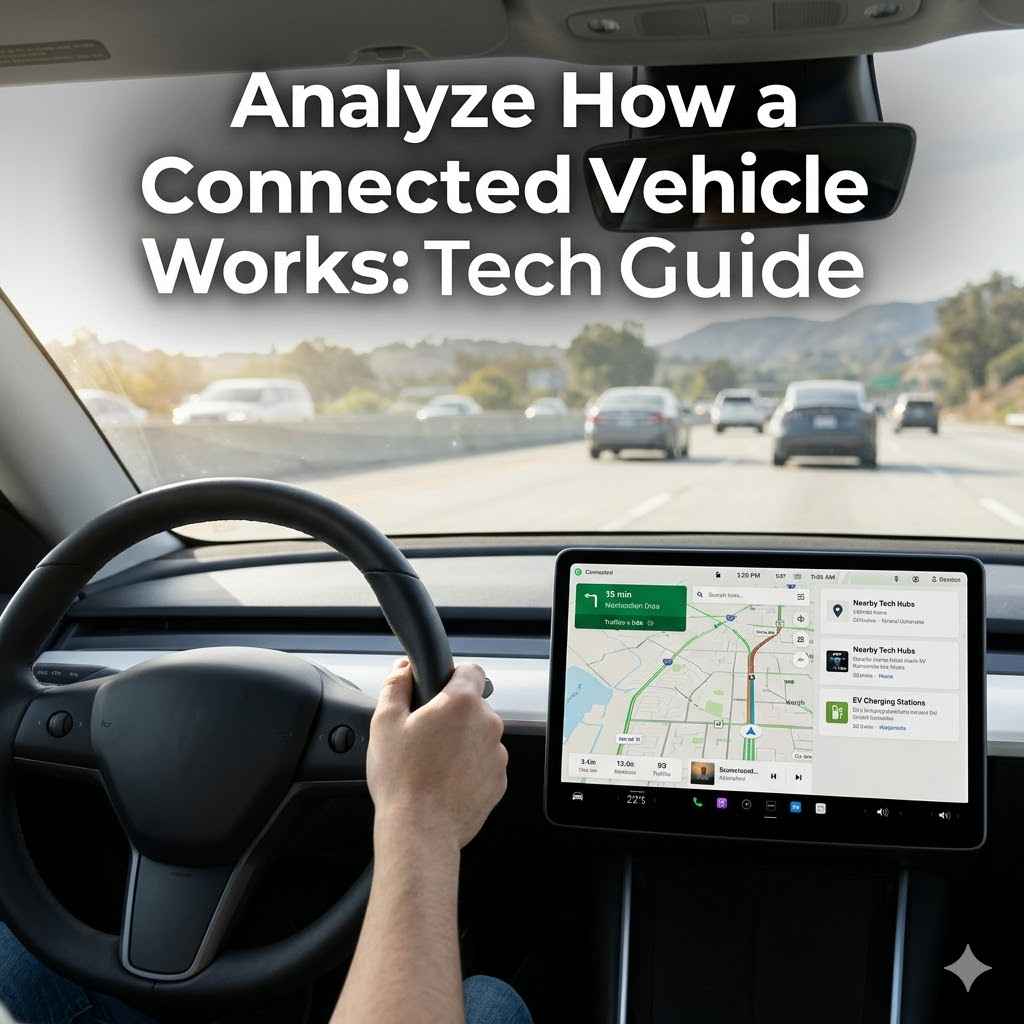
Analyze How a Connected Vehicle Works: Local Tech Guide
Learning how a connected car works might seem tricky at first. You might wonder where to begin when trying to Analyze How a Connected Vehicle Works: Local Tech Guide. Many new ideas can feel overwhelming.
But don’t worry, this guide breaks it all down. We’ll go step-by-step to make it easy to grasp. Get ready to see how your car stays in touch with the world around it.
How Connected Vehicles Communicate
This section explains the basic ways cars talk to each other and to other systems. It covers the main technologies that make a car “connected.” We will look at the different signals and data they send and receive. This helps you see the core function of a modern vehicle’s network.
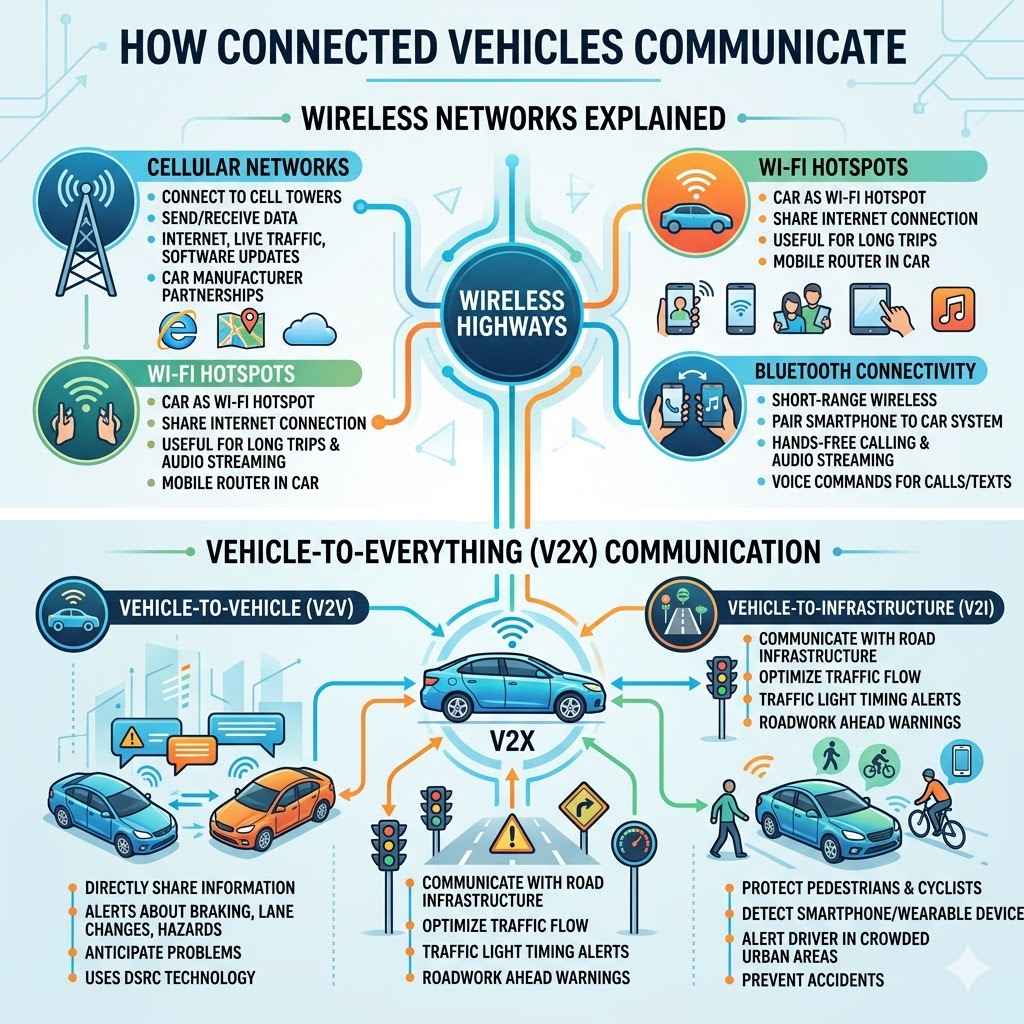
Wireless Networks Explained
Wireless networks are the invisible highways that connected vehicles use. They allow cars to send and get information without wires. This includes things like GPS data, traffic updates, and even remote commands from your phone.
These networks are essential for a car’s smart features to work.
Cellular Networks
Cellular networks are similar to the ones your smartphone uses. Cars connect to cell towers to send and receive data. This enables features like internet browsing in the car, live traffic mapping, and software updates.
Companies like Verizon, AT&T, and T-Mobile provide these services for vehicles. The data speeds are fast enough for streaming music or video calls. Many car manufacturers partner with these providers to offer connectivity packages to drivers.
The strength of the signal can change based on your location, much like your phone.
Wi-Fi Hotspots
Some connected cars can act as Wi-Fi hotspots. This means they can share their internet connection with other devices, like passengers’ phones or tablets. This is very useful for long trips, keeping everyone entertained.
It’s like having a mobile internet router in your car. The car uses its cellular connection to provide the internet for others. This feature can help save on mobile data plans for personal devices.
Bluetooth Connectivity
Bluetooth is a short-range wireless technology. It’s used for connecting devices that are close to each other. In cars, Bluetooth is commonly used to pair your smartphone with the car’s system.
This allows for hands-free calling and audio streaming. You can play music from your phone through the car’s speakers. It also lets you use voice commands to make calls or send texts.
The pairing process is usually simple and happens once.
Vehicle-to-Everything V2X Communication
Vehicle-to-Everything, or V2X, is a way for cars to talk to their surroundings. This goes beyond just connecting to the internet. It means cars can communicate with other cars, traffic lights, pedestrians, and the road itself.
This technology aims to make driving safer and more efficient. Imagine a car warning another about a sudden stop ahead. Or a traffic light telling cars when to expect a green light.
This forms a smart traffic network.
Vehicle-to-Vehicle V2V
V2V communication lets cars directly share information with each other. They can send alerts about braking, lane changes, or potential hazards. This helps drivers anticipate problems before they become accidents.
For example, if a car ahead slams on its brakes, it can send a signal to cars behind it. These cars can then warn their drivers to slow down. This type of communication can significantly reduce collisions.
It uses dedicated short-range communications or DSRC technology.
Vehicle-to-Infrastructure V2I
V2I allows vehicles to communicate with road infrastructure like traffic signals and signs. This can help optimize traffic flow. A traffic light could tell cars its timing, allowing them to adjust speed for a smooth pass.
Or a sign could warn drivers about roadwork ahead. This technology can reduce waiting times at intersections and improve fuel efficiency. It makes driving smoother and less stressful.
It can also alert emergency vehicles to approaching traffic.
Vehicle-to-Pedestrian V2P
V2P communication is designed to protect pedestrians and cyclists. A car can detect a pedestrian using a smartphone or wearable device and alert the driver. This is especially useful in crowded urban areas.
It can help prevent accidents involving vulnerable road users. Imagine a car detecting a child about to run into the street. The car can then alert the driver and even apply the brakes.
This adds an extra layer of safety for everyone.
Core Technologies Inside A Connected Vehicle
Now, let’s look at the parts inside a car that make it connected. This section breaks down the essential hardware and software. You will learn about the sensors, processors, and communication modules.
These components work together to bring you all the smart features you expect.
Sensors Gathering Data
Cars are filled with sensors that act like the car’s eyes and ears. These sensors collect information about the car’s surroundings and its own performance. This data is vital for many connected car features.
GPS Receivers
Global Positioning System (GPS) receivers pinpoint the car’s exact location. This is fundamental for navigation apps and location-based services. The GPS signal is received from satellites orbiting Earth.
The receiver calculates its distance from multiple satellites to determine its position. This accuracy allows for precise routing and traffic reporting. It’s also used by apps that track your driving habits or parking locations.
Cameras and Radar
Cameras provide visual data, recognizing lane markings, traffic signs, and other vehicles. Radar systems use radio waves to detect objects, measure their distance, and track their speed. These technologies are key for advanced driver-assistance systems (ADAS).
Features like adaptive cruise control and automatic emergency braking rely on these sensors. They work together to create a 360-degree view around the car. Some systems even use thermal cameras for better night vision.
Lidar Sensors
LiDAR (Light Detection and Ranging) uses laser pulses to measure distances. It creates a detailed 3D map of the car’s surroundings. LiDAR is very accurate and can detect objects even in low light conditions.
It’s a crucial sensor for autonomous driving systems. The laser beams bounce off objects and return to the sensor. The time it takes for the light to return helps calculate distance.
This provides extremely precise environmental data.
On-Board Processing and Computing
The data from sensors needs to be processed quickly. This is done by powerful computers inside the car. These computers are the “brain” of the connected vehicle.
ECUs Electronic Control Units
ECUs are specialized computers that control various functions within a car. A modern car can have dozens of ECUs. These control everything from engine performance to infotainment systems.
In a connected car, ECUs also manage communication with external networks. They process sensor data and send commands to actuators. For example, an ECU might receive data from a forward-facing camera and decide to apply the brakes.
Infotainment Systems
The infotainment system is what you interact with for entertainment and information. It includes the touchscreen display, navigation, radio, and smartphone integration. These systems are becoming more powerful and capable.
They are the interface through which many connected car services are accessed. They can connect to the internet for streaming services and app access. Many now support over-the-air software updates.
Communication Modules
These are the hardware components that allow the car to connect to the outside world.
Telematics Control Unit TCU
The TCU is a dedicated module for telematics services. Telematics combines telecommunications and informatics. It allows for remote monitoring and control of vehicles.
The TCU handles cellular communication, GPS, and sometimes Wi-Fi. It’s the gateway for services like remote start, vehicle location tracking, and emergency assistance. It can also collect vehicle performance data for diagnostics.
Modems and Antennas
Modems enable the car to connect to cellular networks. Antennas are needed to send and receive signals for cellular, GPS, and Wi-Fi. The placement and type of antennas are important for good signal strength.
Many cars have multiple antennas integrated into the roof or body panels. These ensure reliable connectivity even when driving through areas with spotty coverage.
How Data Is Used And Protected
Connected cars generate a lot of data. This section discusses what that data is used for and how it’s kept safe. Protecting your privacy is a key concern.
Data Collection and Analysis
Information from your car can be collected for various reasons. This can help improve driving experiences and services.
Performance Monitoring
Car manufacturers collect data on how their vehicles perform. This helps them identify potential issues and improve future designs. It includes data on engine performance, fuel efficiency, and component wear.
This information can be used to develop predictive maintenance alerts. For instance, the car might tell you when it’s time for an oil change based on actual usage.
Traffic and Navigation
Real-time traffic data is gathered from many connected vehicles. This information is used to provide accurate navigation and suggest the fastest routes. By aggregating data from thousands of cars, systems can detect congestion and accidents.
This helps all drivers avoid delays. Services like Google Maps and Waze heavily rely on this collective data. It allows for dynamic rerouting when conditions change.
Personalization
Connected car systems can learn your preferences. This includes your preferred radio stations, seat positions, and climate control settings. This data helps personalize your driving experience.
The car can automatically adjust settings when it recognizes you. Some systems can even learn your common routes and offer proactive suggestions. This makes the car feel more like your own.
Cybersecurity Measures
Keeping connected cars safe from hackers is very important. Strong security measures are in place.
Encryption
Data transmitted between the car and external servers is encrypted. This means it’s scrambled into a secret code. Only authorized systems can decode it.
This prevents unauthorized access to sensitive information. For example, your login credentials or personal settings are protected. Encryption ensures that even if data is intercepted, it cannot be read.
Secure Software Updates
Software updates are delivered securely to the car. These updates fix bugs and improve security. They are digitally signed to ensure they come from the legitimate manufacturer.
This prevents malicious software from being installed. Over-the-air updates are a convenient way to keep the car’s systems up-to-date and secure. They can be done while the car is parked.
Firewalls and Intrusion Detection
Similar to computer networks, cars have firewalls. These block unauthorized access to the car’s internal systems. Intrusion detection systems monitor for suspicious activity.
If any threats are detected, they can alert the driver or take action. These systems act as digital guards for the car’s electronics. They are constantly working to protect the vehicle’s network.
Privacy Considerations
Your driving data is personal. Car manufacturers have policies on how they use and protect it.
Data Anonymization
Often, data collected for analysis is anonymized. This means personal identifiers are removed. This allows manufacturers to study trends without knowing who specifically provided the data.
The focus is on the behavior of the vehicle or the driving conditions. This helps protect individual privacy. Anonymized data is less sensitive and can be used more freely for improvements.
User Consent
Most connected car services require your explicit consent to collect and use your data. You typically agree to terms and conditions when setting up the service. You can often manage your privacy settings within the car’s infotainment system.
This gives you control over what information is shared. It’s important to review these settings periodically.
Data Retention Policies
Manufacturers have policies on how long they keep your data. Sensitive information is usually deleted after a certain period. This minimizes the risk of data breaches over time.
Clear data retention policies ensure that personal information is not stored indefinitely. You should be able to find this information in the car’s privacy statement.
Analyze How A Connected Vehicle Works Local Tech Guide Examples
Seeing how these technologies work in real life helps you understand them better. This section provides practical examples of connected car features.
Real-World Applications
Here are some common ways connected car technology is used today.
Remote Vehicle Access
Apps on your smartphone allow you to remotely start your car, lock or unlock doors, and check fuel levels. This is very convenient, especially on cold mornings or when you’ve forgotten if you locked the car. Services like OnStar and various manufacturer apps offer these features.
You can pre-heat or cool the cabin before you get in. This is a direct benefit of the car’s connectivity. The TCU in the car communicates with the app via cellular networks.
Traffic Incident Alerts
When you’re driving, your navigation system might alert you to a traffic jam ahead. It might suggest an alternate route. This information comes from other connected cars reporting slow traffic or accidents.
Services like Google Maps and Apple Maps use this real-time data. They help you avoid getting stuck in long delays. This saves you time and frustration.
This is a prime example of V2X in action.
Over-the-Air Software Updates
Just like your smartphone, your car’s software can be updated wirelessly. This can add new features, improve performance, or fix bugs. For example, a car’s infotainment system might get a new interface design or better voice recognition.
Tesla is famous for its frequent OTA updates. These updates ensure your car’s technology stays current without needing a visit to the dealer. They are downloaded when the car is connected to Wi-Fi or cellular.
Scenarios Illustrating Connectivity
Let’s look at a couple of scenarios.
Scenario: A driver is on a long road trip and their car’s low fuel light comes on. The navigation system, connected to the internet, automatically searches for nearby gas stations. It shows prices and distances, allowing the driver to choose the best option. The system can even guide them directly to the chosen station. This seamless integration of navigation and real-time data makes driving easier.
Scenario: A car is approaching an intersection where a traffic light has just turned red. Through V2I, the car receives a signal from the traffic light indicating the duration of the red light. This information can be displayed to the driver, helping them to adjust their speed smoothly to avoid a hard stop. This improves traffic flow and reduces unnecessary braking.
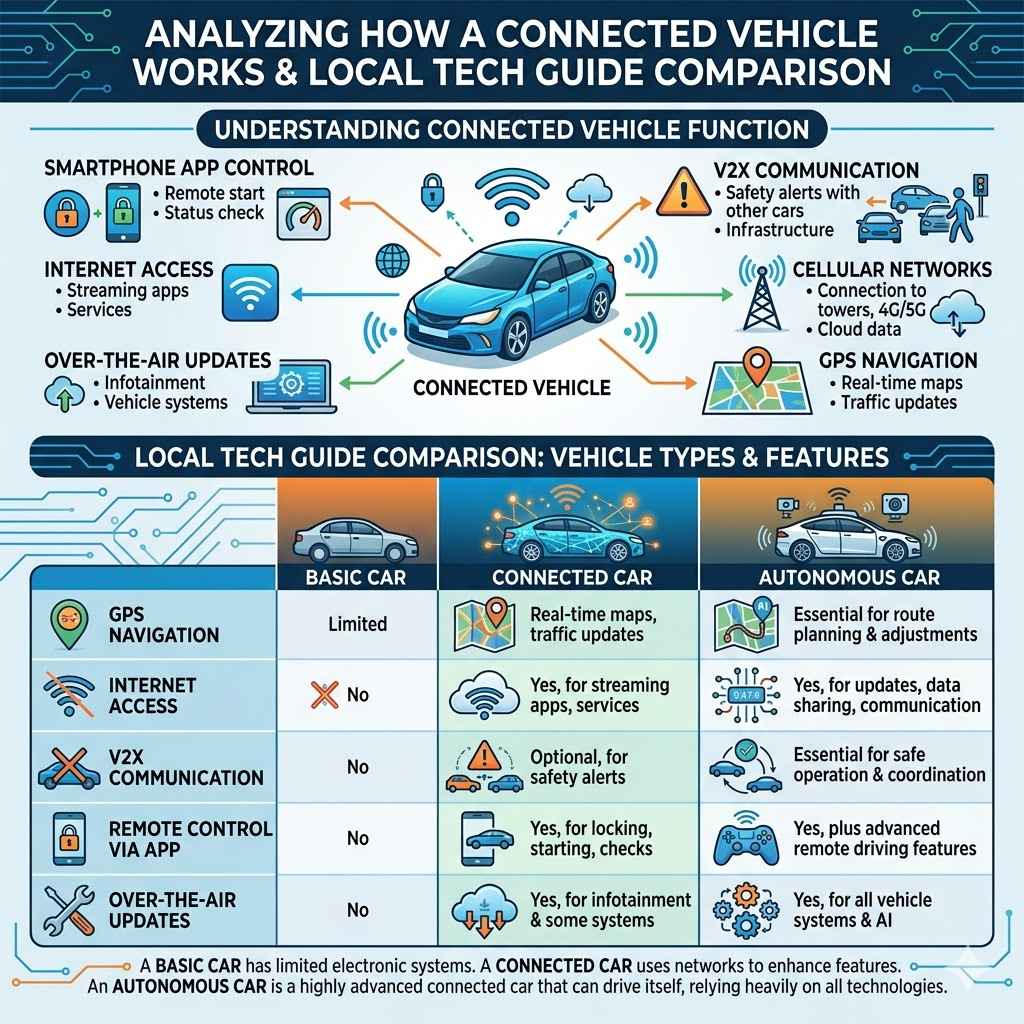
Analyze How A Connected Vehicle Works: Local Tech Guide Comparison
Understanding the difference between different types of connectivity can be helpful. While the core idea is communication, the methods and purposes vary.
| Feature | Basic Car | Connected Car | Autonomous Car |
|---|---|---|---|
| GPS Navigation | Limited | Real-time maps traffic updates | Essential for route planning and real-time adjustments |
| Internet Access | No | Yes, for streaming apps services | Yes, for updates, data sharing, and communication |
| V2X Communication | No | Optional, for safety alerts | Essential for safe operation and coordination |
| Remote Control via App | No | Yes, for locking, starting, checking status | Yes, plus advanced remote driving features |
| Over-the-Air Updates | No | Yes, for infotainment and some systems | Yes, for all vehicle systems and AI |
A basic car has limited electronic systems. A connected car uses networks to enhance its features. An autonomous car is a highly advanced connected car that can drive itself.
It relies heavily on all the technologies discussed.
Frequently Asked Questions
Question: What is the main purpose of a connected vehicle
Answer: The main purpose is to enhance safety, efficiency, and the driving experience by allowing the vehicle to communicate with other vehicles, infrastructure, and the internet.
Question: Do I need a separate data plan for my connected car
Answer: Often, connected car features require a subscription service that includes a data plan provided by the car manufacturer or a partner cellular company.
Question: Can my connected car be hacked
Answer: While manufacturers implement strong cybersecurity measures, no system is completely immune. However, risks are minimized through encryption, secure updates, and firewalls.
Question: How does a connected car know where I am
Answer: It uses GPS receivers to determine its precise location, which is then used for navigation and other location-based services.
Question: Are all new cars connected cars
Answer: While many new cars offer connectivity features, not all vehicles come standard with advanced connectivity. The level of connectivity can vary greatly by make and model.
Summary
We’ve explored how connected cars use wireless networks, sensors, and onboard computers to communicate. Data is collected for improving services and is protected by strong cybersecurity. Understanding these elements helps you appreciate the technology.
You now have a clearer picture of how to Analyze How a Connected Vehicle Works: Local Tech Guide.