Car Sound Technology Explained: How It Works in Cars
Car audio is often described as a chain that includes the source, processor, amplifier, speakers, and cabin acoustics. Fix the weakest point first, then add damping and proper tuning. Ignore that chain and you get harsh treble, weak bass, road-noise masking, and money spent on parts that barely change the result. This guide explains each component, which factory features matter, what is mostly marketing, and the upgrade path that best fits commuting, bass, and EV use.
What is a car audio system?
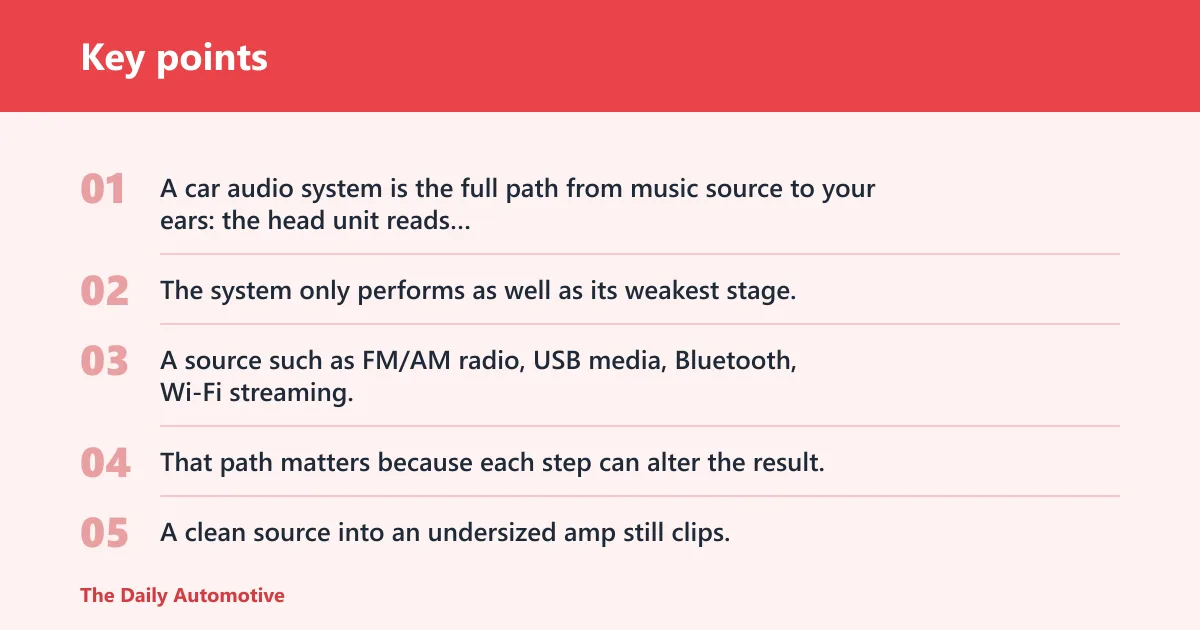


A car audio system is the full path from music source to your ears: the head unit reads or receives audio, signal processing shapes it, amplification raises power, speakers convert it to sound, and the cabin changes the result. The system only performs as well as its weakest stage, and a bad match can sound worse than a properly tuned budget build.
The signal chain from source to sound
A source such as FM/AM radio, USB media, Bluetooth, Wi-Fi streaming, or a phone can feed the head unit, and the signal may then pass through an amplifier and DSP before reaching speakers and, if fitted, a subwoofer.
That path matters because each step can alter the result. A clean source into an undersized amp still clips. Strong amplification into poorly placed speakers still sounds flat. Good parts arranged badly can waste money.
Why the cabin changes what you hear
The car cabin is small and enclosed, so reflections arrive quickly and the dashboard, doors, seats, and glass all affect tonal balance. Speaker placement is fixed by the vehicle, not by ideal home-audio geometry, which is why the same hardware can sound different in two cars.
HiFiReport defines speakers as devices that convert electrical signals into sound waves. That sounds simple, but the space around them matters too.
How does a car audio system work?
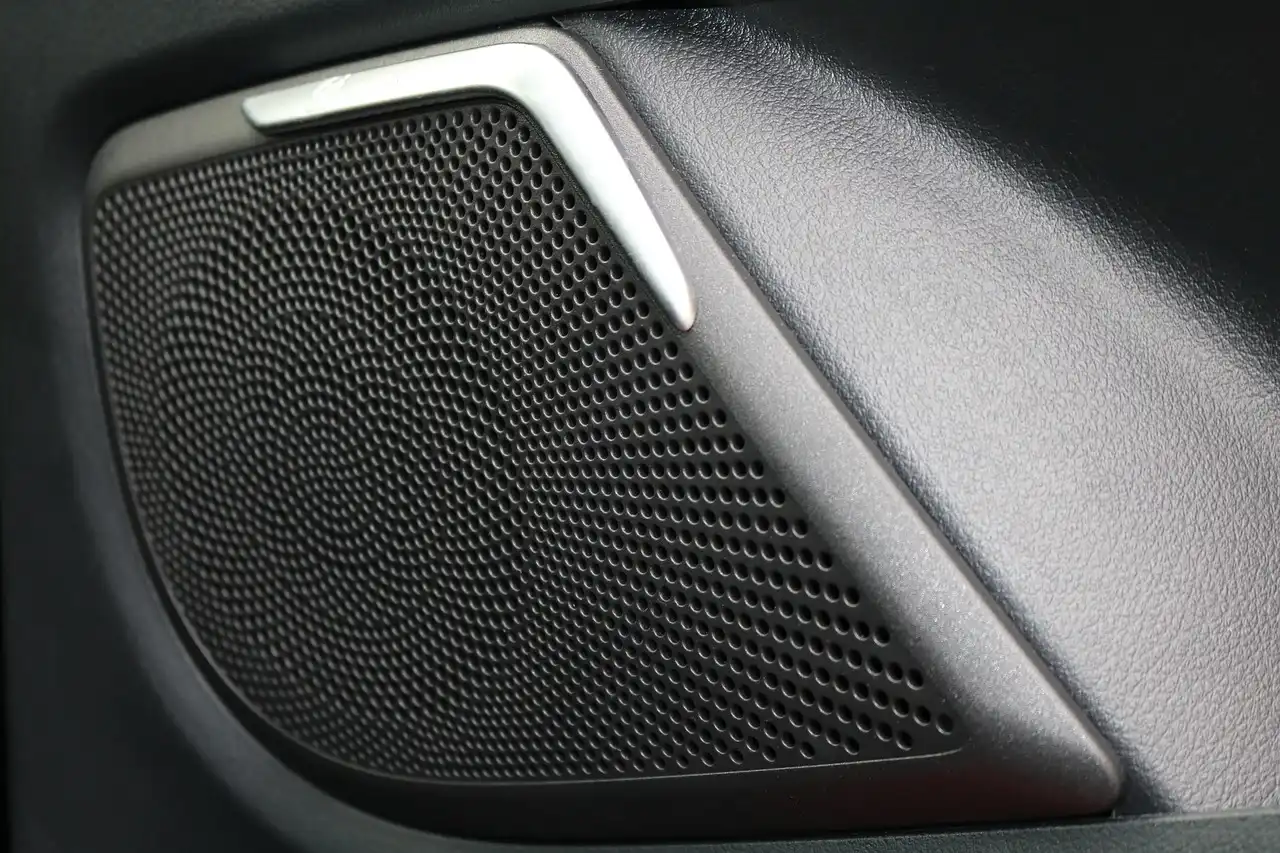
Car audio works by taking a source signal at the head unit, shaping it with processing, increasing its power with an amplifier, and sending that powered signal to speakers and a subwoofer. Better matching of those parts improves sound quality, while bad gain settings, poor crossover choices, or the wrong impedance can make a system noisy or thin.
Head unit: source control and media handling
The head unit is the central interface for audio, video, and navigation. HiFiReport describes it as ranging from FM/AM radio to integrated multimedia centers, and modern units often add Bluetooth, Wi-Fi, smartphone integration, and built-in streaming services like Spotify and Pandora.
Those features affect convenience more than raw fidelity. Bluetooth and Wi-Fi are standard connectivity options, but they do not fix a poor speaker layout or a clipped amp. MP3 is still common; lossless audio preserves more data and can sound cleaner when the rest of the chain is up to it.
Amplifier: power, headroom, and distortion control
An amplifier increases the power of the audio signal from the head unit. When it is sized and matched correctly, it gives speakers more headroom, lowers distortion at useful listening levels, and improves control over woofer movement.
Class D amps are common in cars because they are efficient and run cool. Multichannel amps can power front and rear speakers plus a sub, but they still need the correct speaker impedance and a clean turn-on signal.
Speakers and subwoofer: who handles which frequencies
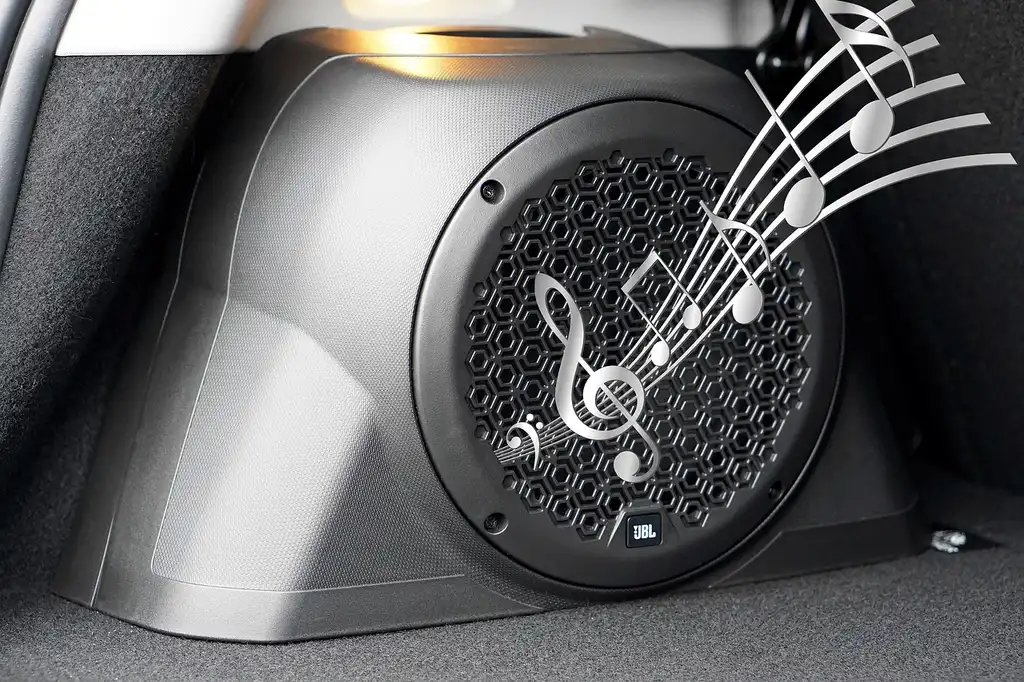
Speakers deliver mid-range and high-frequency sounds, while subwoofers handle low-frequency bass. In a typical setup, tweeters cover the top end, midrange drivers cover voices and instruments, and woofers handle upper bass and body.
A subwoofer does not make a system “louder” by itself. It fills in the lowest octave or two, and it needs the right enclosure and enough power to work without strain.
Why does the car cabin matter so much?
Cabin acoustics matter because the listening space is small, reflective, and asymmetric. Glass, plastic, fabric, and seat shapes all color the sound, so placement and timing matter as much as speaker quality. A car can measure or sound off even with expensive parts if the cabin is not accounted for.
Reflections, seating position, and speaker placement
Your left ear is usually much closer to the left door speaker than the right speaker, which pulls the image sideways. Reflections from the windshield and side windows arrive a few milliseconds later and can blur vocals or make treble seem sharp.
DSP can help by adjusting equalization, crossover points, and time alignment. HiFiReport notes that sound processors can even simulate environments such as stadiums or concert halls, but in a car they are usually more useful for correcting cabin effects than for adding artificial space.
Why two cars with the same gear can sound different
Door volume, dash shape, seat height, and factory grille design all change output. Say your hatchback has the tweeters mounted high in the sail panels, while a sedan uses low door locations. The hatchback may sound more open with less effort, even before tuning.
That is why “same brand, same kit” comparisons often fail. The vehicle is part of the acoustic design.
Which upgrades change sound quality most?
The biggest gains usually come from amplifier power, speaker fit, and DSP tuning, not from the latest wireless feature or the name on the faceplate. A better amp helps when the current one clips or runs out of headroom, speakers matter most when the factory drivers are weak, and DSP fixes cabin problems that parts alone cannot solve.
Where a better amp helps
Amplification matters when the system sounds strained at moderate volume, gets harsh on peaks, or loses bass control. A well-matched amp can reduce distortion and improve dynamics, but an oversized amp still needs sane gain settings or it will clip just the same.
When speakers matter most
Speakers matter most when the factory units have poor sensitivity, weak cone control, or a narrow usable range. Many stock systems use lightweight drivers that trade detail for cost. Replacing them with better-built front speakers often changes clarity more than replacing the source unit alone.
What DSP fixes that parts alone cannot
A DSP is the tool for cabin correction. It can set crossovers, apply equalization, and delay channels so the sound arrives more evenly. It is the difference between “loud enough” and “properly aligned.”
A common first-timer mistake is adding a subwoofer before fixing the front stage. The result is bass that seems detached from the rest of the music.
How do you match parts without creating a mismatch?
Matching means the head unit, amplifier, speakers, subwoofer, and turn-on method all agree electrically and acoustically. A factory head unit can work with an aftermarket amp, but you need the right input method, the right speaker impedance, and enough power without overdriving anything.
Factory head unit versus aftermarket source
A factory head unit may not have preamp outputs, so the amp may need high-level inputs or a line output converter. Aftermarket sources often give more control, but replacing the factory unit can break vehicle integration for climate, cameras, or steering-wheel controls.
Speaker impedance, amp power, and turn-on method
Check speaker impedance before buying an amp. If the amp and factory drivers are not matched in impedance, heat and protection issues can follow. Likewise, the amplifier must know when to turn on, whether by remote wire, signal sense, or data interface.
Subwoofer enclosure and power matching
A subwoofer needs the right enclosure volume and a power level that suits its design. Sealed boxes usually favor tighter response and smaller size. Ported boxes can deliver more output, but only if the tuning matches the driver and the cabin.
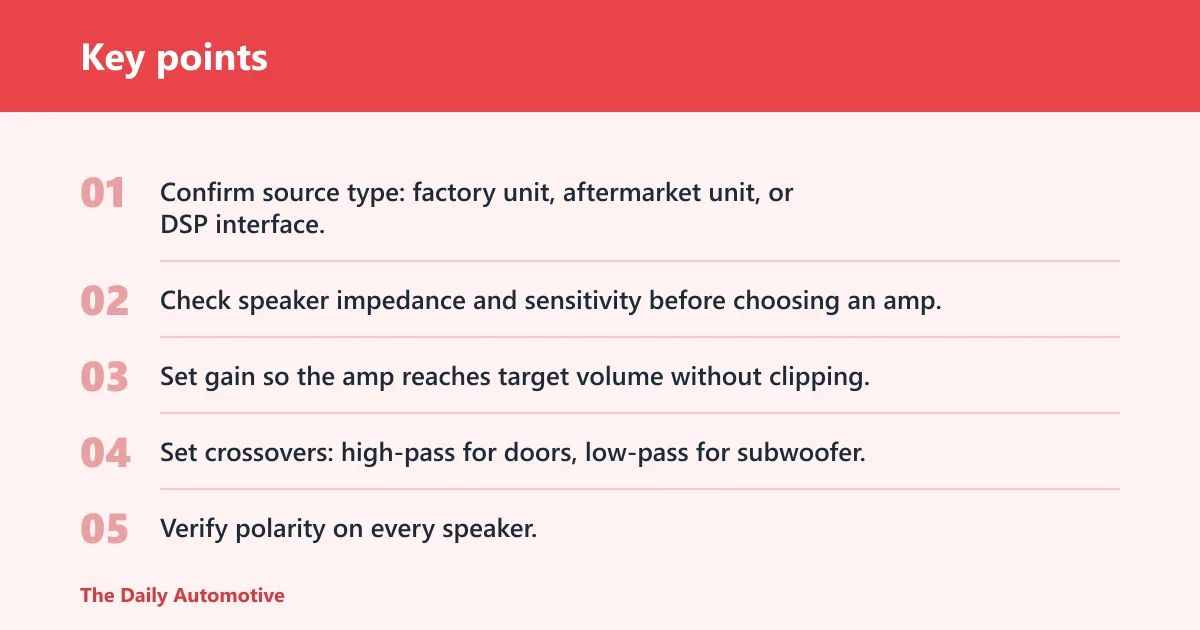
- Confirm source type: factory unit, aftermarket unit, or DSP interface.
- Check speaker impedance and sensitivity before choosing an amp.
- Set gain so the amp reaches target volume without clipping.
- Set crossovers: high-pass for doors, low-pass for subwoofer.
- Verify polarity on every speaker.
- Use time alignment and EQ to correct cabin asymmetry.
| Listening goal | Vehicle type | Budget | Best head unit / amp / speaker / DSP mix | Common mismatch symptom | Fix priority |
|---|---|---|---|---|---|
| Daily driver clarity | Compact car or sedan with factory radio | Low | Factory source, compact class D amp, upgraded front speakers, basic DSP or active crossover | Harsh vocals, weak center image | Front speaker fit, polarity check, mild EQ |
| Bass-first build | SUV or hatchback | Medium | Factory or aftermarket source, mono or bridged amp for sub, front speakers, sealed or ported sub box, DSP | Bass sounds loud but disconnected | Low-pass setup, phase check, time alignment |
| Commuting and hands-free calling | Any daily commuter | Low to medium | Head unit with Bluetooth and Wi-Fi, efficient front speakers, modest amp, light DSP | Calls sound thin, music is muddy at speed | Microphone placement, front stage tuning, road-noise masking control |
| EV and factory retrofit | Electric vehicle with quiet cabin | Medium | Factory integration retained, DSP, clean multichannel amp, front stage upgrade, sub only if needed | Small hiss, overbearing bass at low speed | Gain staging, noise-floor check, restrained sub level |
What role do Bluetooth, Wi‑Fi, Dolby Atmos, and DTS:X play?
Bluetooth and Wi-Fi mainly handle connectivity, while Dolby Atmos and DTS:X are surround formats meant to create more immersive playback. They can improve convenience and presentation, but they do not fix bad speaker placement, weak amplification, or poor tuning. Sound quality still depends on the system chain.
Wireless links and smartphone integration
Bluetooth supports wireless streaming and hands-free calling. Wi-Fi can help with smartphone integration, app-based audio, and some multimedia features. Both are useful, but neither changes the acoustics of the cabin or the limits of the speaker mounts.
Premium surround formats in modern cars
Dolby Atmos and DTS:X are part of the modern story, especially in premium systems. They aim for more enveloping playback, but retrofit builds rarely gain much unless the vehicle already has the speakers and processing layout to support them.
What these features can and cannot fix
They can make media handling richer and more flexible. They cannot cure phase errors, alternator whine, or a subwoofer with the wrong enclosure. If the basics are wrong, new badges on the head unit will not save the sound.
What parts make up a car audio system?
A car audio system usually includes a head unit, amplifier, speakers, and often a subwoofer, with DSP, wiring, and sometimes factory integration modules in the background. Bose says it develops custom-engineered components, algorithms, and software for specific car models, which is one reason some factory systems feel more cohesive than generic parts.
Early mono systems to modern infotainment
Early car audio used mono speakers with limited functionality. Modern systems may bundle navigation, video, radio, phone integration, and streaming in one unit, but the basic job remains the same: move audio cleanly from source to listener.
How modern systems differ from factory basics
Factory systems often optimize for cost, packaging, and broad compatibility. Premium systems may tune the cabin more carefully, but they still face the same vehicle acoustics. Better engineering helps, yet custom fit does not automatically mean better sound for every listener.
How do amplifiers and speakers affect car sound quality?
Amplifiers and speakers are the main sound-shaping hardware. The amp decides how cleanly and how hard the signal is driven, while the speakers decide how accurately that power becomes sound. When either side is mismatched, distortion rises and the system loses detail or impact.
Gain staging and clipping
Gain is not volume. It is the point where input level meets amplifier output. If gain is set too high, the amp clips early; if it is too low, you leave power unused. Proper gain staging keeps peaks clean and protects speakers.
Crossovers, polarity, and time alignment
Crossovers keep each driver in its usable band. A high-pass filter protects door speakers from deep bass, and a low-pass filter keeps the sub from playing voices. Polarity checks prevent one driver from canceling another, and time alignment helps the image lock to the dash instead of the nearest door.
Common failure modes
Alternator whine usually points to grounding or routing issues. Clipping sounds like hard edges on loud passages. Phase problems can make bass disappear around the crossover region. Weak bass often comes from the wrong enclosure, reversed polarity, or a sub level that is too low for the cabin.
Why do electric cars make that sound?
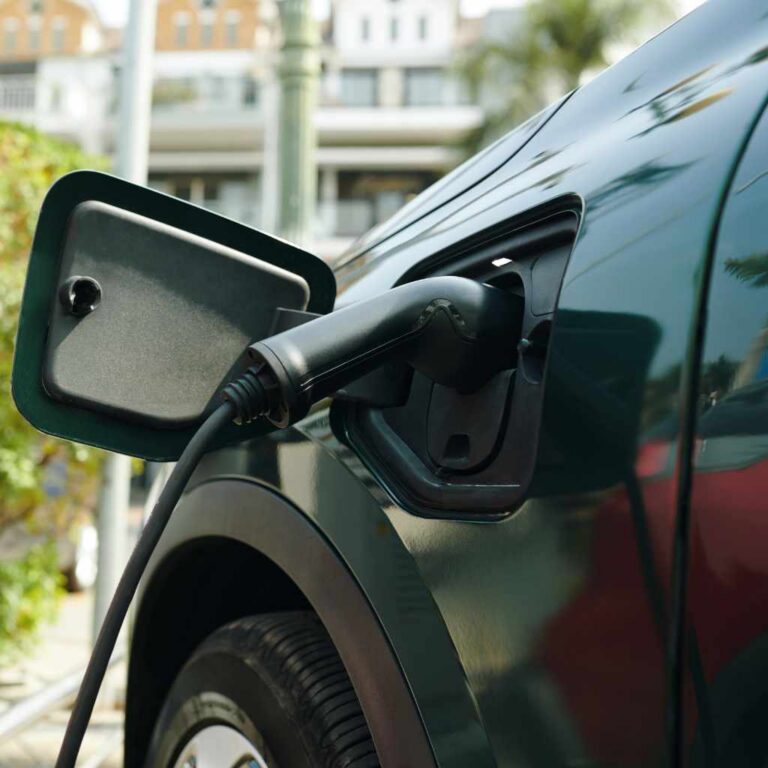
Electric cars make artificial exterior warning sounds to alert pedestrians at low speed, but those sounds are separate from cabin audio priorities. Inside the car, the quiet drivetrain can make hiss, fan noise, or tuning errors more noticeable, so gain structure and noise control matter even more.
Exterior warning sounds versus cabin sound quality
The exterior sound is a safety feature, not a music feature. It does not improve streaming quality, bass response, or speaker imaging. In an EV, the quieter cabin can reveal flaws in the system that a louder gasoline engine might hide.
What to prioritize in EV audio builds
Start with low-noise amplification, clean wiring, and restrained subwoofer tuning. Since the cabin is quieter, small mistakes are easier to hear. A balanced front stage usually matters more than chasing oversized bass output.
How do I connect a car sound system?
You connect a car sound system by matching the source, signal path, power, and trigger method before any hardware goes in. The practical job is less about plugging in parts and more about making the factory radio, amp, and speakers agree on signal level, impedance, and turn-on behavior.
Compatibility checklist
Before buying anything, confirm these points: whether the head unit has preamp outputs or needs a converter; whether the amplifier accepts high-level input; whether the speakers are the correct impedance; whether the amp can be triggered by remote wire, signal sense, or data; and whether the sub box matches the driver.
Four-step connection logic
First, route clean signal from the head unit or interface. Second, power the amplifier with proper fuse protection and grounding. Third, connect speakers with correct polarity. Fourth, set gains and crossovers before playing music at normal volume.
How do you design a car audio system?
You design a car audio system by choosing the listening goal first, then building the signal chain around the vehicle, not around a shopping list. The right setup for commuting is not the right setup for bass competition, and an EV cabin has different noise and space constraints than a pickup.
Choose the goal before the parts
Daily driver builds should favor clarity, easy integration, and low noise. Bass-first builds need a better sub path and enough electrical support. Commuting systems should prioritize hands-free use and simple controls. Factory retrofits should preserve vehicle functions unless you are ready to replace them.
Match budget to the weakest link
Put money where the problem is. If the factory speakers distort first, replace them. If the amp clips, fix the amp. If the cabin image is pulled to one side, spend on DSP and tuning before buying a bigger sub.
What sound do cars make?
Cars make a mix of mechanical, road, wind, and powertrain noise, and that noise changes what the stereo seems to sound like. A loud cabin masks low-level detail, while a quiet cabin exposes hiss, rattles, and poor equalization. The vehicle itself is part of the listening experience.
What sound do cars make
At speed, tires and airflow often dominate the noise floor. That matters because the audio system has to overcome masking without becoming harsh. Good tuning keeps vocals intelligible and bass controlled even when road noise rises.
How to make car sounds
If the goal is the sound of the vehicle itself, the usual path is exhaust tuning, intake sound, or an engineered sound generator in some EVs. Those are separate from car audio and should not be confused with speaker upgrades.
Products related to this article
Sponsored / affiliate links. As an Amazon Associate I earn from qualifying purchases. I may earn additional commission from eligible campaigns.