Are Car Roof Boxes Universal? What You Need To Know
We all want that extra space for luggage, sports equipment, or even just to keep things tidy inside the car. A roof box seems like the answer. But are they really one-size-fits-all?
Let’s dive into what makes a roof box work with a car. You’ll learn about the different parts involved and what to look for to make sure your choice is the right one. By the end, you’ll feel much more confident about finding a roof box that works for you.
Car roof boxes are not universally interchangeable. While many are designed to fit a wide range of vehicles, specific mounting systems, roof rack types, and vehicle roof designs mean that compatibility is key. Choosing the right box involves checking its fitment with your car’s existing roof rack or bare roof system.
Understanding Roof Box Compatibility
So, the short answer is no, not all roof boxes are universal. Think of it like shoes. You wouldn’t wear a size 12 on a size 8 foot, right?
Roof boxes are similar. They need to connect to your car in a specific way. This connection happens through what’s called a roof rack.
Most modern cars either come with a roof rack already installed, or they have points where you can attach one.
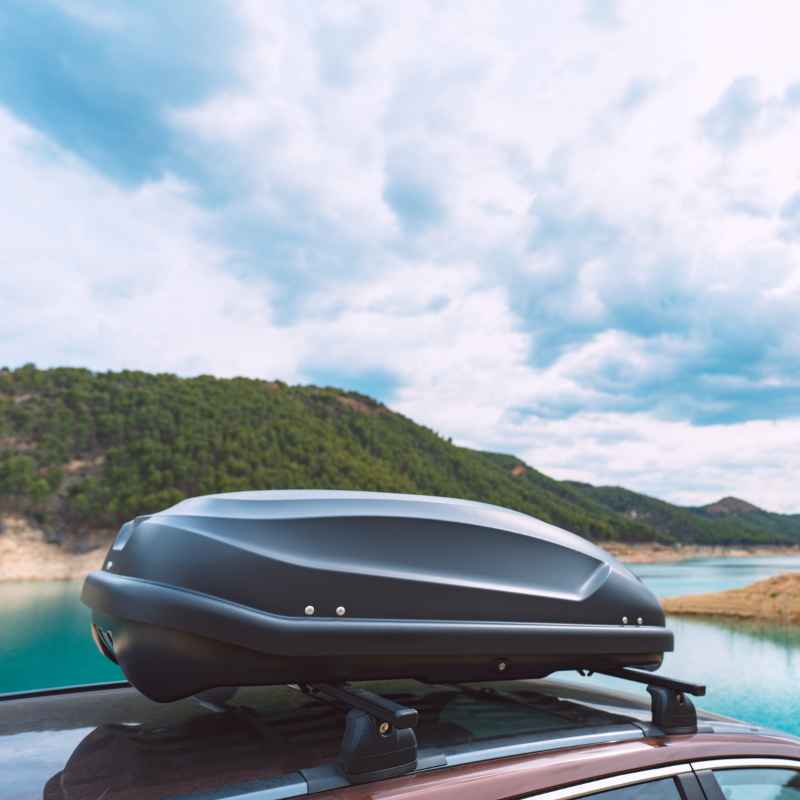
A roof rack has two main parts. There are the bars that run across your car, often called crossbars. Then there are the feet or towers that connect these bars to your car’s roof.
These feet grip onto different types of car roofs. Some cars have raised rails that run front to back along the sides. Others have flat roofs with specific mounting points, sometimes called flush rails or fix points.
Some cars have no rails at all and need clamp-style feet that grab the edge of the car door frame.
The roof box then attaches to these crossbars. The way it attaches depends on the box’s mounting system. Most systems are designed to be flexible.
They can clamp onto different sizes and shapes of crossbars. However, there are limits. Very wide or very narrow crossbars might not work with certain box mounts.
Also, the distance between your crossbars is important. The box needs to span this distance securely. If the distance is too small or too large for the box’s mounting points, it won’t fit safely.
This is why manufacturers always provide a compatibility guide. They list which cars and which roof rack systems their boxes will work with. It’s like a puzzle.
The car’s roof system has to be compatible with the roof box’s mounting system. Without the right connection, the box won’t be secure. This is crucial for safety on the road.
A loose roof box can be dangerous for you and other drivers.
Why Universal Fit is Tricky
The main reason a truly “universal” roof box doesn’t exist is the sheer variety of car designs. Think about it. We have tiny hatchbacks, large SUVs, sedans, minivans, and even trucks with specific racks.
Each of these has a different roof shape and size. The points where a roof rack attaches can be in different places.
For example, a car with raised side rails has a gap between the rails and the roof. Roof rack feet designed for this style will wrap around or clamp under these rails. A car with flush rails has rails that sit directly on the roof, with no gap.
The feet for these look quite different. They often have a channel or a specific shape to grip the flush rail.
Then there are cars with fixed points. These are usually small threaded holes on the roof, often covered by little flaps. The roof rack feet have special adapters to screw into these points.
Finally, there are bare roofs where the rack feet simply clamp onto the car’s door frame. The shape of the door frame and the curve of the roof at the top of the door are critical for these clamps to get a good grip. Each of these systems requires a different type of roof rack foot.
And since the roof box attaches to the crossbars of the rack, the rack itself must be compatible first.
Beyond the roof rack, the crossbars themselves come in different shapes and sizes. There are square bars, aero (wing-shaped) bars, and sometimes oval bars. Most modern roof box mounting systems can handle aero and square bars.
But very old systems or very new, specialized bars might pose a problem. The width of the crossbar and its height can also affect how well the box mounts.
Manufacturers try to make their mounting systems as adaptable as possible. They use adjustable clamps and different slots. This allows one box model to fit many different car and roof rack combinations.
But there will always be edge cases. Some very large or very small vehicles, or cars with unusual roof designs, might not have a compatible roof box. It’s always best to check the specific fitment information provided by the roof box manufacturer.
Key Roof Rack Types
Raised Side Rails: Common on SUVs and wagons. Bars mount above the rails.
Flush Side Rails: Rails lie flat on the car roof. Bars mount directly to them.
Fixed Points (Fixpoints): Small threaded holes on the roof, usually covered.
Bare Roof (Clamp Mount): No rails. Feet clamp onto the car’s door frame.
How Roof Boxes Mount to Crossbars
Once you have the right roof rack system on your car, the roof box needs to attach to its crossbars. This is usually done with a U-bolt or a clamp mechanism. Most roof boxes come with hardware that fits a range of crossbar shapes and sizes.
This is where the “almost universal” idea comes from.
The most common mounting systems involve placing the box onto the crossbars. Then, you reach inside the box and secure it. A typical system uses U-shaped bolts that go through slots in the bottom of the roof box.
These bolts then pass around the crossbars. On the inside of the box, you place a metal or plastic plate and tighten knobs or screws. This pulls the plate down, clamping the crossbar tightly.
Many systems are designed to fit square and aero crossbars. Aero bars are flatter and wider. U-bolts might not fit around them.
So, many boxes include special adapters or wider clamp plates for aero bars. These adapters have a different shape to grip the flatter surface of the aero bar.
Some higher-end boxes use a “quick-mount” or “quick-release” system. These often have levers or knobs on the outside. You position the box, close the levers, and they clamp onto the bars.
These systems are usually very fast and easy to use. They are also designed to accommodate a wide range of bar widths and shapes.
The crucial aspect here is the internal width of the mounting channel within the roof box. This channel needs to be wide enough to accommodate your crossbars. Also, the length of the U-bolts or clamps must be sufficient to wrap around the crossbars and still allow you to tighten the locking mechanism.
If the crossbars are too thick or too wide, the hardware might not reach or secure properly.
It’s also important to check the maximum weight capacity of both your roof rack and your roof box. This is a safety limit. Exceeding it can damage your car or cause an accident.
The roof box itself has a weight limit, and the roof rack has a separate weight limit. You also need to consider the weight of the box itself when calculating how much gear you can add.
My Own Roof Box “Oops” Moment
I remember the first time I bought a used roof box. It was a great deal. I picked it up from a seller online.
It looked perfect. Big, black, and ready for adventure. I was so excited to use it for a camping trip with my family.
I had a roof rack on my old Subaru Outback. It had those classic raised side rails.
I got the box home and eagerly placed it on my car’s crossbars. I went inside to start tightening the clamps. That’s when I hit a snag.
The U-bolts were just a little too short. They couldn’t quite get a good grip around my crossbars. I tried wiggling them, turning them different ways.
Nothing worked. The knobs wouldn’t screw on far enough to feel secure. I was panicked.
The trip was in two days!
I spent an hour looking at the mounting hardware. I realized my crossbars were a bit thicker than the ones the box was originally designed for. The seller hadn’t mentioned this, and I hadn’t thought to ask.
I felt so silly. I had visions of the box flying off the highway. It was a moment of pure frustration.
I ended up having to buy a new set of longer U-bolts from a hardware store that fit my specific crossbars. It worked out, but it was a stressful lesson. Always check the mounting hardware against your actual crossbars before you buy!
Quick Check for Mounting Hardware
U-Bolt Size: Ensure the U-bolts are long enough to go around your crossbars and still allow tightening.
Clamp Shape: Check if the clamps can grip your specific crossbar shape (square, aero, etc.).
Adapter Included?: Does the box come with adapters for aero bars if you have them?
Internal Width: Can the box’s internal mounting channel accommodate your crossbar width?
Factors Affecting Roof Box Fit
Beyond the basic roof rack connection, several other factors influence how well a roof box fits and performs. These aren’t always obvious when you’re just looking at a box online or in a store.
One major factor is the shape of your car’s roof. Some roofs have a slight curve or a sloping rear. A very long, flat roof box might not sit perfectly flush on a very curved roof.
This can create small gaps. While usually not a safety issue, it might allow more wind noise or a slightly less stable feel. The length of the box also matters.
A box that is too long might overhang your windshield too much, or it might hit your rear hatch when it’s opened.
The width of the box is also important. If the box is too wide, it might interfere with your car’s existing shark fin antenna or other roof-mounted accessories. It could also be too close to the edge of your car, making it harder to open the car doors fully.
Some people also worry about the box blocking their view out of the rear window. This is more of an issue with larger SUVs or vehicles where the roofline is lower.
Consider the type of crossbars you have. Aero bars are quieter and more fuel-efficient because they are more aerodynamic. However, some older or simpler mounting systems might not clamp as securely to their flatter surface.
Square bars are less aerodynamic but often provide a more aggressive grip for some clamp types. If you have specialized crossbars, like the very narrow ones found on some European cars, you’ll need to check if the box hardware is compatible.
The material of your car’s roof can also be a subtle factor. Most roof rack feet have rubber or plastic pads to protect the paint. However, on some cars with very smooth or slightly flexible roofs, the pressure from the roof rack clamps might be a concern.
Reputable roof rack manufacturers design their feet to distribute pressure evenly to prevent damage. But it’s always wise to read reviews or ask the manufacturer if you have any doubts about your specific car model.
Finally, think about how you plan to use the box. If you plan to carry very long items like skis or kayaks (though kayaks usually need special carriers), you’ll need a longer box. If you just need a bit of extra space for luggage on a family vacation, a shorter, wider box might be better for stability and aerodynamics.
The overall look and balance of the box on your car are also considerations for many people.
Style and Fit Considerations
Box Length: Ensure it doesn’t interfere with windshield or rear hatch opening.
Box Width: Check for clearance with antennas or door openings.
Roof Curve: A flatter box may sit better on a gently curved roof.
Crossbar Type: Aero vs. square bars can affect mounting ease and security.
When is a Roof Box “Universal Enough”?
While no roof box is 100% universally compatible with every single car ever made, many are designed to be “universal enough” for the vast majority of common vehicles. This means they come with a range of mounting hardware and adjustability to fit a wide spectrum of roof rack systems.
These “universal” boxes typically have mounting clamps that can be adjusted to fit different crossbar widths. They also include adapters or different U-bolt lengths to accommodate various crossbar shapes and thicknesses, including standard square bars and popular aero bars. The key is that the roof rack system you have on your car is a standard type, and the roof box’s mounting system is designed to adapt to those standards.
For example, a box labeled as having a “universal fit” might state that it fits crossbars from 20mm to 80mm wide and up to 35mm tall. This covers a huge range of common crossbars. It might also say it fits square, aero, and some oval bars.
This flexibility is what makes it “universal” for most practical purposes.
However, this label doesn’t mean you can just buy it and assume it will work. You must still verify. Does your car have a roof rack system that the box is designed to attach to?
Does the specific mounting hardware included with the box match the type and dimensions of your crossbars? These are critical checks. A “universal fit” is a marketing term that means it’s designed to fit a wide range, not every single one.
If your car has a very unusual roof setup, like extremely thin crossbars or a custom-built rack, you might need to look at specialized mounting solutions or consult with the roof box manufacturer directly. But for most factory-installed or common aftermarket roof racks on sedans, SUVs, and wagons, a well-designed “universal” roof box should be a viable option.
The best approach is always to consult the manufacturer’s fitment guide. These guides are usually available on their website. You select your car’s make, model, and year, and it will tell you which of their roof boxes are compatible.
This is the most reliable way to ensure a proper and safe fit. Don’t skip this step!
Real-World Scenarios and Their Solutions
Let’s look at a few common car types and how roof boxes fit them.
Scenario 1: The Family SUV with Raised Side Rails
This is probably the most common setup. Your SUV has rails running front to back on the roof sides. You’ll likely buy a roof rack system with feet that grip the inside or outside of these rails, and then crossbars that span the car.
Most “universal” roof boxes will work well here. The key is ensuring the crossbar spread (the distance between the front and rear bars) is within the range specified by the roof box manufacturer. You’ll use the internal clamp system to secure the box to the crossbars.
Scenario 2: The Sleek Sedan with Factory-Installed Flush Rails
Many modern sedans and wagons have flush rails that lie flat against the roof. These require specific roof rack feet that clamp onto the rail itself. Once the rack is installed, the crossbars are in place.
Again, most “universal” roof boxes are designed to fit standard aero and square bars that would attach to these flush rails. You’ll use the box’s internal mounting system to connect to these bars. It’s important that the flush rails are long enough to accommodate the crossbar spread needed by the box.
Scenario 3: The Older Hatchback with Fixed Mounting Points
Some cars, especially older models or those without prominent rails, have discreet mounting points. These are usually small threaded holes under plastic covers. You’ll need a roof rack system with specific adapters that screw into these points.
Once the rack is installed, you have crossbars. The roof box will then attach to these crossbars using its standard clamp or U-bolt system. The fixed points are generally very strong, providing a secure base for the rack and box.
Scenario 4: The Car with a Bare Roof (No Rails)
This is where fitment can be trickier. You need a roof rack that uses clamp-style feet that grab the edge of the car door frame. These feet are often custom-designed for specific car models to ensure a secure grip without damaging the doors or paint.
Once the rack is installed, the roof box attaches to the crossbars as usual. It’s critical to get the exact roof rack fit kit for your car model when using a bare roof setup. The roof box itself will then likely have a universal fit for the crossbars that come with the rack.
In each of these scenarios, the roof box itself might be the same model, but the required roof rack system is different. The roof box’s “universality” lies in its ability to adapt to standard crossbars, not to attach directly to every car roof.
Quick Scan: Car Type vs. Rack Needs
| Car Type | Typical Rack Need | Box Fit Factor |
| SUV (Raised Rails) | Rail-Clamping Feet + Crossbars | Crossbar spread, width |
| Sedan (Flush Rails) | Flush Rail-Clamping Feet + Crossbars | Crossbar spread, width |
| Hatchback (Fixed Points) | Fixed Point Adapters + Crossbars | Crossbar spread, width |
| Sedan/Hatch (Bare Roof) | Door Frame Clamps (Model-Specific Kit) + Crossbars | Crossbar spread, width, rack stability |
What This Means for Your Purchase Decision
Knowing that roof boxes aren’t truly universal changes how you should shop. First and foremost, always check compatibility. Don’t just assume.
This means two main things:
1. Your Car’s Roof Rack System: Identify what type of roof you have and if you already have a roof rack. If not, you’ll need to buy a roof rack that is compatible with your car and the roof box you choose.
Roof rack manufacturers also have fit guides. You’ll need to find the right rack first.
2. The Roof Box Mounting System: Once you know what kind of crossbars you have (or will have), look at the roof box’s specifications. Check its mounting hardware.
Can it accommodate your crossbar shape and size? Does it have enough adjustment range for the distance between your crossbars?
Prioritize Safety: A poorly fitted roof box is a safety hazard. It can detach from your car, especially at highway speeds. Always follow the installation instructions precisely.
If anything feels loose or unstable, do not drive. Consult the manufacturer or a professional.
Consider a System Approach: Many reputable brands sell both roof racks and roof boxes. Buying from the same brand can sometimes simplify the compatibility process. They design their systems to work together.
However, you can often mix and match brands, provided you do your homework on fitment.
Don’t Be Afraid to Ask: If you’re unsure, ask for help. Talk to staff at an automotive accessories store. Contact the manufacturer’s customer service.
They can help you navigate the options and ensure you make the right choice for your specific vehicle.
Used Market Caution: Buying a used roof box can save money. But it’s even more important to check compatibility. The seller might not know your car’s specific rack type.
You might also be missing crucial mounting hardware. Inspect it thoroughly, and confirm all necessary parts are included and compatible.
Ultimately, a roof box can be a fantastic addition for carrying gear. The key to a successful purchase is understanding the connection between your car, the roof rack, and the roof box itself. With a little research, you can find a secure and reliable solution for your travels.
Quick Fixes and Tips for Roof Box Use
Even with a properly fitted box, a few tips can make its use smoother and safer.
- Read the Manual: Seriously, both for the rack and the box. Instructions have vital safety and installation details.
- Tighten Securely: After initial fitting, drive a short distance (10-15 miles) and re-tighten all mounting hardware. Check again periodically, especially on long trips or rough roads.
- Distribute Weight: Place heavier items at the bottom and towards the center of the box. This keeps the car’s center of gravity lower and more stable.
- Don’t Overload: Respect the weight limits of the box and the rack. Overloading can bend or break the rack or cause handling problems.
- Secure Loose Items: Use cargo nets or straps inside the box to prevent items from shifting.
- Check for Aerodynamic Noise: Some wind noise is normal, but excessive roaring or whistling might mean the box isn’t sealed properly or is positioned incorrectly.
- Wash Regularly: Road salt and grime can get into the mounting mechanisms. Clean them to ensure smooth operation and prevent corrosion.
- Store Properly: When not in use, store the box in a dry place, away from direct sunlight, to prolong its life.
Frequently Asked Questions About Roof Box Fit
Can I use a roof box if my car doesn’t have crossbars?
No, you cannot attach a roof box directly to your car’s roof. You first need a roof rack system. This involves crossbars that attach to your car’s specific roof type (rails, fixed points, or bare roof clamps).
The roof box then mounts onto these crossbars.
How do I know if my car’s roof rails are compatible with a roof box?
Your roof box attaches to the crossbars of your roof rack system, not directly to your car’s rails. You need to ensure your car’s rails are compatible with a specific roof rack system. Then, you check if that roof rack system’s crossbars are compatible with the roof box’s mounting hardware.
Always check the fitment guides for both the rack and the box.
What is the most important measurement for roof box fit?
The most critical measurements relate to the roof rack crossbars. These include the width of the crossbars, their thickness (or height), and the distance between the front and rear crossbars (the crossbar spread). The roof box’s mounting hardware must be able to securely grip these bars.
Can I put a roof box on any car?
While most cars can potentially support a roof box with the correct roof rack system, some very small cars or cars with unusual roof designs might have limitations. You must always check the specific fitment compatibility for your car model and the chosen roof rack and box combination.
Will a roof box make my car taller?
Yes, a roof box will add height to your car. The amount depends on the box’s design and how it sits on your crossbars. It’s essential to be aware of this for parking garages, drive-thrus, and other low-clearance areas.
Check the total height of your car with the box installed.
How do I check if a roof box will fit my specific car?
The best way is to use the manufacturer’s online fitment guide. You’ll select your car’s make, model, and year, and it will list compatible roof boxes and roof rack systems. You can also measure your car’s crossbars and compare those dimensions to the roof box’s mounting specifications.
Final Thoughts on Roof Box Fitment
Finding the right roof box for your vehicle is a journey, not just a destination. It requires a bit of detective work. You need to understand your car’s roof setup and the requirements of the roof box.
By focusing on compatibility and safety, you can avoid frustration. You’ll end up with a secure and practical storage solution for all your adventures.
Products related to this article
Sponsored / affiliate links. As an Amazon Associate I earn from qualifying purchases. I may earn additional commission from eligible campaigns.