HEET Red vs. Yellow Bottle: Which Gas Line Antifreeze Do You Need?
The yellow HEET bottle is methanol-based and Gold Eagle lists it for 4-cycle gasoline engines only. The red Iso-HEET bottle is isopropyl-alcohol-based, adds an injector cleaner, and is listed for gasoline, 2-cycle and diesel engines. Every fact below comes from Gold Eagle’s own product pages and the safety data sheets (SDS) for both bottles, including the parts most articles skip: what each bottle contains, how much to pour in, and how flammable and hazardous they are.
HEET Red vs. Yellow: Side-by-Side Comparison
Best Pick for Any Engine Type
|
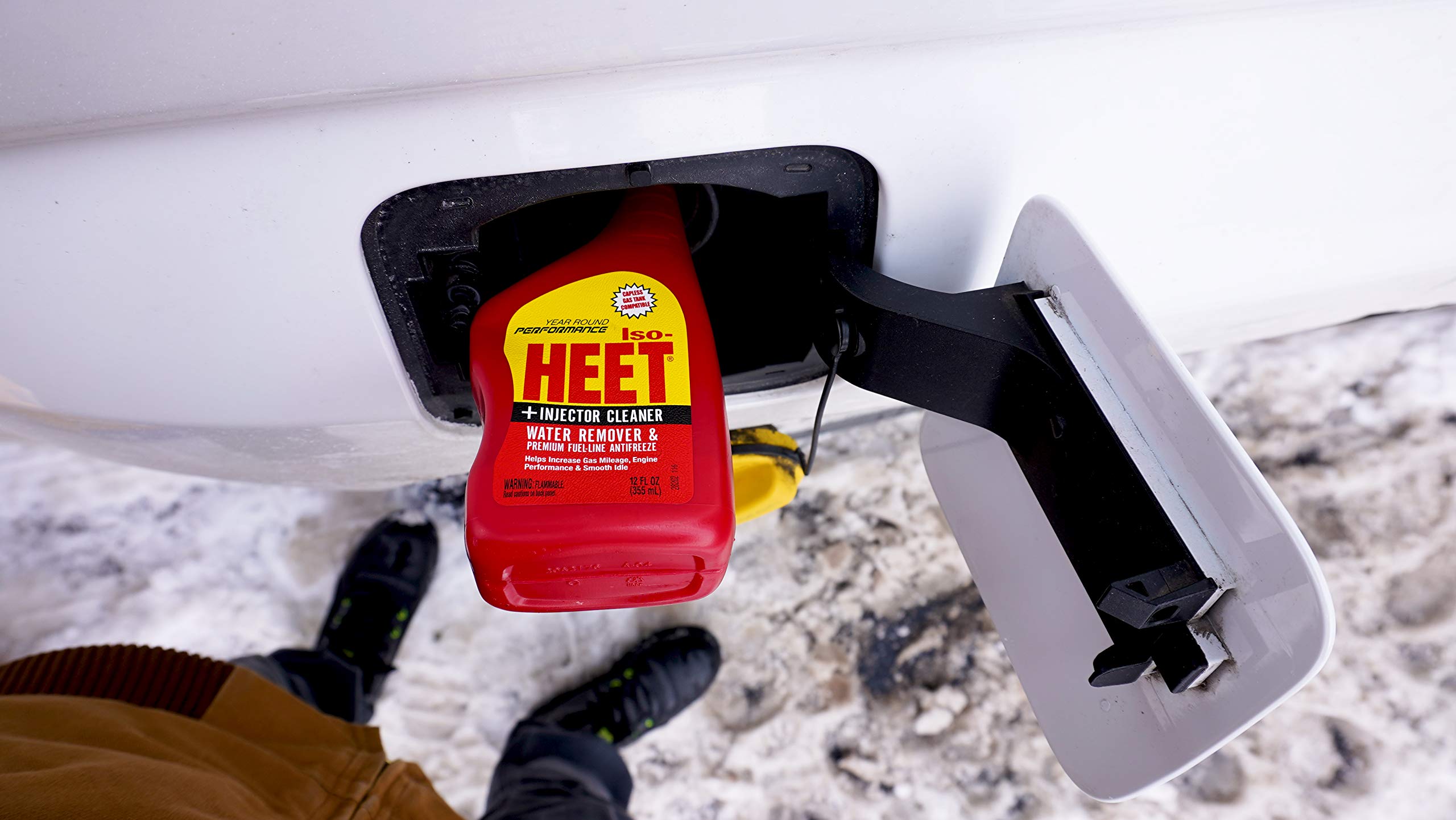
Iso-HEET Water Remover & Premium Fuel Line Antifreeze + Injector Cleaner (Red, 12 oz)
|
As an Amazon Associate we earn from qualifying purchases. Spec-based pick from the listing, not a hands-on test.
The table below compares the two bottles using only what Gold Eagle and the SDS state. Where a figure comes from a Gold Eagle support answer rather than the label, it says so.
| Attribute | Yellow HEET | Red Iso-HEET |
|---|---|---|
| Gold Eagle product code | 28201 | 28202 |
| Main ingredient (per SDS) | Methanol (99.9996% on the 2018 SDS) | Isopropyl alcohol (75% or more on the 2019 SDS), plus an injector cleaner additive per Gold Eagle |
| Engines Gold Eagle lists | 4-cycle gasoline engines only, including fuel-injected | 2-cycle and 4-cycle gasoline engines and diesel |
| Fuel-injected cars | Labeled safe for fuel-injected engines | Labeled safe for fuel injectors |
| Where the SDS says not to use it | Diesel fuel and gasoline/oil mixes for 2-cycle engines | No such restriction printed; not for home heating oil per Gold Eagle Q&A |
| Dose | One 12 oz bottle per up to 20 gallons | One 12 oz bottle per up to 20 gallons |
| Winter use (label) | Every fill-up | Every fill-up |
| Warm weather use (label) | In warm, wet weather to handle condensation | At least every 5,000 miles to clean injectors; also for condensation |
| Wait time on a frozen line (Gold Eagle) | 15 to 20 minutes | 20 to 40 minutes, depending on fuel level (support Q&A) |
| Water handling claim | Removes water | Listing claims it absorbs 5 times more water than regular gas dryers |
| Flammability (SDS) | Danger. Highly flammable liquid and vapor. Flash point 56 F | Isopropyl alcohol component is Flammable Liquid Category 2. Flash point 54 F on SDS copies |
| Health notes (SDS) | Skin and eye irritation, drowsiness or dizziness, suspected of damaging fertility or the unborn child, eye damage on repeated exposure | Isopropyl alcohol component: eye irritation, drowsiness or dizziness. Call a poison center if you feel unwell after swallowing |
One correction before you pick a bottle. Many guides say you need the red bottle for a fuel-injected car. That is not what Gold Eagle says: its pages label both the yellow and the red bottle as safe for fuel-injected engines. The real dividing line is engine type and purpose, not fuel injection.
Yellow HEET (Methanol): What It Does
Yellow HEET (Gold Eagle part 28201) is described on the maker’s page as a special fuel additive plus methanol. The SDS lists methanol as 99.9996% of the product on the 2018 revision. Methanol mixes with water, so the water that settles in a tank can travel through the fuel system with the gasoline instead of sitting in a low spot and freezing in a line. Gold Eagle says it prevents gas-line freeze-up and removes water from the fuel system, which also helps prevent rust and corrosion.
Limits of yellow HEET:
- Gasoline 4-cycle engines only. The SDS restriction reads: do not use in diesel fuel or add to gasoline/oil mixtures used in 2-cycle engines.
- It is a water remover, not an injector cleaner. Gold Eagle describes the red bottle, not the yellow one, as the injector cleaner.
- The neat liquid is not rubber-friendly. The SDS lists rubber and rubber-based coatings among incompatible materials for the undiluted product. Gold Eagle does not publish guidance on repeated use in a rubber fuel line, so the claim you may see elsewhere that it slowly ruins fuel lines is not something we can source, and we have not repeated it.
Red ISO-HEET (Isopropyl Alcohol): What It Does
Red Iso-HEET (part 28202) swaps the methanol for isopropyl alcohol. The 2019 SDS lists isopropyl alcohol at 75% or more of the mixture, and Gold Eagle says the bottle also contains an injector cleaner. The Amazon listing states it absorbs 5 times more water than regular gas dryers, and Gold Eagle’s product page frames it as the year-round bottle: use it with every fill-up in winter, and at least every 5,000 miles in summer to clean injectors.
- Listed for more engines. Gold Eagle lists it for 2-cycle and 4-cycle gasoline engines and for diesel.
- Recommended by Gold Eagle for water problems. Gold Eagle’s support replies point to red for heavier water because it handles water more efficiently, and to yellow for preventing or treating a frozen line.
- Vehicle use only. Gold Eagle says it is not for home heating fuel oil.
Which Engine Type Needs Which Bottle?
- Gasoline car, truck or SUV (4-cycle): either bottle is listed. Yellow fits basic freeze prevention; red adds the injector cleaner and the stronger water claim.
- Diesel engine: red only. The yellow bottle’s SDS says not to use it in diesel fuel.
- 2-cycle engines (chainsaw, snowmobile, outboard): red only. The yellow bottle’s SDS says not to add it to gasoline/oil mixes.
- Ethanol blends (E10, E85) and flex-fuel vehicles: neither Gold Eagle product page makes a statement about ethanol, so we cannot say one bottle is safer. Check your owner’s manual before adding any fuel treatment.

If you are still deciding whether gasoline can actually freeze in your car or whether water is the real cold-weather problem, read our guide on can gas freeze in a car. For a wider look at what else goes in a tank, see the best gas additives for cars.
How to Use HEET: Dosage and Frequency
Both bottles use the same directions from Gold Eagle:
- Open the bottle fully. Twist off the cap and remove the foil seal.
- Pour in the whole 12 oz bottle. One bottle treats up to 20 gallons of fuel. Before or after fueling works equally well per Gold Eagle; for the red bottle it is best at a full fill-up, not a top-off.
- Do not overdose. The label limits are no more than 2 bottles in a 20-gallon tank or 3 in a 30-gallon tank. For a small tank under about 8 gallons, Gold Eagle advises against pouring in a full bottle. Gold Eagle’s red-bottle pages are not consistent on the limit (one answer says 1 bottle per 20 gallons, another says 2), so when in doubt use one.
- Wipe up spills promptly. The label says so, and the liquid is flammable.
- Frozen line? Add a bottle and wait: 15 to 20 minutes for yellow, 20 to 40 minutes for red depending on fuel level, per Gold Eagle. If the engine still will not start, move the vehicle somewhere warm.
Safety: Both Bottles Are Flammable and Methanol Is Poisonous
The yellow bottle’s SDS carries a DANGER signal word. It classifies the product as a highly flammable liquid and vapor, a skin and eye irritant, capable of causing drowsiness or dizziness, suspected of damaging fertility or the unborn child, and damaging to the eyes with repeated exposure. Its flash point is 56 F, so it can ignite below normal room temperature, and the SDS notes that vapors are heavier than air and can travel to an ignition source. The red bottle’s isopropyl alcohol is also classified as a flammable liquid, with a flash point of 54 F on the SDS copies we read.
- Keep both bottles away from heat, sparks, flames and cigarettes, and use them outdoors or in a well-ventilated area, as the SDS directs.
- Wear gloves and eye protection when pouring. For eye contact, the yellow-bottle SDS says to rinse with water for 15 to 20 minutes and get medical attention immediately.
- Never swallow it and never siphon fuel with your mouth. Methanol is poisonous if swallowed. In the US, call Poison Control at 1-800-222-1222 right away, or emergency services if the person is unwell.
- Store the bottles cool. Gold Eagle does not recommend storage above 120 F; a bottle that has swollen in heat may still be usable but should be opened carefully.
- Keep them away from children and pets.
Does HEET Actually Work? What It Can and Cannot Fix
HEET works as advertised for one problem: a small amount of water in the fuel. It will not repair contaminated or old fuel, a clogged fuel filter, or a failing fuel pump. Gold Eagle’s own advice on its water-in-tank page is blunt: if there is more water in the tank than gas, no fuel additive can fix it, and the best fix is to drain and refill the tank, with a professional mechanic if you cannot do it yourself. Its support replies add that more than about 8 oz of water in the fuel is beyond what HEET can fix.
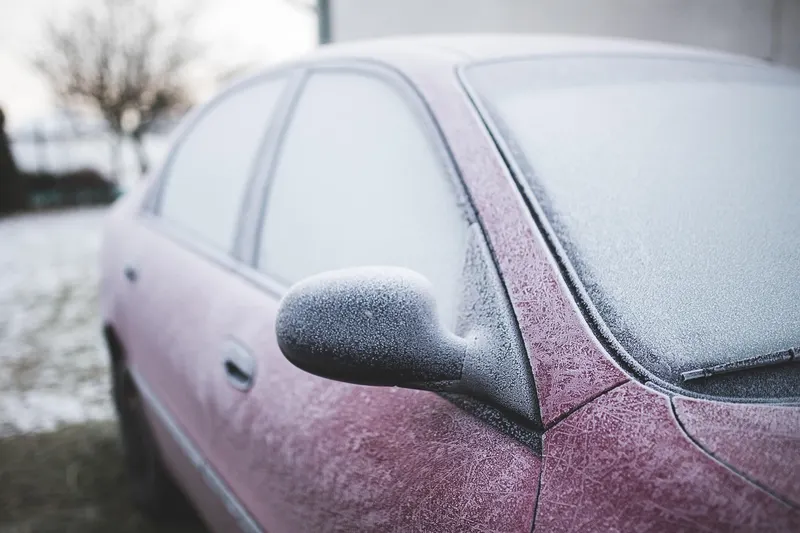
Stop adding bottles and see a professional if the engine will not start within about an hour of treating it, if it keeps hesitating or sputtering even after treatment, or if you suspect a large amount of water, for example after filling at a station with a known water problem. Stacking more bottles will not fix it, and the label dose limits still apply. Gold Eagle does not claim a mileage or power gain on its product pages for either bottle, so do not buy one for that reason.
Looking for an injector cleaner rather than a water remover? Compare fuel injector cleaner vs fuel stabilizer first, since they do different jobs.
When to Use HEET Year-Round vs. Seasonally
On the label, the yellow bottle is a winter and wet-weather product: every fill-up in winter, and in warm, wet weather when condensation is the worry. The red bottle is the one Gold Eagle describes for year-round use, at least every 5,000 miles in summer for injector cleaning. If your car runs fine and you have no reason to suspect water, Gold Eagle support says to add it only when you suspect water or have performance issues.
Frequently Asked Questions
What are the key differences between HEET Red and Yellow bottle?
The yellow bottle (28201) is methanol-based and Gold Eagle lists it for 4-cycle gasoline engines only. The red Iso-HEET bottle (28202) is isopropyl-alcohol-based with an injector cleaner and is listed for 2-cycle and 4-cycle gasoline engines and diesel. Both are labeled safe for fuel-injected engines.
How do I know if I need HEET Red or Yellow for my car?
If your car runs on gasoline and you only want to prevent or treat a frozen fuel line, the yellow bottle matches that purpose. If you also drive a diesel or run a 2-cycle engine, or you want an injector cleaner, Gold Eagle lists only the red bottle for those uses.
Can I use HEET in a diesel engine?
Only the red Iso-HEET is listed for diesel. The SDS for yellow HEET says not to use it in diesel fuel or in gasoline/oil mixes for 2-cycle engines.
Can I use both HEET Red and Yellow bottles together?
Gold Eagle does not publish a combined-use instruction, so pick one bottle that fits your engine and follow the dose limits on its label (no more than 2 bottles in a 20-gallon tank or 3 in a 30-gallon tank for yellow HEET).
Is HEET safe to use every time I fill up?
Gold Eagle directs use with every fill-up in winter on both bottles, and says the red bottle should be used at least every 5,000 miles in summer to clean injectors. Outside winter, Gold Eagle support says to add it only if you suspect water or have performance problems.
Is HEET poisonous?
Treat it as a hazardous chemical. Yellow HEET is methanol-based and its SDS lists it as highly flammable, irritating to skin and eyes, and capable of causing drowsiness. Do not swallow it or siphon fuel by mouth. In the US, call Poison Control at 1-800-222-1222 if someone swallows it or gets it in their eyes.
Does HEET actually work?
It does one specific job: it carries small amounts of water through the fuel system so the water can burn off, and it keeps that water from freezing in a fuel line. Gold Eagle states that if there is more water in the tank than gas, no additive can fix it, and recommends draining and refilling the tank.
Which HEET bottle is better overall?
For most gasoline cars both work for water removal, so it comes down to your needs. Gold Eagle recommends the red bottle for water problems and for diesel or 2-cycle engines, and the yellow bottle for preventing or treating a frozen gas line.
Conclusion
The most important thing to know about HEET red vs. yellow: yellow is methanol and listed for 4-cycle gasoline engines only; red is isopropyl alcohol with an injector cleaner and is listed for gasoline, 2-cycle and diesel engines. Both are labeled safe for fuel-injected cars, both are one 12 oz bottle per up to 20 gallons, and both are flammable liquids that need careful handling. Pick the bottle that matches your engine, pour in one, and if the problem is more water than an additive can handle, drain the tank.
Products related to this article
Sponsored / affiliate links. As an Amazon Associate I earn from qualifying purchases. I may earn additional commission from eligible campaigns.