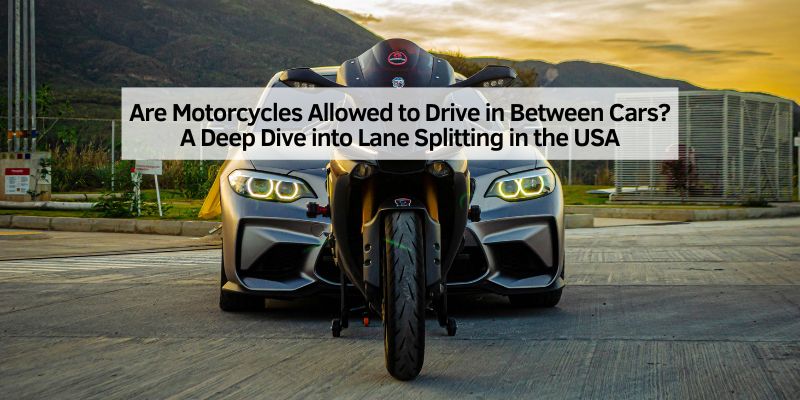
Are Motorcycles Allowed to Drive Between Cars? Lane Laws by State
Motorcycles can legally ride between lanes of moving traffic in only two states — California and, since July 2025, Minnesota. Four more states (Utah, Arizona, Montana, and Colorado) allow the narrower, stopped-traffic version called lane filtering. Riding between cars anywhere else can mean a ticket for unsafe passing or reckless driving, even where the law never names the maneuver directly. This guide breaks down the exact rules, speed limits, and real safety data behind lane splitting, state by state.
Quick Answer
As of 2026, motorcycles can legally ride between moving lanes of traffic (lane splitting) only in California and Minnesota. Utah, Arizona, Montana, and Colorado allow the slower, stopped-traffic version called lane filtering instead. In every other state — including Texas, Florida, New York, Washington, and Georgia — splitting or filtering between cars is not legal and can result in a citation for unsafe passing or reckless driving.
What Is Lane Splitting?
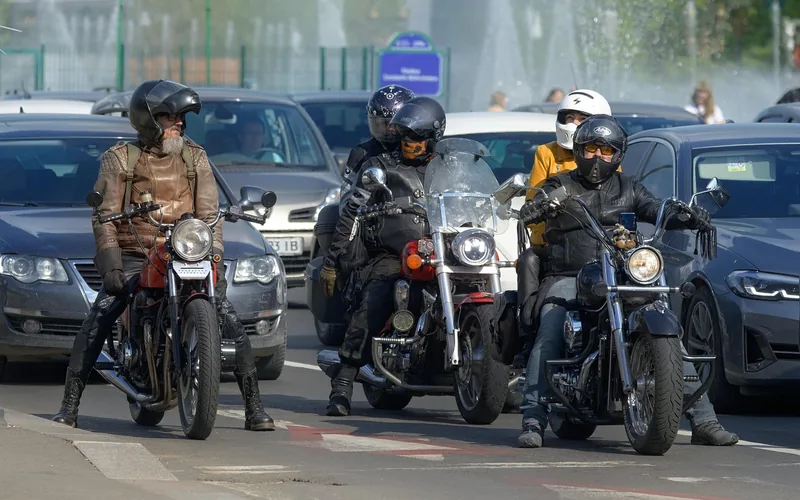
Lane splitting is when a motorcyclist rides between two lanes of traffic, usually to get through congestion. Imagine you’re in bumper-to-bumper traffic, and a motorcycle weaves past you, fitting snugly between your car and the one next to it. That’s lane splitting. It’s not about speeding or showing off; it’s often just a way for riders to keep moving when cars are stuck.
I first noticed lane splitting years ago on a busy highway in California. The traffic was crawling, and I saw a rider glide through the gaps like it was no big deal. I was curious but also a bit nervous watching it happen. Is it safe? Is it allowed everywhere? Those questions led me down a rabbit hole of research, and I found that lane splitting is a complex topic with different rules depending on where you are — and those rules have been changing fast in the last few years.
Lane Splitting vs. Lane Filtering: What’s the Difference?
Lane splitting is when a motorcycle passes between two lanes of traffic that are still moving. Lane filtering is the narrower, slower maneuver of moving between lanes of traffic that is completely stopped — at a red light or in gridlock — to reach the front of the line. The distinction matters because most states that allow any form of this only permit filtering, not splitting: filtering happens at walking-to-jogging speed against motionless traffic, while splitting happens against traffic that’s still rolling. If you’ve seen this called something else — “stripe-riding,” “white-lining,” or “the slot” — those are just regional slang for the same two maneuvers.
A motorcycle is legally a distinct vehicle class from a car in every state, which is exactly why lawmakers can write lane-splitting and lane-filtering rules that apply only to motorcycles and not to any other vehicle. For more on how that classification works, see our guide on whether a motorcycle is legally considered a car.
Where Is It Legal? Lane-Splitting and Lane-Filtering Laws by State (2026)
Here’s the big question: can motorcycles legally drive between cars? The answer depends on exactly where you are, and it has changed more in the last two years than in the previous two decades. Six states now allow some legal version of it; every other state either bans it outright or simply doesn’t address it, which in practice means officers can and do cite riders under general unsafe-passing or reckless-driving statutes.
California: Lane Splitting Since 2017
California is the only state where full lane splitting — riding between lanes of traffic that’s still moving — is explicitly legal. I learned this firsthand when I rode through Los Angeles a few years back. The legislature passed Assembly Bill 51 in 2016, adding Vehicle Code section 21658.1, which took effect January 1, 2017, and directed the California Highway Patrol (CHP) to publish safety guidance for the practice.
I remember chatting with a CHP officer at a gas station about this. He told me that lane splitting, when done safely, can reduce traffic congestion and keep riders cooler in hot weather. But he also warned that reckless splitting — going too fast or weaving dangerously — can lead to tickets or worse. One detail worth knowing: CHP used to publish specific numeric guidelines (don’t exceed traffic speed by more than 10 mph, don’t split above 30 mph), but it pulled those exact numbers from its website and handbook in 2021 after finding they caused confusion during enforcement. The current CHP guidance is qualitative — consider the total traffic environment, favor the far-left lanes, avoid splitting next to large vehicles — and it’s educational rather than a hard legal limit, so violating it alone won’t get you a ticket the way violating the actual Vehicle Code would.
Minnesota: The Newest Lane-Splitting State (2025)
Minnesota became the second state to legalize true lane splitting, effective July 1, 2025. Riders may pass a vehicle in the same lane, or move between two parallel lanes of moving traffic, at a maximum speed of 25 mph — and never more than 15 mph faster than the traffic being passed. Once surrounding traffic is moving faster than 25 mph, riders are required to return to their own lane. Filtering through completely stopped traffic is also allowed, capped at 15 mph. The law prohibits both maneuvers in school zones, roundabouts, freeway on-ramps, and single-lane work zones, and it added new penalties for drivers who intentionally block a filtering or splitting motorcyclist.
States That Allow Lane Filtering Only
Four more states allow lane filtering — moving between completely stopped lanes of traffic — but not splitting between lanes that are still moving:
- Utah legalized filtering first, via HB 149 in 2019. The conditions: a road with at least two lanes in the same direction, a posted speed limit of 45 mph or less, traffic completely stopped, and the motorcycle moving no faster than 15 mph. It’s worth flagging that Utah’s legislature quietly repealed this provision inside a much larger 2026 bill (HB 0381, signed March 24, 2026) — the repeal doesn’t take effect until July 1, 2027, so filtering is still legal in Utah today, but riders there should not assume that will still be true in two years.
- Arizona allows filtering on surface streets posted at 45 mph or less, between fully stopped vehicles, at 15 mph or slower — it does not apply on freeways.
- Montana permits filtering past a vehicle that’s stopped or moving 10 mph or slower, so long as the passing motorcycle doesn’t exceed 20 mph and the lane is wide enough to pass safely.
- Colorado legalized filtering on August 7, 2024, capped at 15 mph past vehicles that are fully stopped in the rider’s lane and any adjacent lane going the same direction. The law is written with a sunset clause and automatically expires in September 2027 pending a legislative safety review.
Everywhere Else: Treated as Illegal
In most states, lane splitting and lane filtering are either illegal or simply not addressed in the vehicle code, which in practice means officers treat it as illegal. Washington State is a clear example — RCW 46.61.608 requires motorcyclists to use a full lane, and there’s been no serious legislative push to change that in years. Hawaii briefly allowed a related maneuver called “shoulder surfing” (riding the paved shoulder, not between lanes) under a 2018 pilot law, but that law had a built-in sunset clause, expired December 31, 2020, and was never renewed — so shoulder surfing, lane splitting, and lane filtering are all currently illegal in Hawaii.
In Texas, I once saw a rider get pulled over for splitting lanes in heavy traffic. The officer explained that it was considered “unsafe passing.” New York, Florida, and Georgia have similar stances, where lane splitting can lead to a citation for reckless driving or improper lane usage even though none of those states has a law that mentions motorcycles splitting lanes by name.
To make things clearer, here’s a table summarizing lane-splitting and lane-filtering status by state as of 2026:
| State | Status | Conditions |
|---|---|---|
| California | Lane splitting legal | Since Jan. 1, 2017 (CVC 21658.1). No hard numeric speed limit in the statute itself; CHP guidance is educational. |
| Minnesota | Lane splitting & filtering legal | Since July 1, 2025. Splitting capped at 25 mph (max 15 mph over traffic); filtering capped at 15 mph. |
| Utah | Lane filtering legal — repeal pending | ≤45 mph roads, motorcycle ≤15 mph, traffic fully stopped. Repeals July 1, 2027 under HB 0381. |
| Arizona | Lane filtering legal | ≤45 mph surface streets only, motorcycle ≤15 mph, traffic fully stopped. |
| Montana | Lane filtering legal | Motorcycle ≤20 mph passing traffic that’s stopped or ≤10 mph. |
| Colorado | Lane filtering legal — sunsets 2027 | Motorcycle ≤15 mph, traffic fully stopped. Law under legislative review by September 2027. |
| Washington | Illegal | RCW 46.61.608 requires motorcycles to use a full lane. |
| Hawaii | Illegal | 2019–2020 “shoulder surfing” pilot expired and was not renewed. |
| Texas, Florida, New York, Georgia (and most other states) | Illegal / not addressed | Typically cited as unsafe passing, reckless driving, or improper lane usage. |
If you’re a rider or driver in a state not listed here, check your state DMV or highway patrol website for the latest rules — four states have changed their laws in the last two years alone, and Utah is scheduled to reverse course in 2027, so “check what your state currently allows” is genuinely more useful advice than a one-time list.
Why Do Motorcyclists Lane Split?
When I first saw lane splitting, I wondered why riders would take the risk. After talking to fellow motorcyclists and trying it myself in California, I started to understand the reasons behind it.
Beating Traffic Congestion
The most obvious reason is to avoid sitting in traffic. Motorcycles are smaller than cars, so they can fit through tight spaces. In a gridlocked city like Los Angeles, lane splitting can save riders a lot of time. I’ve been in situations where a 30-minute car commute took me just 10 minutes on my bike because I could slip through the gaps.
Staying Cool and Comfortable
Motorcycles, especially air-cooled ones, can overheat in stop-and-go traffic. Riders can too! I remember a scorching summer day in California when I was grateful to keep moving and feel the breeze. Sitting still in 90-degree heat with full gear on is no fun, and lane splitting helps riders stay cooler and avoid engine issues.
Safety Considerations
This one might surprise you, but lane splitting can sometimes be safer. When I’m stopped in traffic on my bike, I’m vulnerable to being rear-ended, and motorcycles are already involved in crashes at a disproportionate rate relative to their numbers on the road — see our breakdown of how motorcycle stopping distances compare to cars for more on that risk profile. Research from UC Berkeley found that lane splitting at moderate speeds reduces the risk of rear-end collisions for motorcyclists. By keeping moving, riders are less likely to be hit from behind by a distracted driver.
Is Lane Splitting Safe?
Safety is a huge concern when it comes to lane splitting. As a rider, I’ve felt the adrenaline of weaving between cars, and as a driver, I’ve been startled by a motorcycle suddenly appearing in my side mirror. So, is it safe? The answer isn’t black-and-white — but there’s real data on it, not just opinion.
The Case for Safety
The most-cited research here is a 2015 study from UC Berkeley’s Safe Transportation Research & Education Center (SafeTREC), which reviewed nearly 6,000 California motorcycle collisions from June 2012 through August 2013, including 997 that involved lane splitting at the moment of the crash. Compared to non-splitting riders in a collision, lane-splitting riders were less likely to suffer a head injury (9% vs. 17%), a torso injury (19% vs. 29%), or a fatal injury (1.2% vs. 3%). The key was speed: injury risk rose sharply once a rider exceeded the surrounding traffic’s speed by more than 15 mph, or when overall traffic was moving faster than 50 mph.
📊 Lane-splitting riders in a collision had a 1.2% fatal-injury rate versus 3% for non-splitting riders in the same dataset. — Source: UC Berkeley SafeTREC, Motorcycle Lane-Splitting and Safety Report, 2015
“Lane-splitting is relatively safe if done in traffic moving at 50 mph or less, and if motorcyclists do not exceed the speed of other vehicles by more than 15 mph. Above a 15-mile-per-hour speed differential, the risk of injury rose significantly.”
I’ve learned a few tricks from experienced riders that line up with what that data suggests. Always assume drivers don’t see you. Use your mirrors, signal early, and keep a steady pace well under that 15 mph differential. I also avoid splitting near large trucks or in heavy rain when visibility is low.
The Risks Involved
On the flip side, lane splitting can be dangerous if not done carefully. Drivers might not expect a motorcycle to pass between cars, leading to sudden lane changes or door openings that can cause accidents. I’ve had close calls where a driver started merging into my path without signaling. It’s scary, and it’s why riders need to stay alert.
Another risk is road rage. Some drivers get upset when they see a motorcycle “cutting” through traffic. I’ve heard stories of drivers intentionally trying to block riders or even opening their doors to scare them. It’s rare, but it happens, and it’s something to watch out for — and in Minnesota, deliberately blocking a legally filtering or splitting rider is now its own citable offense.
Tips for Safe Lane Splitting and Filtering
Based on my experience, advice from other riders, and the SafeTREC data above, here are some tips for splitting or filtering safely wherever it’s legal:
- Respect the speed differential: Don’t exceed the surrounding traffic’s speed by more than 15 mph — and check your specific state’s legal cap, since it’s often lower (15 mph in Colorado and Utah, 20 mph in Montana).
- Choose the right lane: Split between the leftmost lanes (like the carpool lane and the next lane) where drivers are more likely to expect motorcycles.
- Be visible: Wear bright or reflective gear, use your headlights, and consider adding reflective accents to your bike and helmet.
- Watch for signs: Look for turn signals, brake lights, or cars drifting in their lanes, which might indicate a lane change.
- Know when to stop: If traffic is moving too fast, conditions feel unsafe, or you’re not certain your state permits it, stay in your lane.
Best Rider-Visibility Pick
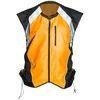
Badass Moto Reflective Motorcycle Safety Vest
A high-visibility reflective vest that fits over your existing jacket — a direct, low-cost way to act on the “be visible” tip above whether you’re splitting, filtering, or just riding in traffic.
- Best for: Riders who commute through traffic in any state, legal filtering or not
- Why we picked it: 360-degree reflective striping is visible from a driver’s side mirror at exactly the angle that matters when a bike is passing between lanes
- Main drawback: Adds a layer, so it’s less ideal in very hot weather
Compare more rider-visibility options
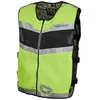 Option 1 Cortech Hi-Viz Motorcycle Vest
|
 Option 2 LED Motorcycle Helmet Light Strip
|
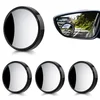 Option 3 OBTANIM 4-Pack Blind Spot Mirror
|
As an Amazon Associate we earn from qualifying purchases.
Why Is Lane Splitting Controversial?
Lane splitting stirs up a lot of emotions. As a rider, I’ve heard both sides — drivers who think it’s unfair and riders who see it as their right. Let’s explore why it’s such a hot topic.
Drivers’ Perspectives
I get why some drivers don’t like lane splitting. It can feel startling when a motorcycle appears out of nowhere. Some drivers think it’s unfair that motorcyclists can “skip” traffic while they’re stuck. I’ve had friends tell me they worry about hitting a rider by accident because they didn’t see them coming.
There’s also a misconception that lane splitting is always reckless. I’ve had drivers assume I’m speeding or showing off when I’m just trying to get through traffic safely. Education is key here — many drivers don’t know that lane splitting can be legal and safe when done right, or that it’s now legal in a state as far from California as Minnesota.
Riders’ Perspectives
From a rider’s point of view, lane splitting is a practical solution. We’re exposed to the elements, and sitting in traffic isn’t just inconvenient — it can be uncomfortable or even dangerous. Many riders, including me, feel that lane splitting is a fair trade-off for the risks we take riding a motorcycle in the first place.
There’s also frustration when drivers don’t understand or respect lane splitting. I’ve had riders tell me stories of drivers trying to “teach them a lesson” by blocking their path. It’s a reminder that mutual respect on the road goes a long way.
Bridging the Gap
The controversy often comes down to a lack of understanding. Drivers need to know that lane splitting can be legal and safe, while riders need to follow guidelines and ride responsibly. I’ve found that talking to drivers about lane splitting — explaining why I do it and how I stay safe — helps reduce tension. It’s all about sharing the road.
Benefits of Lane Splitting
Lane splitting isn’t just about convenience for riders. It has broader benefits that can make roads better for everyone. Here’s what I’ve learned about why lane splitting matters.
Reducing Traffic Congestion
When motorcycles lane split, they take up less space on the road. This means fewer vehicles clogging up highways, since motorcycles can move through gaps rather than adding to the gridlock. On busy roads, this can make a real difference for everyone stuck behind them.
Environmental Impact
Fewer idling vehicles mean less fuel consumption and fewer emissions. When I lane split, I’m not sitting in traffic burning gas. It’s a small way to reduce my environmental footprint, and if more riders do it, the impact adds up.
Safer Roads for Riders
As I mentioned earlier, the SafeTREC data shows lane splitting can reduce the risk of certain injuries for motorcyclists in a collision. By keeping moving, riders are less likely to be hit by distracted drivers rear-ending them at a stop. It’s not foolproof, but it’s a compelling reason more states are experimenting with legalizing some version of it. For a broader look at how motorcycle risk compares to car risk generally, see are motorcycles safer than cars?
States Expanding Lane Filtering: The Trend So Far
California stood alone for eight years, but the trend has picked up speed since 2019. Here’s the actual timeline of states legalizing some version of this:
- 2017 — California: Full lane splitting legalized (AB 51).
- 2019 — Utah: Lane filtering legalized (HB 149) — though it’s now scheduled to be repealed in 2027.
- 2021 — Montana: Lane filtering legalized (SB 9), becoming the third state to adopt any version.
- 2022 — Arizona: Lane filtering legalized on surface streets 45 mph or under.
- 2024 — Colorado: Lane filtering legalized, with a built-in 2027 review.
- 2025 — Minnesota: The first state after California to legalize true lane splitting, not just filtering.
I’ve talked to riders in states without a law yet who are hopeful but cautious. They want clear rules to avoid confusion and ensure safety. It’s a slow, uneven process — Utah’s reversal shows a state can also walk it back — but the overall direction over the last seven years has clearly been toward more states allowing some version of it, not fewer.
How Drivers Can Help
As a driver, you play a big role in making lane splitting and filtering safer, whether or not it’s legal where you live. I’ve been on both sides of this, and small actions can make a huge difference. Here’s what you can do:
- Check your mirrors: Motorcycles are smaller and harder to see, so glance at your side mirrors before changing lanes.
- Signal early: Give riders a heads-up if you’re about to merge or turn.
- Stay calm: If a motorcycle passes you, don’t take it personally. They’re just trying to get through traffic like you are.
- Learn the laws: If you’re in California, Minnesota, Utah, Arizona, Montana, or Colorado, know that some form of this is legal there and expected in the right conditions.
I’ve found that most drivers are happy to share the road once they understand what’s going on. A little awareness goes a long way.
My Personal Take
As someone who rides and drives, I see both sides of the lane splitting debate. On my bike, lane splitting feels like freedom — it’s practical, keeps me cooler in traffic, and sometimes feels safer. But in my car, I’ve had moments of frustration or surprise when a rider zooms by. What’s helped me is learning the rules and practicing patience. Lane splitting works best when everyone — riders and drivers — respects each other and follows the law. If you want to read another rider’s real-world take on tricky splitting scenarios — construction zones, stalled traffic, tight lanes — our related piece on navigating lanes allocated for mechanical vehicles covers some of the gray-area situations this guide doesn’t get into.
If you’re a rider, I’d urge you to lane split or filter responsibly, and only in states where it’s actually legal. If you’re a driver, try to see it as a way to make roads less congested for everyone. We’re all just trying to get where we’re going safely.
Conclusion
Exploring the world of lane splitting has been a journey for me, from my first curious glances at riders weaving through traffic to digging into the actual statutes and safety studies behind it. Whether motorcycles are allowed to drive between cars depends entirely on where you are: California and Minnesota say yes to full lane splitting, Utah, Arizona, Montana, and Colorado allow the slower filtering version, and most other states say no or leave it unaddressed — which functions as a no. Done within the legal limits, it can save time, reduce congestion, and even make roads statistically safer for riders, but it’s not without risk or controversy, and the rules are shifting fast enough that a state that’s legal today (Utah) may not be in 2027.
If you’re a rider, check your state’s current law before you split or filter — don’t assume a rule you read a year ago still applies. If you’re a driver, keep an eye out for motorcyclists and give them space, whether or not it’s currently legal where you live. Together, we can navigate this changing topic and keep our roads safe.
FAQs
Is lane splitting the same as lane filtering?
No. Lane splitting is riding between two lanes of traffic that’s still moving. Lane filtering is the narrower maneuver of moving to the front of traffic that’s completely stopped, like at a red light. California and Minnesota allow true splitting; Utah, Arizona, Montana, and Colorado allow only filtering.
Is lane splitting legal in Minnesota?
Yes, since July 1, 2025. Riders may split lanes of moving traffic up to 25 mph (and no more than 15 mph faster than surrounding traffic), or filter through fully stopped traffic up to 15 mph. It’s prohibited in school zones, roundabouts, freeway on-ramps, and single-lane work zones.
Is motorcycle lane-splitting law a federal law or a state law?
It’s entirely a state law issue. There is no federal statute that legalizes or bans lane splitting anywhere in the US — each state’s own vehicle code and highway patrol decide the rule, which is exactly why the answer changes the moment you cross a state line.
Why don’t all states allow lane splitting?
Many states worry about safety and driver confusion. Lawmakers often say they need more data, like California’s and Minnesota’s track records, before they feel confident legalizing it. There’s also resistance from drivers who see it as unfair. It’s a slow process to change minds and laws — and Utah’s scheduled 2027 repeal shows the trend doesn’t only move in one direction.
Can lane splitting cause accidents?
Yes, if it’s done recklessly. Close calls happen when riders exceed a safe speed differential or drivers don’t check their mirrors. But UC Berkeley SafeTREC’s 2015 research found that riders who kept their speed within 15 mph of surrounding traffic, in traffic moving 50 mph or slower, had lower rates of head, torso, and fatal injury than non-splitting riders in a collision.
What should I do if a motorcycle is lane splitting near me?
As a driver, always check your mirrors and signal early. Stay in your lane and avoid sudden moves. If you’re in a state where splitting or filtering is legal, expect it and give riders room to pass safely rather than trying to block them.
Are there penalties for lane splitting where it’s illegal?
Yes, you could get a ticket. In states like Texas or Washington, riders have been cited for reckless driving, unsafe passing, or improper lane usage. Penalties vary by state, but it’s usually a fine, and in some cases, points on your license.
Products related to this article
Sponsored / affiliate links. As an Amazon Associate I earn from qualifying purchases. I may earn additional commission from eligible campaigns.