Auto Repair Vs Body Shop: Which One Do You Need?
Start with an auto repair shop for warning lights, steering, suspension, cooling, or wheel damage; start with a body shop for dents, paint, panels, glass, or bumper covers. Going to the wrong first stop can add delays, miss hidden damage, and leave some safety systems unrepaired. This guide shows what to inspect first, when one repair leads to the other, and how to choose the right shop after a hit.
| Decision factor | Auto Repair | Body Shop: Navigating Car Care Choices | Winner |
|---|---|---|---|
| Main problem type | Mechanical issues, including engine diagnostics and repair, brake system maintenance, suspension and steering repairs, transmission services, and routine maintenance. | Cosmetic and collision damage, including dents, scratches, paint jobs, doors, windows, bumpers, and exterior panels. | Tie |
| Best first stop after a bump | Best when the car has warning lights, odd noises, vibration, pull, fluid loss, or drivability changes. | Best when the impact left visible dents, cracked paint, broken trim, or misaligned panels without drivability symptoms. | Tie |
| Structural repair ability | Can address related suspension, steering, and alignment issues that follow an impact. | Can handle frame-related work, structural repairs, and post-collision restoration. | Body Shop: Navigating Car Care Choices |
| Typical tools | Diagnostic scanner for engine codes, plus equipment for brake, suspension, and transmission service. | Dent puller, paint sprayer, and frame straightening machine for cosmetic and structural work. | Tie |
| Common add-on needs | Calibration checks, alignment follow-up, and repairs to hidden mechanical damage. | Paint matching, teardown, supplements, and coordination with mechanical repair after impact. | Tie |
What each shop type actually fixes
Auto repair shop work
Auto repair shops fix engine, braking, steering, suspension, transmission, and cooling problems. That includes engine diagnostics and repair, brake system maintenance, suspension and steering repairs, transmission services, and routine maintenance. If the car will not run right, stop straight, or shift properly, this is usually the first place to start.
A diagnostic scanner is a useful tool here because it reads engine codes and can help narrow the fault path. That matters after a collision too, since a wheel hit or underbody strike can trigger codes, sensor faults, or drivability complaints that are not visible from the outside.
Body shop work
Body shops repair the vehicle’s exterior parts. They handle dents and scratches, paint jobs, and damage to doors, windows, bumpers, and exterior panels. They also handle cosmetic and structural repairs, which is why a body shop is often the right first stop after a fender bender or parking-lot impact.
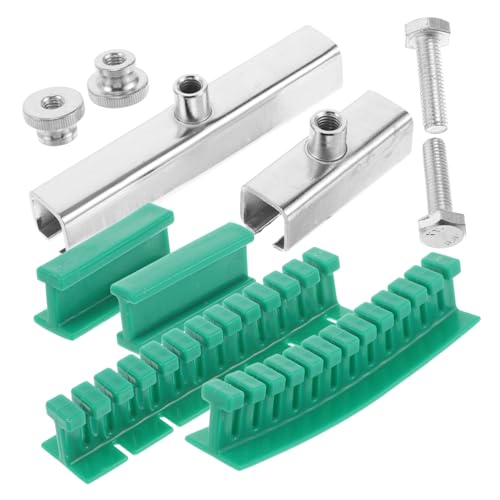
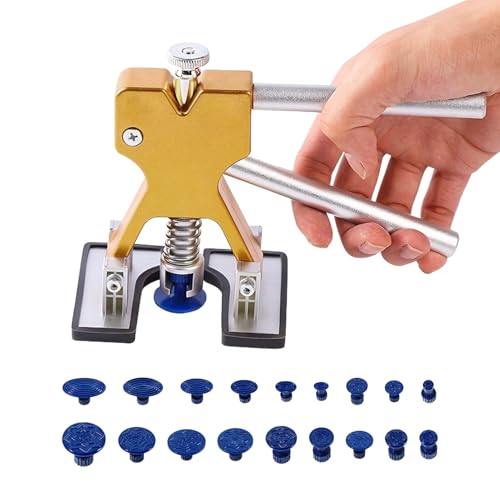
Tools matter here. A dent puller can be used for cosmetic body repairs, a paint sprayer can support refinishing and touch-up work, and a frame straightening machine can be used for structural restoration after collision damage.
Where structural repairs fit
Structural repairs sit between appearance and safety. If the vehicle’s frame or body structure is affected, a body shop can handle the restoration, but the work often has to be coordinated with mechanical repair for suspension, steering, sensor, or alignment issues.
That coordination is common after a front or rear impact. A bumper cover may look like the main problem while hidden damage extends into brackets, crash structures, wiring, radar units, or suspension points.
How to tell if the damage is cosmetic, mechanical, structural, or mixed
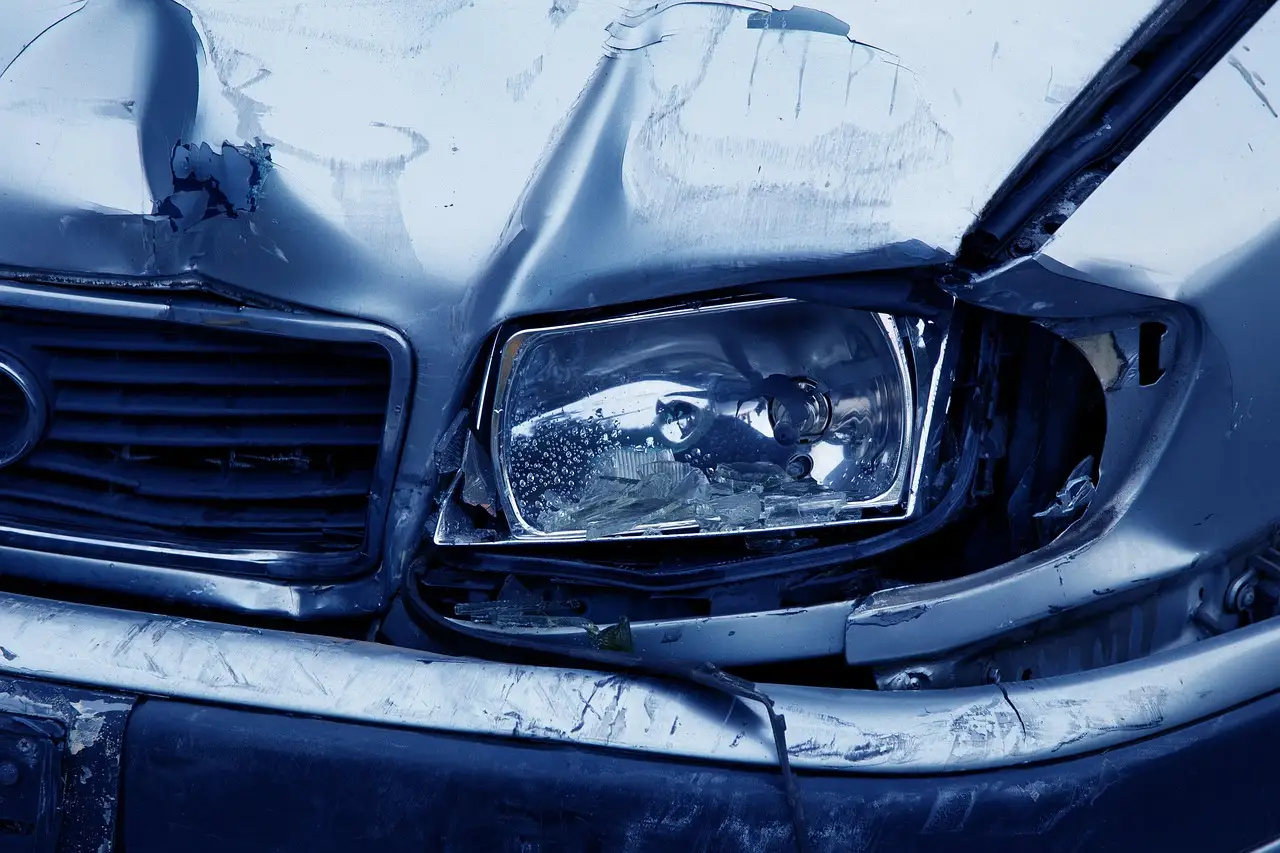
Use a fixed order: look, listen, drive only if safe, then inspect for warning signs. Cosmetic damage stays on the surface, mechanical damage changes how the car drives, structural damage affects body geometry or crash structures, and mixed damage shows signs from more than one category.
- Check for fluid leaks. Fresh puddles or drips suggest mechanical damage, not just body damage.
- Look at panel gaps. Uneven gaps around doors, hood, trunk, or bumper covers point to alignment or structural movement.
- Scan for warning lights. An illuminated check engine light, ABS light, airbag light, or stability warning can point to mechanical or sensor-related damage.
- Check wheel position. A wheel sitting crooked, tucked inward, or pushed forward/back can mean suspension or frame damage.
- Feel for steering changes. Pulling, wandering, or a crooked steering wheel suggests alignment, steering, or suspension trouble.
- Listen for new noises. Scraping, clicking, grinding, or clunking after impact often points to hidden mechanical or body interference.
- Inspect tires and rims. Sidewall bubbles, bent wheels, or scuffed rims can signal a curb strike with hidden suspension damage.
- Check bumper and grille area. Broken mounts can hide sensor damage, especially if parking sensors or radar sit behind the cover.
- Test doors, windows, and latches. Binding or poor closure can mean body shell movement or damaged hinges and regulators.
- Note airbag or safety-system alerts. Any restraint or driver-assist warning raises the odds of mixed damage.
Picture a front bumper that looks mostly scuffed after a low-speed hit in a grocery store lot. If the parking sensors fail and the steering wheel sits off-center on the next drive, the job is no longer cosmetic only. That becomes a mixed repair with body, alignment, and possibly sensor work.
Red flags that point to hidden suspension, alignment, or frame damage
Hidden damage may be present if the car pulls to one side, the steering wheel is no longer centered, a tire wears unevenly, or a wheel looks out of line with the fender opening. These signs matter because the body damage may be minor while the suspension or structure took the real hit.
A common mistake is to worry about the scraped fender paint and overlook the steering wheel that now pulls slightly to one side after the collision. That gap can point to a bent control arm, shifted subframe, or frame issue that a body-only estimate will miss.
When one impact creates both cosmetic and mechanical problems
One hit often creates both. A curb strike can bend a wheel, damage a tire, knock the alignment out, and scuff the bumper at the same time. The right response is not choosing one shop by habit; it is identifying the first clear symptom and then checking for the second layer of damage.
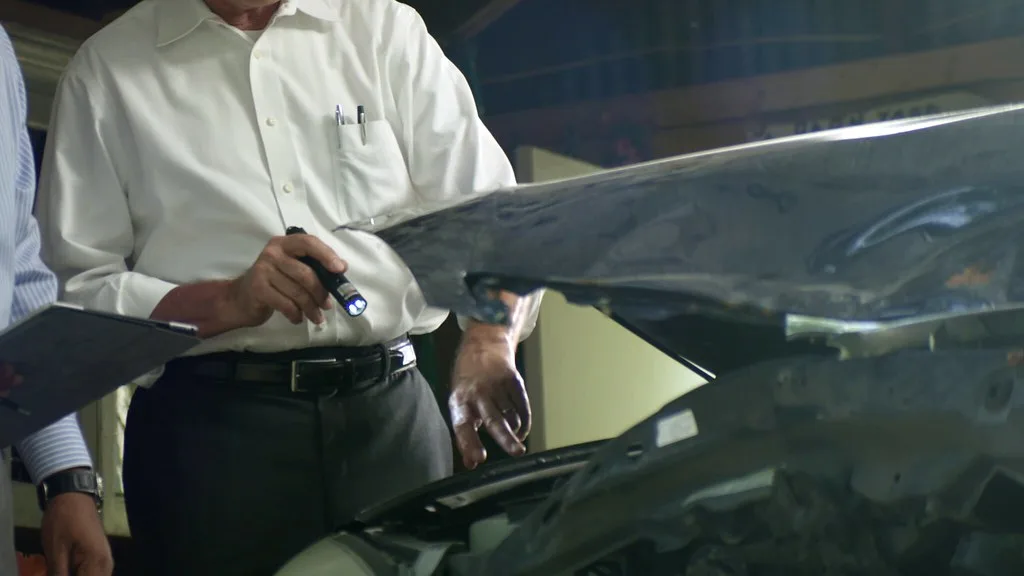
Should you start with an auto repair shop or a body shop?
Start with the shop that matches the first clear symptom. If the car has drivability problems, fluid loss, warning lights, or wheel damage, begin with an auto repair shop. If the main issue is visible exterior damage with no mechanical symptoms, begin with a body shop.
When a body shop should inspect first after a collision
Choose a body shop first when the damage is mainly dents, scratches, broken trim, damaged bumpers, cracked glass, or misaligned exterior panels. A body shop can also spot frame-related work early and decide whether mechanical coordination is needed before final reassembly.
That matters for insurance too. The body shop often documents visible damage first, writes an initial estimate, and then finds hidden issues during teardown. Those hidden items can become supplements after the first inspection.
When engine, brake, steering, or transmission symptoms make the auto repair shop the first stop
Start with auto repair if the impact left the car hard to steer, hard to stop, noisy under load, leaking fluid, or showing a warning light. Brake problems, suspension issues, and transmission symptoms belong there even if the outside damage looks minor.
If the wheel took the hit, do not assume the damage is only cosmetic. A bent wheel or pushed suspension point can create alignment problems that need mechanical diagnosis before the car returns to body work for final fit and finish.
Can a body shop fix frame or structural damage?
Yes. A body shop can fix frame or structural damage when the vehicle’s structure is affected by a collision. That work often uses a frame straightening machine, measurement procedures, and careful teardown before reassembly and refinishing.
What that repair path looks like
Structural repair usually starts with measuring the damage, removing exterior panels, and checking whether the impact moved any mounting points. If the structure is off, the body shop can straighten, replace, or rebuild the damaged area, then hand off mechanical items if needed.
Not every body shop can do every structural job. Ask whether the shop has collision repair experience, current equipment, and the ability to coordinate alignment, suspension, sensor, and calibration work after the metal work is complete.
Tools you may see in a body shop
Expect a dent puller for cosmetic damage, a paint sprayer for repainting and touch-up work, and a frame straightening machine for structural restoration. Those tools solve very different problems, which is why a shop’s equipment list matters as much as its estimate.
What certifications, tools, and estimates should you ask about?
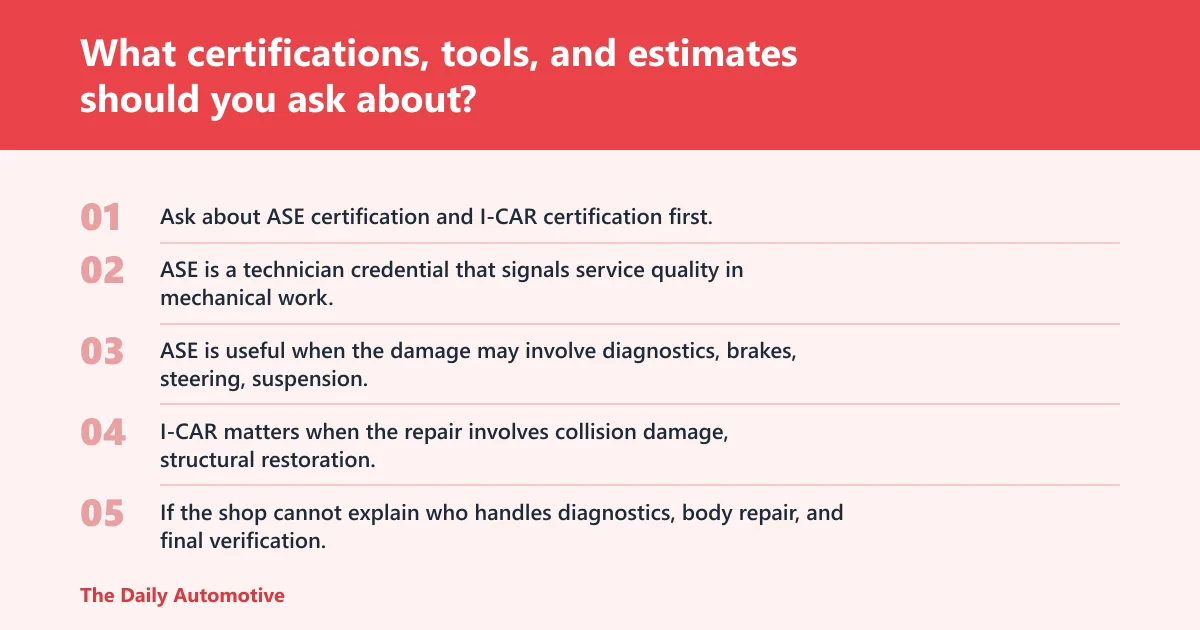
Ask about ASE certification and I-CAR certification first. ASE is a technician credential that signals service quality in mechanical work, while I-CAR is a collision repair training credential that signals body repair preparation.
Why certifications matter
ASE is useful when the damage may involve diagnostics, brakes, steering, suspension, or transmission work. I-CAR matters when the repair involves collision damage, structural restoration, panel replacement, or procedures around modern crash and body systems.
If the shop cannot explain who handles diagnostics, body repair, and final verification, that is a warning sign. One shop can sometimes handle both collision and mechanical work, but only if it has the people and equipment to do both well.
Why diagnostics, calibration, and paint equipment matter
A diagnostic scanner is not optional when warning lights or sensor faults appear. Modern impacts can affect ADAS sensors, bumper radar, and related systems that require inspection or recalibration after repair. A paint sprayer matters too, because a bad color match can leave even a repaired panel obviously mismatched.
Also ask whether the shop handles post-repair alignment. After impact, the car may need both body correction and a mechanical alignment check, especially if a wheel, suspension arm, or subframe moved.
Estimate basics: teardown, supplements, and total-loss thresholds
Collision repair estimates often change after teardown, when hidden damage becomes visible. That is normal. A supplement is the added estimate for damage found after the first inspection, and it is one reason a bumper hit can cost much more than the visible scratches suggest.
Insurance may also raise a total-loss question if the damage estimate climbs too close to the car’s value. That decision depends on the insurer’s threshold and the repairable versus actual cash value calculation, so a complete estimate matters before anyone approves body work, mechanical work, or both.
How do I know whether damage is cosmetic or mechanical?
Cosmetic damage changes how the car looks. Mechanical damage changes how it drives, stops, steers, shifts, or warns you through lights and messages. If the car drives normally and only the exterior is affected, the damage is probably cosmetic; if drivability changes, treat it as mechanical or mixed.
A 10-point inspection checklist for mixed damage
Use this order after a collision or curb strike:
- Visible dents, scratches, cracks, or broken trim
- Warning lights on the dash
- Fluid leaks under the car
- Steering wheel centering
- Pulling, vibration, or wandering on a short safe drive
- Wheel and tire position in the fender opening
- Uneven panel gaps
- Broken camera, sensor, or radar housings in the bumper area
- Noises when turning, braking, or going over bumps
- Door, hood, trunk, or hatch operation
If three or more of those items point away from appearance only, assume mixed damage until a shop confirms otherwise. That reduces the chance of a missed suspension fault or an incomplete body estimate.
Can one shop handle both mechanical and collision repairs?
Sometimes, yes. A shop with both collision and mechanical capabilities can handle body damage, mechanical faults, and final verification under one roof. But do not assume that capability from the sign out front. Ask what work is done in-house and what gets sent elsewhere.
When coordination becomes necessary
Coordination is needed when the body shop finds hidden suspension damage, wheel damage, sensor damage, or alignment problems after the initial teardown. The body work may pause until the mechanical repair is complete, or the vehicle may bounce between shops for diagnosis, parts, and final checks.
That is especially common after front-end hits. The bumper cover may come off first, then the shop discovers radar damage, a cracked bracket, a bent reinforcement, or a wheel that needs mechanical evaluation before the exterior can be finished.
Insurance-driven repair flow
When insurance is involved, expect estimates, supplements, and possible approvals before final assembly. A body shop typically writes the collision estimate, then coordinates with a mechanical shop or in-house techs if the teardown reveals brakes, suspension, or steering damage.
Suppose a sedan backs into a pole and the rear bumper looks lightly scraped, but the trunk floor is buckled and one rear wheel sits at an odd angle. That repair is not a body-only job; it becomes a mixed claim with structural, alignment, and possibly suspension work.
What tools do body shops use versus auto repair shops?
Body shops use tools for exterior repair, refinishing, and structural restoration, while auto repair shops use tools for diagnosis and mechanical service. The tool set tells you a lot about the shop’s core work before the estimate even begins.
| Shop type | Common tools | What they do |
|---|---|---|
| Auto repair | Diagnostic scanner | Reads engine codes and supports mechanical diagnosis. |
| Auto repair | Brake, suspension, and transmission service equipment | Supports brake system maintenance, suspension and steering repairs, and transmission services. |
| Body shop | Dent puller | Removes or reduces cosmetic dents. |
| Body shop | Paint sprayer | Supports repainting, blending, and touch-up work. |
| Body shop | Frame straightening machine | Helps restore structural geometry after collision damage. |
What is the difference between an auto repair shop and a body shop?
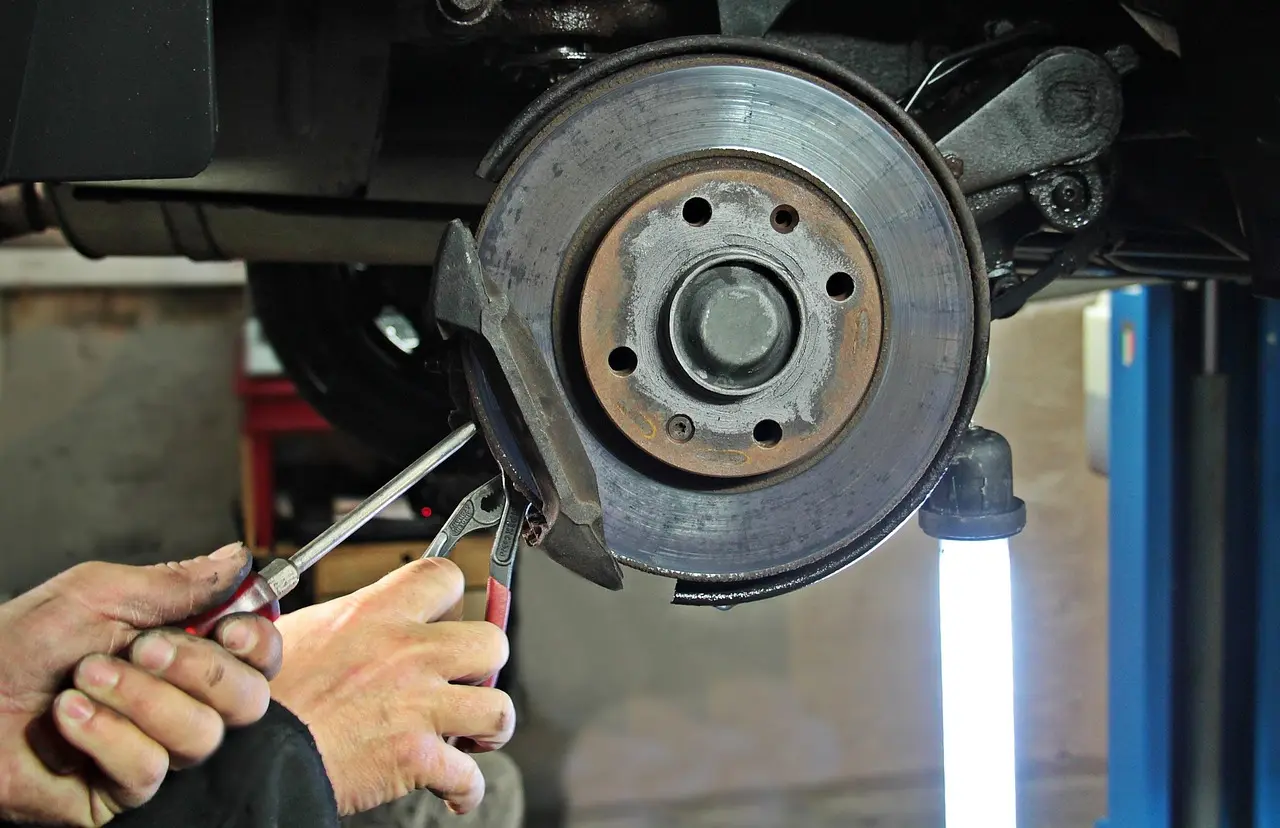
An auto repair shop fixes mechanical problems: engine diagnostics and repair, brakes, suspension, steering, transmission services, and routine maintenance. A body shop fixes exterior and collision work: dents, scratches, paint, panels, doors, windows, bumpers, and frame-related repairs. If the car’s function changed, start with auto repair; if the car’s shape changed, start with a body shop.
Should I take dents and scratches to a body shop?
Yes, if the damage is mainly cosmetic. Body shops handle dents and scratches, and they can also repaint panels, blend color, and replace damaged exterior parts when needed. If the same impact also caused warning lights, steering problems, or wheel damage, bring in mechanical diagnosis too.
Do engine, brake, or transmission problems go to an auto repair shop?
Yes. Engine problems, brake issues, steering concerns, suspension damage, and transmission complaints belong at an auto repair shop. Those are mechanical issues, and a diagnostic scanner is often part of the first inspection when codes or warning lights appear.
What certifications should I look for in a repair shop?
Look for ASE certification on the mechanical side and I-CAR certification on the collision side. ASE is a useful technician credential for service quality, while I-CAR is a collision-repair training signal. Either one is more useful when matched to the type of damage the car actually has.
Verdict: Auto Repair or Body Shop: Navigating Car Care Choices?
Choose Auto Repair if the car has warning lights, fluid loss, steering that pulls, odd noises, or wheel damage after an impact, such as a curb strike that bends a wheel and knocks the alignment out.
Choose Body Shop: Navigating Car Care Choices if the damage is mainly dents, scratched paint, broken trim, cracked glass, or misaligned bumper covers and exterior panels after a fender bender or parking-lot impact.
Products related to this article
Sponsored / affiliate links. As an Amazon Associate I earn from qualifying purchases. I may earn additional commission from eligible campaigns.