Auto Stop Service Centre: What Wollongong drivers check
Auto Stop Service Centre is worth considering in Wollongong if it can state the repairs, diagnostics, parts, and warranty terms for your car before work starts. Bad diagnosis or vague quotes can turn a routine service into repeat labour, missed faults, and a bigger bill. This guide explains what the shop says it does, how that should show up in repair outcomes, and which questions help you compare it with other local mechanics.
Auto Stop Service Centre: what the listing says and what it means



Auto Stop Service Centre is listed in North Wollongong, NSW, Australia, and is described as locally owned. It says it provides top-quality auto repair services, with industry professionals, skilled technicians, and transparent pricing with no hidden costs. Those claims matter only if they appear in the work order, estimate, and fault-finding steps you receive.
What broad service labels can and cannot tell you
A one-stop destination for auto repairs and maintenance sounds handy. It does not tell you whether the shop is set up for a basic brake pad replacement, an intermittent electrical fault, or a hybrid-system warning light. Broad labels are a starting point, not proof.
That means you should separate marketing language from repair detail. Ask what systems they actually handle, which parts are commonly replaced, and how they confirm the fault before fitting anything.
What services should you expect from a Wollongong repair shop?
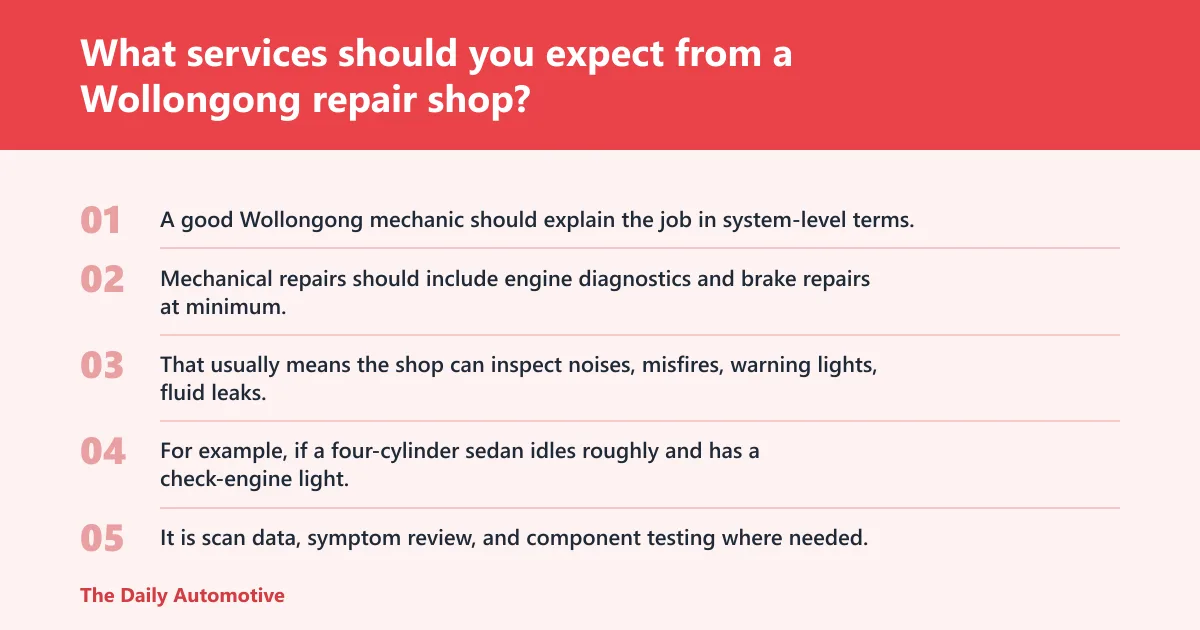
A good Wollongong mechanic should explain the job in system-level terms, not just say “general repairs.” For Auto Stop Service Centre, the brief points to mechanical repairs, electrical diagnostics, routine servicing, and preventive care, along with other common jobs such as brake repairs, battery replacement, air conditioning work, and hybrid and electric car repairs.
Mechanical repairs and engine diagnostics
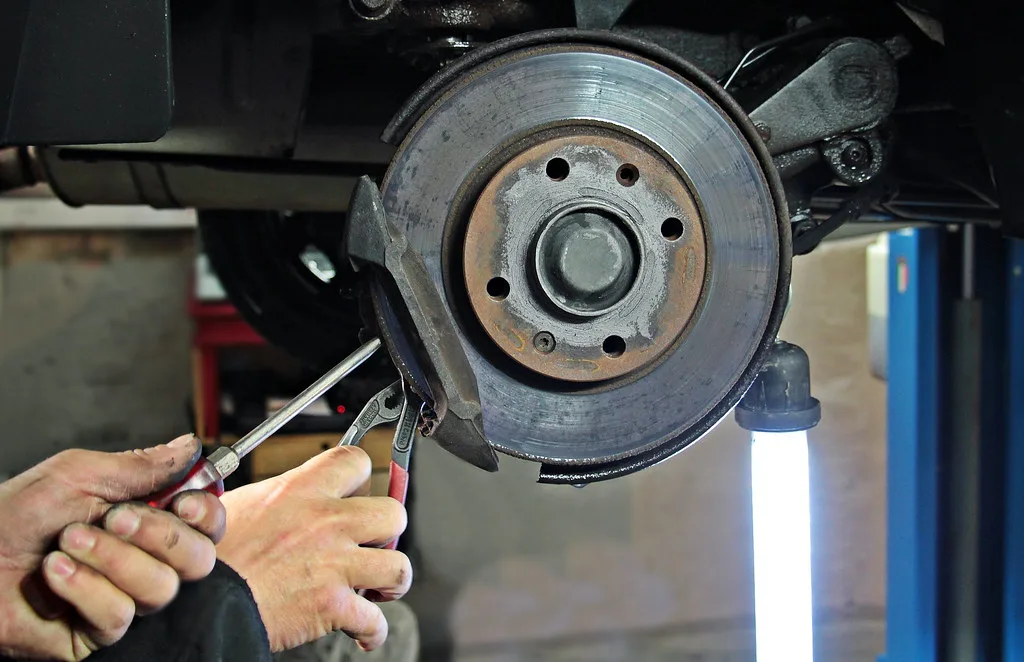
Mechanical repairs should include engine diagnostics and brake repairs at minimum. That usually means the shop can inspect noises, misfires, warning lights, fluid leaks, vibration, overheating, and drivability issues, then connect those symptoms to a likely fault path before quoting the repair.
For example, if a four-cylinder sedan idles roughly and has a check-engine light, the right first step is not “replace plugs” by default. It is scan data, symptom review, and component testing where needed.
Brake repairs, battery replacement, and air conditioning work
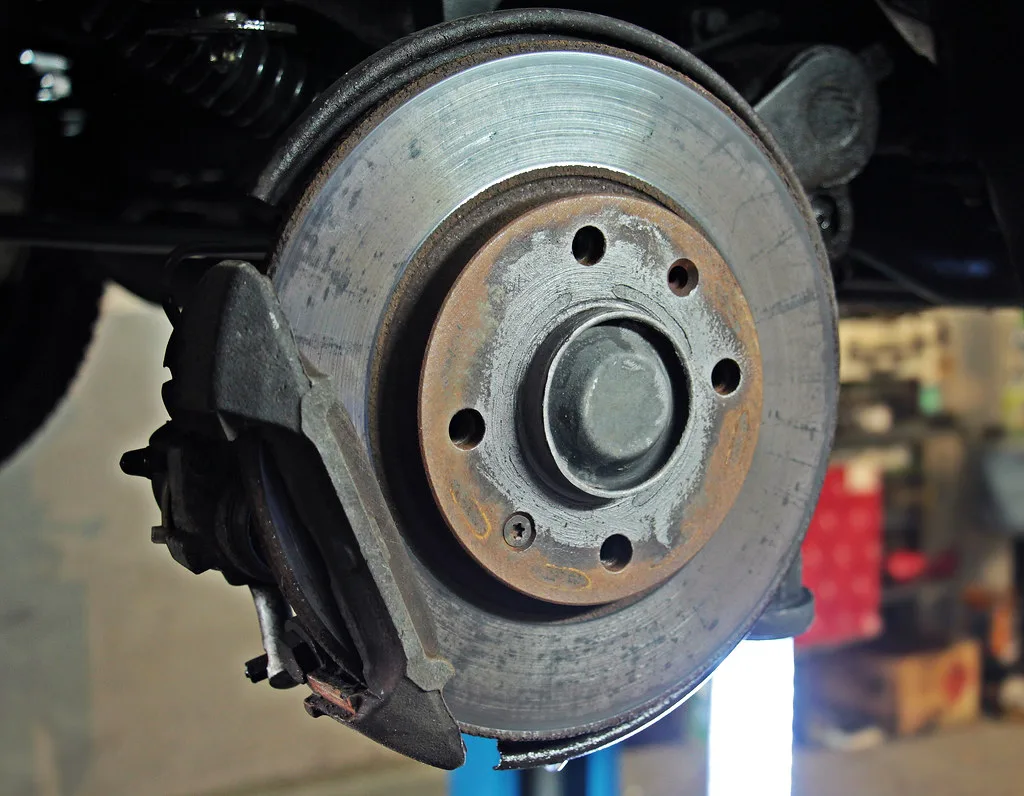
Brake work should cover pads, rotors, hydraulics, calipers, and brake-fluid condition where relevant. Battery replacement should not stop at selling a battery; the charging system and terminal condition matter too. Air conditioning work should include leak checks, compressor and electrical checks, and confirmation that the system can hold charge and cool properly.
Suppose your hatchback starts clicking when you turn the wheel and the battery warning light comes on after short trips. A proper shop should consider charging-system fault, battery age, belt condition, and electrical draw, not only fit a new battery and hope for the best.
Hybrid and electric vehicle repairs
The directory material mentions hybrid and electric car repairs as a service category, which matters because these vehicles need fault-finding discipline and safety-aware handling. Ask whether the shop works on high-voltage systems directly or only on conventional service items such as brakes, tyres, fluids, and 12V batteries.
That distinction matters for older hybrids and newer EVs alike. A warning light, charging issue, or reduced-range complaint needs a clear line between low-voltage accessories and the high-voltage system.
How good diagnostics should work for mechanical and electrical faults
Good diagnostics should start with the symptom, move to scanning or testing, and end with a repair plan that names the faulty part or system. For electrical diagnostics, the brief specifically mentions advanced tools, which should mean scan data, circuit checks, and component-level troubleshooting instead of guesswork.
What electrical diagnostics should include
Electrical fault-finding should begin with a symptom review: when the fault happens, how often, and whether weather, bumps, or engine temperature change it. Then come scan-tool checks, fuse and relay inspection, voltage and ground testing, and component-level testing where the data points.
If a power window fails only after rain, the shop should not stop at a generic “electrical issue” label. Water ingress, switch faults, wiring damage, and module communication problems all need different tests.
How a shop should explain fault finding step by step
Ask for the sequence. A trustworthy answer sounds like this: confirm the complaint, test the system, identify likely cause, confirm with a second check, then quote parts and labour. If the shop cannot explain the path from symptom to repair, the quote may be built on assumption.
When a symptom needs component-level testing
Some faults only appear under load, heat, or vibration. Intermittent stalling, dash warnings, random misfires, ABS lights, and charging problems often need testing at the component level because scan codes alone rarely finish the diagnosis. Codes point to a circuit or system. They do not always name the failed part.
Is Auto Stop Service Centre suitable for routine servicing and preventive care?
Routine servicing and preventive care can be worthwhile if the shop follows the manufacturer schedule, checks wear items, and explains what it found. The service page says routine servicing is essential for keeping vehicles in top condition, and preventive care is framed as a way to avoid costly repairs and breakdowns. That only helps if the inspection is specific.
What scheduled inspections should cover
A scheduled service should usually cover fluids, filters, brakes, tyres, steering and suspension wear, battery condition, belts, hoses, and a scan for stored faults if the vehicle calls for it. The exact list depends on model, age, mileage, and driveline.
For a five-year-old commuter car, that might mean more attention to cabin filters, brake wear, coolant condition, and battery health. For a 15-year-old ute, leaks, mounts, suspension play, and cooling-system wear deserve more scrutiny.
How maintenance intervals help prevent repeat faults
Maintenance intervals reduce the odds of small problems becoming larger ones. A weak battery can strain alternators and start-stop systems. Old brake fluid can affect pedal feel and ABS performance. Missed coolant service can contribute to overheating and hose failure. Prevention works best when the next service is scheduled before symptoms return.
Which signs suggest you should book sooner
Book sooner if you see warning lights, fluid loss, longer cranking, uneven braking, steering pull, overheating, air-conditioning drop-off, or repeated fuse failures. Those are not “wait and see” issues. They often become more expensive after a few extra trips.
How to judge transparent pricing before you approve repairs

Transparent pricing means you know what is being charged, why it is needed, and what may change the bill. The service promise mentions no hidden costs, but the real test is the estimate structure. You need parts, labour, diagnostics, and possible extras stated clearly enough to compare with other shops.
What a written estimate should include
A proper written estimate should list the complaint, diagnostic fee if any, required parts, labour hours or a labour total, taxes where applicable, and any conditions that could alter the final amount. If the shop says the price is “about” something but will not separate labour and parts, ask for a clearer version.
Questions to ask about extra labour and parts
- What does the quote include and exclude?
- What happens if the diagnostic finds more than one fault?
- Will you call before replacing anything beyond the estimate?
- Are parts new, reconditioned, or aftermarket?
- Is there a separate charge for additional testing?
How to compare quotes without chasing the cheapest option
Compare scope, not only price. One quote may include scan testing, fluid replacement, and a warranty; another may only list a basic repair. A low number can be a false bargain if it omits the diagnostic step that finds the real problem.
| What to compare | Good answer from a repair shop | Vague answer to question again |
|---|---|---|
| Service scope | Names the system, fault, and repair step | “We do all kinds of repairs” |
| Pricing clarity | Lists parts, labour, and diagnostic charges separately | “It depends” with no breakdown |
| Diagnostics process | Explains scan data, testing, and confirmation | “We’ll have a look” |
| Turnaround expectations | Gives a realistic window and says what could delay it | No time frame at all |
| Warranty questions | States parts and labour coverage in writing | “We stand behind our work” only |
| Proof of similar repairs | Can describe recent jobs on the same system or model type | No examples, no detail |
What proof should a trustworthy repair shop be able to give you?
Trust should rest on proof, not friendly wording. Ask for technician qualifications, warranty terms, and evidence of similar work. Customer testimonials and reviews help as reputation signals, but they do not replace a written estimate, a fault-finding process, or a clear explanation of the fix.
Technician training and qualifications
The listing says the business is staffed by industry professionals and skilled technicians. That is a claim, not a credential. Ask whether the technician working on your vehicle has training relevant to your fault type, especially if the car has electronic faults, a hybrid system, or an age-related wiring problem.
Warranty terms and parts coverage
Warranty terms should ideally cover both the part and the labour where possible, and you should confirm the time period before approving the job. Ask whether warranty rules change for supplied parts, electrical components, or third-party parts. If the answer is vague, keep asking.
Recent similar repairs and customer reviews
Recent similar repairs are stronger evidence than general praise. A good shop should be able to point to comparable work on brakes, diagnostics, batteries, or air-conditioning faults. Reviews can support that picture, especially if they mention the same kind of repair and a clear outcome.
What should I ask before choosing a Wollongong mechanic?
Ask what system is likely at fault, how the diagnosis will be confirmed, what the written estimate includes, how long the car may be needed, and what warranty applies. You are trying to find out whether the mechanic diagnoses first and repairs second, or the other way around.
First-visit checklist for comparing Auto Stop with other Wollongong mechanics
- Describe the symptom, not just the noise or warning light.
- Ask for the diagnostic process in plain language.
- Request a written estimate before any major repair.
- Ask what parts are being fitted and why.
- Confirm whether the quote includes labour, diagnostics, and test driving.
- Ask how soon the car can be started and finished.
- Get warranty terms in writing.
- Ask for an example of a recent similar repair.
How to use the table when you compare shops
Fill it in while you speak to each shop. A useful answer is specific enough to compare. If one place explains scan testing for an intermittent fault and another only says “bring it in,” the first answer gives you more confidence, even if the price is slightly higher.
When to walk away from vague answers
Walk away if the shop will not explain diagnostics, will not break down pricing, or will not say what happens when extra faults appear. Also pause if they promise fast fixes for electrical or intermittent issues without testing. Those jobs are where guesses become expensive.
How do I know if a repair shop is trustworthy?
A trustworthy repair shop gives you specific answers, written pricing, a sensible diagnosis path, and warranty terms you can read before approving work. Reviews and testimonials help, but they should support, not replace, hard evidence such as clear estimates, trained staff, and examples of similar repairs.
Frequently asked questions
Is Auto Stop Service Centre in North Wollongong reliable?
It can be a reliable option if its claims line up with the way it quotes, diagnoses, and warranties work. The listed North Wollongong location, locally owned positioning, skilled technicians, and transparent pricing claim are useful starting points, but the real check is whether the shop answers questions clearly before repair work begins.
What services does Auto Stop Service Centre offer?
The brief points to auto repair and maintenance, including mechanical repairs, engine diagnostics, brake repairs, electrical diagnostics, routine servicing, and preventive care. It also mentions common service categories such as battery replacement, air-conditioning work, and hybrid and electric car repairs, but you should still confirm the exact scope for your vehicle.
Does Auto Stop Service Centre have transparent pricing?
The page says the business offers transparent pricing with no hidden costs. That claim is only useful if the estimate shows parts, labour, and diagnostic charges in writing. Ask what could change the total, whether extra work needs approval, and how warranty terms affect the final bill.
Is Auto Stop Service Centre good for brake repairs?
Brake repairs are named in the mechanical repairs category, which makes them a relevant service to ask about. A good brake job should include fault confirmation, worn-part inspection, and a clear explanation of whether the issue involves pads, rotors, hydraulics, or related wear items before anything is replaced.
Can Auto Stop Service Centre handle electrical diagnostics?
The listing says electrical diagnostics use advanced tools, which is the right starting point for electrical faults. Ask how the shop confirms intermittent issues, whether it uses scan data and component testing, and how it separates a wiring fault from a failed module, relay, or sensor before quoting repairs.
Products related to this article
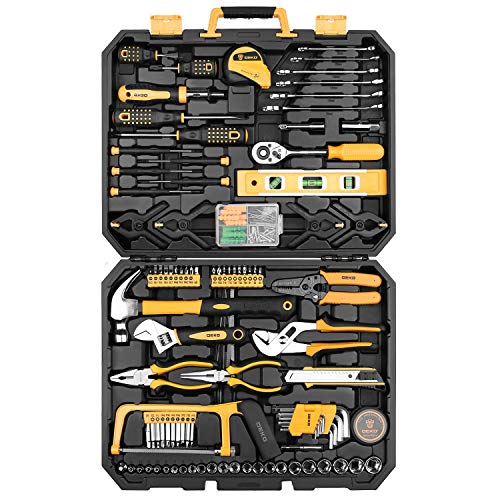
Sponsored / affiliate links. As an Amazon Associate I earn from qualifying purchases. I may earn additional commission from eligible campaigns.