Auto Service vs Pickerl: Which Choice Comes First?
Routine auto service should come before the Pickerl if maintenance is due or the car has warning signs; otherwise, a Pickerl-first check is fine, and combining both in one visit works best when the workshop can do a pre-inspection. Skip the order, and you can pay for a failed inspection, a repeat fee, and rushed repairs. This guide explains the difference, the best booking order, and when a dealer or free workshop makes sense.
Auto service vs Pickerl: what each one actually does
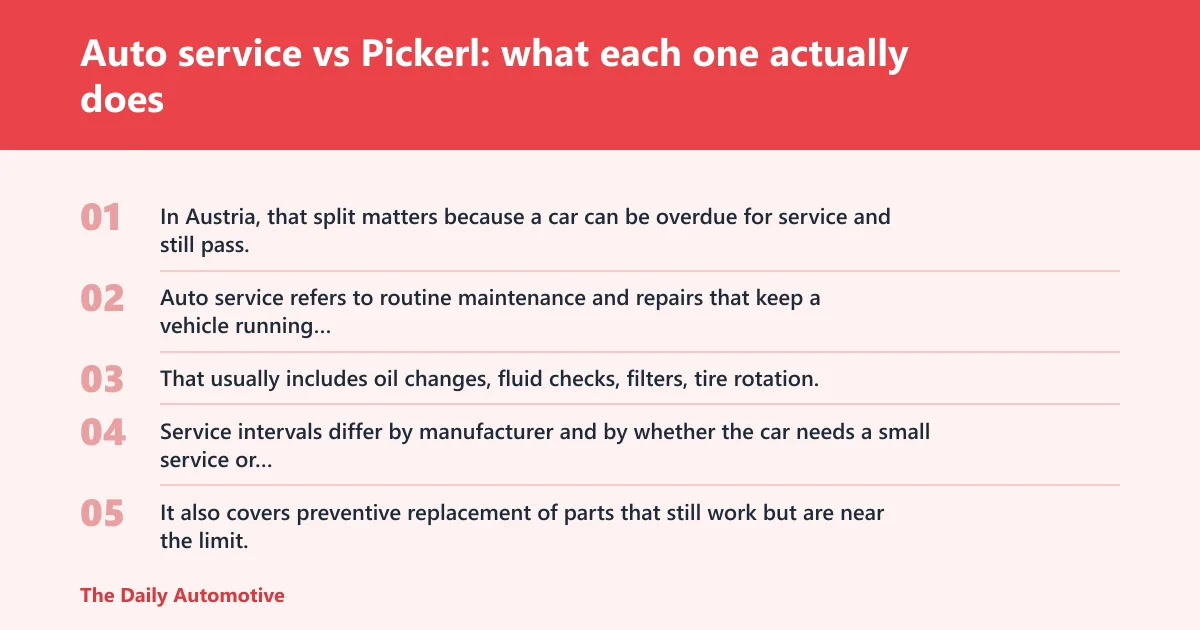


Auto service is maintenance. Pickerl is the legal roadworthiness check. In Austria, that split matters because a car can be overdue for service and still pass, or look fine to the owner and still fail on lights, brakes, emissions, or other inspection items.
Auto service: maintenance, wear items, and scheduled repairs
Auto service refers to routine maintenance and repairs that keep a vehicle running smoothly. That usually includes oil changes, fluid checks, filters, tire rotation, brake wear checks, and other work based on mileage or vehicle age. Service intervals differ by manufacturer and by whether the car needs a small service or a large service.
It also covers preventive replacement of parts that still work but are near the limit. That is the key point: service tries to prevent trouble. Pickerl deals with roadworthiness trouble already there.
Pickerl: roadworthiness, safety, and emissions checks
Pickerl is a mandatory periodic inspection required by law. It checks whether the car meets prescribed safety and environmental standards, and a pass results in a certificate indicating compliance. Pickerl validity varies by region and must be renewed periodically.
The inspection typically covers brakes, lights, steering, suspension, and emissions. In practice, leaks, worn tires, warning lamps, and obvious safety defects can also trigger a fail if they affect roadworthiness or emissions compliance.
Why the two jobs are related but not interchangeable
The jobs overlap, but they are not the same. Good maintenance lowers fail risk; it does not guarantee a pass. A fresh oil change will not fix a broken brake light, and a clean inspection result does not replace needed service work.
| Decision factor | Auto Service | Pickerl: Which Choice Prevails? | Winner |
|---|---|---|---|
| Purpose | Routine maintenance and repairs that keep the car running smoothly | Mandatory periodic inspection for roadworthiness, safety, and emissions | Tie |
| Best timing trigger | Overdue interval, wear, warning lights, fluid loss, or service history gap | When the car is due for the legal inspection period | Auto Service |
| Fail prevention | Can reduce fail risk if maintenance issues are the cause | Can identify faults, but cannot fix them on its own | Auto Service |
| Legal necessity | Depends on manufacturer schedule and ownership needs | Required by law in the inspection cycle | Pickerl: Which Choice Prevails? |
| All-in planning | May include repair spend before inspection | May add inspection fees, plus repeat cost if it fails | Auto Service |
Purpose
Auto service wins on prevention. Pickerl wins on legal compliance. Those are different jobs, so the better choice depends on whether the driver is trying to preserve reliability or meet the inspection requirement.
Best timing trigger
If the service interval is due, auto service comes first because neglected maintenance can turn into a Pickerl problem. If the car is current on service and has no symptoms, the inspection can be booked directly.
Fail prevention
Service is the better fail-prevention tool because it addresses wear before the examiner sees it. Pickerl can only judge what is there on the day. That is why a failed inspection often sends the car back for the same repairs that service would have found earlier.
Legal necessity
Pickerl is the legal gate. Service is not. A car may need service without needing the inspection immediately, but it cannot legally skip the inspection when due.
All-in planning
Planning only for the inspection price is risky. A realistic budget should include service spend, inspection spend, and any repair work needed to pass. That matters most if the car has warning lights or an overdue maintenance record.
What is the difference between auto service and Pickerl?
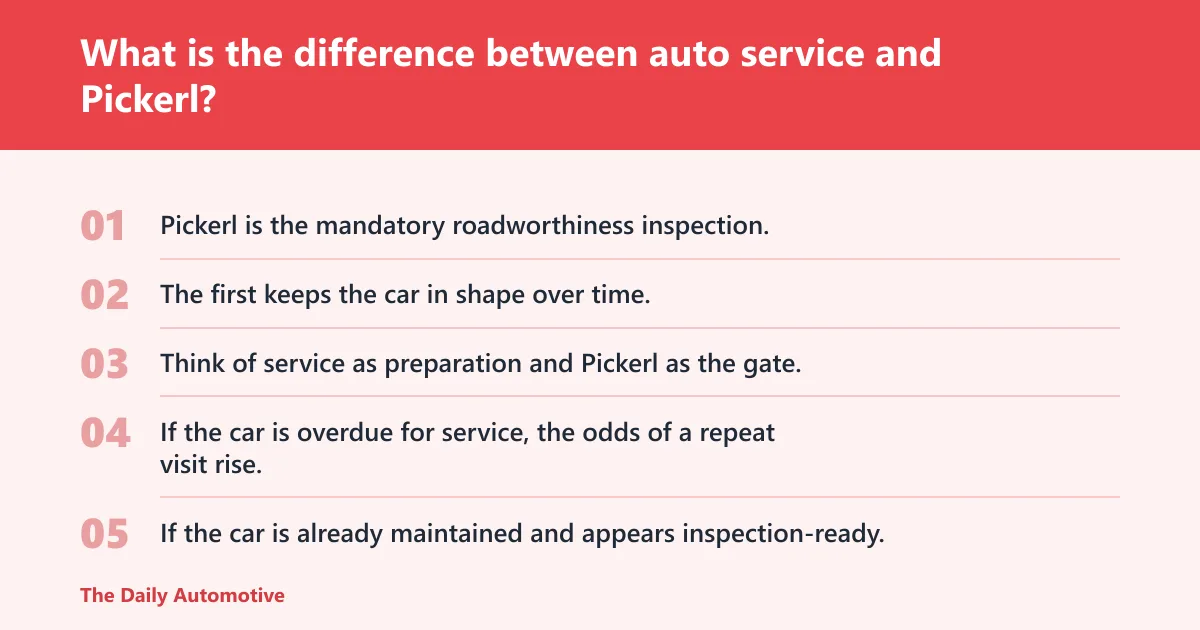
Auto service is maintenance and repair work. Pickerl is the mandatory roadworthiness inspection. The first keeps the car in shape over time; the second checks whether the car meets safety and environmental standards at the inspection date.
Think of service as preparation and Pickerl as the gate. If the car is overdue for service, the odds of a repeat visit rise. If the car is already maintained and appears inspection-ready, the legal check can usually come first.

Is Pickerl the same as a car service?
No. Pickerl is not a car service. It is an inspection that checks whether the vehicle is safe and compliant enough to keep on the road, while a service changes fluids, renews wear items, and follows the manufacturer schedule.
A common first-timer mistake is assuming a passed Pickerl means the car is “fully serviced.” It does not. A car can pass with maintenance still due, especially when service intervals are based on kilometers or age rather than an immediate safety defect.
Do I need to service my car before the Pickerl inspection?
Yes, when the car is overdue, has warning lamps, shows obvious wear, or has a maintenance-related fault that could lead to a fail. If the service history is current and the car has no inspection red flags, Pickerl first is reasonable. Combining both visits often saves time.
When service first lowers the risk of a fail
Service first is smart if brakes are thin, tires are worn, a fluid leak is visible, emissions readiness looks doubtful, or the dashboard shows a warning light. These are the kinds of issues that often turn into failed inspection items rather than minor maintenance notes.
When a fresh service does not change the Pickerl result
Not every service item affects the inspection result. A fresh cabin filter or a routine oil change may improve maintenance status without changing whether the car passes today. If the inspection concern is a cracked lamp lens or a broken suspension component, service alone will not fix it unless that fault is included.
When booking both together makes sense
Booking both in one visit works best when the workshop can do a pre-inspection check. That lets the technician catch simple fail points before the legal test, then complete the service and inspection with one handoff.
Use this checklist before you book
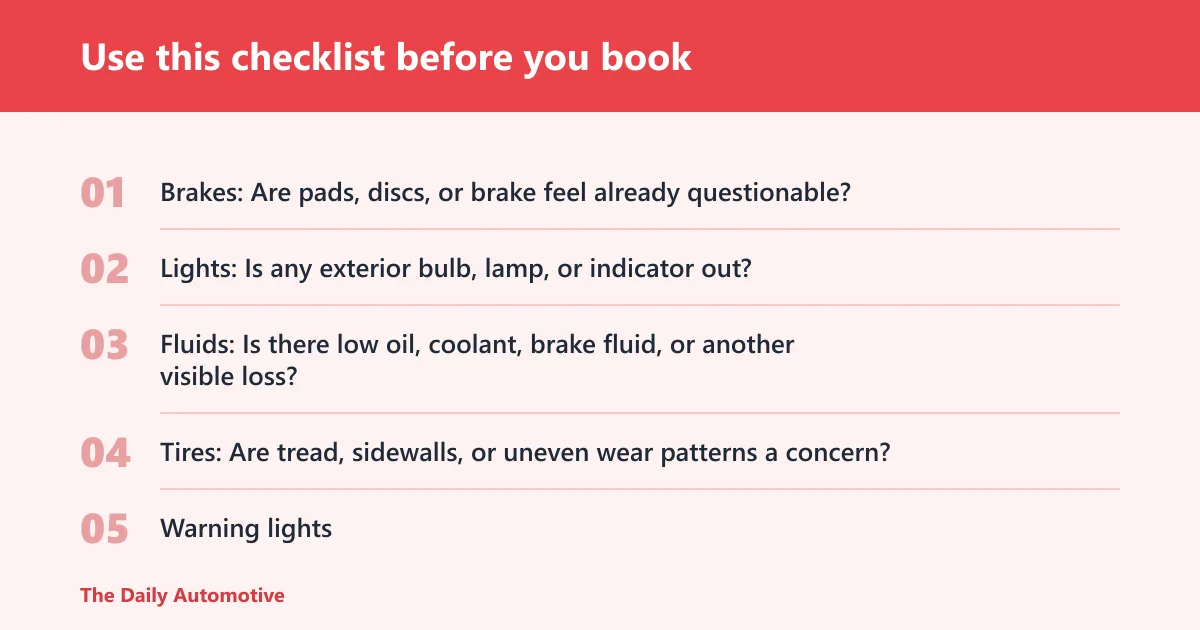
Use this list to decide whether the car should go to service first, Pickerl first, or a dealer for diagnostics. A “yes” answer usually means you should address that item before the inspection if it could affect roadworthiness or emissions.
- Brakes: Are pads, discs, or brake feel already questionable?
- Lights: Is any exterior bulb, lamp, or indicator out?
- Fluids: Is there low oil, coolant, brake fluid, or another visible loss?
- Tires: Are tread, sidewalls, or uneven wear patterns a concern?
- Warning lights: Is the check-engine light or another warning lamp on?
- Leaks: Is there oil, coolant, fuel, or brake fluid under the car?
- Emissions readiness: Has the car recently had battery loss, exhaust faults, or poor running?
- Steering/suspension: Is there play, noise, pull, or uneven handling?
- Paperwork: Is the service record incomplete or missing recent maintenance?
- Warranty status: Is the car still under factory coverage or pending recall work?
- Modified vehicle: Are there non-standard wheels, suspension, exhaust, or lighting parts?
- Dealer-only diagnostic: Do symptoms suggest brand-specific software or module faults?
What each yes answer means for timing and repair priority
If brakes, lights, tires, leaks, steering, suspension, or warning lights need attention, service before inspection is usually the better move. Yes on paperwork or warranty status means records matter, especially if the car is young enough that factory coverage or recall work could be involved. Yes on modified vehicle or dealer-only diagnostic points to a more careful workshop choice.
Which answers point to a dealer-only diagnostic
Dealer-only diagnostics become more likely when the issue involves brand-specific software faults, module coding, or a recall tied to the manufacturer’s systems. Dealer technicians undergo rigorous manufacturer training programs, and they often have specialized diagnostic tools and OEM parts access that can shorten the fault-finding step.
Can a free workshop do both service and Pickerl?
Yes, often it can. Free workshops can service vehicles of all brands, and they may also perform Pickerl checks and warranty work where authorized. For many drivers, that means one stop can cover maintenance, inspection, and the repairs needed to pass.
What a free workshop can usually handle
A free workshop is often the practical middle ground. It can handle standard maintenance, inspect common wear items, and usually tell you what truly needs attention. Independent auto repair shops can also handle services with certified technicians.
Local mechanic shops typically offer competitive pricing and are cost-effective. They often bring cross-brand experience and flexible parts sourcing, which matters when the job is straightforward and not locked to a manufacturer-only diagnostic path.
When dealer technician training and OEM tools matter
A dealer is more useful when the problem is brand-specific, electronically complex, or tied to a specialized system. Dealer technicians undergo rigorous manufacturer training, and dealerships typically have access to OEM parts and factory software that can solve faults an independent workshop may need more time to trace.
When warranty, recalls, or software faults push you toward the dealer
Warranty coverage does not automatically force every service into the dealer network, but maintenance records matter. Factory coverage, recall work, and some software updates are easier to handle at the dealership, especially when the issue has to be documented under manufacturer rules.
Choose auto service if… / choose Pickerl first if…
Choose auto service first if the car is overdue, worn, or showing a warning lamp. Choose Pickerl first if the service history is current, the car drives normally, and the likely problem is whether it still meets inspection standards today. The dealer becomes the right move when the fault is brand-specific, warranty-linked, or diagnostic-heavy.
Choose auto service first if…
Choose auto service first if the interval is due, the brakes feel marginal, fluids are low, tires are near limit, or a warning light is active. That sequence reduces the chance of paying for an inspection that the car was unlikely to pass anyway.
Choose Pickerl first if…
Choose Pickerl first if the service record is current, no warning lights are on, and the car seems inspection-ready. That is also sensible when the inspection date itself is the immediate legal deadline and the car has no obvious maintenance red flags.
Choose a dealer if…
Choose a dealer if you need manufacturer diagnostics, recall handling, software updates, or a repair that may affect warranty coverage. A dealer is not always necessary for maintenance, but it can be the most efficient route when the issue depends on factory tools, module coding, or brand-specific fault tracing.
What happens if the car fails Pickerl because of maintenance issues?
If the car fails because of maintenance-related defects, the usual outcome is simple: fix the fault, then return for another inspection. The cost problem is the repeat visit. If an inspection fails because of worn brakes, bad lights, or a leak, you may end up paying for the inspection again after the repair if the problem was not caught beforehand.
Common fail points tied to neglected maintenance
Common maintenance-linked fail points include weak brakes, inoperative lights, tire defects, fluid leaks, worn steering or suspension parts, and emissions problems. Those are often preventable or at least identifiable during a good pre-inspection service check.
Fixing the fault and booking a repeat inspection
After a fail, the workshop should correct the defect and confirm that the original inspection issue is gone. If the fault involves a dealer-only system, that may mean a second visit to a dealership. If it is a basic wear issue, a free workshop is usually enough.
How to avoid paying twice for the same visit
The cheapest path is usually the one that catches obvious defects before the legal inspection. That is why service before Pickerl makes sense whenever the car is due for maintenance or shows symptoms. It reduces avoidable repeat visits and keeps the all-in cost visible before you book.
Frequently asked questions
What parts are checked during a Pickerl?
Pickerl typically checks brakes, lights, steering, suspension, and emissions. In practice, inspectors also look for obvious safety issues such as leaks, worn tires, or other defects that affect roadworthiness. The exact result depends on the car’s condition on the day of the inspection.
Is a mechanic or dealership cheaper for car service?
Local mechanic shops typically offer competitive pricing and are cost-effective, while dealerships have higher overhead costs. That said, price should be weighed against the job itself. A dealer may be the better choice for a brand-specific diagnostic problem, while an independent shop often wins on routine service.
Does a dealership have to service my car to keep warranty?
No, not automatically. Warranty, recall work, and maintenance records matter, but routine servicing can often be done outside the dealership if the work is performed properly and documented. A dealer becomes more important when the issue is covered by factory rules, software updates, or recall handling.
How often is a Pickerl inspection required?
Pickerl validity varies by region and must be renewed periodically. The exact timing depends on the local rule and the vehicle’s inspection cycle. Because the legal schedule matters, drivers should confirm the due date rather than assume the same interval applies to every car.
Products related to this article
Sponsored / affiliate links. As an Amazon Associate I earn from qualifying purchases. I may earn additional commission from eligible campaigns.