Cheapest Ways to Get Your Car Serviced for Less, Safely
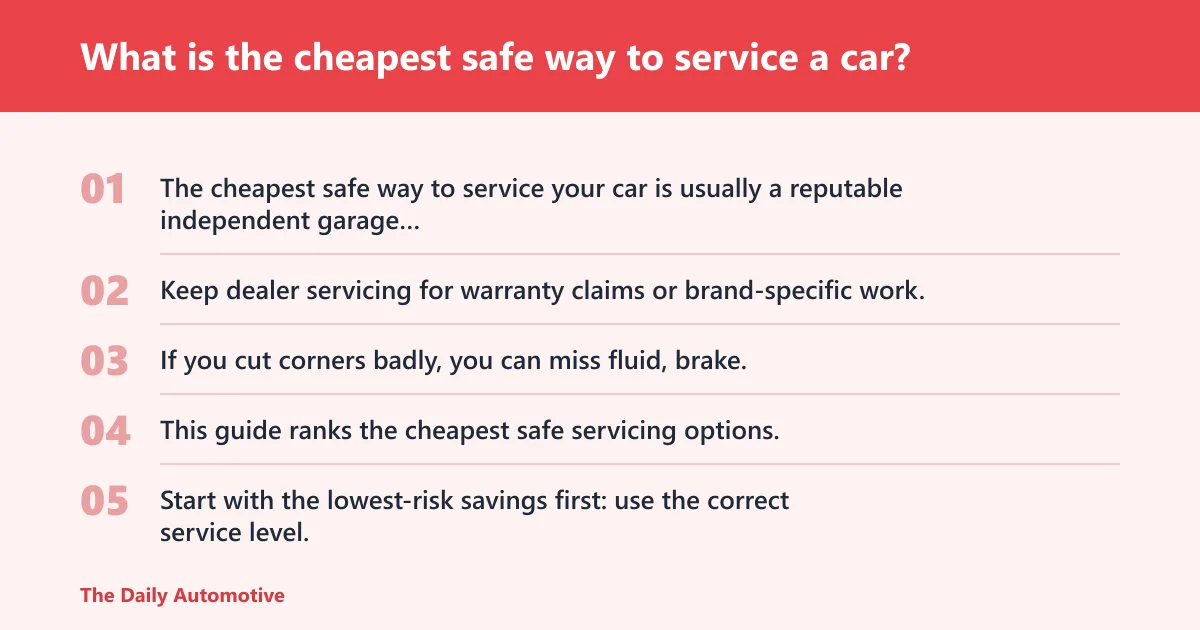
The cheapest safe way to service your car is usually a reputable independent garage using the maker’s schedule. Keep dealer servicing for warranty claims or brand-specific work. If you cut corners badly, you can miss fluid, brake, or timing-belt problems that turn a routine bill into a four-figure repair. This guide ranks the cheapest safe servicing options, shows where dealers beat independents, and flags the cuts you should never make.
Start with the lowest-risk savings first: use the correct service level, book the right garage, then compare written quotes before you trim extras. A full service is typically once a year or every 12,000 miles. High-mileage drivers should add a six-monthly interim service. An MOT is separate, and it is a legal roadworthiness test in the UK once a vehicle is at least 3 years old.
What is the cheapest safe way to service a car?

Interim service vs full service vs MOT
An interim service is the cheaper, lighter visit. It usually covers key fluids, filters, and wear items, and it suits drivers who cover a lot of miles between full services. A full service goes further. It checks and repairs key functioning parts, and it is the better choice when you want a broader inspection rather than a quick top-up.
The MOT is different again. It is not a service, and it is not a maintenance plan. It is an annual legal test for roadworthiness once the car is at least 3 years old. A car may pass an MOT and still still need servicing work such as oil, filters, brake inspection, or fluid replacement.
What an interim service covers
Interim servicing is the cheapest safe option when the car is used hard and often. It usually focuses on the basics that wear quickly: oil, filter checks, essential fluids, and visible safety items. For a commuter that racks up miles fast, this can stop small problems from waiting until the annual service and becoming more expensive.
What a full service covers
A full service is the better value for most low- to average-mileage cars because it goes further than an interim check. Expect inspection of oil and filter condition, fluids, filters, tyres, lights, and brakes, plus more detailed checks of key components. If you want one visit that catches more issues early, this is the one to price-check.
Why an MOT is different from a service
An MOT looks at whether the car meets minimum roadworthiness rules. A service is maintenance. That difference matters because a cheap MOT-only strategy can miss overdue oil changes, weak brake parts, and low fluids. A service-only strategy also misses the legal test if the car is old enough to need one.
Should you book a dealer or an independent mechanic?
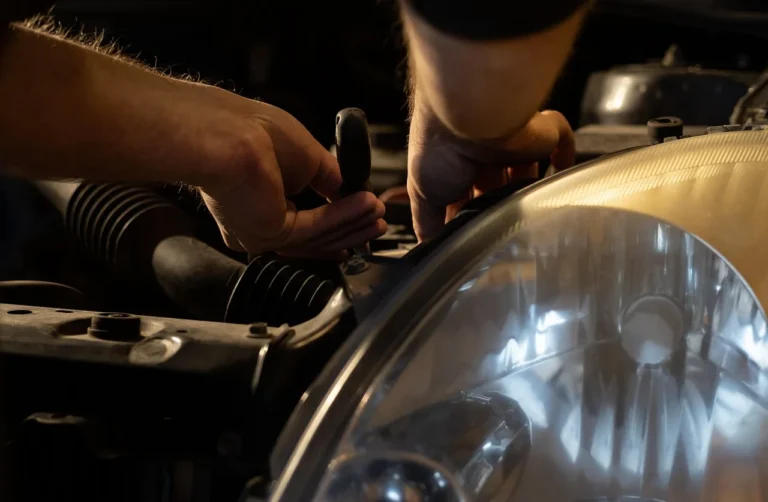
A dealer or manufacturer service centre is often the most expensive option, but it can make sense for warranty work, brand-specific software issues, or vehicles that need manufacturer procedures. A trusted independent mechanic who specialises in your make is often the cheaper safe option, especially for routine servicing and common repairs.
Choose the garage based on the job, not the badge. If the car is under warranty or needs model-specific updates, the dealer may be worth the price. If the work is routine, an independent auto repair shop with the right tools and service history access often gives the same safety outcome for less.
Dealer or manufacturer service centre: when the higher price may make sense
Dealer servicing is authorised by the vehicle manufacturer, and that can matter for software updates, recalls, and brand-specific diagnostics. It is usually the most expensive route. For a newer car with a warranty claim or a known model issue, the extra cost may buy a cleaner paper trail and fewer disputes later.
Independent mechanic: when it is usually the cheaper safe choice
An independent garage that knows your make is often a good balance of price and safety for routine servicing. The shop should be trusted and nearby, so follow-up work is practical if the inspection finds a problem. The saving is often in labour rates and parts sourcing, not in skipping the inspection list.
How to check that a garage specialises in your make
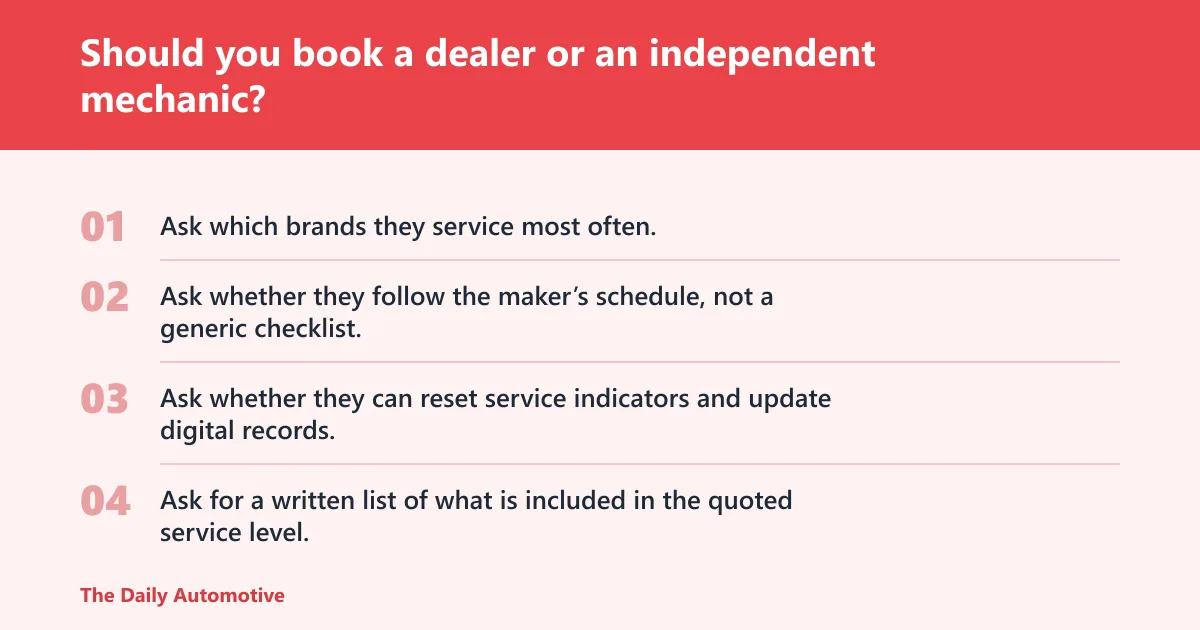
- Ask which brands they service most often.
- Ask whether they follow the maker’s schedule, not a generic checklist.
- Ask whether they can reset service indicators and update digital records.
- Ask for a written list of what is included in the quoted service level.
Say your 8-year-old hatchback needs a routine service and the dealer quote comes in high. A local independent that regularly handles that brand may still use the correct fluids, filters, and inspection points, while costing less because the labour rate is lower and the parts source is not locked to one network.

How to cut the bill before you book
The cheapest safe savings usually come before anyone opens the bonnet. Get multiple quotes, check membership discounts, and make sure you are comparing the same service level. Many repairs found during servicing cost extra, so the quoted service price may not be the final bill.
Get multiple quotes and compare labour and parts separately
Get multiple quotes before any major repair. Ask for labour and parts separately where possible, because a low headline price can hide expensive consumables. This is one of the best ways to avoid being overcharged, especially when a service turns up extra work such as brakes, tyres, or fluid leaks.
Use the quote to check whether the garage is pricing the same items. A full service at one shop may include more checks than another shop’s “full service” label. If the list is not clear, the cheap quote may be missing the items that matter most.
Check membership discounts before booking
Membership discounts through AAA or similar programs can reduce service cost, so check them before you book. Some programs also offer towing or roadside help that can soften the cost if the car is already giving trouble. Ask whether the discount applies to labour, parts, or only selected services. (acg.aaa.com)
Ask what is included in the quoted service level
Some low-priced offers are cheap because they cut inspection items. Ask whether the quote includes oil and filter change, brake check, fluids, filters, tyres, and lights. If the service level does not spell that out, you may be buying a visit that looks cheap but misses the problem you wanted checked.
What can you do yourself to keep servicing costs down?
Simple checks can save money, but only for basic maintenance. You can reduce the next service bill by spotting problems early, keeping the car clean, and handling minor consumables. Do not confuse low-cost maintenance with safety-critical repairs, because those belong with a qualified garage.
Simple checks that may reduce the next service bill
Check oil level, tyre condition, lights, and obvious fluid loss between services. Catching a leak early can prevent a larger repair. If the car is not reporting a fault, these checks can help a garage focus on the right issue instead of starting from scratch.
Oil and filter change: when it helps and when it is not enough
An oil and filter change is a basic maintenance task that can extend the time between full services and support fuel efficiency. It helps when the rest of the car is healthy. It is not enough if the car has brake noise, a warning light, a fluid leak, or uneven tyre wear.
Why brake checks should stay with a qualified garage
Brake check work is safety-critical and may require wheel removal. A proper inspection can reveal hidden wear before damage worsens. That makes it a good place to spend money carefully, because a missed pad or disc problem can become far more expensive than the inspection itself.
A common mistake is choosing the lowest-priced service special and assuming it includes brake checks, fluid top-ups, and other extras that are often charged separately. Suppose a diesel saloon shows no warning light but has faint braking vibration and a low coolant level. A basic oil change alone would miss both issues. A proper inspection catches them before the bill climbs.
How much to service my car
How much to service your car depends on the service level, the garage, and what the inspection finds. A full service is usually once a year or every 12,000 miles, while a six-monthly interim service suits high-mileage drivers. Repairs discovered during the visit usually cost extra and can change the final total.
What a service typically includes
Common service items include oil, fluids, filters, brakes, tyres, and lights. The exact list depends on the car and the service level. The cheaper the quote, the more important it is to confirm whether those items are actually included or only checked if something seems wrong.
Why repairs found during servicing usually cost extra
Service inspections are not a fixed-price promise for every problem. If the mechanic finds worn pads, a leaking hose, or a failed component, the repair is usually added on top. That is why the lowest safe price is not always the lowest headline service price.
How to get a cheap car service
The cheapest safe car service comes from matching the garage and service level to the car’s condition. Use an independent mechanic for routine work, compare quotes, and keep dealer servicing for cases where the manufacturer’s support matters. Then confirm the service includes the items your car actually needs.
Decision table: cheapest safe option by car scenario
| Service scenario | Lowest-cost safe option | Red-flag warnings |
|---|---|---|
| Low-mileage older car | Book a full service with a trusted independent mechanic who specialises in your make. Compare with one dealer quote if the car has a warranty history or brand-specific issue. | A suspiciously cheap “full service” that excludes brakes, fluids, or filter checks; no written checklist; added charges for every inspection item. |
| High-mileage commuter | Use an interim service every 6 months, then a full service on the annual schedule. Keep an eye on oil and filter changes, tyre wear, and brake condition. | Skipping the interim visit because the car “seems fine”; ignoring tyre wear; a quote that covers only a basic oil change and no safety inspection. |
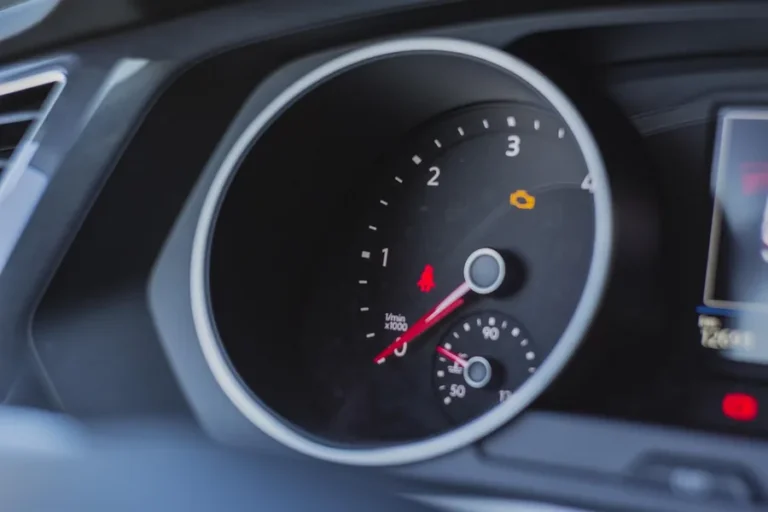
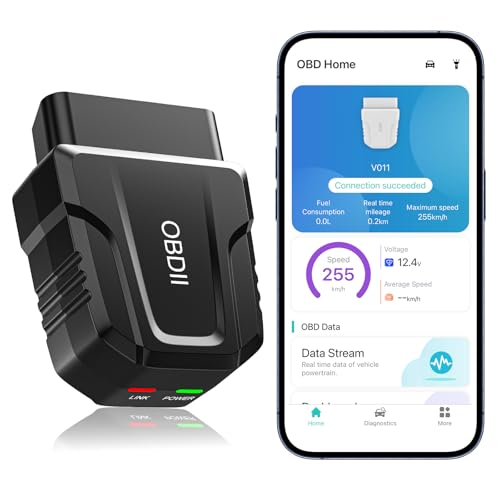
| Car with a dashboard warning light | Get a diagnostic check first, then repair only what the fault code and inspection confirm. Use an OBD II scanner if appropriate as a cheap way to avoid an initial diagnostic visit; the listed scanner price is $23.99. | Resetting the light without diagnosing the cause; driving on with brake, coolant, or engine warnings; buying parts before the fault is confirmed. |
Do not cheap out on these service items
Do not cut corners on brakes, warning lights, major fluid issues, or tyres that are near unsafe wear. These are the jobs where a small saving can become a large repair or a safety problem. If the car is telling you something is wrong, treat that as a diagnosis, not a suggestion.
Repairs that the service uncovers
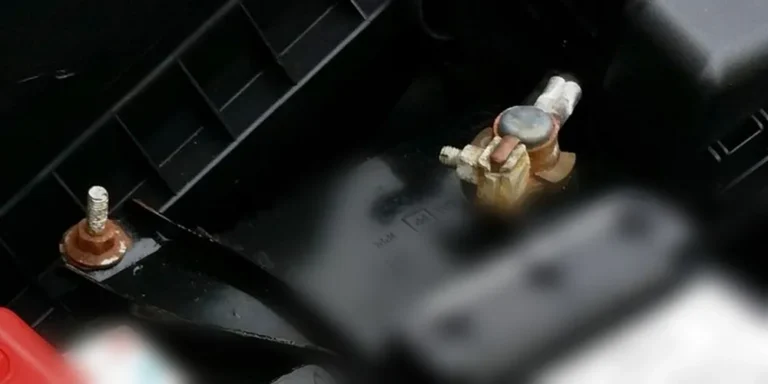
If the garage finds a worn belt, a leak, or corrosion, ask for the evidence and the price split. Quote comparison matters most here. Compare labour and parts separately where possible, because one garage may price a repair fairly while another pads the bill with vague labour time or unnecessary parts.
For basic tools, some drivers choose to do small maintenance themselves. A long-neck oil-change funnel is priced at $15.99, and a mechanics tool set is priced at $129.00. An OBD II scanner at $23.99 can also help you read a fault code before paying for a first diagnostic visit.
how to get car serviced
Start by matching the service level to the car’s mileage and condition, then choose a reputable garage and ask for a written quote. If the car is under warranty or needs brand-specific work, a dealer may be appropriate. For routine servicing, a trusted independent mechanic is often the cheaper safe choice.
how often should I get my car serviced
A common rule of thumb is a full service once a year or every 12,000 miles. High-mileage drivers should add a six-monthly interim service. If the car is doing short trips, towing, or heavy commuting, service needs can come sooner than the calendar suggests.
should I use a dealer or independent garage
Use a dealer when manufacturer procedures, warranty work, or brand-specific diagnostics matter. Use an independent garage when you want routine servicing at a lower price and the shop specialises in your make. The safest low-cost choice is the one that matches the job and documents the work clearly.
what can I do myself to cut servicing costs
You can check oil, tyres, lights, and obvious fluid loss between services, which may help you catch issues early. A basic oil and filter change can also stretch time between full services if the rest of the car is in good shape. Leave brake diagnosis and warning lights to a qualified garage.
what is the cheapest way to service a car
The cheapest safe way is usually an independent garage, the correct service level, and a clear quote before booking. Add membership discounts if you have them, and compare labour and parts separately on bigger jobs. Cheap becomes expensive when the service is too thin to catch hidden wear.
Frequently asked questions
how to get a car cheap
If the aim is a cheap car overall, the servicing budget matters as much as the purchase price. Look for a model with widely available parts, a good maintenance record, and simple servicing needs. A cheap buy with neglected fluids or warning lights can cost far more later.
how to get cars for cheap
Buy with the service history in hand, not after the sale. A car that has had regular servicing, proper brake checks, and timely fluid changes is often cheaper to own than a neglected bargain. A low purchase price means little if the first service turns into repair work.
Products related to this article
Sponsored / affiliate links. As an Amazon Associate I earn from qualifying purchases. I may earn additional commission from eligible campaigns.