Automotive Technology Job Opportunities: Career Paths
Automotive technology job opportunities often fall into a handful of paths, such as general technician, diagnostic specialist, service advisor, fleet technician, and EV or hybrid technician, with management sometimes coming after several years of shop experience. Pick the wrong track, and you can end up undertrained, underpaid, or stuck doing work that does not fit your strengths. This guide compares duties, training, certification, pay drivers, and advancement options for each track.
What jobs can I get with automotive technology training?
Automotive technology training can lead to entry-level technician work, service advising, parts support, fleet maintenance, and advanced diagnostic roles. UTI identifies automotive technician, parts technician, and service writer/advisor as common entry-level automotive careers, while service manager, fleet technician, and shop owner are later-stage roles. (uti.edu)
Entry-level technician roles
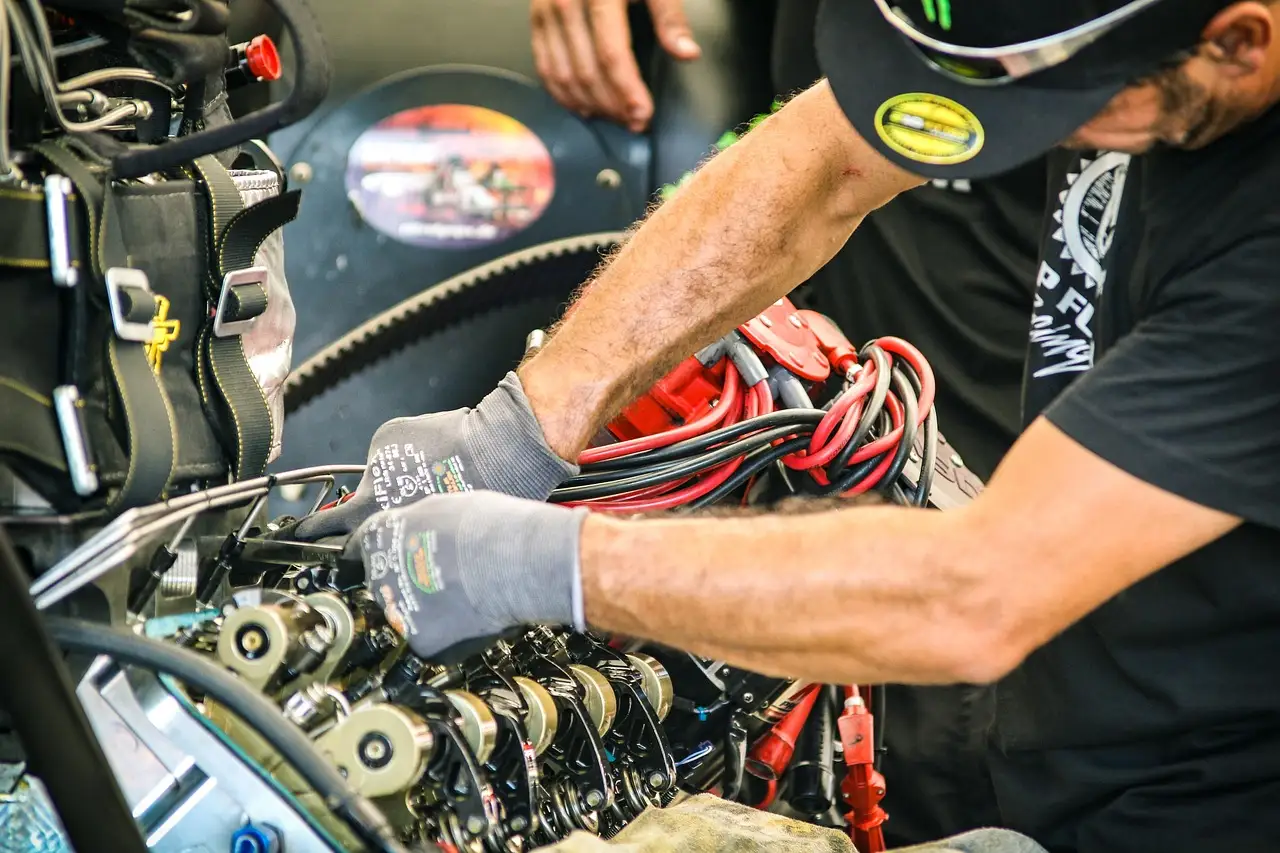
An automotive technician often starts with inspection, maintenance, brake work, oil services, tire service, battery testing, and basic repair tasks. That work builds speed, tool habits, and diagnosis basics. From there, many technicians specialize in electrical systems, brakes, engines, or advanced systems.
Specialist and customer-facing roles
As skill grows, the path can branch. A service advisor writes repair orders and acts as the go-between for customers and technicians. A master technician handles deeper diagnostic work, drivability complaints, and complex electronic systems. Fleet technicians support company, municipal, or government vehicles that need high uptime.
📊 The global automotive market is about $2.75 trillion in 2025. Source: Automotive industry.
How do you choose the right automotive career path?

The best path depends on how you like to work, not only on whether you like cars. If you want hands-on problem-solving, technician or diagnostic work fits better than customer-facing roles. If you are organized and calm with customers, service advising may suit you. If you like stable schedules and repeatable maintenance, fleet work can be a strong fit.
Match your work style to the job
Think about three things: how much customer contact you want, how much diagnosis you enjoy, and whether you prefer routine or variety. People who like fast physical work often prefer shop bays. People who like communication may do better in service writing or management. People who enjoy puzzles often move into diagnostics.
Compare training depth and certification needs
Entry-level technician roles can begin with a certificate or associate program plus shop training. Diagnostic specialists need deeper electrical knowledge, scan-tool fluency, and strong troubleshooting habits. Service advisors need product knowledge, repair-order writing skill, and enough diagnostic understanding to translate concerns accurately.
Use this quick self-assessment checklist
- Do you prefer hands-on repair over customer conversation?
- Do electrical faults and scan data interest you more than routine service?
- Are you comfortable learning software-based diagnostics and EV safety basics?
- Do you want a path that can lead into leadership later?
- Do you want a stable fleet schedule or a faster-paced retail shop?
A common first-timer mistake is choosing service advising because it sounds easier than technician work. It is different work, not easier work. You need product knowledge, customer communication, and enough technical understanding to keep repair orders accurate.
Career-path matrix: 8 automotive jobs side by side
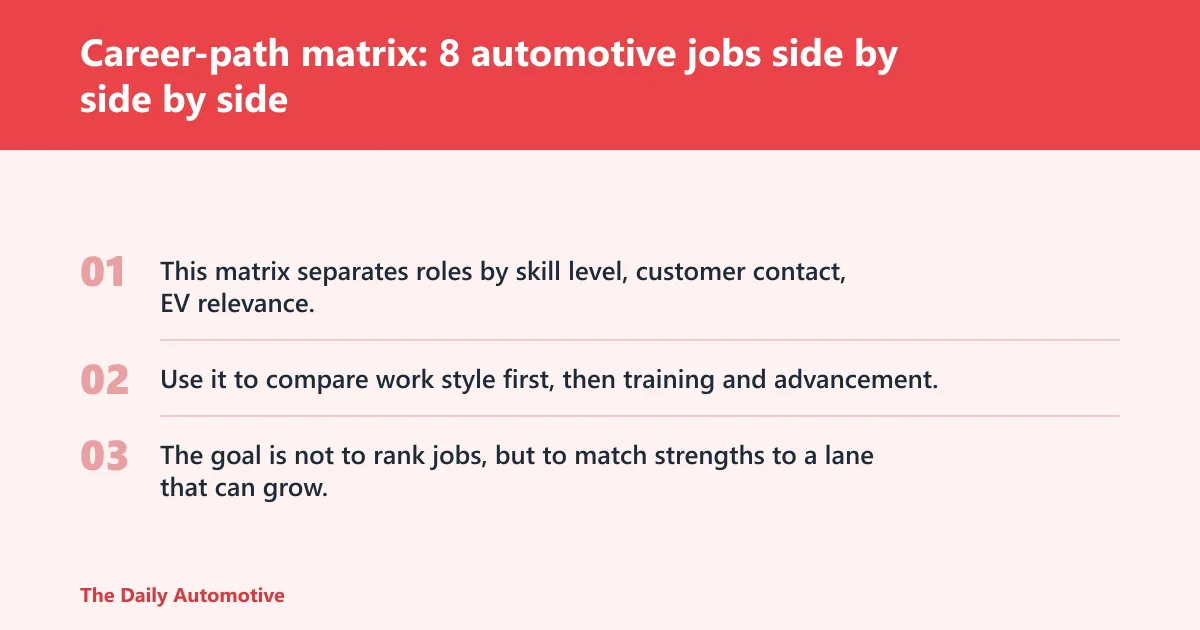
This matrix separates roles by skill level, customer contact, EV relevance, and likely setting. Use it to compare work style first, then training and advancement. The goal is not to rank jobs, but to match strengths to a lane that can grow.
| Job type | Required skills | Training level | Customer contact | EV relevance | Likely work setting | Likely next step |
|---|---|---|---|---|---|---|
| Automotive technician | Maintenance, brakes, inspections, basic diagnosis | Certificate or associate degree plus entry shop training | Low to moderate | Moderate | Repair shop or dealership | Specialist technician |
| Brake specialist | Hydraulics, pads, rotors, ABS basics | Entry to intermediate | Low | Low to moderate | Independent shop or dealer | General diagnostic work |
| Electrical technician | Wiring diagrams, circuits, parasitic draw testing | Intermediate to advanced | Low | High | Dealer or diagnostic-heavy shop | Master technician |
| Service advisor | Repair order writing, communication, basic technical translation | Customer service plus automotive knowledge | High | Moderate | Dealer or service-focused shop | Service manager |
| Master technician | Complex diagnostics, drivability, advanced systems | Advanced, often with certifications | Low | High | Dealer or large independent shop | Shop foreman or training lead |
| Fleet technician | Preventive maintenance, uptime repair, scheduling discipline | Entry to intermediate, often expanded by fleet systems training | Low | Moderate | Corporate, municipal, or government fleet | Lead fleet tech or supervisor |
| EV or hybrid technician | High-voltage awareness, battery systems, software diagnostics | Intermediate to advanced | Low | Very high | Dealer, specialty shop, fleet, or manufacturer support | Advanced diagnostics or EV specialist |
| Shop manager | Scheduling, quality control, labor planning, customer flow | Experience-based leadership | High | Moderate | Repair shop or dealership | General manager or owner |
How do automotive technician careers progress over time?
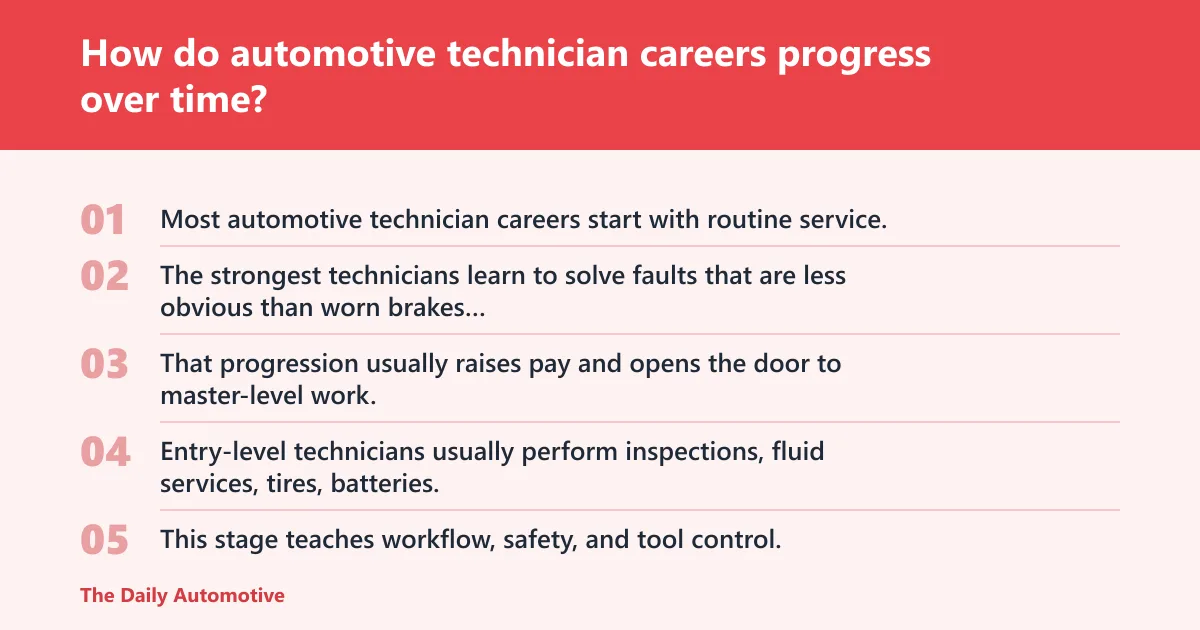
Most automotive technician careers start with routine service, then move toward deeper diagnosis, specialty systems, and possibly leadership. The strongest technicians learn to solve faults that are less obvious than worn brakes or low fluids. That progression usually raises pay and opens the door to master-level work.
Starting as an entry-level technician
Entry-level technicians usually perform inspections, fluid services, tires, batteries, brakes, and basic part replacement. This stage teaches workflow, safety, and tool control. It also shows whether a person likes repetitive maintenance or prefers diagnostic puzzles.
Moving into advanced diagnostics
After core maintenance comes electrical testing, drivability complaints, sensor faults, and scan-tool interpretation. Modern vehicles include hybrid engines, electric vehicles, and high-tech diagnostics, so employers increasingly expect software-aware troubleshooting. UTI notes that modern automotive technology includes hybrid engines, electric vehicles, and high-tech diagnostics.
From senior technician to shop leader
A senior or master technician often becomes the person others ask about stubborn faults. Later, some move into team lead, foreman, service manager, training roles, or shop ownership. That path usually demands broad repair depth, steady documentation, and the ability to communicate with customers and staff.
Say your strengths are pattern recognition and electrical troubleshooting. A car comes in with a dead battery after sitting overnight for two days in a row. A general maintenance tech may swap the battery, but an advanced diagnostic tech tests current draw, checks modules, and finds the real fault.
Where can automotive technicians work besides repair shops?
Automotive technicians can work in dealerships, independent repair shops, fleet operations, municipal garages, government service centers, and some manufacturing or support environments. The work style changes a lot by setting. Dealer work often follows brand procedures closely, while fleets focus on uptime and scheduled maintenance.
Dealership service departments
Dealerships usually provide brand-specific training, access to factory information, and a clear ladder from entry-level technician to master technician. They can be a strong fit for people who want structured systems, warranty work, and a defined specialization track.
Independent repair shops
Independent shops often expose technicians to a wider mix of makes, model years, and repair types. That can speed up problem-solving. It also demands adaptability, because the next car on the lift may need brakes, a check-engine diagnosis, or electrical repair.
Fleet, municipal, and government operations
Fleet technicians support vehicles that must stay on the road. That can mean delivery vans, service trucks, buses, police vehicles, or municipal equipment. The work is often stable, scheduled, and focused on reducing downtime rather than maximizing ticket count.
Related roles in service advising and support
Not every automotive career is a wrench-turning role. Parts technicians manage inventory and warranty issues. Service advisors handle repair orders and customer updates. Those jobs can fit people who know vehicles but prefer communication, coordination, and office-side structure.
Is ASE certification worth it for automotive jobs?
ASE certification is often worth pursuing because it can signal job-ready competence to employers. It is not the only hiring factor, but it helps show that a technician understands core systems like engine repair, electrical, and brakes. ASE also supports career growth when combined with formal training and shop experience.
Which ASE areas matter most
For many entry-level candidates, ASE areas tied to brakes, electrical systems, and engine repair matter first. That lines up with common shop needs. For higher-level roles, broader ASE coverage can support diagnosis, drivability, and management credibility.
How employers use ASE on hiring decisions
Employers often treat ASE as evidence that a candidate can learn technical material and pass a standards-based test. It does not replace hands-on ability, but it can separate candidates with similar resumes. In some shops, ASE may also affect pay bands or promotion timing.
When formal training helps more than experience alone
Formal training helps most when a job requires electrical diagnosis, scan-tool work, or hybrid and EV safety. A shop can teach habits, but structured coursework gives a better base in theory, measurement, and systems thinking. That matters when troubleshooting is more important than routine replacement.
Do automotive tech jobs include EV and hybrid work?
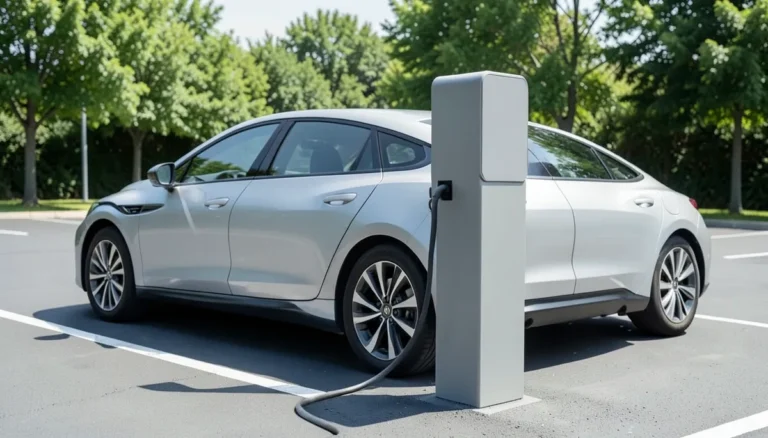
Yes. EV and hybrid work is becoming a real career lane, not a side topic. UTI notes that modern automotive technology includes hybrid engines, electric vehicles, and high-tech diagnostics. Employers also want high-voltage awareness, scan-tool skill, and comfort with software-driven troubleshooting.
High-voltage safety awareness
EV work requires careful handling of high-voltage systems and lockout procedures. That changes the skill mix. A technician must know when a vehicle is safe to touch, how to isolate energy sources, and how to follow shop procedures without shortcuts.
Diagnostics, scan tools, and software
EVs and hybrids rely heavily on software, control modules, battery management, and communication networks. That means stronger scan-tool literacy and electrical reasoning. ISO 26262 is considered a best-practice framework for automotive functional safety, which shows how much the field depends on disciplined systems thinking.
Which jobs are best positioned for EV work
Diagnostic technicians, master technicians, dealership specialists, and some fleet technicians are best positioned for EV work. These roles already require troubleshooting and system knowledge. As EVs take a larger share of repairs, technicians with battery and electronics skills should have an advantage.
How much can automotive technicians earn by role and experience?
Earnings vary by role, location, shop type, and specialization. Entry-level technicians usually earn less than diagnostic specialists and master technicians because their tasks are simpler. Service advisors, fleet technicians, and managers can earn differently depending on commission, salary structure, and responsibility level.
Entry-level vs. senior technician pay
Entry-level technicians tend to earn based on basic repair throughput and training stage. Senior and master technicians usually earn more because they solve harder problems, carry more responsibility, and reduce comebacks. The pay gap can widen when a technician can diagnose electrical, drivability, or EV issues.
How specialization changes pay potential
Specialists who handle electrical, hybrid, ADAS, or EV diagnostics often have stronger pay potential than general maintenance techs. That is because fewer people can do the work well. The market pays for hard-to-replace skill, not just years in a bay.
Why pay differs between shops, dealers, and fleets
Dealerships may pay differently from independent shops because warranty labor, factory standards, and specialty training shape the job. Fleets may trade peak commission potential for steadier hours and predictable work. Shops with heavy diagnostic volume often pay more for top-level problem solvers.
What skills do employers look for in automotive technicians?
Employers look for hands-on repair ability, diagnosis, safety habits, and the communication needed to document work clearly. Modern hiring also favors scan-tool literacy, electrical testing, and comfort with hybrid and EV systems. Basic competence is expected; the stronger candidates can solve problems without wasting time.
Technical skills
Core skills include brakes, steering, suspension, engine service, electrical diagnosis, wiring repair, and inspection discipline. As vehicles become more software-driven, employers also value understanding of network communication, sensors, and module-related faults.
People skills
Service advisors need customer communication. Technicians need clear notes. Managers need scheduling and conflict handling. Even shop-floor roles depend on teamwork, because poor communication can turn a simple repair into a comeback.
Training and hiring signals
ASE certification, formal automotive training, internships, and dealership experience all help. So does a willingness to keep learning. The field changes fast, and the best candidates show that they can adapt to new systems instead of staying tied to old habits.
What training helps me get hired in automotive technology?
Training that combines classroom learning with shop practice is the strongest hiring signal for most candidates. Certificate programs, associate degrees, manufacturer training, and ASE preparation all help. Employers like proof that you can work safely, think clearly, and keep learning as vehicles change.
Best starting options
For entry-level technician work, a certificate or associate program can be enough to open doors. For EV, hybrid, or advanced diagnostics, added electrical training matters. For service advising, training in customer communication and repair-order workflow can be just as important as wrench time.
How to use training to move faster
Choose coursework that includes diagnosis, electrical systems, scan tools, and customer documentation. Then pair it with ASE study where possible. The best early-career candidates are the ones who can speak clearly about systems, not just replace parts.
Frequently asked questions
What is the difference between a technician, service advisor, and service manager?
A technician repairs and diagnoses vehicles. A service advisor writes repair orders, communicates with customers, and coordinates with technicians. A service manager oversees workflow, staffing, and customer satisfaction. These roles are related, but the daily work and skill priorities are very different.
Products related to this article
Sponsored / affiliate links. As an Amazon Associate I earn from qualifying purchases. I may earn additional commission from eligible campaigns.