Battery Operated Christmas Lights for Car: No Wiring Required
Battery operated Christmas lights for a car are self-contained LED string lights powered by their own AA, AAA, or rechargeable battery pack — they are never wired into your car’s actual 12-volt electrical system.
That distinction matters more than it sounds. A small battery pack holding just 2 to 4 AA batteries can power 50 to 100 warm-white LEDs for 40 to 100+ hours before you need a swap, and none of that power comes from your car. There is nothing to wire in, nothing that can drain your starter battery, and nothing that needs a fuse or an adapter.
This guide covers what to look for before you buy, how battery-operated lights compare to lights wired directly into a car battery, where you can safely mount them inside and outside your car, and the safety details — like visibility and cold-weather battery life — that most product listings never mention.
What Are Battery Operated Christmas Lights for a Car?
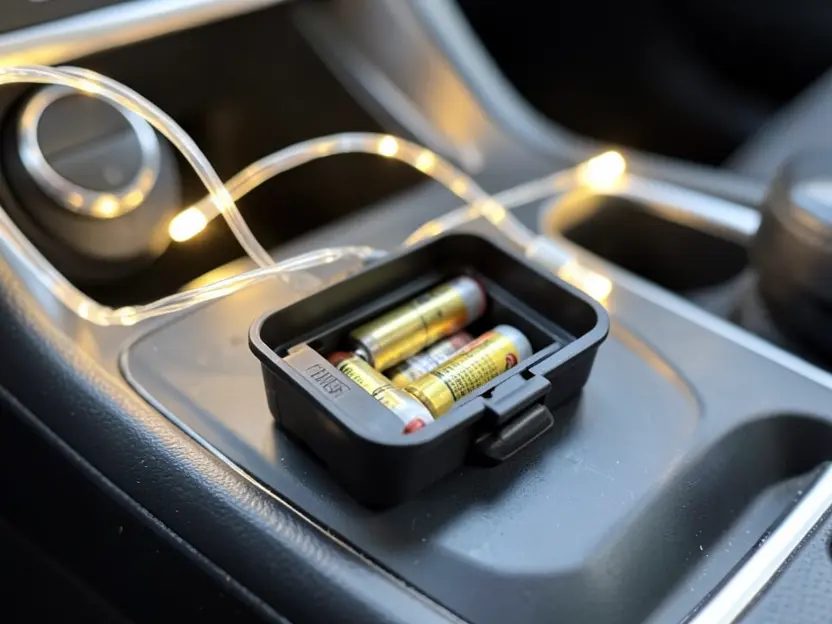
Battery-operated Christmas lights are the same LED fairy or string lights you would use to decorate a bedroom, a mason jar, or a wedding centerpiece — most sold for cars are actually the same generic product, just marketed with “car” in the title. Each strand connects to a small plastic battery case instead of a plug. Flip a switch, and the strand lights up on its own power source.
Because the LEDs draw so little current, a battery pack the size of a matchbox can keep dozens of bulbs glowing for days of intermittent use. That is also why these lights barely warm up, which matters when they are sitting an inch from your dashboard vinyl or window trim.
4-Pack Pick For Multiple Spots On Your Car
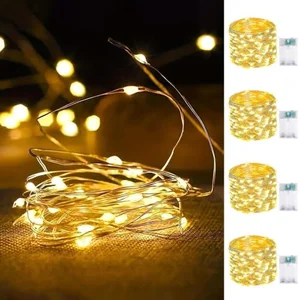 |
4 Pack Fairy Lights Battery Operated, 16ft 50 LED Warm White – $17.99 Four separate battery packs let you run one strand on the dash, one around the rear window, and one on a roof rack or grille without splitting a single long strand thin.
|
Battery-Operated vs. Hardwired: Which Is Right for Your Car?
Not every string of Christmas lights sold for cars works the same way. Some, like the ones covered here, run entirely on their own batteries. Others are meant to be hardwired directly into your car’s electrical system, tapping the same 12-volt battery that starts your engine. The two approaches solve different problems.
| Feature | Battery-Operated | Hardwired to Car Battery |
|---|---|---|
| Power source | Own AA/AAA/rechargeable pack | Car’s 12V starter battery |
| Installation | Clip, stick, or tuck in place — no tools | Adapter, fuse, and wiring knowledge required |
| Risk to car | None — fully isolated from the car’s electronics | Can drain or damage the battery if wired wrong |
| Runtime | Roughly 40 to 100+ hours per battery set | Runs as long as the engine or battery allows |
| Best for | Interior touches, quick exterior displays, rentals | Permanent installs on a car you own and maintain |
If you are drawn to the idea of a permanent, always-on display, our guide on how to hook up Christmas lights to a car battery safely covers the fuses and low-voltage lights that setup actually requires — it also warns, correctly, that this is generally not recommended for standard household lights due to the risk of damage to the lights, the battery, and fire hazards. Battery-operated lights sidestep all of that by design, which is why they are the more common choice for most car owners.
How to Choose the Best Battery-Operated Lights for Your Car
Most listings look interchangeable at a glance, but a few specs decide whether a set holds up on a car and lasts more than one holiday season.
- Battery type: Most sets take 2 or 3 AA or AAA batteries. Rechargeable NiMH batteries cost more upfront but pay for themselves after two or three swaps if you plan to use the lights every holiday season.
- Light modes: Steady-on mode uses the least power and lasts the longest. Flashing or fade modes look festive but can drain batteries noticeably faster, so a set with an adjustable mode switch gives you more control over runtime.
- Water resistance: Anything going on the exterior of the car needs an IP44 rating or higher (splash-resistant); IP65 or better is safer if the car sits outside through rain or snow. Interior-only strands do not need a rating at all.
- Wire type: Thin copper wire bends and holds a shape well for interior wraps around a mirror or vent, but it is more fragile over time. Rubber- or PVC-coated wire is stiffer but holds up much better against sun exposure and repeated door slams if it is going along a window frame.
- Mounting method: Look at how the strand actually attaches. Small plastic clips or hooks are reusable and will not damage paint or trim. Adhesive tape works once and can pull off clear coat or leave residue on interior plastic when removed.
One thing worth knowing before you buy: cold weather noticeably shortens battery life. Standard alkaline AA batteries lose roughly a fifth of their usable capacity as temperatures drop toward freezing, which is exactly when most people are running these lights on a parked car. If you are decorating for a cold-climate holiday drive, budget for more frequent battery swaps than the package claims, or use lithium AA batteries, which hold up much better in the cold.
Where and How to Install Battery-Operated Lights on Your Car
Placement matters as much as the lights themselves — both for how good the display looks and for whether it is actually safe to drive with.
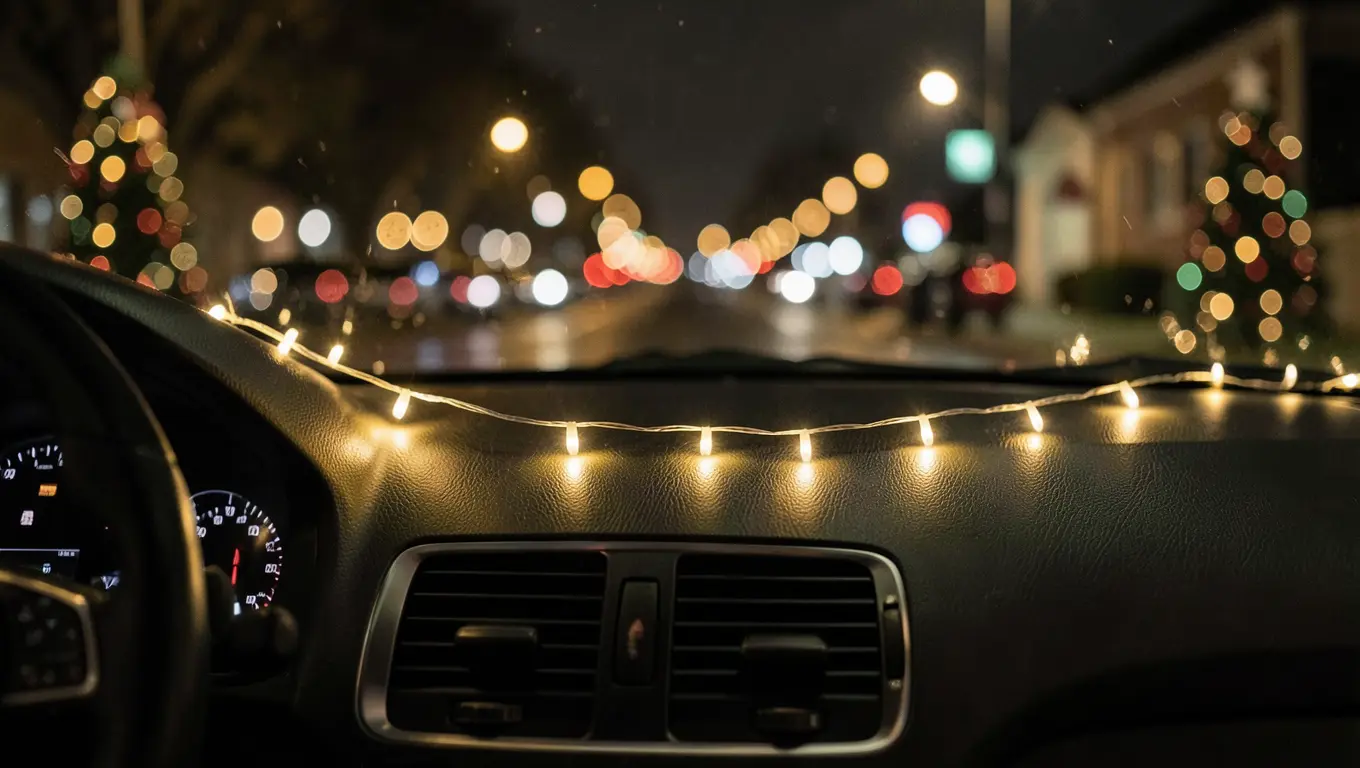
- Dashboard and console: Tuck the strand along the base of the windshield or around the edges of the dash, well below your sightline. Keep the battery pack in a cup holder or console tray where it will not slide around.
- Rearview mirror: A short strand wrapped loosely around the mirror stem adds a festive touch without swinging into your line of sight — leave enough slack that it does not pull the mirror out of position.
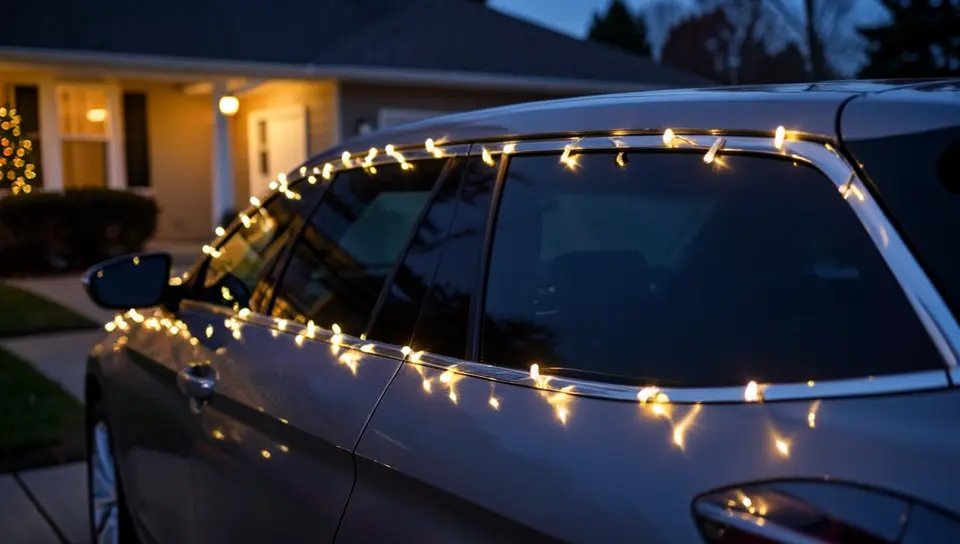
- Window and door trim: Use the strand’s clips to run lights along the rubber weatherstripping or trim around a rear window. This keeps the wire off the glass itself and out of the way of wipers or window motors.
- Roof rack or grille: These are the sturdiest exterior mounting points and give the most visible display. Zip-tie or clip the strand rather than taping it directly to painted surfaces.
- Areas to avoid entirely: Never run lights across the windshield, side mirrors, headlights, taillights, brake lights, turn signals, or license plate. Covering any of these can obstruct your view or make you harder for other drivers to read, which is the actual safety issue behind most local rules on decorated cars.
Are Battery-Operated Christmas Lights Safe to Use on a Car?
Yes, with a few common-sense precautions. Because the battery pack is completely separate from your car’s electrical system, there is no way these lights can drain your starter battery, blow a fuse, or interfere with anything the car itself runs on — that risk only exists with lights wired directly into the car’s battery.
The real safety considerations are about visibility, not electricity. Keep every light off the windshield, mirrors, and any lens the car uses to signal (headlights, taillights, brake lights, turn signals). Rules on driving with a fully lit-up car vary by state and by how much of the vehicle is covered, so if you plan to drive around with exterior lights on rather than just park with them, check the specifics in our guide on whether it is legal to cover your car with Christmas lights before you head out.
Frequently Asked Questions
Do Battery Operated Christmas Lights Drain My Car’s Battery?
No. Battery-operated string lights run entirely on their own AA, AAA, or rechargeable battery pack, which is completely separate from your car’s 12-volt starter battery. You could leave a battery-operated strand running for days and it would have zero effect on whether your car starts.
How Long Do the Batteries Last?
Most sets run 40 to 100+ hours on a fresh set of alkaline batteries in steady-on mode, less if you use a flashing or fading mode, which draws more power. Cold weather also shortens runtime — alkaline batteries lose roughly 20% of their capacity near freezing, so expect more frequent swaps in winter. Lithium AA batteries cost more but hold their charge much better in the cold.
Can I Leave Battery Operated Lights on My Car Overnight?
Yes, since they draw power from their own battery pack rather than the car. The only downsides are faster battery drain and, for lights left outside, exposure to dew or rain — so stick to sets rated IP44 or higher for anything left on the exterior overnight.
Is It Legal to Drive With Christmas Lights on My Car?
It depends on where you live and how the lights are placed. Most jurisdictions allow decorative lights as long as they do not obstruct the windshield, mirrors, headlights, taillights, or signals, but specific rules vary by state. See our dedicated guide on the legality of covering a car in Christmas lights before driving around with a fully decorated exterior.
What Is the Difference Between Battery Operated and Plug-In Car Christmas Lights?
Battery-operated lights run on their own internal battery pack and can go anywhere on or in the car with no wiring at all. Hardwired or “plug-in” lights tap directly into the car’s 12-volt battery through an adapter, which gives unlimited runtime but requires correct wiring, a fuse, and low-voltage lights designed for the job to avoid damaging the car’s electrical system.
Where Should I Avoid Placing Lights on a Car?
Never run lights across the windshield, side mirrors, headlights, taillights, brake lights, turn signals, or license plate. These all need to stay fully visible and unobstructed for the car to be safe and legal to drive.
Conclusion
Battery operated Christmas lights are the simplest way to decorate a car for the holidays: no wiring, no risk to your car’s actual battery, and no tools beyond a set of clips. Pick a set with the runtime, water resistance, and mounting style that match where you plan to use it, keep every strand clear of windshields, mirrors, and signal lights, and swap batteries a little more often once temperatures drop. That is really all it takes to turn a plain car into a rolling holiday display.
Products related to this article
Sponsored / affiliate links. As an Amazon Associate I earn from qualifying purchases. I may earn additional commission from eligible campaigns.