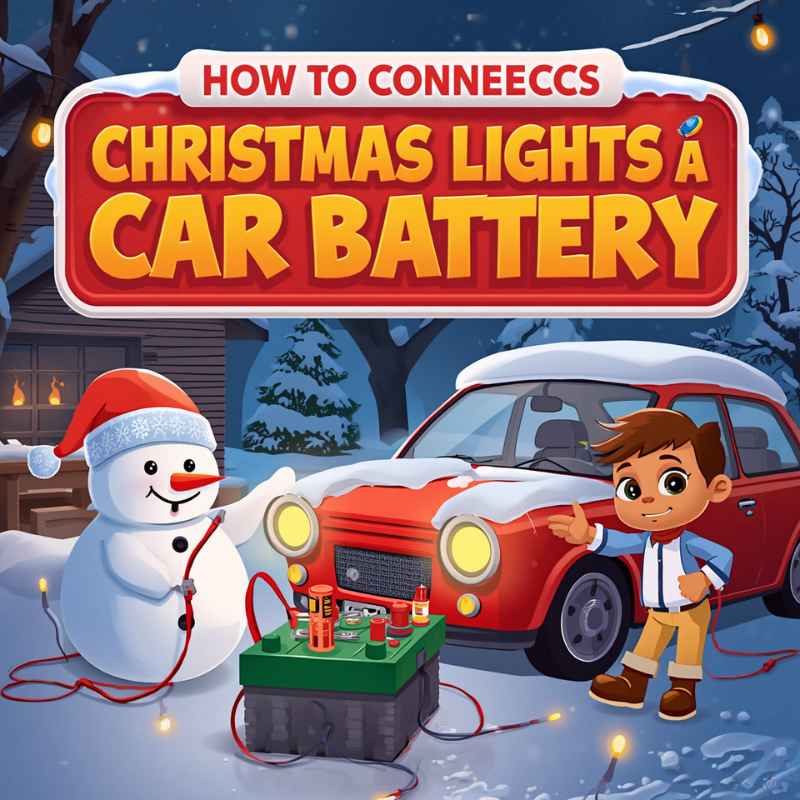
How To Hook Up Christmas Lights To A Car Battery Safely
Hooking up Christmas lights to a car battery might sound like a bright idea for a dazzling holiday display. It’s easy to imagine those twinkling lights illuminating your yard or driveway. But before you grab your tools, it’s super important to know how to do it safely — including whether it’s even legal to drive with them lit up.
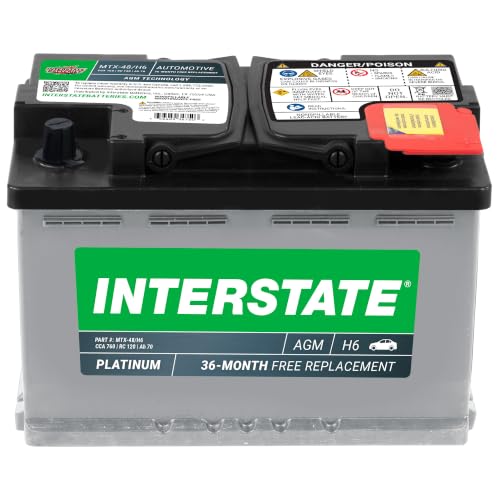
This isn’t like plugging lights into a wall socket. A car battery holds a lot of power. Getting it wrong can be risky.
We’ll walk you through what you need to know so your holiday cheer doesn’t turn into a scary mishap.
Connecting Christmas lights directly to a car battery requires specific adapters and a deep understanding of voltage. It’s generally not recommended for standard household lights due to potential damage to the lights, the battery, and fire hazards. If you’d rather skip wiring into the car’s electrical system entirely, see our guide to battery operated Christmas lights for your car instead. If you must, use only low-voltage (12V) lights designed for this purpose and ensure proper wiring with fuses.
Understanding Car Batteries and Power
A car battery is a powerful thing. It’s built to start your engine. This means it can send a lot of electrical energy very fast.
Most Christmas lights you buy for your house run on household power. This is usually 120 volts. Your car battery gives out only 12 volts.
So, it’s a much lower voltage.
However, even 12 volts can be dangerous if handled wrong. The car battery can supply a very high amount of electrical current. This is called amperage.
This current can heat up wires. It can melt plastic. It can even start a fire.
Standard Christmas lights are not made for this kind of power. They will likely burn out quickly.
You might also drain your car battery. If you use too much power for too long, your car won’t start. This is a common problem people run into.
They want pretty lights, but forget the car still needs its battery to work. It’s like using your phone’s battery to power a small TV. It might work for a bit, but it will drain very fast.
Why Standard Christmas Lights Are Not a Good Idea
Most Christmas lights you buy for indoor or outdoor use are made for your home’s electrical system. They plug into a standard wall outlet. This outlet provides alternating current (AC) at 120 volts.
Inside these lights, there are often small bulbs or LEDs. These are designed to handle that specific voltage and power type.
Connecting these lights directly to a 12-volt car battery is a recipe for disaster. The voltage is too low for them to even turn on properly. If you try to force them, you could overheat the wires.
This can melt the insulation. It can create short circuits. A short circuit is when electricity takes a path it shouldn’t.
This can cause sparks and potentially a fire. Your lights will also likely be destroyed.
Think about it like trying to power a toaster with a tiny button battery. It just won’t work. The power source isn’t right for the device.
For Christmas lights, the power from the car battery is too different. It’s not designed to be compatible.
Even if you manage to get them to light up, it will be very dim. The current from the battery might not be enough. Or, it might be too much for the thin wires in the light strings.
This is where safety becomes a big concern. Damaged wires are a fire risk. They can also shock you.
What If I Really Want to Use My Car Battery?
If you’re set on using your car battery for a special display, you can’t just plug in your regular lights. You need special equipment. The most important thing is to use lights designed to run on 12-volt direct current (DC) power.
These are often called “12V lights.”
You can find these types of lights. They are sometimes used for RVs, boats, or off-grid applications. They are built to handle the power from a 12-volt battery system.
You can also find special adapters. These are called power inverters. An inverter can change the 12-volt DC power from your car battery into 120-volt AC power.
This is like the power from your wall outlet.
However, using an inverter adds another layer of complexity. You need to make sure the inverter is strong enough for your lights. If your lights use a lot of power, you’ll need a bigger inverter.
Overloading an inverter can also be dangerous. It can damage the inverter and create a fire risk.
Using 12V Christmas lights is the simpler and safer approach. You still need to be careful with how you connect them. Always check the instructions that come with the lights.
They will tell you how to connect them to a 12V power source.
Choosing the Right Lights
Look for 12V DC lights. These are designed for battery power.
Check the wattage. Make sure the total wattage of your lights is not too high for your battery. Small LED strings are usually best.
Use outdoor-rated lights. Even if they are for your yard, they need to withstand weather.
The Dangers of a Direct Connection
Connecting anything to a car battery without the right knowledge is risky. It’s not just about your lights or your car. There are serious safety concerns.
Car batteries contain sulfuric acid. This is a corrosive liquid. If the battery is damaged or leaks, this acid can cause severe burns.
It can also damage surfaces.
Car batteries also produce hydrogen gas. This gas is highly flammable. It can build up around the battery.
If there’s a spark, it can cause an explosion. This is why you should always be careful when working near a car battery. Avoid creating sparks.
Ensure good ventilation.
When you connect wires directly, you bypass all the safety features. Household power outlets have circuit breakers or fuses. These are designed to cut off power if there’s too much current.
This prevents fires. A direct connection to a car battery has none of that protection.
The wires in standard Christmas lights are often thin. They can’t handle the amount of current a car battery can push out. This can cause the wires to overheat very quickly.
The plastic insulation can melt. Exposed wires can then touch each other or other metal parts. This is a short circuit.
It can lead to sparks, smoke, and fire.
I remember a time when I was helping a friend set up a temporary outdoor display. We had some extra battery packs for some equipment. He thought we could use one to power a string of lights.
He just stripped the wires and twisted them on. Within minutes, the wires were hot to the touch. Smoke started to curl up.
We had to yank them off fast. It was a close call. We learned a valuable lesson that day about respecting electrical power.
Essential Safety Precautions
If you decide to proceed with powering lights from a car battery, safety must be your top priority. This means taking extra steps. It’s not optional.
It’s critical for preventing accidents.
Use the Right Lights: As mentioned, only use 12V DC lights. Never try to use standard household lights.
Get a Fuse: This is super important. You need to put a fuse in the circuit. A fuse is a small device designed to break the circuit if too much current flows through it.
This protects your lights and prevents fires. The fuse should be rated lower than the wire’s capacity. It also should be lower than the maximum current your lights will draw.
Use Proper Connectors: Don’t just twist wires together. Use proper electrical connectors. These ensure a secure connection.
They also help prevent short circuits. Crimp connectors or terminal blocks are good choices.
Insulate Everything: Make sure all connections are well insulated. Electrical tape is okay for temporary fixes, but proper heat-shrink tubing is better. You don’t want any bare wires showing.
Keep it Dry: Water and electricity are a dangerous mix. Make sure your setup is completely protected from rain and snow. Even dew can be a problem.
Ventilate: If the battery is enclosed, ensure there is good airflow. This helps prevent hydrogen gas buildup.
Don’t Run the Engine Unnecessarily: While running the engine charges the battery, it also produces exhaust fumes. It’s also noisy and uses fuel. For short displays, it’s usually better to run on battery power alone.
But be mindful of draining the battery too much.
Monitor Heat: Feel the wires and connections periodically. If they are getting warm, turn off the power immediately. Something is wrong.
Quick Safety Checklist
- Use only 12V DC lights.
- Install an inline fuse.
- Use secure, insulated connectors.
- Protect from moisture.
- Ensure good ventilation.
- Check for heat.
How to Wire 12V Lights to a Car Battery
Here’s a general idea of how you might wire 12V DC Christmas lights to a car battery. Remember, this is for 12V lights ONLY. And always consult the specific instructions for your lights and any adapters you use.
First, you need your 12V light string. You’ll also need your car battery. Make sure the car is turned OFF.
You’ll need some lengths of appropriately gauged wire. You’ll also need an inline fuse holder and the correct fuse. Finally, you’ll need connectors for the battery terminals and for the light string wires.
Step 1: Disconnect the Battery (Optional but Safer). For ultimate safety, you could disconnect the battery. But often, you can work with it connected. Just be extra careful not to short anything.
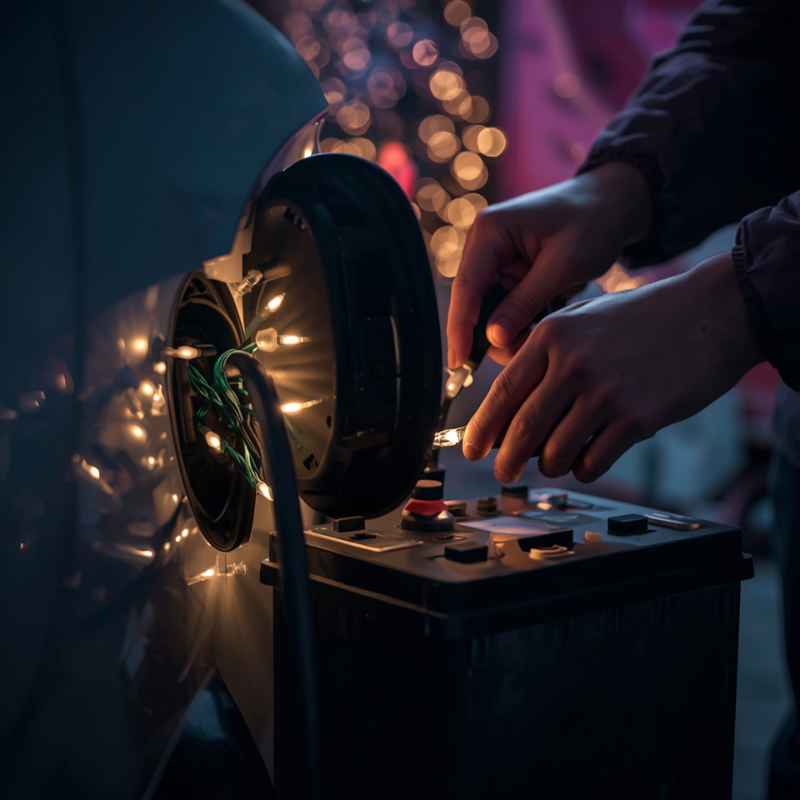
Step 2: Connect to the Positive Terminal. Take a wire and connect one end to the positive (+) terminal of your car battery. You might use a ring terminal that bolts onto the battery post. This wire will go to your fuse holder.
Step 3: Install the Fuse. Connect the other end of the wire from the positive terminal to one side of your inline fuse holder. Then, connect another wire from the other side of the fuse holder. This wire will go to the positive wire of your Christmas lights.
Step 4: Connect to the Negative Terminal. Take another wire. Connect one end to the negative (-) terminal of your car battery. This wire will go directly to the negative wire of your Christmas lights.
Step 5: Connect to the Lights. Now, connect the wire coming from the fuse holder to the positive wire of your 12V light string. Connect the wire from the negative battery terminal to the negative wire of your 12V light string. Make sure these connections are secure and insulated.
Step 6: Test. Before you put everything in place, carefully turn on the power. You might need to turn the car’s ignition to accessory mode, or simply have the battery connected. If everything is wired correctly, your lights should light up.
Check for any signs of overheating or odd behavior.
This setup sends power directly from the battery. The fuse acts as your safety net. It stops too much current from flowing.
It’s a simple circuit. But every connection needs to be perfect.
Wiring Flow
(+) Battery Terminal → Wire → Inline Fuse Holder → Wire → (+) Light String Wire
(-) Battery Terminal → Wire → (-) Light String Wire
Using an Inverter: An Alternative Path
If you have standard household Christmas lights, an inverter is your only option. An inverter takes the 12V DC power from your car battery and converts it into 120V AC power. This is the type of power your household lights need.
Choosing the Right Inverter: The most crucial step is selecting an inverter with enough power. You need to know the total wattage of your Christmas lights. Check the packaging or the lights themselves for this information.
Add up the wattage of all the light strings you plan to use.
Inverters are rated in watts. You should choose an inverter that can handle at least 20% more wattage than your lights require. This gives you some headroom.
For example, if your lights use 100 watts, get an inverter rated for at least 120 watts. For continuous use, a higher rating is even better.
Connecting the Inverter: Inverters usually connect directly to the car battery terminals. They have red (+) and black (-) cables. Make sure you connect them correctly.
Red to positive, black to negative. Most inverters also have a power switch.
Plugging in the Lights: Once the inverter is connected and switched on, it will provide a standard electrical outlet. You can then plug your regular Christmas light strings into this outlet. Treat it like any other wall outlet.
Important Considerations with Inverters:
- Battery Drain: Inverters use some power themselves, even when nothing is plugged in. They can drain your car battery faster than direct 12V connections.
- Heat: Inverters can get warm during operation. Ensure they have good ventilation.
- Noise: Some inverters make a humming noise.
- Waveform: Cheaper inverters produce “modified sine wave” power. Some sensitive electronics don’t like this. Most Christmas lights are fine, but it’s something to be aware of. “Pure sine wave” inverters are better but more expensive.
I used an inverter once to power some decorations at a remote campsite. It was a small one, maybe 150 watts. It powered a few strings of lights and a small fan.
The key was knowing the total wattage. I wrote it down on a sticky note and stuck it to the inverter. It helped me not overload it.
The biggest surprise was how quickly it drained the car battery if I wasn’t careful. I had to start the car every hour or so to recharge.
Inverter Power Calculation
Step 1: Find Wattage. Check each light string for its wattage.
Step 2: Sum Wattage. Add up the wattage of all strings.
Step 3: Add Buffer. Multiply total wattage by 1.2 (for 20% buffer).
Example: 3 strings at 30W each = 90W. 90W * 1.2 = 108W. You need an inverter rated for at least 108W.
A 150W inverter would be a good choice.
Battery Drain and Runtime
One of the biggest concerns when powering Christmas lights from a car battery is how long it will last. This is called battery runtime. It depends on several factors.
Battery Capacity: Car batteries are rated in amp-hours (Ah). A typical car battery might be around 50-70 Ah. This means it can supply 50-70 amps for one hour, or 1 amp for 50-70 hours.
However, you should never fully drain a car battery. Doing so can damage it.
Power Draw: How much power your lights use is measured in watts. To figure out how long the battery will last, you need to know its capacity and the power draw of your lights.
Calculating Runtime (Simplified):
First, find the total amperage your lights draw. If you know the wattage (W) and the voltage (V), you can find amperage (A) using this formula: A = W / V.
For 12V lights: If your lights draw 24 watts, they pull 2 amps (24W / 12V = 2A).
Now, divide your battery’s amp-hour capacity by the amperage your lights draw. This gives you the total theoretical runtime. For example, a 60 Ah battery powering 2 amps would last 30 hours (60 Ah / 2A = 30 hours).
Remember: This is a rough estimate. You don’t want to discharge the battery completely. A good rule of thumb is to not go below 50% charge.
So, your usable runtime is roughly half of the calculated total.
Using an Inverter: If you use an inverter, the calculation changes. You’ll use the inverter’s wattage rating and its own efficiency. Inverters are not 100% efficient.
Some power is lost as heat. It’s harder to calculate precisely. Generally, using an inverter will drain the battery faster than using direct 12V lights.
I learned this the hard way during a power outage one year. I hooked up some Christmas lights to my car battery using an inverter. I wanted to have some festive cheer.
I figured my battery was strong. I left them running for several hours. The next morning, my car wouldn’t start.
I had completely drained the battery. I had to call for a jump start. It cost me time and money.
Now, I always keep a separate deep-cycle battery for things like that, or I limit my runtime and start the car often.
Battery Health Tips
- Avoid deep discharges. Don’t let the battery go completely dead.
- Keep it charged. Use a battery charger if the car isn’t running regularly.
- Clean terminals. Corrosion on terminals can reduce power flow.
- Use a deep-cycle battery if possible. These are designed for continuous low-level discharge, unlike car starting batteries.
When to Worry: Red Flags to Watch For
Most of the time, if you follow safety steps, things will be fine. But it’s important to know what to look out for. These are red flags that indicate a problem.
You need to stop and investigate immediately.
Hot Wires or Connectors: If any part of the wiring or connections feels hot to the touch, this is a serious sign of resistance or a short circuit. Turn off the power right away. Let it cool down.
Then, check all your connections. Make sure they are tight and properly insulated.
Sparks or Smoke: Any sign of sparks or smoke means there is an electrical fault. This is extremely dangerous and a fire hazard. Disconnect the power source immediately.
Do not try to fix it until it has cooled and you can identify the problem safely. Sometimes, this means the equipment is faulty.
Flickering or Dim Lights: While some flickering might happen with very cheap lights or a weak battery, consistent dimming or flickering can mean a few things. It could be a loose connection. It could be the battery is very low.
Or, the wire gauge might be too small for the distance or current. If you’re using 12V lights, ensure the voltage is stable.
Unusual Smells: A burning plastic smell is a major warning. It means insulation is melting. This is a fire risk.
Stop using the lights immediately. Identify the source of the smell.
Battery Warning Lights: If you see a warning light on your car’s dashboard related to the charging system, it could mean you’re putting too much strain on the electrical system. Even if the car is off, the battery is still being used.
Short Circuit in Lights: If one section of your 12V light string suddenly goes out and the rest are still on, it might indicate a short circuit within the lights themselves. If you can’t find the problem, it’s best to replace the string.
I once saw a neighbor’s display that was partially shorted. The wires were visibly warped and blackened in one spot. It was a clear sign of overheating.
They were lucky it didn’t catch fire. It was a strong reminder to always check for heat and damage. It’s better to be safe than sorry.
Red Flag vs. Normal
Red Flag: Wires feel very hot.
Normal: Wires might feel slightly warm with heavy use.
Red Flag: Visible sparks or smoke.
Normal: Steady, bright light from the LEDs.
Red Flag: Burning plastic smell.
Normal: No unusual odors.
Alternatives to Using Your Car Battery
While using a car battery for Christmas lights might seem tempting, especially if you want a portable display or lack outlets, there are many safer and easier alternatives. These options often provide similar results without the risks.
Portable Power Stations: These are like large power banks specifically designed for AC and DC output. They are safe, rechargeable, and much easier to use than a car battery. You can plug your regular household lights into them.
They are an investment, but great for many uses beyond Christmas lights.
Solar-Powered Lights: Many outdoor Christmas lights now come with small solar panels. You stake them into the ground during the day, and they charge up. At night, they turn on automatically.
They are eco-friendly and require no wiring or external power source.
Battery-Operated LED Lights: These use standard AA or D-cell batteries. They are great for smaller displays or accent lighting. LED lights are very energy-efficient, so the batteries last a long time.
You can find them in many styles and colors.
Extension Cords: If you need to reach a spot further from an outlet, a good quality outdoor extension cord is the standard solution. Make sure it’s rated for outdoor use and is the correct gauge for the power draw of your lights.
Generators: For larger displays or if you need a lot of power away from an outlet, a small portable generator can be used. However, these require fuel, maintenance, and can be noisy. They also produce exhaust fumes.
I decided to invest in a portable power station after a couple of close calls with car batteries and extensions cords that weren’t quite long enough. Now, I can set up lights anywhere without worrying about draining my car or running extension cords across walkways. It’s given me a lot more freedom and peace of mind for decorating.
Alternative Power Sources
- Portable Power Station: Safe, rechargeable, AC/DC output.
- Solar Lights: Eco-friendly, charges in daylight, automatic at night.
- Battery-Operated LED Lights: Uses AA/D batteries, energy-efficient.
- Outdoor Extension Cords: Standard solution for reaching outlets.
Conclusion
Hooking up Christmas lights to a car battery is technically possible, but it’s a path fraught with potential dangers. Standard household lights are incompatible and risky. If you choose to use 12V DC lights, strict adherence to safety protocols, including proper wiring, fuses, and insulation, is essential.
Always prioritize your safety and the safety of those around you. When in doubt, opt for the many safer alternatives available. Your holiday spirit should shine bright, not cause a safety hazard.
Frequently Asked Questions
Can I plug regular Christmas lights into a car battery?
No, you should not plug regular household Christmas lights directly into a car battery. They are designed for 120-volt AC power, while a car battery provides 12-volt DC power. Trying to do so can damage the lights, create a fire hazard, or even damage the car’s electrical system.
What kind of Christmas lights can I use with a car battery?
You must use Christmas lights specifically designed for 12-volt DC power. These are often labeled as “12V DC lights” and are commonly used in RVs or boats. Standard household lights will not work safely.
How do I wire 12V Christmas lights to a car battery safely?
To wire 12V lights safely, connect the positive (+) wire of the lights through an inline fuse holder to the positive terminal of the battery. Connect the negative (-) wire of the lights directly to the negative terminal of the battery. Ensure all connections are secure, insulated, and protected from moisture.
Will powering lights drain my car battery?
Yes, powering lights will drain your car battery. The amount of drain depends on the wattage of the lights and how long they are connected. You should avoid draining the battery below 50% of its capacity to prevent damage and ensure your car can still start.
What is an inverter and how does it help?
An inverter converts the 12-volt DC power from your car battery into 120-volt AC power, which is what standard household electronics and Christmas lights use. If you want to use regular household lights, you need an inverter, but ensure it has enough wattage capacity for your lights and be aware it uses battery power.
What are the risks of connecting lights to a car battery?
The risks include fire hazards from overheating wires, short circuits, damage to the lights and car battery, electrical shocks, and potential battery explosions due to flammable hydrogen gas. It’s crucial to understand and mitigate these risks.
Products related to this article
Sponsored / affiliate links. As an Amazon Associate I earn from qualifying purchases. I may earn additional commission from eligible campaigns.