Best Racing Oil Coolers for Turbo Cars: we compared
For most turbo cars, the best racing oil cooler is a stacked-plate 19-row with a thermostat for mixed street and track use, or a 25-row if the car sees long road-course sessions. Skip it, and oil thins out, pressure falls, bearings wear, and a cheap cooler can also overcool the engine on the street. This guide starts with failure modes, then covers cooler sizes, thermostatic setups, and kit choices that hold heat in check without adding restriction.
This guide is part of our Race car types and specs series.
Quick comparison
| Product | Badge | Best for | Price | ||
|---|---|---|---|---|---|
 |
Mishimoto – MMOC-19BK Universal 19 Row Oil Cooler, BlackMishimoto | Upgrade pick | 19-row stacked-plate cooler, -10AN ports | $196.95
Price as of 29 Sep 2026
|
View |
 |
Setrab 1 Series ProLine Engine Oil Cooler, 10 Row with M22SETRAB | Also great | 10-row Setrab ProLine, M22 female ports | $162.38
Price as of 29 Sep 2026
|
View |
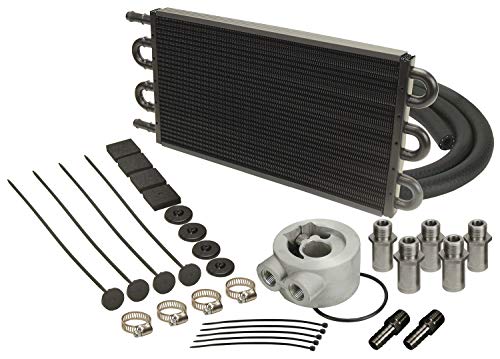 |
Derale 15502 Engine Oil Cooler Kit,BlackDerale | Budget pick | Derale thermostatically controlled, copper/aluminum | $183.27
Price as of 29 Sep 2026
|
View |
The top pick here is the Mocal-style thermostatic stacked-plate kit for the broadest mix of street manners and track control. The safest pick for a street-driven turbo car is the thermostatic option, because warm-up protection matters as much as peak cooling.
How we chose
We compared cooling efficiency against pressure drop, because turbo engines can be hurt by both heat and restriction. We also looked at fitment around intercoolers, radiators, and crash bars, since front-end packaging is where many “universal” kits fail in practice.
Thermostat quality and hose quality mattered too. A good cooler that is plumbed with poor AN adapters, long soft hose runs, or no warm-up control can create more problems than it solves.
Finally, we weighed serviceability. A kit that lets the filter be reached easily, survives heat cycles, and is simple to inspect for seepage tends to age better on a turbo street car.

Turbo-car cooling decision table
| Use case | Cooler style | Thermostat needed? | Hose/fitting complexity | Likely install risk |
|---|---|---|---|---|
| Street-driven turbo car with occasional spirited pulls | Stacked-plate, 19-row | Yes | Medium | Medium, mostly packaging and leak checks |
| Frequent track days with long sessions | Stacked-plate, thicker core or 25-row | Recommended | Medium to high | Medium to high, due to airflow and line routing |
| Mild-power street build with simple install goals | Tube-and-fin kit | Preferable | Low to medium | Low, if space is open |
| Tight front-end packaging with intercooler and crash bar constraints | Compact stacked-plate or remote-mounted solution | Usually yes | High | High, because core size and routing are tight |
Symptom-to-fix checklist
- Oil temperature climbs lap by lap: move to a larger stacked-plate cooler, improve airflow path, and check whether the thermostat is opening fully.
- Slow warm-up after a cold start: add or verify a thermostatic sandwich plate, shorten unnecessary line length, and avoid an oversized cooler for the duty cycle.
- Oil pressure drops at high rpm: inspect for excessive cooler restriction, too-small hose, long plumbing runs, or an adapter stack that adds pressure loss.
- Leaks around fittings: check AN flare condition, thread type, and hose end compatibility before blaming the cooler core itself.
- Heat soak after shutdown: route the cooler to clean airflow, verify mounting away from stagnant pockets, and consider better ducting or heat shielding.
Mocal thermostatic stacked-plate kit: best for mixed street and track use
This is the best fit for a turbo car that still sees real street miles, because the thermostatic control helps oil route through the cooler only when it is actually hot enough. Stacked-plate construction also suits turbo heat loads better than a basic tube-and-fin core, with better cooling efficiency for the same frontal area.
The appeal is balance. A thermostatic sandwich plate protects warm-up, which matters on cold starts and short trips where a cooler can otherwise over-chill the oil and keep the engine out of its happy range for too long.
The drawback is complexity. Compared with a simple universal cooler, you are adding more hose, more joints, and more decisions about mounting space, so the chance of a seep or clearance issue rises if the install is rushed.
Why the thermostat matters
A thermostatic sandwich plate is the part that keeps oil routing sane on the street. Until oil reaches the opening temperature, flow bypasses or limits the cooler path, which keeps the engine from running too cold and helps the turbo oil warm up evenly.
For mixed use, that matters more than the biggest possible cooler core. A giant cooler without control can slow warm-up, thicken the oil, and leave the engine noisier and less protected during the first part of the drive.
Fitment notes
Check the AN port size, hose length, and the space around the filter mount before buying. On turbo cars, the sandwich plate often has to coexist with oil filter housings, downpipe heat, and a crowded front end, so the cleanest route is rarely the shortest-looking one.
Mishimoto budget cooler kit: best for street-driven builds on a tighter budget
This makes sense when the goal is to cut oil temperature without paying for a more complex setup. Based on the spec sheet and owner feedback, the 19-row stacked-plate layout and -10AN ports give it the kind of basic performance most street turbo cars need.
The drawback is that budget-friendly does not mean friction-free. A lower-cost cooler still needs proper hose quality, thoughtful mounting, and a thermostat if the car sees short trips or cold climates; otherwise it can still overcool on the street.
For a street car, this is the point where cooler size, line length, and plumbing quality should be checked together. A decent core with poor adapters is still a poor system.
What to check before buying
Pay attention to the oil cooler core size, because width, height, and thickness all fight for room around the crash bar, radiator, intercooler, and ducting. If the cooler forces a bad mounting location, the front end may look full while airflow is actually compromised.
Also check the pressure side of the system. Turbo cars are sensitive to oil pressure drop, and a cool-looking kit with tiny hose or a restrictive routing path can create the wrong kind of tradeoff.
Setrab-style stacked-plate setup: best for track-heavy turbo cars

This is the pick for cars that spend more time on track than on the street. Research and parts experience both point the same way: a stacked-plate cooler gives better cooling efficiency and better durability under repeated heat cycles than a basic tube-and-fin design.
The compact 6.42-inch size is a packaging advantage in tight bays, and the M22 female ports can be adapted with the right fittings. That said, compact size can be both a blessing and a constraint, because a small core may need very clean airflow or a larger core elsewhere in the system.
The drawback is that track-focused hardware often invites aggressive plumbing. Longer lines, more adapters, and additional joints raise the chance of pressure drop and seepage if the installer is casual with thread type and flare quality.
How core thickness and row count matter
More core thickness and more rows can improve heat shedding, but they also add restriction if the airflow path is poor or the engine bay is already crowded. For a turbo car, that matters because track sessions load the oil hard, while the wrong size can still hurt pressure at the end of a long line run.
Track cars also punish weak mounting. A durable stacked-plate core is worth little if it sits in front of another heat exchanger without enough air management.
Mounting and ducting
Front-of-car placement is still the default, but not every open-looking area is a good airflow path. If the cooler is buried behind an intercooler, partially blocked by a radiator, or mounted in stagnant air, it will not perform like the spec sheet suggests.
When space is tight, some cars do better with careful ducting and less-core volume than with a bigger core stuffed into a worse location.
Tube-and-fin kit: best for mild power and simpler installs
A tube-and-fin cooler still has a place. It can cost less, is usually easier to package, and can be fine for mild street turbo cars that do not spend long periods at elevated oil temperature.
The tradeoff is clear: lower cooling capacity and more sensitivity to airflow quality. Tube-and-fin designs can be acceptable when the car is not tracked hard, but they are not the first choice when oil breakdown risk climbs with repeated heat soak or long road-course laps.
That said, the simpler core can make routing easier in a cramped front end. If the owner values straightforward packaging over maximum thermal control, this style can fit the mission better than a thicker, more aggressive cooler.
Where it still makes sense
It works best on mild power, light boost, and cars that need a basic reduction in oil temperature rather than sustained track control. If the car sees mostly commuting, occasional spirited driving, and short heat bursts, the simpler route can be enough.
Once the car starts seeing repeated hot-lap use, the stack-up of benefits shifts toward stacked-plate construction.
What size oil cooler do I need for a turbo car?
Most turbo cars do best with a cooler sized to the use case, not just the horsepower number. A street-first car usually wants a moderate stacked-plate core with a thermostat, while a track-heavy car benefits from a larger or thicker core that can handle sustained heat without driving oil pressure too low.
Size is really three questions at once: core width, core height, and core thickness. If the chosen cooler blocks airflow, fights the intercooler, or forces long hose runs, the wrong size can be worse than a smaller but better-placed unit.
How to match size to the car
Use the smallest core that controls temperature in the car’s actual duty cycle. That means accounting for climate, track session length, shutdown heat soak, and how much front-end space exists after the radiator and intercooler are already in place.
For many turbo street cars, a 19-row stacked-plate cooler with a thermostat is often a good middle-ground choice. For hard track use, the answer often moves toward a larger stacked-plate setup with cleaner airflow and better ducting.
Is a stacked-plate oil cooler better than a tube-and-fin cooler?
Yes, for most turbo cars. A stacked-plate cooler usually gives better cooling efficiency, more track durability, and a stronger balance between temperature reduction and pressure drop than a tube-and-fin design, especially when the engine sees hard boost, heat soak, and long sessions.
Tube-and-fin units can still fit simple builds and lower budgets, but they are typically chosen for packaging or cost rather than outright thermal performance. On a turbo car, that tradeoff becomes more important as oil temperature rises faster under load.
Pressure drop and restriction
The best cooler is not simply the biggest one. Too much restriction can steal oil pressure, especially when the cooler uses long lines, small hose, or an awkward route through the front of the car.
That is why a good stacked-plate design with the right thermostat often wins: it controls heat without forcing unnecessary restriction during cold operation.
Do I need a thermostat with a racing oil cooler?
Most street-driven turbo cars do. A thermostat keeps oil routing sensible during cold starts and short trips, then opens the cooler path once temperature rises enough to need it. That protects warm-up behavior and reduces the risk of overcooling.
Track-only cars in consistently hot conditions can sometimes run without one, but even then the tradeoff is real. The more the car sees mixed use, the more a thermostatic sandwich plate becomes the safer choice.
What the thermostat changes
It changes both routing and behavior. Rather than forcing oil through the cooler all the time, it allows bypass flow until the opening temperature is reached, then sends more flow to the cooler when the engine actually needs heat rejection.
That matters because a turbo engine that stays too cool can suffer from sluggish warm-up and unnecessary viscosity, while one that runs too hot can accelerate oil breakdown and pressure loss.
How do I know if my turbo car needs an oil cooler?
If oil temperature climbs hard on track, heat soak returns quickly after shutdown, or the car is making sustained boost in hot weather, an oil cooler is usually justified. A turbo engine that repeatedly pushes oil into a high-heat zone is telling you the factory margin is gone.
Another sign is pressure behavior. If pressure falls as temperature rises, or the engine feels fine for a few laps and then gets noisy or inconsistent, the oil may be thinning faster than the system can handle.
Common warning signs
Watch for repeated high-temp warnings, hotter oil after each lap, and longer recovery times between sessions. On street cars, poor warm-up and frequent short-trip use can also point toward a thermostat problem or a cooler that is simply too large for the job.
What oil temperature is too hot for a turbo engine?
When oil temperature stays high enough that pressure drops and viscosity falls out of the safe range for the engine’s load, the turbo engine is operating in the danger zone. For a hard-used turbo car, the real warning sign is not a single spike, but temperature that keeps climbing with no recovery.
Track severity matters here. A short pull is one thing; a long session with heat soak after each lap is another. Once the oil cannot shed heat between loads, breakdown risk rises and bearing safety becomes a concern.
What to watch instead of the number alone
Look at the combination of temperature, pressure, and session length. If the number is moderate but pressure is sliding or the engine is heat-soaked after shutdown, the system still needs attention.
That is why a thermostat, the right cooler size, and good airflow all matter together.
Can an oil cooler hurt warm-up on a street turbo car?
Yes. A large cooler without thermostatic control can keep oil too cold for too long, especially on short trips or in cool weather. That can leave the engine running thick oil longer than it should and reduce the protection the driver expected to gain.
A thermostat fixes most of that problem by routing oil around the cooler until the engine actually needs the extra heat rejection. For a street turbo car, that is usually the difference between a smart upgrade and a noisy compromise.
What fittings and hose sizes do racing oil coolers use?
Most performance kits use AN fittings, commonly with size variants such as -8AN and -10AN for the cooler circuit, though the exact choice depends on the kit and engine packaging. The thread type on the adapter must match the port, and hose compatibility must match both the fitting and the pressure requirements.
Braided oil hose is preferred because it handles heat, pressure, and abrasion better than plain hose in crowded engine bays. The best setups also keep line length sensible, since longer runs add volume, complicate routing, and can increase pressure drop.
Leak risk and adapter choices
Most leaks come from poor flare quality, mismatched adapters, or crossed thread types, not from the cooler core itself. A clean AN seal depends on proper mating surfaces, correct hose ends, and careful tightening, especially where the hose meets a sandwich plate or remote filter housing.
Where should I mount an oil cooler on a turbo car?
The best mount is where airflow is clean and consistent, but packaging is the limiter. On turbo cars, that usually means the front of the car with enough clearance for the radiator, intercooler, crash bar, and ducting, while avoiding dead air pockets and heat stacking.
If the cooler sits behind another heat exchanger without enough path for fresh air, performance drops. A good location is one that does not turn the cooler into a decorative part sitting in hot airflow.
Packaging reality
Limited front-end space is common. Intercoolers already compete for room, and many turbo cars have crash bars or condenser packaging that forces the cooler into a compromise position.
In those cases, core thickness, mounting angle, and ducting quality matter more than a bigger part number.
Do I need a sandwich plate for an oil cooler?
Most turbo cars do if the cooler is mounted remotely. A thermostatic sandwich plate gives the system a controlled routing point, keeps warm-up sane, and makes the cooler circuit work only when temperature calls for it. It is especially useful on street cars that see cold starts and short trips.
If the cooler is used on a track-only build with a different plumbing strategy, the answer can change, but for mixed use the sandwich plate is usually the right piece to include.
Which one should you buy
Choose the Mocal-style thermostatic stacked-plate kit if the car is street-first with regular weekend abuse and the owner wants the best balance of warm-up protection and heat control. It is the most complete answer to the turbo-car failure modes: too much heat, too little pressure, and overcooling when the car is cold.
Choose the Mishimoto 19-row budget kit if the goal is sensible cooling on a tighter budget and the car is not seeing constant track duty. Add a thermostat if the car is driven in cooler weather or makes lots of short trips.
Choose the Setrab-style stacked-plate setup if track sessions are the priority and packaging can support careful ducting and plumbing. It is the right direction when durability and thermal control matter more than simplicity.
Choose the tube-and-fin kit only when the car is mild, the install space is simple, and the owner values lower cost and easier packaging over maximum cooling capacity.
For street-first turbo cars, pick the thermostatic stacked-plate kit. For frequent track days, move up in core size and focus on airflow before chasing a bigger cooler.
Products related to this article
Sponsored / affiliate links. As an Amazon Associate I earn from qualifying purchases. I may earn additional commission from eligible campaigns.