How Much Does a Race Car Wrap Cost? Cost Breakdown
A race car wrap usually costs from the low-thousands to the mid-thousands, with partial graphics near the low end and full dirt or NASCAR-style coverage at the high end; simple decal packages can cost less. Bad measurements, weak vinyl, or a rushed install can turn a budget job into peeling edges, wasted panels, and reprints. This guide breaks down real pricing by coverage level and race type, then shows when wrap costs beat paint or custom graphics.
How much does a race car wrap cost?


Typical price ranges by coverage level
Full race car wrap costs the most because it covers every visible panel, uses more vinyl, and takes longer to trim and set. Partial wraps sit in the middle, covering selected sections instead of the whole shell. Spot graphics and vinyl decals cost less because they need smaller print runs, fewer install hours, and less risk when the design changes late.
What most teams actually pay first
Most budget talks start with the visible areas: roof, quarter panels, nose, and rear deck. If the car needs sponsor logos, driver name, and number only, decals can stay well below a full wrap. If the team wants strong visual coverage for partners, the quote rises fast once printed panels and labor are added.
When a quote looks too low
A low number often means the shop skipped prep, removal, or design revisions. It can also mean thin material, limited warranty support, or a quote built for a simpler body than the one in the garage. If the car has old graphics, damaged panels, or tight bodywork, the final bill usually moves upward.
According to Race Car Wraps — Formula One car goes at $15 million.
What changes the price the most?
Body shape, panel condition, removal work, and design changes move race car wrap pricing more than the printed vinyl itself. Shop labor often matters as much as material choice. A clean, simple body costs less. A car with dents, old film, sponsor changes, or awkward contours takes more time and raises the quote.
Body shape and panel count
More panels mean more seams, more trimming, and more time lining up graphics across curves. Flat, predictable surfaces are cheaper. Deep vents, splitters, spoilers, mirrors, and sharp character lines add install time and increase the chance of wasted material. NASCAR-style bodies usually demand more fitting than a simple late model or dirt car shell.
Prep, repair, and removal work
Prep can include cleaning, degreasing, light sanding, badge removal, and fixing chips or lifted edges. Old wrap removal is a separate labor item and can become the biggest surprise on the invoice. If the surface is rough or contaminated, vinyl adhesion suffers, and a shop may charge more to get the panel ready.
Design changes, sponsor swaps, and reprints
Late sponsor changes cost money because printed panels may need to be reworked, cropped, or reprinted. Number changes and logo swaps are cheaper than rebuilding a whole livery, but they still add file prep and install time. Teams that change partners often should budget for revisions, not just the first print.
Shop labor versus material cost
Material is only part of the bill. Labor covers patterning, printing, trimming, panel warming, edge sealing, cleanup, and sometimes removal of the old finish. On complex builds, labor can exceed vinyl cost. That is why two cars with the same overall size can land miles apart in price.
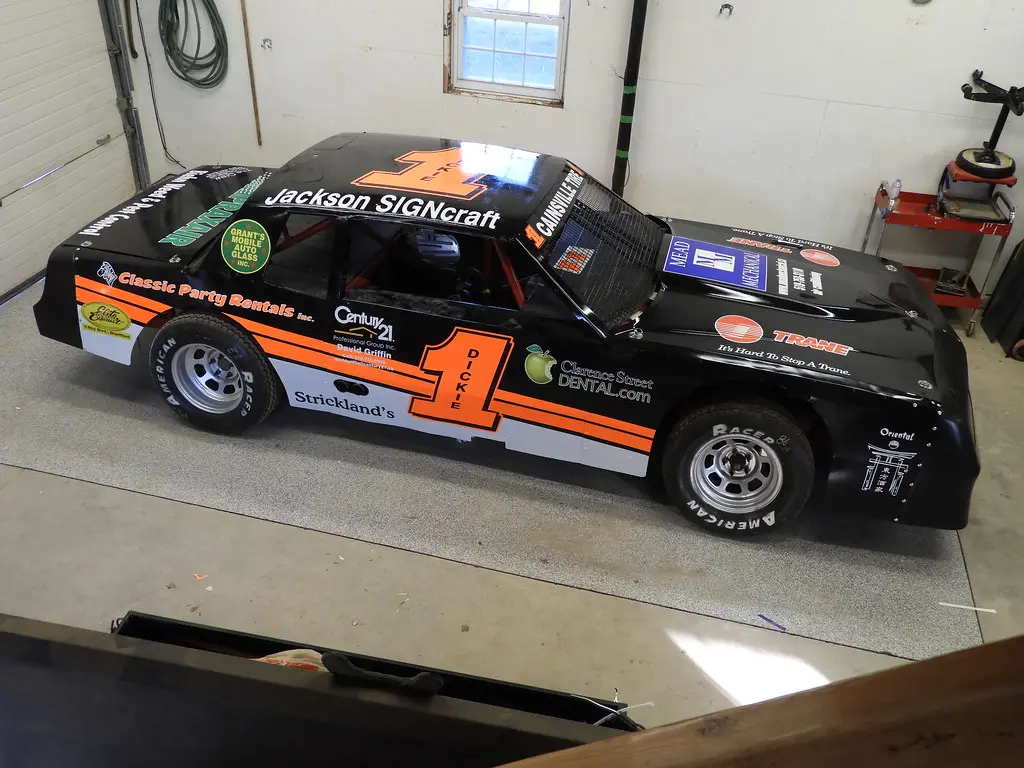
Full race car wrap vs partial race car wrap vs spot graphics vs vinyl decals
A full race car wrap is the highest-cost option because it covers the whole car and gives the most protection and branding space. Partial wraps are the middle option. Spot graphics and vinyl decals cost less, fit smaller budgets, and work well for numbers, names, and sponsor placement.
Full race car wrap
A full race car wrap covers every visible body panel, uses the most material, and usually requires the most labor. Teams choose it for maximum protection and branding, especially when sponsor space matters. A full wrap is described as non-negotiable for maximum protection, but it is not always the smartest spend for a small program.
Partial race car wrap
A partial race car wrap covers selected body panels instead of every surface. It is a lower-cost option than a full wrap and works well for team colors, repeated sponsor blocks, or one strong side profile. For many grassroots racers, this is the best middle-ground option.
Spot graphics
Spot graphics are small logos or sponsor placements on specific areas like the quarter panel, rear bumper, or hood corner. They are usually the lowest-cost graphic solution and are common for advertisements and sponsorships. They can be combined with numbers and names, which makes them useful when a team wants a clean car without paying for full coverage.
Vinyl decals
Vinyl decals are used for driver name, number, and stripes, and they are cheaper than a full wrap. They are more flexible and removable than paint, which helps when cars change hands or sponsors move. For many teams, lettering and small graphics solve the job without paying for unused coverage.
Cost breakdown by race type and coverage
Real pricing depends on body style, surface prep, and how much of the car gets covered. The ranges below are practical planning numbers for teams that need a budget before calling a shop. They are not all-inclusive, but they reflect how quote totals usually separate by coverage level and race type.
| Race type | Coverage level | Low | Mid | High |
|---|---|---|---|---|
| Asphalt | Full wrap | $2,400 | $3,800 | $5,500 |
| Asphalt | Partial wrap | $1,200 | $2,000 | $3,000 |
| Asphalt | Spot graphics | $250 | $600 | $1,100 |
| Asphalt | Vinyl decals | $120 | $300 | $700 |
| Dirt | Full wrap | $2,700 | $4,200 | $6,000 |
| Dirt | Partial wrap | $1,300 | $2,200 | $3,300 |
| Dirt | Spot graphics | $300 | $700 | $1,200 |
| Dirt | Vinyl decals | $150 | $350 | $800 |
| NASCAR-style build | Full wrap | $4,500 | $6,500 | $9,000 |
| NASCAR-style build | Partial wrap | $2,200 | $3,800 | $5,500 |
| NASCAR-style build | Spot graphics | $500 | $1,000 | $1,800 |
| NASCAR-style build | Vinyl decals | $250 | $500 | $1,000 |
Asphalt car pricing table
Asphalt race car wraps often favor bright, glossy finishes because sponsor visibility matters and the surface is usually smoother. That smoother body can help installation, but damage, old adhesive, and repainted panels still raise labor. Asphalt cars also see road debris, so clean adhesion matters if the wrap needs to stay put at speed.
Dirt car pricing table
Dirt race car wrap jobs usually need tougher material choices and more abrasion planning. The body gets dirty fast, panels see repeated scraping, and corners take more abuse. Dirt racing wraps should be scratch-resistant, and many teams choose matte finishes or subdued finishes so wear is less visible between events.
NASCAR-style build pricing table
how much does it cost to wrap a nascar race car and how much does it cost to wrap a nascar both trend higher because the body shape, sponsor demands, and shop labor are more involved. Template use helps, but labor still rises when the car needs precise branding, repeated reprints, or high-end finishing across a large, complex body.
Labor line items that move the total
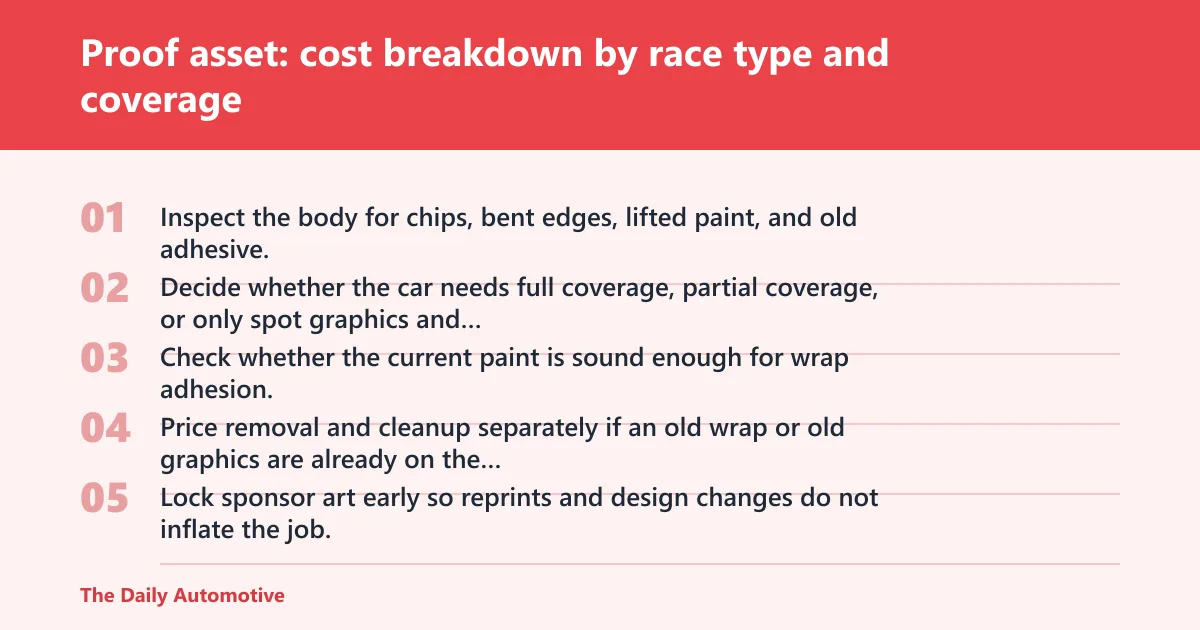
These items usually move the quote the most: surface prep, old wrap removal, repair of chips or dents, design revisions, sponsor swaps, reprints, install time, edge finishing, and post-install cleanup. Vinyl adhesion is tied to prep quality, so a cheaper quote can cost more later if edges lift or panels fail early.
- Inspect the body for chips, bent edges, lifted paint, and old adhesive.
- Decide whether the car needs full coverage, partial coverage, or only spot graphics and decals.
- Check whether the current paint is sound enough for wrap adhesion.
- Price removal and cleanup separately if an old wrap or old graphics are already on the car.
- Lock sponsor art early so reprints and design changes do not inflate the job.
- Choose material and finish based on dirt, asphalt, or NASCAR-style use.
Is a full wrap worth it for your car?
A full wrap is worth it when the car needs maximum branding, long-term protection, and a consistent sponsor look across every visible panel. It is harder to justify on cars that only need a number, name, and a few logos. The decision usually comes down to sponsor value, not vanity.
Sponsor-heavy teams
Sponsor-heavy builds usually benefit most from a full race car wrap because they need broad, clean space for logos and repeated branding. A full wrap also gives the team a better surface for coordinated color blocking. When partner visibility matters, partial coverage can leave money on the table.
Cars that need paint protection
Race car wraps can help protect against UV rays, scratches, and other environmental wear, so they do more than change color. They can also help preserve paint underneath if the adhesion is strong and the surface was prepped correctly. That makes wraps attractive for cars stored outdoors or rebuilt between seasons.
Budget builds that only need numbers and logos
If the car only needs a driver name, number, and a few sponsor marks, decals or spot graphics usually make more sense. Wraps can be removable and customizable, but a full install is wasted money when the team does not need full coverage. A smart graphics plan keeps the spend aligned with the program.
Do dirt race cars need a different wrap than asphalt cars?
Yes. Dirt race cars usually need tougher abrasion planning, while asphalt race cars often use brighter, glossier finishes on smoother surfaces. Dirt setups take more scuffing and grime, so material choice and edge protection matter more. Asphalt wraps must balance durability with sponsor visibility and clean presentation.
Abrasion resistance and edge wear
Dirt racing wraps should be scratch-resistant because the car is constantly hit by grit, dirt, and repeated contact. Edge lift is the enemy here. If the film cannot stay bonded, it fails early on corners, seams, and body breaks. That can turn a decent wrap into a recurring repair job.
Matte and subdued finish choices
Dirt racing wraps often use matte finishes because they hide grime better and reduce glare under harsh track lighting. Asphalt race car wraps favor glossy finishes, which help colors pop and sponsor art read cleanly from the stands or broadcast cameras. Finish choice is not cosmetic only; it changes how wear shows up.
When overlaminate makes sense
An overlaminate can be worth the extra cost on dirt cars, especially where scuffing and cleaning wear the film quickly. It can also help on long-running programs that need a little more surface protection. The tradeoff is added cost and weight, so it should be tied to actual use, not habit.
Can you wrap over paint or old graphics?
Sometimes, yes. A race car can be wrapped over existing paint or some old graphics if the surface is smooth, stable, and fully cleaned. It is a bad idea when the paint is lifting, the old vinyl is brittle, or adhesive residue is left behind. Poor surface condition hurts adhesion and shortens wrap life.
When existing paint is safe to cover
Fresh, solid paint with a smooth finish is usually the best base for vinyl. It should be fully cured, free of contamination, and free of weak clear coat. If the panel feels rough or shows fading, the installer may need more prep before the wrap goes down.
When old graphics should come off first
Old graphics should usually be removed if they are cracked, shrinking, or lifting at the edges. Stacking new vinyl over failing material creates thickness problems and weak spots. Removal adds cost, but it is cheaper than paying for a wrap that lifts on the first few heat cycles.
How surface condition affects adhesion
Vinyl adhesion is critical for high-speed durability. The film has to bond well to preserve paint underneath and to keep edges from peeling under airflow, dirt, heat, and wash cycles. If the surface is oily, porous, or uneven, the material may not hold, and the job becomes more expensive to fix.
How long does a race car wrap last before replacing it?
Most race car wraps need replacement when fading, edge lift, abrasion, or sponsor changes make the film look tired or unreliable. The useful life depends on storage, race surface, and cleaning habits. Cars kept outside with strong sun exposure usually age faster, which is where UV protection pays back.
UV protection and outdoor storage
UV protection helps reduce fading, and that matters on cars stored outside between events. A wrap that looks sharp in the paddock can fade fast if it sits in the sun every week. Long-running race programs should treat UV resistance as part of value, not an optional extra.
Wear from dirt, speed, and washing
Dirt cars wear out faster because the film is constantly attacked by abrasive material. Asphalt cars can last longer, but road debris, tire rubber, and harsh washing still shorten life. If the wrap is cleaned aggressively, the top layer can dull or fail sooner than expected.
Frequently asked questions
How much does it cost to wrap a race car?
Most race car wraps tend to fall in a broad low-thousands-to-mid-thousands range, depending on coverage and body complexity. Partial graphics and decals sit lower, while dirt and NASCAR-style full wraps sit higher. Prep, removal, and sponsor changes can push the final bill above the first estimate.
How much does it cost to wrap a NASCAR race car?
A NASCAR-style wrap often lands in the higher-thousands, since the bodies are more complex, the branding demands are higher, and the labor is more exacting. Template use helps, but the shop still has to manage large graphic fields, precise alignment, and more detailed finishing work.
How much does it cost to wrap a NASCAR?
For a NASCAR, the answer is similar: expect a higher number than a basic race car because of scale, sponsor detail, and labor time. Smaller decal-only packages stay far cheaper, but a full sponsor wrap can climb quickly once revisions, removal, and prep are included.
Is a full wrap more expensive than decals or spot graphics?
Yes. A full wrap is the most expensive option because it covers every visible panel and uses more material and labor. Decals and spot graphics cost less and are a better fit when the car only needs numbers, names, or a few sponsor logos.
What affects race car wrap pricing the most?
The biggest price drivers are body shape, panel count, prep quality, old wrap removal, design changes, and install time. Material matters, but labor usually decides the final total. A clean body with stable paint costs far less to wrap than a car that needs repair and rework.
Do race car wraps protect paint from scratches and UV?
Yes, race car wraps can protect against UV rays, scratches, and other environmental corrosions. That protection depends on material quality and surface prep. If adhesion is poor or the car is abused, the film can fail early and stop doing its job.
Products related to this article
Sponsored / affiliate links. As an Amazon Associate I earn from qualifying purchases. I may earn additional commission from eligible campaigns.
 KPMF Car Wrap Roll K75400 Matte Iced Red Titanium | K75506 | (5ft x 10ft (50 Sq/ft)) | Automotive Vinyl Wrap for Cars - Car Interior Wrap & Exterior | w/Free Instawraps Pro Glove
 3M Car Wrap Roll 2080 Gloss Flame Red | G53 | (5ft x 5ft (25 Sq/ft)) | Automotive Vinyl Wrap for Cars - Car Interior Wrap & Exterior | w/Free Instawraps Pro Glove