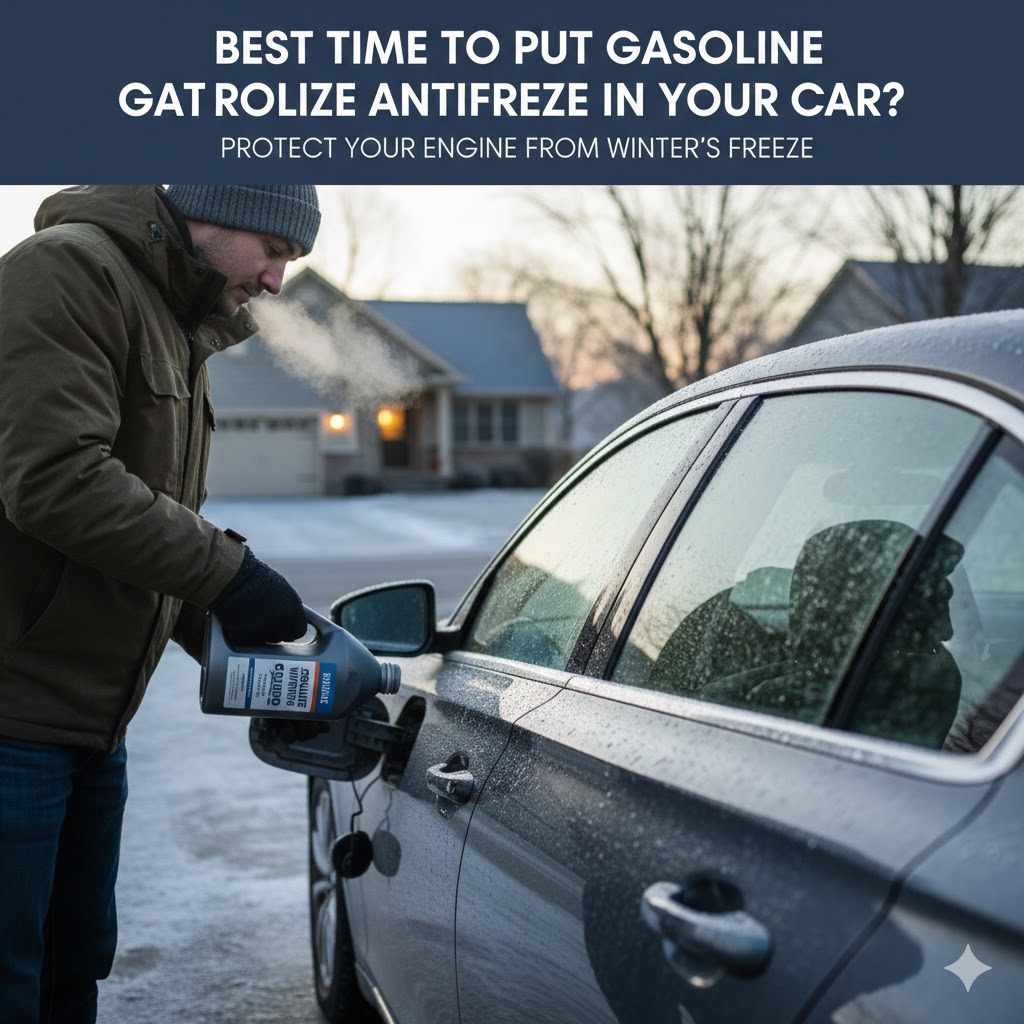
Best Time to Put Gasoline Antifreeze in Your Car
Figuring out the Best Time to Put Gasoline Antifreeze in Your Car can seem tricky, especially if you’re new to car care. Many people wonder if it’s a regular thing or something you only do when there’s a problem. It’s easy to get confused about when and why you need it.
But don’t worry! This guide will make it super simple. We’ll walk you through exactly when and how to add antifreeze to your car so you can keep it running smoothly.
When To Add Gasoline Antifreeze To Your Car
Knowing the Best Time to Put Gasoline Antifreeze in Your Car is really important for keeping your engine safe and running well. It’s not just about cold weather; it’s also about preventing your car from overheating in the summer. This part will explain the key times you should check and potentially add antifreeze.
We’ll cover the usual schedule and what signs your car might show that tell you it’s time.
Understanding Your Car’s Cooling System
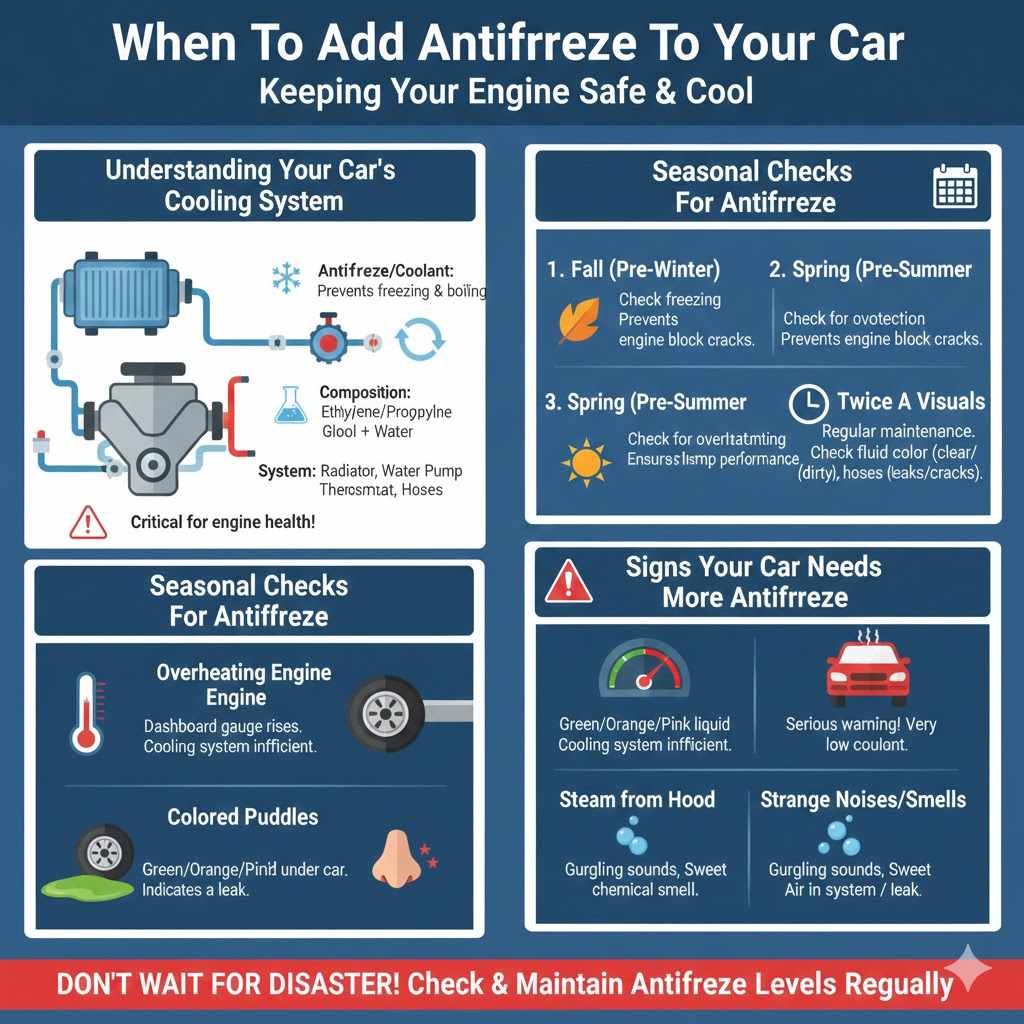
Your car’s cooling system is like its personal thermostat. It keeps the engine from getting too hot when it’s working hard or too cold when it’s freezing outside. The main job of antifreeze, also called coolant, is to make sure the liquid in this system doesn’t freeze in winter and doesn’t boil over in summer.
It does this by lowering the freezing point and raising the boiling point of the water in the system.
Antifreeze is a special mix of chemicals, usually ethylene glycol or propylene glycol, mixed with water. This mixture is designed to handle a wide range of temperatures. Without it, water in your radiator could freeze, expand, and crack your engine block.
In hot weather, plain water would boil away quickly, causing your engine to overheat, which can cause serious damage.
The cooling system has several parts working together. There’s the radiator, which cools the fluid down by letting air pass through it. The water pump moves the fluid around the engine.
The thermostat controls the flow of the fluid, opening when the engine gets hot enough to let the fluid circulate. Hoses connect all these parts, and a pressure cap on the radiator helps maintain the right pressure in the system.
Regular checks and maintenance of this system are vital. Low coolant levels or old, degraded antifreeze can lead to big problems. Understanding how this system works helps you appreciate why adding antifreeze at the right time is so important for your car’s health and your safety on the road.
Seasonal Checks For Antifreeze
The seasons are a big clue for when to check your antifreeze. Before winter really sets in, it’s a good idea to make sure you have enough antifreeze and that it’s the right kind. This prevents your engine’s cooling system from freezing and causing damage.
Many people do this in the fall. You want to make sure the freezing protection is ready before the first frost hits your area.
In the summer, especially during heat waves, your car’s engine works harder. This can lead to overheating. Checking your antifreeze levels before summer begins is just as important as checking them before winter.
This ensures your coolant can handle the higher temperatures without boiling over. A lot of mechanics recommend a coolant check during your spring maintenance.
Even if you live in a place with mild weather, temperature changes can still affect your car. A sudden cold snap in the spring or fall can surprise you. It’s smart to check your antifreeze levels at least twice a year.
Think of it like changing the oil – a regular maintenance task that keeps things running smoothly.
When you check, look at the color of the antifreeze. If it looks rusty or dirty, it might be time for a flush and refill, even if it’s not the usual time. This old fluid isn’t protecting your engine as well.
Also, check the hoses for any leaks or cracks. A leaky hose can cause you to lose antifreeze quickly.
Best Time to Put Gasoline Antifreeze in Your Car usually falls before the extreme temperatures of winter and summer arrive. It’s proactive maintenance that saves you from potential breakdowns and costly repairs. Doing these checks regularly ensures your car is prepared for whatever the weather throws at it.
Signs Your Car Needs More Antifreeze
Your car can tell you when it needs more antifreeze, if you know what to look for. One of the biggest signs is when your car’s temperature gauge on the dashboard starts creeping up into the red zone. This means the engine is getting too hot.
It’s a clear signal that the cooling system isn’t working efficiently, and low coolant is a common reason.
Another sign is seeing puddles of colored liquid under your car. Antifreeze comes in different colors like green, orange, or pink. If you see a leak, it’s important to find out where it’s coming from and top up the antifreeze.
Leaks mean you’re losing coolant, and that needs to be fixed.
You might also notice steam coming from under your car’s hood. This is a serious warning sign that your engine is overheating. It’s usually a sign of very low coolant levels or a problem with the cooling system.
If you see steam, pull over safely and turn off the engine.
Sometimes, you might hear strange noises from the engine bay, like a bubbling or gurgling sound. This can happen when there’s not enough coolant, or there’s air trapped in the system. This air can cause hot spots and lead to overheating.
The pump might also make noise if it’s not getting enough fluid.
Your car might also smell different. A sweet, syrupy smell can indicate a coolant leak. This smell is often stronger when the engine is hot.
If you notice any of these signs, it’s time to check your antifreeze level. Don’t wait for these issues to become major problems. Regular checks will help you avoid these situations.
How To Add Gasoline Antifreeze Safely
Adding antifreeze might sound intimidating, but it’s a straightforward process if you follow the right steps. Safety is the most important thing here. You don’t want to get burned or spill anything harmful.
This section will guide you through the process step-by-step, making sure you do it correctly and safely.
Safety Precautions Before You Start
Before you even think about opening the hood, safety is your top priority. Your car’s cooling system is pressurized, and the coolant can be very hot. Always make sure your car’s engine is completely cool.
This means letting it sit for at least a couple of hours, or even overnight, after it’s been driven.
Wear safety glasses to protect your eyes from any splashes. Also, wear gloves, preferably rubber or nitrile ones, because antifreeze is toxic and can irritate your skin. Avoid getting it on your skin or in your eyes.
If you do, wash the area immediately with plenty of water.
Never open the radiator cap or the coolant reservoir cap when the engine is hot. The hot, pressurized fluid can spray out with great force, causing severe burns. Wait until the engine is cool to the touch.
This is non-negotiable for your safety. It’s better to wait longer than to risk injury.
Also, be aware that antifreeze is poisonous to pets and children. If you spill any, clean it up immediately and thoroughly. Store any leftover antifreeze in a safe, sealed container away from children and pets.
Dispose of old coolant responsibly, as it’s harmful to the environment.
When you are ready to add the antifreeze, make sure you have the correct type. Check your car’s owner’s manual to find out which type of antifreeze it needs. Using the wrong type can cause damage to your cooling system.
Having all your safety gear and the correct antifreeze ready before you start makes the whole process smoother and safer.
Locating the Coolant Reservoir
The coolant reservoir is usually a translucent plastic tank, often white or light-colored, located somewhere in the engine bay. It’s connected to the radiator by a hose. You can usually see the coolant level marked on the side of the tank with “MIN” and “MAX” lines, or “LOW” and “FULL” indicators.
This reservoir acts as a storage tank for your coolant. As the engine heats up, the coolant expands, and some of it flows into the reservoir. When the engine cools down, the coolant contracts, and fluid is drawn back from the reservoir into the cooling system.
This helps maintain the correct level and pressure.
If you can’t easily spot the reservoir, your car’s owner’s manual will have a diagram of the engine bay that shows its exact location. Some older cars might not have a separate reservoir and only have a cap directly on the radiator. In those cases, you’d add coolant directly to the radiator when the engine is cool.
Always check the coolant level when the engine is cold. The reservoir is the easiest place to check and top up the coolant without opening the main radiator cap. If the level is below the “MIN” line, it’s time to add more.
If it’s at or above the “MAX” line, you usually don’t need to add anything, unless there’s a specific reason.
It’s important to note that if you find yourself constantly needing to add coolant to the reservoir, it might indicate a leak in the cooling system. In that case, it’s best to have a mechanic inspect your car to find and fix the source of the leak.
Choosing and Mixing the Right Antifreeze
There are different types of antifreeze, and it’s crucial to use the one recommended for your car. The most common types are based on different chemical technologies. You’ll often see “conventional” green antifreeze, which is an older technology.
Then there are “OAT” (Organic Acid Technology) and “HOAT” (Hybrid Organic Acid Technology) coolants, which come in colors like orange, red, yellow, or pink.
Your car’s owner’s manual is the best place to find out which type of antifreeze it requires. Using the wrong type can lead to corrosion and damage to your engine’s cooling system components, like the water pump, radiator, and seals. For example, mixing conventional and OAT coolants can cause them to gel, blocking the system.
Antifreeze is usually sold in concentrated form or as a pre-mixed 50/50 solution with distilled water. If you buy concentrated antifreeze, you must mix it with distilled water. Never use tap water, as the minerals in it can cause deposits and corrosion in your cooling system.
A 50/50 mix is generally recommended for most climates, offering a good balance of freeze protection and boil-over protection.
To mix it, use a clean container. Pour in half the amount of antifreeze and half the amount of distilled water. Stir it well.
A 50/50 mix typically provides freeze protection down to about -34 degrees Fahrenheit (-37 degrees Celsius) and boil-over protection up to about 265 degrees Fahrenheit (129 degrees Celsius) when the system is pressurized.
If you live in an extremely cold climate, you might need a higher concentration of antifreeze, like a 60/40 or 70/30 mix of antifreeze to water. However, always follow the recommendations in your owner’s manual. Too much antifreeze can actually reduce the cooling efficiency, as water is better at transferring heat.
The 50/50 mix is the standard for a reason.
The Step-By-Step Process
First, ensure your engine is completely cool. Open the hood and locate the coolant reservoir. It’s usually a plastic tank with markings for “MIN” and “MAX” or “LOW” and “FULL”.
If the coolant level is below the “MIN” line, you’ll need to add more. Open the cap on the reservoir. If you are using pre-mixed antifreeze, you can add it directly.
Slowly pour the correct 50/50 antifreeze/water mixture into the reservoir until the level reaches the “MAX” or “FULL” line. Do not overfill it.
If your car does not have a separate reservoir and you need to add coolant to the radiator, ensure the engine is completely cool. Then, carefully remove the radiator cap. Slowly pour the antifreeze mixture into the radiator until it is full.
Some air might still be in the system, so you might need to top it off again after running the engine briefly.
Once you’ve added the coolant, securely replace the cap on the reservoir or radiator. It’s a good idea to wipe up any spills around the cap to ensure a good seal.
After adding antifreeze, start your engine and let it run for about 10-15 minutes. Turn on your car’s heater to its highest setting. This helps circulate the new coolant throughout the entire system, including the heater core.
Watch the temperature gauge to make sure it stays in the normal range.
Turn off the engine and let it cool down again. After it’s cool, recheck the coolant level in the reservoir and top it up if necessary. This final check ensures the system is properly filled and purged of any initial air pockets.
Factors Influencing When To Add Antifreeze
Several things can affect when you should check and add antifreeze. It’s not always just about the calendar. Environmental conditions and how you use your car play a big role.
Understanding these factors helps you make the best decisions for your vehicle’s health.
Climate and Geographical Location
Where you live is a major factor in determining the Best Time to Put Gasoline Antifreeze in Your Car. In regions with harsh winters, where temperatures regularly drop well below freezing, it’s critical to have sufficient antifreeze protection throughout the cold months. This usually means checking and topping up your antifreeze in the fall, before the first deep freeze.
Conversely, if you live in a very hot climate, your primary concern might be overheating during the summer. While antifreeze does protect against freezing, its higher boiling point is also crucial for preventing your engine from boiling over in extreme heat. In these areas, a check in the spring and regular monitoring during the hottest months is recommended.
For those in temperate climates with mild winters and summers, the need for antifreeze might seem less urgent. However, even in these areas, temperature fluctuations can occur. A sudden cold snap or an unexpected heatwave can put stress on your cooling system.
Therefore, a routine check twice a year, typically in spring and fall, is still a good practice.
The altitude you live at can also play a role. Higher altitudes generally mean colder temperatures, especially at night. This can increase the risk of freezing.
If you are in a mountainous region, even if it’s generally warm, be prepared for colder nights.
Remember that antifreeze degrades over time, losing its protective properties. So, even if your location doesn’t experience extreme temperatures, the age of your coolant is a significant factor. This is why a regular replacement schedule, often every 3-5 years, is also recommended, regardless of the climate.
Driving Habits and Conditions
How you drive your car can significantly impact the demands placed on its cooling system, and thus, when you might need to add antifreeze. If you frequently drive in stop-and-go traffic, especially in hot weather, your engine will generate more heat, and the cooling system will be under more stress. The radiator relies on airflow to cool the coolant, and this airflow is significantly reduced at low speeds or when stationary.
If you often tow heavy loads or drive up steep hills, your engine works harder, producing more heat. This increased workload can push the cooling system to its limits. In such cases, ensuring your coolant is at the optimal level and in good condition is vital to prevent overheating.
You might need to check your coolant more frequently than someone who primarily drives on highways at steady speeds.
Frequent short trips, where the engine doesn’t always reach its optimal operating temperature, can also have an effect. While less likely to cause overheating, it can contribute to condensation in the cooling system, which can affect coolant performance over time. However, the main concern for adding antifreeze is usually related to the extreme temperature protection or the boiling point.
Driving in dusty or muddy conditions can sometimes lead to radiator fins getting clogged. This reduces the radiator’s efficiency in dissipating heat. If this happens, your engine might run hotter, even with a full coolant level.
Therefore, keeping the exterior of the radiator clean is also part of maintaining the cooling system’s effectiveness.
The lifespan of your coolant is also affected by driving conditions. If your coolant is exposed to extreme heat cycles or contaminants, it might degrade faster than usual. This means you might need to check and potentially top up or even flush and replace the coolant more often than the manufacturer’s recommended interval.
Coolant Lifespan and Maintenance Schedule
Antifreeze doesn’t last forever. Over time, the additives that protect your engine from corrosion and freezing can break down. This means that even if your coolant level is full, the fluid itself might not be providing adequate protection.
This is why a regular maintenance schedule for flushing and replacing your coolant is just as important as topping it up.
Most car manufacturers recommend replacing the coolant every 3 to 5 years, or after a certain number of miles, like 30,000 to 60,000 miles. This interval can vary depending on the type of antifreeze used. Newer long-life coolants are designed to last longer, sometimes up to 10 years or 100,000 miles, but it’s always best to check your owner’s manual.
Following this schedule ensures that the protective properties of your antifreeze are maintained. If you skip this crucial maintenance, you risk corrosion in your cooling system, which can lead to leaks and expensive repairs. The breakdown of additives can also reduce the antifreeze’s ability to prevent freezing and boiling.
When you get your coolant flushed and
If you’re unsure about when your coolant was last changed, it’s always better to err on the side of caution and have it checked or replaced. A small investment in coolant maintenance can save you from major engine damage and repair bills down the road. Think of it as an essential part of your car’s long-term health plan.
Best Time to Put Gasoline Antifreeze in Your Car – A Practical Guide
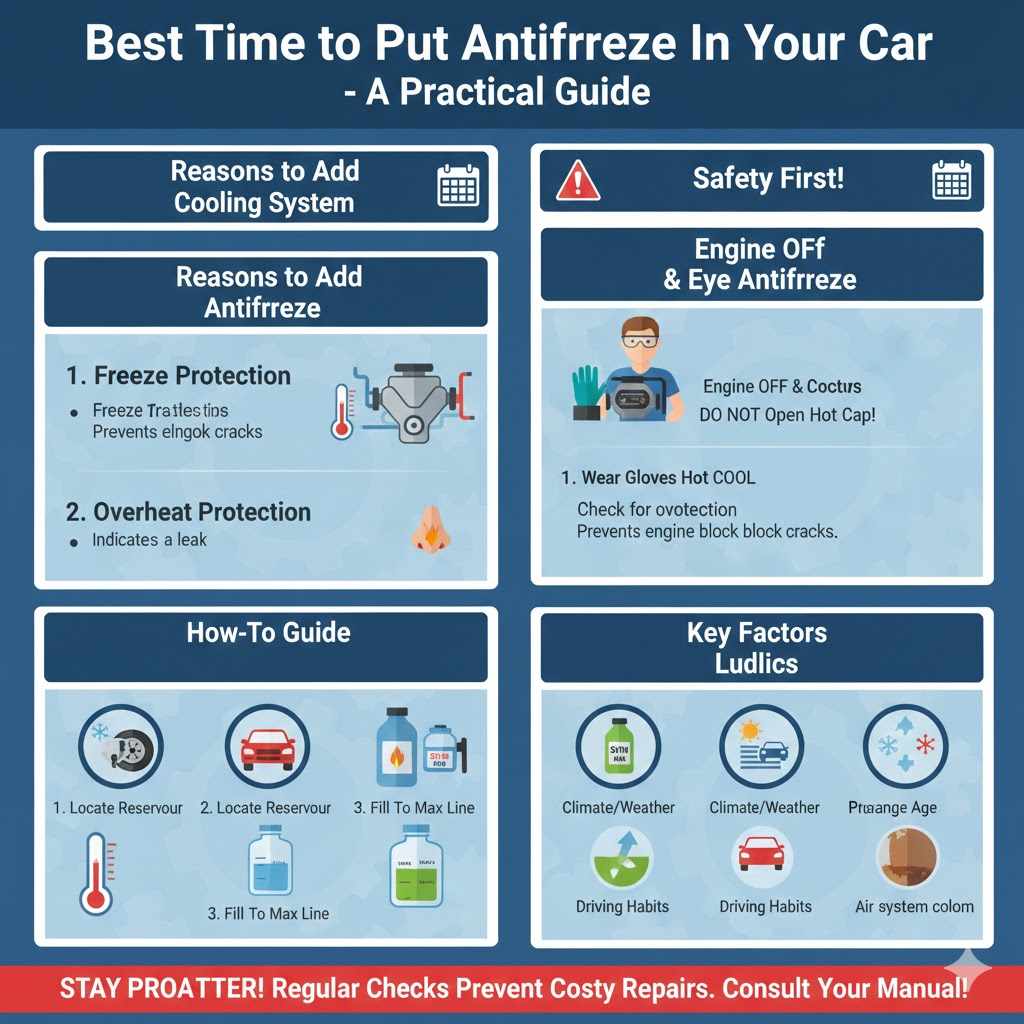
So, what’s the absolute Best Time to Put Gasoline Antifreeze in Your Car? It’s not a single event but a combination of proactive checks and responsive action. Understanding the core reasons for adding antifreeze, the safety measures, and the influencing factors will empower you to keep your car in top condition.
We’ve covered how the cooling system works and why antifreeze is essential for both freezing and overheating protection. We’ve also gone through the safety steps needed before you even touch the coolant, like making sure the engine is cool and wearing protective gear. Knowing where to find the coolant reservoir and choosing the right type of antifreeze is also key to a successful top-up or refill.
Remember that your car’s needs can change based on where you live, how you drive, and how old your coolant is. Listening to your car and performing regular checks will help you catch problems before they become serious. By following these simple guidelines, you can confidently manage your car’s antifreeze needs and ensure it runs reliably all year round.
Frequently Asked Questions
Question: When should I check my car’s antifreeze level?
Answer: You should check your car’s antifreeze level at least twice a year, typically in the fall before winter and in the spring before summer. Also, check it anytime your car’s temperature gauge rises unusually high or if you see puddles under your car.
Question: Can I use plain water in my radiator instead of antifreeze?
Answer: No, you should never use plain water alone. Water will freeze and expand in cold temperatures, which can crack your engine block, and it will boil at a much lower temperature than antifreeze, leading to overheating in hot weather.
Question: What happens if I use the wrong type of antifreeze?
Answer: Using the wrong type of antifreeze can cause damage to your cooling system. It can lead to corrosion, clog your radiator, and reduce the effectiveness of the coolant, potentially causing overheating or freezing issues.
Question: How often should I completely replace my car’s antifreeze?
Answer: Most car manufacturers recommend flushing and replacing your antifreeze every 3 to 5 years, or after a certain mileage, usually between 30,000 and 60,000 miles, depending on the type of antifreeze your car uses. Always consult your owner’s manual.
Question: Is it safe to add coolant to a hot engine?
Answer: Absolutely not. Adding coolant to a hot engine is extremely dangerous. The cooling system is under pressure, and opening the cap can cause hot, pressurized coolant to spray out, leading to severe burns.
Always wait for the engine to cool down completely.
Summary
Knowing the Best Time to Put Gasoline Antifreeze in Your Car involves seasonal checks, watching for warning signs like temperature spikes, and performing regular maintenance. Always prioritize safety by ensuring the engine is cool before checking or adding fluid. Use the correct type of antifreeze and mix it with distilled water for optimal protection against both freezing and overheating, keeping your engine healthy.