Blow Through Carb Turbo Setup: The Complete Engineering Guide
You’ve got a carbureted engine and a turbocharger sitting in the garage. The idea of boost through a carburetor sounds simple: cram air in, add fuel, make power. Then you start reading forums and find guys fighting fuel pressure issues, blowing out power valves, and chasing idle problems that make no sense. The truth is, a blow-through setup is a handful of specific engineering problems. Solve them in the right order, and it works well. Skip one, and you’ll be pulling the carb off every weekend.
This guide walks through the entire system: choosing the right carb, sealing it for boost, calculating fuel pressure, plumbing the intake, and tuning every circuit from idle to wide-open throttle. You’ll also see a realistic cost comparison against an EFI conversion. By the end, you’ll know exactly what your build needs before you spend a dollar.

OXCANO
OXCANO 27421-99C Carburetor Rebuild Carb Repair Kit…
- [Fitment]-Compatible with Harley Davidson Sportster 40mm XL883 XLH1200,Keihin HD CV40 Carburetor,CV Carburetor,1200 Custom XLC,120…
- [OE]-27421-99C,27490-04,27465-04,27501-88,27004-89,27415-99C.
- [Package]-1 PACK Carburetor Rebuild Carb Repair Kit.
Before you start, a quick note on parts. If you’re rebuilding a Keihin CV40 for a Harley Sportster or Dyna, a fresh gasket set makes a difference. The OXCANO carburetor rebuild kit covers the 40mm Keihin HD CV40 used on many Sportsters and Softails, and it’s a cheap way to eliminate vacuum leaks from aged gaskets before you add boost pressure to the equation.
Why Choose a Blow-Through Carb Setup?
People choose blow-through for one main reason: cost. A used Holley or Edelbrock costs a fraction of a standalone EFI system. You keep your existing intake manifold and distributor, and you don’t need a laptop to make changes. For a weekend cruiser or a budget drag car, that’s a real advantage.
The other reason is simplicity of tuning at wide-open throttle. A carburetor’s main jet circuit responds predictably to boost. You jet it rich, watch the air/fuel ratio, and make small changes. There’s no fuel map to load, no VE table to build from scratch.
But blow-through has a reputation for being finicky, and that reputation is earned. The carburetor was designed to see atmospheric pressure in the float bowl. When you pressurize the top of the carb, you upset that balance. Every circuit gets affected, and the fix is a systematic approach to sealing and fuel pressure. That’s what the rest of this guide covers.
Carburetor Selection: Best Candidates for Boost
Not every carburetor takes boost well. The float bowl design and the location of the vent tubes matter more than brand loyalty.
Holley 4-barrels are the most common choice for V8 builds. Their modular design makes jet changes and power valve swaps easy. The downleg boosters in older models can be sensitive to boost, but the newer annular boosters handle it better. Look for a model with a mechanical secondary or a vacuum secondary that you can lock out.
Weber DCOE and Dellorto side-draft carbs work well on four-cylinder and six-cylinder engines. Their float bowls sit to the side, which makes pressurizing them simpler. The main jets are accessible from the outside, so tuning under boost is quick. The downside is that they’re expensive and the throttle shaft seals are often worn.
SU and Stromberg carbs are the dark horse choice. They use a constant-vacuum piston instead of a venturi. Boost referencing the dashpot is straightforward, and they tolerate boost surprisingly well. They’re not ideal for high horsepower, but for a low-boost daily driver, they’re a solid option.
What about the Keihin CV40 found on Harleys? It’s a constant-velocity carb with a diaphragm. It can work, but the rubber diaphragm is a weak point under boost. It will hold a few psi, but don’t plan on 15 psi without a serious rebuild and a lot of patience.
Essential Modifications for Boost Reliability
You can’t just bolt a turbo to a stock carburetor. The carb needs to be sealed and modified to survive positive pressure. These are the non-negotiable changes.
Sealing the Throttle Shafts and Vents
The throttle shafts on most carbs ride in bronze bushings. After years of use, the shafts wear and air leaks past them. Under boost, that leak becomes a high-pressure air jet that messes up the idle mixture and causes lean spots. The fix is to ream the housings and install brass bushings, then use a throttle shaft seal kit. It’s a machine shop job, but it’s the single most important reliability mod you can do.
The float bowl vents are the next problem. On a Holley, the vents are small tubes that stick up from the bowl. Under boost, air can push past the vent and pressurize the bowl unevenly. The standard fix is to run a vent tube from each bowl to a common manifold, then route that manifold to a small air filter or a catch can. This equalizes pressure and prevents fuel from being forced out the vents.
The carburetor lid on a Holley needs a good gasket. Use a thick, reusable gasket and make sure the surface is flat. A warped lid will leak boost and lean out the front barrels.
Replacing the Power Valve and Jetting
The power valve in a Holley is a rubber diaphragm that opens under vacuum. Under boost, the manifold pressure pushes against the diaphragm in the opposite direction. If the valve is old or weak, it can blow out, dumping fuel into the engine and causing a rich condition so severe the engine won’t run. Replace it with a high-quality valve and consider using a power valve plug if you plan to run high boost. That forces you to tune the main jets rich enough to cover the power valve circuit, which is safer.
Jetting for boost is always richer than naturally aspirated. A good starting point is to increase the main jet size by 6 to 8 numbers over your baseline. For example, if your engine ran a 68 jet naturally aspirated, start with a 74 or 76. Read the spark plugs and the wideband, not the jet chart. Every engine is different.
The metering block gaskets also need attention. Use the thick, reinforced gaskets that won’t collapse under pressure. A thin gasket can allow fuel to bypass the booster circuit and cause a stumble.
Fuel System Design: Pumps, Regulators, and Boost Referencing
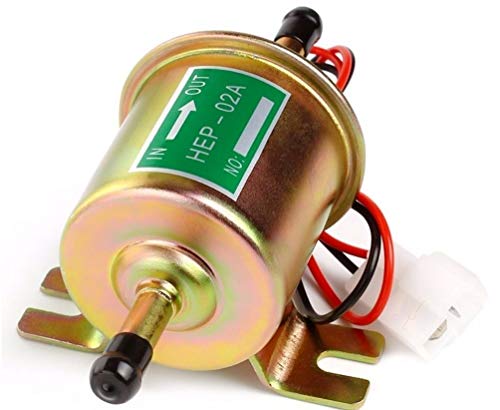
The fuel system on a blow-through setup is where most people get the math wrong. A standard mechanical pump won’t keep up. You need an electric pump, a return line, and a regulator that can reference boost.
Calculating Fuel Pressure Requirements
The rule is simple: fuel pressure must equal boost pressure plus the base pressure. If you run 8 psi of boost and your carburetor needs 6 psi of base pressure, your fuel pressure must be 14 psi at wide-open throttle. That’s the number the regulator needs to hold.
Here’s the math. Base pressure is the pressure you set with the vacuum line off the regulator. Most Holleys like 6 to 7 psi. At idle, with vacuum applied, the regulator should drop the pressure by the amount of vacuum. At 10 inches of vacuum, fuel pressure drops to about 1 psi. That keeps the idle circuit from flooding.
Under boost, the regulator sees positive pressure in the vacuum line. It adds that pressure to the base setting. So at 10 psi of boost, a regulator set to 6 psi base delivers 16 psi of fuel pressure. The float needle and seat must be able to handle that pressure. A standard Viton-tipped needle and seat will hold up to about 15 psi. Beyond that, you need a high-pressure needle and seat or a bypass regulator inside the bowl.
Choose a fuel pump that can deliver enough volume at that pressure. A typical 255 liter-per-hour in-tank pump is enough for up to 500 horsepower. A carbureted engine needs a return-style regulator, not a dead-head regulator. The return line keeps fuel moving and prevents vapor lock.
Boost Leak Management and Intake Plumbing
Boost leaks are the silent killer of blow-through setups. A leak on the intake side causes a lean condition that you’ll chase forever. The throttle shaft leaks we covered are one source. The other sources are the intake manifold gaskets, the carb mounting flange, and the turbo-to-carb piping.
Use a thick, quality carb base gasket. The four-hole gaskets are better than the open-center ones because they support the base plate better. Torque the carb down evenly. Check the intake manifold gaskets for leaks with a smoke machine if you have access to one. If not, spray carb cleaner around the gaskets while the engine idles. If the RPM changes, you found a leak.
The piping from the turbo to the carb needs to be secure. Use T-bolt clamps, not worm-gear clamps. A worm-gear clamp will slip under boost and blow the pipe off. The blow-off valve should be placed between the turbo and the throttle body. A compressor bypass valve that vents to the atmosphere is fine, but it will cause a rich condition between shifts because the air is dumped but the fuel isn’t. A recirculating valve is better for street drivability.
Don’t forget the wastegate. It needs to be plumbed so that it sees the actual boost pressure in the intake manifold, not the pressure at the compressor outlet. That prevents boost spikes and keeps the system stable.
Tuning the Blow-Through Carburetor
Tuning a blow-through carb is not just about the main jets. The idle and transition circuits need attention first, or you’ll never get a clean launch.
Idle and Transition Circuit Tuning
At idle, the engine sees vacuum, not boost. The carburetor should behave like a normal carb. The problem is that the idle mixture screws are now sensitive to the throttle shaft seals and any tiny leak. Set the idle mixture screws for the highest vacuum reading, then check the air/fuel ratio. You want around 13.5 to 14.0 at idle.
The transition circuit, which covers the first few degrees of throttle opening, is where blow-through gets tricky. When you crack the throttle, the vacuum drops and the boost starts to build. The fuel curve needs to transition from the idle circuit to the main circuit without a lean spike. The accelerator pump covers this on a Holley. You need a strong accelerator pump shot. Use the largest pump cam and the highest shooter that doesn’t cause a bog. Watch the wideband during this transition. A lean spike here will cause a stumble and can detonate.
Wide-Open Throttle Tuning and Air/Fuel Ratios
At wide-open throttle, you’re tuning for safety. A naturally aspirated engine likes 12.5 to 13.0. A boosted engine wants to be richer, around 11.5 to 12.0. That rich mixture cools the combustion chamber and prevents detonation.
Read the spark plugs after a pull. The ground strap should be light tan at the tip. If it’s white or grey, you’re too lean. If it’s black and sooty, you’re too rich. The porcelain should be clean. Fuel fouling on the porcelain means the jet is too large or the power valve is leaking.
Ignition timing is part of tuning. You must pull timing as boost rises. A typical street setup runs 10 to 12 degrees of base timing and pulls 1 degree of timing for every 2 psi of boost. Use a boost-retard timing controller or a distributor with a boost-sensitive vacuum advance.
Common Blow-Through Problems and Fixes
Even a well-built setup has issues. Here are the ones you’ll likely meet.
Fuel boiling in the float bowls. This happens after a hot shutdown. The heat from the engine soaks into the carb, boils the fuel, and causes a hard restart. The fix is a phenolic spacer under the carb and a heat shield. An electric fuel pump that primes the system on key-on helps too.
Blown power valves. We covered this. If you’re running more than 10 psi, just plug the power valve and tune the jets. It’s not worth the risk.
Inconsistent idle after a pull. This is usually a boost leak or a float level issue. The high fuel pressure can push the float needle off its seat, flooding the bowl. Check the float level after a hard run. If it’s high, you need a stronger needle and seat spring.
Lean spike on gear change. The blow-off valve vents the air, but the fuel continues to flow. The result is a rich condition, not a lean one. If you see a lean spike, it’s likely a transition circuit issue or a weak accelerator pump.
Detonation under load. This is the most dangerous one. It sounds like marbles rattling in a tin can. Pull the timing, enrich the mixture, or both. If you hear it, back off the throttle immediately.
Blow-Through vs. EFI: Cost and Performance Comparison
Is the carburetor worth it? The honest answer is yes, if you’re on a budget and you understand the trade-offs. An EFI system gives you better cold start, better fuel economy, and easier tuning once it’s mapped. But the cost is significantly higher.
| Factor | Blow-Through Carb | EFI Conversion |
|---|---|---|
| Initial cost (parts only) | $800 – $1,500 (carb, fuel pump, regulator, turbo plumbing) | $2,500 – $4,000 (ECU, harness, injectors, sensors, fuel system) |
| Installation time | 2-3 days for a competent DIYer | 1-2 weeks, including wiring and tuning time |
| Tuning difficulty | Mechanical, requires jet changes and plug reads | Software-based, requires laptop and dyno time |
| Cold start behavior | Poor, needs choke and careful throttle | Excellent, computer-controlled |
| Fuel economy at cruise | Poor, rich mixture is common | Good, can be tuned lean |
| Maximum horsepower ceiling | About 600 hp on a well-built 4-barrel | Virtually unlimited with proper injector sizing |
| Reliability under boost | Good if sealed and jetted correctly | Excellent, less mechanical failure points |
| Resale value | Low, parts are used | High, ECU and sensors hold value |
The table shows the real story. Blow-through is a weekend project with a low entry cost. EFI is a full build with a learning curve. For a street car that sees occasional track duty, a blow-through setup is a fine choice. For a daily driver or a high-horsepower build, EFI is the better investment.
Frequently Asked Questions
Can I use a stock carburetor for a blow-through setup?
You can, but you shouldn’t. A stock carb needs the throttle shaft bushings reamed and sealed, the float bowl vents equalized, and the power valve addressed. By the time you pay a machine shop to do that work, you’re close to the cost of a used performance carb that’s already set up for it. For a low-boost setup under 5 psi, a fresh stock carb might survive, but it’s a gamble.
What is the best fuel pressure for a blow-through carburetor?
Set the base pressure to 6 to 7 psi with the vacuum line disconnected. Under boost, the pressure should rise one psi for every psi of boost. So at 10 psi of boost, you should see 16 to 17 psi of fuel pressure. If your regulator doesn’t do this, it’s not boost-referenced. You need a boost-referencing regulator.
Do I need an intercooler with a blow-through setup?
You don’t need one, but you’ll want one if you run more than 6 psi of boost. The turbo heats the air, and hot air causes detonation. An intercooler drops the intake temperature and lets you run more timing and more boost safely. It also helps with fuel boiling in the carb on hot days. The plumbing is more complex, but the power gain is worth it.
Why does my blow-through carb spit fuel out the vent tubes?
That’s a pressurization problem. The float bowl is seeing a different pressure than the top of the carb. The vent tubes need to be connected to a common manifold that sees the same air pressure as the carb inlet. If they’re open to the atmosphere, the boost will push fuel out. Check the vent tube routing first, then check the float level. A high float level makes the problem worse.
Can I run a blow-off valve with a blow-through carb?
Yes, but it will cause a rich condition between shifts. The blow-off valve dumps the air, but the fuel continues to flow from the main jets. The result is a puff of black smoke and a rich spike. It’s not harmful, but it’s annoying. A recirculating valve that routes the air back to the turbo inlet is a better choice for street use.
Final Thoughts and Practical Tips
Building a blow through carb turbo setup is a project that rewards careful planning. The engineering isn’t complicated, but it is specific. Here are the takeaways you can act on.
- Seal the throttle shafts and use a thick base gasket. Boost leaks cause more tuning headaches than any jet change.
- Always use a boost-referenced fuel pressure regulator. The math is simple: base pressure plus boost equals total fuel pressure.
- Plug the power valve if you run more than 10 psi. It’s a cheap insurance policy against a catastrophic lean condition.
- Start rich and work lean. A rich mixture at 11.5 to 12.0 is safe. A lean mixture at 13.5 under boost will destroy pistons.
- Install a wideband air/fuel ratio gauge. You cannot tune this system by ear. You need data.
- Pull timing as boost rises. Use a boost-retard timing controller or a distributor with the right vacuum advance curve.
- Check for boost leaks with a smoke machine before you tune. It will save you hours of frustration.
If you’re starting with a Harley CV40, a proper rebuild is step one. Check out the turbocharging a carbureted engine overview for more context on whether this path suits your build. And if you’re chasing a specific issue like a stumble or a hard start, the section on carburetor tuning fundamentals has some transferable principles. The blow-through setup is a different beast, but the basics of air and fuel still apply.
Products related to this article
Sponsored / affiliate links. As an Amazon Associate I earn from qualifying purchases. I may earn additional commission from eligible campaigns.