Can a 2010 Audi A5 Radio Drain Battery
Many car owners wonder, Can a 2010 Audi A5 Radio Drain Battery Without Ignition? This question pops up when you find your car battery dead after the car has been off for a while. It can be a bit confusing, especially if you’re new to car maintenance.
But don’t worry! We’ll walk through this step-by-step to help you figure it out easily. Let’s find out what might be causing this drain and how to fix it.
Investigating Battery Drain Issues In Your Audi A5
When your car battery seems to drain unexpectedly, it’s natural to question specific components like the radio. This section explores the common reasons why electrical systems, especially audio units, can pull power even when the ignition is off. We will look into how modern car electronics are designed and where potential power leaks might occur in an Audi A5.
Understanding these points helps pinpoint the cause of a dead battery and offers a clear path to solving the problem.
The Role of the Audi A5’s Radio System
Your car’s radio isn’t just for music; it’s part of a complex electrical network. In an Audi A5, the radio unit, also known as the infotainment system, performs many functions. It handles audio playback, navigation, Bluetooth connectivity, and sometimes even climate control interfaces.
These features require constant access to power, even when the engine is off, to maintain memory settings and allow for quick startup.
The radio has a dedicated power source that stays active even when the car is turned off. This is often called a “permanent” or “memory” power supply. This circuit ensures that your radio stations, clock settings, and audio preferences are saved.
Without this constant, low-level power feed, the radio would reset every time you turned off the ignition. This is a normal design feature found in most vehicles.
However, this always-on power source is also a potential culprit for battery drain. If there’s a fault within the radio itself or its wiring, it might draw more power than it should. This excessive draw, known as parasitic drain, can slowly deplete the battery over time, especially if the car isn’t driven regularly or the battery is already aging.
Understanding Parasitic Battery Drain
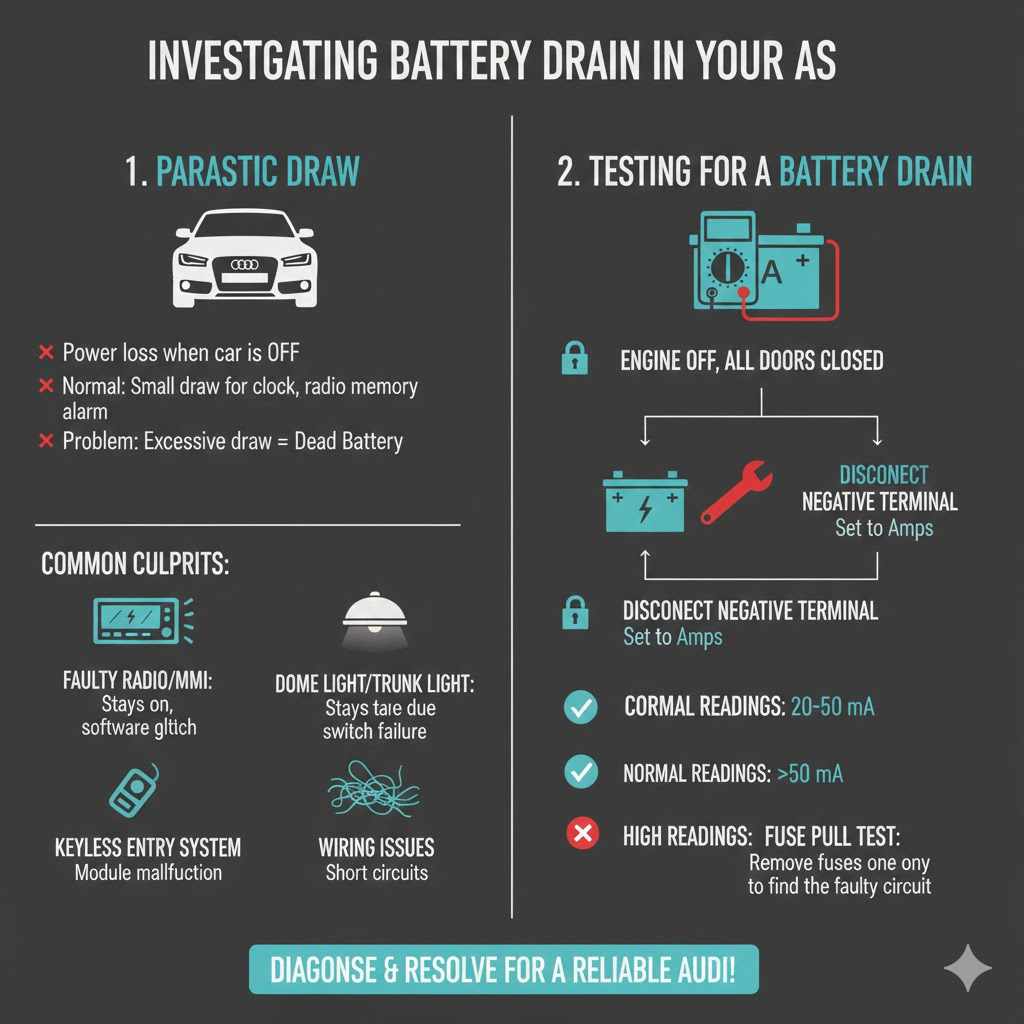
Parasitic battery drain is the term used when a car’s electrical components draw power from the battery even when the vehicle is turned off and all intentional systems are supposed to be inactive. Think of it like a small leak in a water tank; even a little bit of water escaping over a long period can empty the tank.
In cars, most components are designed to shut down completely when the ignition is off. However, some systems, like the car’s computer, alarm system, and the radio’s memory, need a small amount of power to stay active. This is called standby power.
A healthy battery can easily handle this small, constant draw for weeks or even months without issue.
The problem arises when a component draws more power than it should, or when a faulty component fails to shut down properly. This excessive power consumption then becomes the parasitic drain. If this drain is significant enough, it can fully discharge your car’s battery in a matter of days, leaving you with a car that won’t start.
How the Radio Can Cause Parasitic Drain
The Audi A5’s radio, like any electronic device, can develop faults. These faults can lead to it consuming more power than it should when the ignition is off. This is where the question “Can a 2010 Audi A5 Radio Drain Battery Without Ignition?” becomes highly relevant.
One common issue is a faulty internal component within the radio unit itself. This could be a capacitor, a transistor, or an integrated circuit that has failed. When such a component fails, it might bypass the normal power management circuits, leading to a continuous, high power draw.
This is similar to a light switch that gets stuck in the “on” position.
Another possibility is a problem with the wiring harness connected to the radio. If there is a short circuit, where a positive wire touches a negative wire or the car’s chassis, it can create a direct path for electricity to flow, causing a significant drain. This is like a frayed electrical cord where the wires are exposed and touching.
Sometimes, aftermarket accessories connected to the radio’s power supply can also be the cause. If an amplifier, a subwoofer, or a dashcam is wired incorrectly or has a fault, it can create a parasitic drain that might seem like it’s originating from the radio itself.
Troubleshooting Power Draw in Your Audi A5 Radio
To determine if your Audi A5’s radio is indeed the source of a battery drain, a systematic troubleshooting process is necessary. This involves isolating the electrical circuits and measuring their power consumption when the car is off. It requires patience and the right tools.
The most common and effective method for diagnosing parasitic drain is using a multimeter. This tool can measure electrical current, allowing you to see exactly how much power each circuit is consuming. By systematically disconnecting fuses related to the radio and other systems, you can identify which circuit is responsible for the excessive drain.
Before you begin, ensure the car has been sitting for at least 30 minutes to allow all the car’s modules to go into sleep mode. This is crucial because many car systems have a timed shutdown sequence, and if you test too soon, you might get a false reading. Once in sleep mode, you can proceed with the testing.
Using a Multimeter to Detect Drain
A multimeter is an essential tool for diagnosing electrical issues. For parasitic drain testing, you’ll need to set it to measure amperage (current) in the millamp (mA) or amp (A) range. It’s important to use the correct setting and probes to avoid damaging the tool or the car’s electrical system.
The process involves interrupting the flow of electricity to a circuit and inserting the multimeter in its place, effectively “listening” to the current passing through. You start by disconnecting the negative battery terminal. Then, you connect the multimeter’s positive lead to the disconnected battery cable and the negative lead to the battery terminal itself.
With the car doors shut (you might need to use a screwdriver or a similar tool to trick the door latches into thinking the doors are closed, so interior lights don’t come on) and all accessories off, you’ll get a baseline reading of the parasitic draw. A normal parasitic draw in a modern car is typically between 20 and 50 milliamps (mA). Anything significantly higher, say over 100 mA, suggests a problem.
If your initial reading is high, you then systematically pull out fuses one by one. After pulling each fuse, you observe the multimeter reading. If the amperage reading drops significantly when a specific fuse is removed, you’ve found the circuit that’s causing the drain.
If removing the fuse for the radio causes the reading to fall into the acceptable range, then the radio system is likely the culprit.
Step-by-Step Fuse Inspection
To perform the fuse inspection, locate your Audi A5’s fuse boxes. There are typically two main locations: one under the dashboard on the driver’s side, and another in the engine bay. Consult your owner’s manual for the exact locations and a diagram of which fuse corresponds to which circuit.
Begin with the fuse box most likely to contain the radio’s fuse, often located inside the cabin. With the multimeter still connected to the battery in amperage mode, start pulling fuses. Ensure you have a way to keep track of which fuses you’ve removed.
A small notebook and pen are very helpful.
Pull one fuse at a time. Wait a few seconds after removing each fuse to allow the car’s systems to adjust and the multimeter reading to stabilize. If the amperage reading drops dramatically (e.g., from 500 mA down to 30 mA) after removing a particular fuse, that fuse is protecting the circuit that is drawing too much power.
Once you identify the fuse, note down its location and what system it controls, according to your owner’s manual. If it’s the fuse for the radio, then you have your answer. If it’s a fuse for a different system that happens to be linked to the radio in some way, further investigation into that specific system will be needed.
Common Faults Leading to Radio Battery Drain
When the fuse pull test points to the radio, it’s time to explore the specific issues within the audio system that could be causing the battery drain. These issues can range from simple to complex, and sometimes require professional diagnosis.
Faulty radio components are a primary suspect. The internal circuitry of the radio, including amplifiers, processors, or even the display, can fail. When a component malfunctions, it might fail to enter its low-power sleep mode, or it may continue to draw current unnecessarily.
This continuous draw, even if small, adds up over time and depletes the battery.
Another significant cause is related to the radio’s power supply and memory circuits. The radio relies on constant power for its memory functions. If the power management unit or the memory chip within the radio is faulty, it can lead to an increased current draw, preventing the unit from fully powering down.
Internal Radio Component Failure
The heart of the Audi A5’s radio is its printed circuit board (PCB) filled with various electronic components. Over time, these components can degrade due to heat, age, or electrical surges. A common failure point is a capacitor.
Capacitors store electrical energy, and when they fail, they can sometimes short out, creating a direct path for current to flow where it shouldn’t.
Integrated circuits (ICs), which are like miniature brains for specific functions within the radio, can also fail. If an IC responsible for managing power states malfunctions, it might keep other parts of the radio powered on continuously. This is similar to a computer that won’t go into sleep mode because a background process is stuck.
The power amplifier section, which boosts the audio signal, is another area prone to failure. While it’s only meant to draw significant power when the radio is playing, a fault could cause it to draw current even when the radio is supposedly off. This can lead to a noticeable battery drain.
Wiring and Connector Issues
Beyond the radio unit itself, the wiring connecting it to the car’s power source and speakers can also be a source of trouble. The wiring harness is a bundle of wires that runs from the radio to various points in the car. Over time, these wires can become frayed or damaged.
A short circuit is a primary concern. This happens when the insulation around a wire breaks down, allowing the metal conductor to touch another conductor or the metal body of the car. If a power wire from the radio’s permanent power supply touches the car’s chassis, it creates a direct path to ground, causing a significant and rapid battery drain.
Corrosion at the connectors is also a possibility, especially in older vehicles or those exposed to moisture. Corroded terminals can cause resistance, leading to heat buildup and potentially short circuits. Even a loose connector, where the wire isn’t making firm contact, can sometimes cause intermittent issues that might mimic a power drain.
Aftermarket Accessory Interference
Many Audi A5 owners add aftermarket accessories to enhance their audio experience or convenience. These can include amplifiers, subwoofers, GPS trackers, or even dashcams. If these accessories are not wired correctly or are faulty, they can introduce a parasitic drain.
For instance, an amplifier that isn’t properly switched off by the ignition signal might draw power continuously. Similarly, a poorly installed dashcam that records even when the car is off, if not designed with a proper battery management system, can drain the battery significantly. This drain might be mistaken for a problem with the factory radio if the accessory is connected to the radio’s power or accessory wires.
It’s crucial to ensure that any aftermarket installations are done by reputable professionals or according to the manufacturer’s specifications. Poorly executed installations are a very common, yet often overlooked, cause of battery drain in modern vehicles.
Solutions and Prevention Strategies
Once you’ve identified that your Audi A5’s radio is causing a battery drain, there are several solutions and preventative measures you can take. The approach you choose will depend on the severity of the problem and your comfort level with automotive repairs.
The most straightforward solution, if the radio unit itself is faulty, is to replace it. A new or reconditioned radio unit will have all its internal components functioning correctly, eliminating the excessive power draw. If wiring issues are identified, they will need to be repaired or rerouted to prevent future problems.
For those who enjoy their factory radio but want to minimize potential drain, there are also some simpler strategies. These might involve ensuring all settings are correct or considering a battery maintainer if the car is not driven frequently.
Repairing or Replacing the Radio Unit
If your diagnosis confirms a fault within the radio itself, the most direct fix is either to repair the existing unit or replace it entirely. Repairing an automotive radio can sometimes be more complex and costly than replacing it, especially if specialized components are needed.
A qualified car audio specialist or an Audi dealership can diagnose and potentially repair the internal circuitry. They have the tools and expertise to identify faulty components on the PCB and replace them. However, for older units or if multiple components have failed, replacement might be the more economical and reliable option.
When replacing the radio, you have a few choices. You can opt for a genuine Audi
Addressing Wiring and Fuse Issues
If the troubleshooting reveals damaged wiring or a faulty fuse holder, these issues must be addressed promptly. Damaged wires need to be repaired by splicing in new sections or replacing the affected part of the harness. This ensures the integrity of the electrical connections.
A short circuit caused by damaged insulation is a fire hazard and must be fixed immediately. It’s often best to have a professional automotive electrician handle complex wiring repairs, as they can trace the circuit accurately and ensure all connections are secure and properly insulated.
If a fuse holder is corroded or damaged, it should be replaced. A faulty fuse holder can lead to poor electrical contact, causing intermittent issues or even preventing the circuit from functioning correctly. Always use the correct amperage fuse as specified by the vehicle manufacturer.
Preventive Measures for Battery Health
Beyond fixing the immediate problem, there are several preventive measures to keep your Audi A5’s battery healthy and prevent future drains. Regular battery maintenance is key.
Ensure your battery terminals are clean and free of corrosion. This allows for optimal power transfer. If you don’t drive your car very often, consider using a battery tender or trickle charger.
These devices provide a low, steady charge to the battery, keeping it topped up and preventing deep discharges.
Also, be mindful of accessories you connect to your car’s power outlets or USB ports. Some devices, like certain phone chargers or power banks, can continue to draw a small amount of power even when the car is off. If you suspect a particular accessory might be the culprit, try disconnecting it and see if the drain stops.
Regular servicing of your vehicle can also help. Mechanics can identify potential electrical issues during routine checks, preventing them from escalating into larger problems like battery drain.

Frequently Asked Questions
Question: Can a faulty door lock actuator drain my Audi A5 battery?
Answer: Yes, a faulty door lock actuator can sometimes cause a parasitic battery drain. If the actuator is stuck in a state where it’s continuously trying to operate, it can draw power from the battery even when the car is off. This would be considered part of the car’s overall electrical system draw.
Question: How long should an Audi A5 battery last?
Answer: A car battery typically lasts between 3 to 5 years. However, this can vary based on climate, usage patterns, and the battery’s quality. If your battery is older, it might be less capable of holding a charge, making it more susceptible to drain from components like the radio.
Question: What is a “sleep mode” for car electronics?
Answer: Sleep mode, or standby mode, is a power-saving state for car electronic modules. When the car is turned off, most systems are designed to enter this low-power state to conserve battery. This allows essential functions like the car’s computer and alarm system to remain active with minimal power draw.
Question: Is it safe to drive my Audi A5 with a faulty radio?
Answer: If the faulty radio is causing a battery drain, it’s generally safe to drive, but it’s not ideal. The primary concern is the battery being drained, which could leave you stranded. The radio itself, unless it’s causing other electrical system errors, usually won’t affect the car’s drivability.
Question: Can a blown fuse cause a battery drain?
Answer: A blown fuse itself does not cause a battery drain; a blown fuse means a circuit is open and no longer receiving power. However, the underlying cause that blew the fuse, such as a short circuit, is very likely to be the source of a battery drain.
Summary
So, Can a 2010 Audi A5 Radio Drain Battery Without Ignition? Yes, it absolutely can. Faulty components within the radio unit or its wiring can cause it to draw too much power when the car is off.
By using a multimeter and checking fuses, you can pinpoint this drain. Fixing or replacing the faulty radio or wiring resolves the issue, ensuring your battery stays charged.