How to Fix a Car Door Lock That Won’t Lock (Test Order Guide)
A car door lock that will not lock usually comes down to four suspects: a weak fob battery, a blown fuse, a failing door lock actuator, or a mechanical snag in the key cylinder or latch. This guide gives you a test order that rules out the free and cheap causes first, long before anyone removes a door panel. It also covers manual locks, rear child locks, and the point where you should stop and call a professional.
Common Car Door Lock Issues
| Best Sticky Key Cylinder Pick | |
 |
3-IN-ONE Lock Dry Lube, 2.5 OZ Best for: a key that turns stiffly or a lock cylinder that sticks (not for a dead power lock) Why we picked it: the listing describes an aerosol dry lube with an attachable straw for narrow lock mechanisms that dries clear to the touch within minutes and is safe on metal, wood and most plastic, and it was in stock at $6.21 when checked on 2026-10-14 Main drawback: lubricant only helps friction problems: it will not fix a blown fuse, a flat fob battery or a failed actuator, and the listing excludes clear polycarbonate and polystyrene |
As an Amazon Associate we earn from qualifying purchases. Spec-based pick from the listing, not a hands-on test.
Almost every lock complaint fits one of a handful of patterns, and the pattern tells you where to look. The chart matches what you see to the likely cause, the first check, and when to call a professional. These are common patterns, not a diagnosis: your vehicle’s owner’s manual and service manual always win over a general chart.
| What you see | Likely cause | First check | See a pro when |
|---|---|---|---|
| One door will not lock with the switch, but the others do | Actuator or wiring in that one door | Press the lock switch while listening at that door for a motor sound; try the key and the inside lock knob | The door panel has to come off, or there is no sound at all |
| No door locks from the switch or the fob | Fuse, relay or a shared control module | Find the door lock fuse on the fuse panel label and inspect it | The fuse blows again after replacement |
| Fob does nothing, but the door switch works | Fob battery, or a fob that needs pairing | Swap the fob battery, then try a spare fob | Both fobs fail with fresh batteries |
| Key is stiff or will not turn in the door | Worn key, dirt or a sticky cylinder | Try your spare key, then a dry lock lubricant | The key bends, the cylinder will not turn with a spare, or a key piece is stuck inside |
| Rear door opens only from outside | Child lock is switched on | Check the child lock control on the rear door edge | Child lock is off and the door still will not open from inside |
| Whirring, buzzing or grinding when you press lock | Worn actuator gears | Note which door makes the noise | Whenever the noise is present: plan a repair |
If your only complaint is a single door that refuses to lock and you want the full cause-by-cause breakdown, our companion guide on fixing a car door that won’t lock covers that angle. This page is built around the order of tests, so you stop at the first fix instead of working through every cause.
Necessary Tools And Materials
Only the last two items are needed if the door panel has to come off.
- Your owner’s manual (fuse panel locations, child lock location, mechanical key slot)
- A flashlight, to read the fuse panel label
- A spare key or fob, and a fresh fob battery of the type printed on the old one
- A fuse puller or needle-nose pliers, plus spare fuses of the exact same rating
- A dry lock lubricant made for lock cylinders
- A multimeter, only if you are comfortable testing a circuit and have the service manual
- A plastic trim removal kit and the service manual for your model, only if the door panel must come off
See our walkthrough on removing a car door panel before you commit to that step, because the clip layout and hidden screws differ by model.
Preparing Your Workspace
Park on level ground with the parking brake set. Keep the key in your pocket while you test, so you never lock it inside the car. Work with the window down on the door you are testing: if the lock suddenly engages, you can still reach in.
One safety rule overrides everything else on this page: if a child, a pet or any person is trapped inside a locked vehicle, call emergency services right away instead of trying a repair. Do not look for a workaround on a stuck door while someone is inside.
Doors can contain wiring for side airbags and window motors. If a repair means unplugging anything inside the door, follow the service manual for your exact vehicle, including its battery disconnect steps, or hand the job to a professional.
Diagnosing The Problem
Work down this list in order and stop when the lock starts working.
| Step | Test | What it tells you |
|---|---|---|
| 1 | Try every way to lock: door switch, fob, key, inside lock knob | Shows whether the whole system is dead or only one input |
| 2 | Look for a child lock on rear doors that will not open from inside | Rules out a setting that mimics a failure |
| 3 | Replace the fob battery and try a spare fob | Rules out the cheapest cause of a fob that does nothing |
| 4 | Press the lock switch with your ear at each door | A motor sound means the actuator is getting power; silence points upstream |
| 5 | Read the fuse panel label and inspect the door lock fuse | A blown fuse affects several doors at once |
| 6 | Check the door lock relay position on the panel diagram | Only swap with an identical relay if the manual allows it |
| 7 | Test voltage at the actuator connector | Needs the service manual; a professional job for most owners |
Fuse locations and names are not universal. One Kia owner’s manual fuse page says the label inside the fuse panel cover lists each fuse name and capacity, and warns that not all panel descriptions in the manual apply to every vehicle, so check the label on your own car. In that manual’s example, a driver’s-side fuse named DOOR LOCK is listed at 20A and protects the door lock, door unlock and dead lock relays. Your car will differ, so use that only as an example of what to look for.
If a fuse looks blown, replace it only with a fuse of the same rating, and treat a fuse that blows again as a wiring fault for a professional.
Fixing A Stuck Lock
A stuck lock is a mechanical problem, so skip the electrical tests and start with the key. A worn or slightly bent key is a common reason a cylinder feels stiff, so try your spare key before anything else. If the spare turns smoothly, the original key is the problem.
If both keys feel stiff, a dry lock lubricant is the next step. Use a product made for lock cylinders and put it into the keyway with the straw, then work the key in and out a few times. The pick in the box above is described in its listing as a clear, quick-drying aerosol for this job. Our guide to graphite lubricant for car door locks compares the powder approach.
Never force a stiff key. Turning hard on a stuck cylinder is how keys snap off inside it, and a broken key piece turns a free fix into a locksmith visit. If winter weather is the cause, our guide to thawing car door locks covers that case separately, and why your key won’t turn covers ignition cylinders.
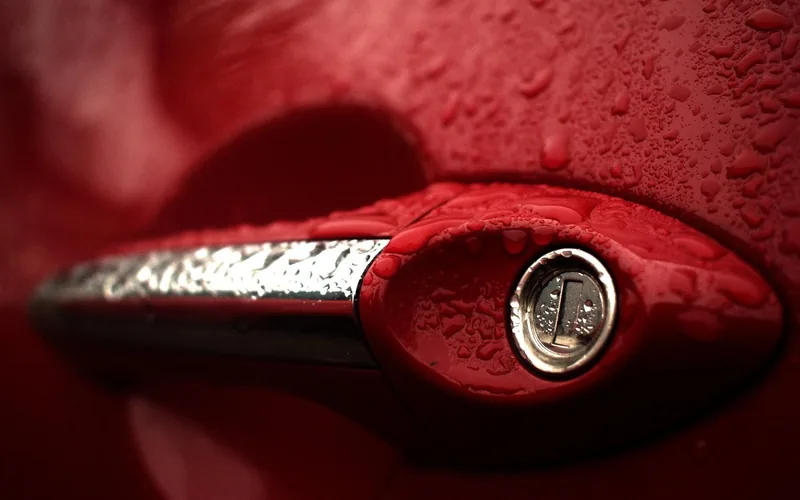
Repairing A Broken Lock Cylinder
If the key turns but nothing happens, or the cylinder spins freely, the part that connects the cylinder to the latch has failed. Replacing a cylinder or its linkage means removing the door panel and working around the latch, window and wiring. The procedure differs on every model, so a general guide cannot safely give steps.
- Get the service manual page for your exact year and model before starting.
- If the door contains side airbag wiring, follow the manual or leave it to a professional.
- Ask a locksmith or shop to confirm the cylinder is the faulty part before buying one.
Addressing Power Lock Failures
Power lock failures are the ones that fill the symptom chart, and most of them are one of three things. If every lock quits at once, suspect the fob battery, a fuse or a relay. If just one door quits, suspect that door’s actuator or the wiring running into the door.
Start with the fob. In one Kia owner’s manual smart key page, the smart key uses a 3 volt CR2032 lithium battery that normally lasts several years, the mechanical key is separated from the smart key to change it, and a battery installed with the wrong polarity will discharge and make the key unusable. Match the battery type printed on your own fob and follow your owner’s manual for opening the case. If the fob itself seems dead, see our dead key fob guide.
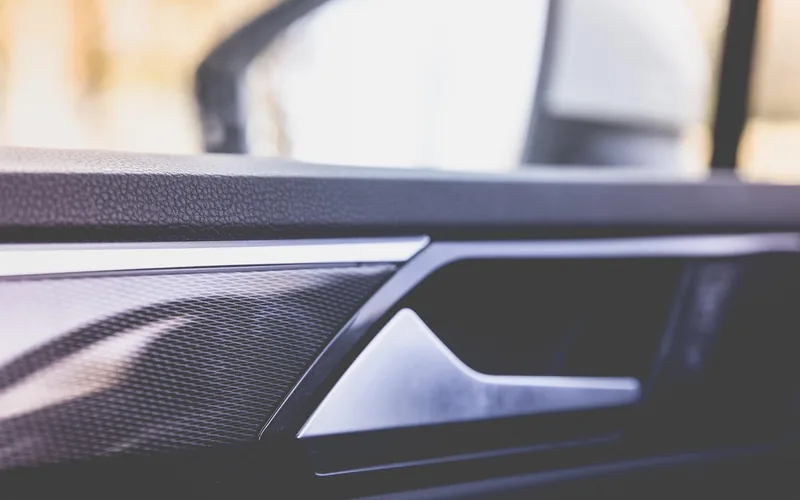
Then do the listening test. Press the lock switch at each door in turn. A buzz or click that stops at one door while the others lock points to that door’s actuator. Silence at every door points back to the fuse and relay. Replacing an actuator means taking the panel off, so read the service manual first and consider a professional.
Child Lock and Rear Door Problems
A rear door that only opens from outside is often a child lock, not a broken lock. Designs differ: in the 2022 Ram 2500/3500 owner’s manual, each rear door has a dial turned with a flat-blade screwdriver, while one Kia model has a key-operated child safety lock and another uses an electronic switch. When the child lock is engaged, the manual says the rear doors open only from outside, even if the inside lock is unlocked.
The Ram manual also warns that passengers could be trapped in a collision, tells you to check that no one is still inside before you leave the vehicle, and describes an emergency exit: pull up on the door lock knob, lower the window and open the door with the outside handle. Always test the child lock by trying the inside handle after you set or release it.
Reassembling And Testing
If you did open a door panel, test before you put every clip back. Reconnect any plugs and the battery only as the service manual directs, then work the lock with the door open and the window down. Cycle it with the switch, the key and the inside lock knob.
- Lock and unlock with the door switch several times and listen for a steady motor sound.
- Pull the inside handle with the lock engaged and confirm the door behaves as your manual describes.
- Close the door while the key is still in your pocket and test again.
- Check the rear child lock by trying the inside handle on both rear doors.
If the lock works with the door open but fails once it is closed, see fixing a jammed car door.
Preventive Maintenance Tips
- Replace the fob battery before it dies, not after, and keep a spare of the right type in your home.
- Keep a working spare key somewhere other than the car.
- Use a dry lock lubricant on the key cylinders occasionally and wipe the keys clean.
For a longer list of lubricants that suit frozen or sticky locks, see our roundup of the best car lock lubricants for frozen locks.
Common Mistakes That Make Door Lock Problems Worse
| Mistake | Why it hurts | Do this instead |
|---|---|---|
| Forcing a stiff key | The key can snap off inside the cylinder | Try the spare key, then a dry lock lubricant |
| Fitting a higher-rated fuse | A fuse is rated to protect the wiring | Use the exact rating shown on the panel label |
| Working inside a door without the manual | Doors can hold airbag and window wiring | Use the service manual or a professional |
| Leaving the child lock on | Rear passengers cannot open the door from inside | Test the inside handle and make sure no one is inside before leaving |
Frequently Asked Questions
Why Won’t My Car Door Lock Work?
Usually a weak fob battery, a blown fuse or relay, a failing actuator, or a sticky cylinder. If every door fails, check the fob battery and fuse first; if one door fails, suspect its actuator.
How Can I Fix A Stuck Car Door Lock?
Try your spare key first, then a dry lock lubricant made for cylinders. Never force the key, because a snapped key makes the repair harder.
What Tools Do I Need To Fix A Car Door Lock?
Your owner’s manual, a flashlight, a spare key, a fresh fob battery, a fuse puller and a dry lock lubricant. A trim removal kit and service manual are needed only if the panel must come off.
Can I Fix A Car Door Lock Myself?
You can handle the fob battery, fuse, child lock and lubrication yourself. Replacing an actuator or cylinder means opening the door near wiring, so use the service manual or hire a professional.
Why Does My Rear Door Only Open From Outside?
A child lock is probably engaged. Its control sits on the rear door edge and varies by model, so check your owner’s manual and test the inside handle afterward.
Conclusion
Fixing a car door lock goes fastest when you test in order: all the ways to lock, the child lock, the fob battery, a listening test, then the fuse. Most owners stop at one of those. If the fuse blows again, the actuator is silent, or a door panel has to come off, bring in the service manual or a professional. For the cause-by-cause view of a single door that won’t lock, read our companion guide.
Facts about child locks, fuse labels and smart key batteries come from the manuals linked above for those specific vehicles; yours may differ, so check your own owner’s manual. This guide is general information, not a substitute for the service manual or a qualified technician.
Products related to this article
Sponsored / affiliate links. As an Amazon Associate I earn from qualifying purchases. I may earn additional commission from eligible campaigns.