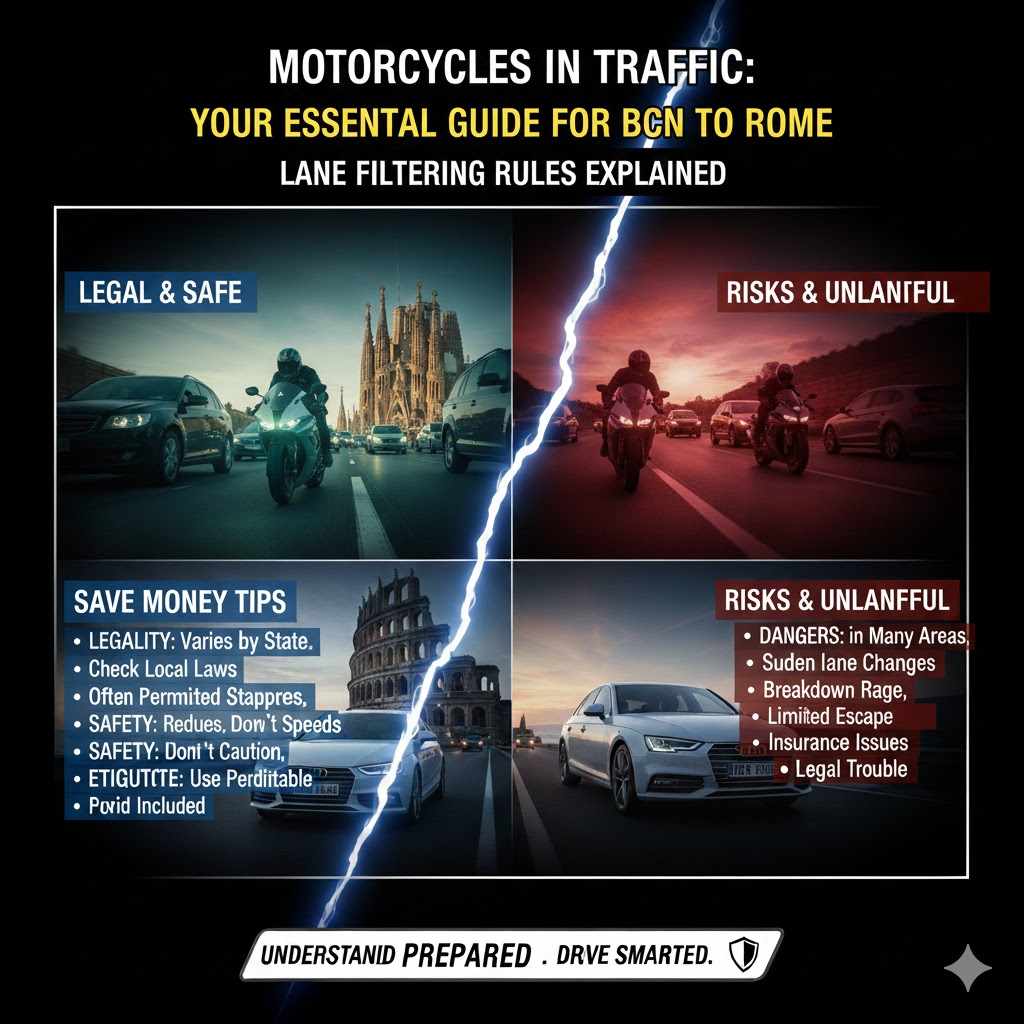
Can Motorcycles Drive In Between Lanes Allocated For Mechanical Vechile?
This practice, often called lane splitting or filtering, is when a motorcycle rides between two lanes of stopped or slow-moving traffic. Whether it’s allowed and how it’s regulated varies a lot. It’s a topic with strong opinions on both sides, and understanding the laws is key.
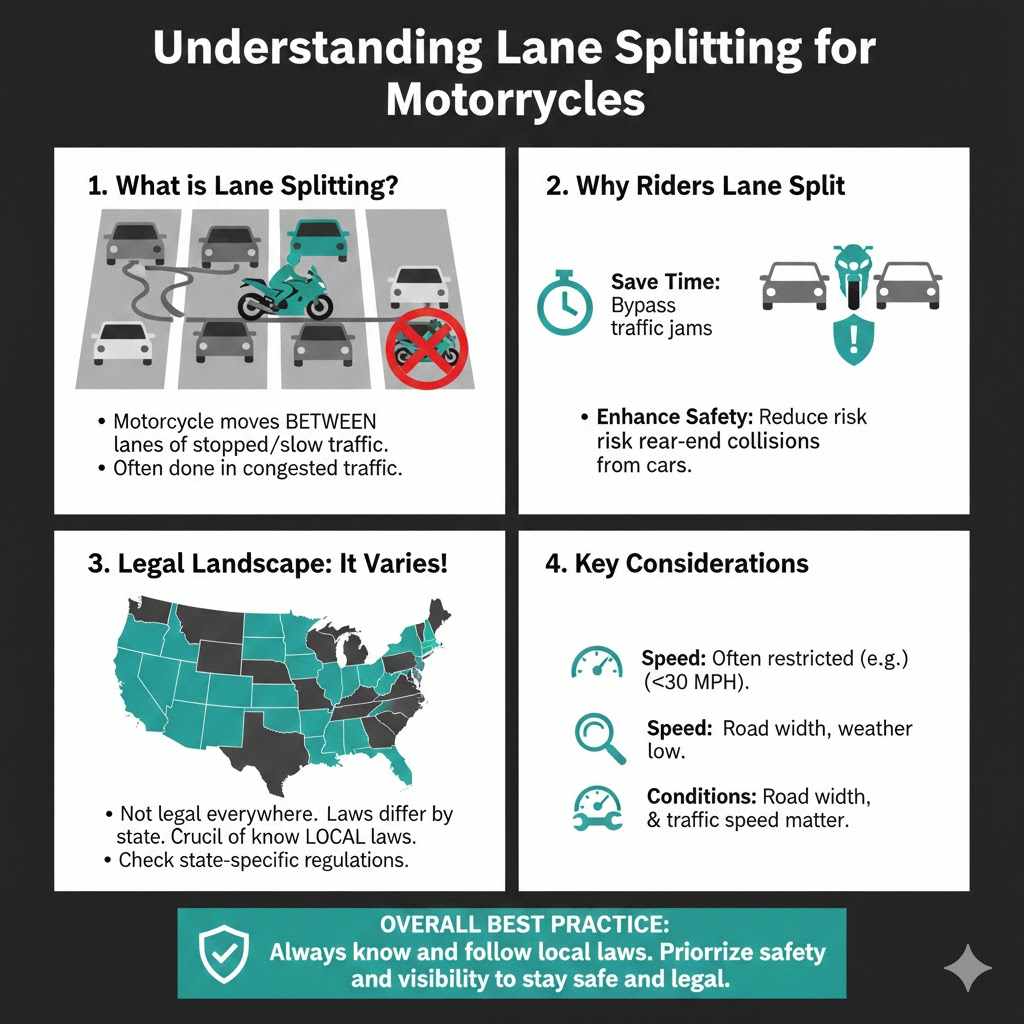
Understanding Lane Splitting for Motorcycles
Lane splitting means a motorcycle driver moves between lanes of traffic. This usually happens when cars are going slow or stopped. It’s different from weaving, which is going back and forth across lanes.
Lane splitting is a specific way to navigate dense traffic.
Why do people do it? Mostly, it’s about saving time. Stuck in traffic can be frustrating for anyone.
For a motorcycle rider, it can also feel more dangerous to be surrounded by cars. Cars might not see you. This is why some riders feel safer moving forward.
However, not all places allow it. Laws about lane splitting are not the same everywhere. Some states have clear rules.
Others have no rules at all. This makes it a tricky area for riders. You need to know the specific laws where you are riding.
This is crucial for staying safe and legal.
My Own Lane Splitting Experience
I remember one sweltering summer day in California. The freeway was a parking lot. Cars were barely inching forward.
I was on my Triumph Bonneville, feeling the heat radiate from the asphalt. My helmet felt heavy, and the constant rumble of idling engines was starting to get to me. I saw a few other bikes ahead, carefully easing their way through the gaps.
My heart pounded a little. I’d read about lane splitting, and California was one of the few places where it was allowed. But actually doing it felt different.
I took a deep breath, checked my mirrors obsessively, and then, very slowly, I started to move forward. It felt like a tightrope walk. Every brake light that suddenly illuminated made me jump.
The space between cars felt narrower than I expected. I focused on keeping a steady, gentle throttle. It took all my concentration.
But as I cleared the main gridlock, the feeling of relief was immense. I made it through safely, and it taught me a lot about focus and careful movement.
What is Lane Filtering vs. Lane Splitting?
Lane Filtering: This is when a motorcycle rides between lanes of traffic that are moving very slowly or are stopped. Think of it as filtering to the front.
Lane Splitting: This term is often used for the same thing. But some people use it to describe moving between lanes when traffic is moving at a slightly higher speed, though still slower than normal highway speeds.
The key difference is the speed of the surrounding traffic. Filtering is usually in a complete stop. Splitting can be in very slow traffic.
The Legal Landscape Across the U.S.
The laws for motorcycles driving between lanes are really different across the United States. Some states have made it legal. Others have made it illegal.
And many states don’t have specific laws about it. This means it’s a legal gray area in many places.
In states where it is legal, there are usually rules. These rules are there to help keep everyone safe. For example, a motorcycle might only be allowed to split lanes if traffic is stopped or moving very slowly.
There might also be speed limits for splitting. For instance, a rider might not be allowed to go more than 5 or 10 miles per hour faster than the surrounding traffic.
In states where it is illegal, a motorcycle rider could get a ticket. This ticket might be for improper lane usage. It could also be for other traffic violations.
It’s really important for riders to know the specific laws in their state. Riding in a way that is illegal can lead to fines and points on your license. It can also be dangerous.
States Where Lane Splitting is Legal (or Tolerated)
California: Fully legal, with guidelines that suggest riding at no more than 10 mph faster than surrounding traffic and only when traffic is stopped or slow.
Arizona: Legal, but riders must exercise extreme caution and can only split lanes when it’s safe to do so.
Hawaii: Legal for filtering, but with strict conditions for safety.
Montana: Legal to split lanes, but with no specific speed guidelines. Caution is advised.
Nevada: Legal, with specific guidelines about when and how it can be done safely.
Oklahoma: Legal, with a focus on safety and reasonable judgment.
Oregon: Legal, often referred to as “lane filtering,” with safety as the primary concern.
Texas: Legal, but riders must be sure they can do it safely without disrupting traffic.
Utah: Legal, with specific rules about speed and lane position.
Washington: Legal, allowing filtering and splitting under safe conditions.
Note: Laws can change. Always check the most current regulations for your specific state.
Why Some States Say Yes and Others Say No
The debate about lane splitting is heated. Safety is a big concern for everyone. Those who support lane splitting often point to studies.
They say it can reduce rear-end collisions for motorcycles. They argue that being stuck in traffic makes motorcycles more vulnerable.
Cars don’t always see motorcycles. A driver might change lanes without looking. They might not see the bike right next to them.
If a car hits a motorcycle from behind, it can be very bad. Supporters say splitting lanes helps riders avoid this danger. They also say it helps ease traffic congestion.
More bikes moving through means fewer bikes stuck in a jam.
Opponents worry about different things. They fear that drivers of cars might not expect motorcycles to be there. A driver might suddenly open their car door.
Or they might change lanes without warning. This could cause a bad accident. Some also feel it’s unfair.
They think all vehicles should follow the same rules of the road.
The state laws reflect these different views. Some states have studied the issue. They look at accident data.
They consider public opinion. They also look at what other states are doing. This leads to the mix of laws we see today.
It’s a complex issue with valid points on both sides.
Safety First: Key Considerations for Riders
Know Your Limits: Never split lanes if you are not comfortable doing so. It takes focus and skill.
Watch for Doors: Be aware of parked cars. A car door opening can be just as dangerous as a car moving.
Maintain Space: Always leave yourself an “out.” Don’t get boxed in. Keep an escape route visible.
Be Visible: Wear bright gear. Use your headlight at all times. Make sure drivers can see you.
Control Your Speed: Do not speed between cars. Go only as fast as the slowest traffic.
Scan Ahead: Look far down the road for hazards. Watch for brake lights and lane changes.
Real-World Scenarios: When It’s Tricky
Even in places where lane splitting is legal, there are situations where it’s just not a good idea. Think about roads with lots of construction. The lanes might be narrowed.
There might be cones or barriers. This reduces the space available. It makes splitting very risky.
What about on curves? If you can’t see what’s ahead, it’s dangerous to split. You don’t know if a car will suddenly stop.
Or if there’s debris on the road. Blind spots are a big problem. Cars have them.
But motorcycles can also be in a car’s blind spot. This is why constant checking is vital.
Also, consider the weather. Rain makes roads slippery. Fog reduces visibility.
Snow and ice are even worse. In bad weather, the risks of lane splitting go way up. It’s often best to just ride with the traffic during these times.
Or even pull over if it’s too dangerous to ride at all.
The condition of the road surface matters too. Potholes or uneven pavement can be a big hazard. A rider might hit one while splitting lanes.
This could cause them to lose control. So, riders need to be aware of all these factors. It’s not just about the law.
It’s about smart, safe riding.
Contrast Matrix: Myth vs. Reality
Myth: Lane splitting is always faster and easier.
Reality: It requires intense focus and can be more dangerous if not done with extreme care. It’s only beneficial in specific traffic conditions.
Myth: All cars are aware of motorcycles splitting lanes.
Reality: Drivers are often distracted. They may not see a motorcycle. You must assume they don’t see you.
Myth: Lane splitting is illegal everywhere.
Reality: Several states have legalized lane splitting or filtering, with specific rules.
What Does This Mean for You?
So, what does all this mean if you’re a rider? First, you need to know your local laws. If you’re in a state that allows lane splitting, understand the specific rules.
Don’t assume it’s okay everywhere.
If lane splitting is legal where you are, think hard before you do it. Ask yourself if it’s truly necessary. Is the traffic bad enough?
Is the space safe? Are you feeling confident and alert? If the answer to any of these is no, then it’s probably best to just ride with traffic.
For drivers, it means being more aware. Keep an eye on your mirrors. Be careful when changing lanes.
Remember that motorcycles can move through traffic differently. They aren’t always in the same place as a car. Checking your blind spots is more important than ever.
It’s about shared responsibility on the road. Riders need to ride safely and legally. Drivers need to be aware and attentive.
Together, we can all help make the roads safer for everyone. Understanding these rules and risks is the first step.
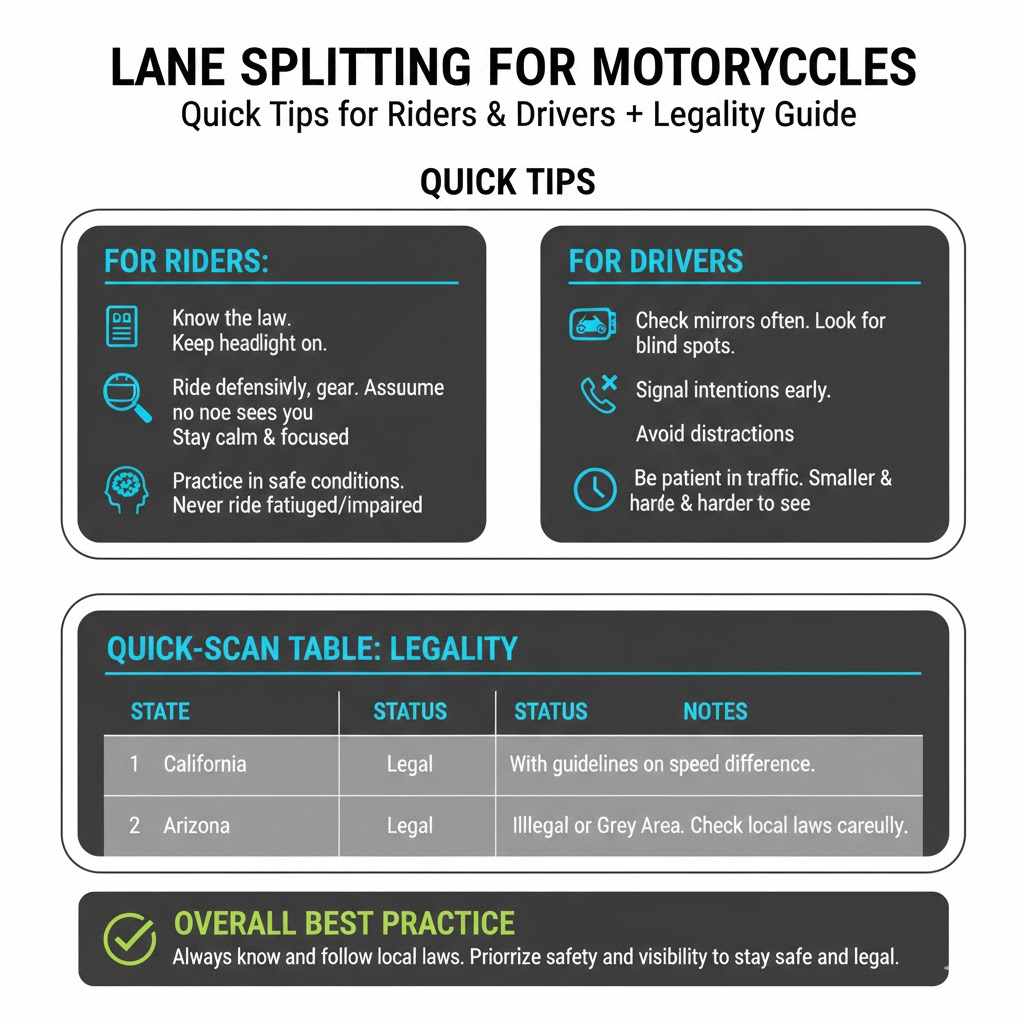
Quick Tips for Riders and Drivers
For Riders:
- Always know the law in your state.
- Wear bright, protective gear.
- Keep your headlight on.
- Ride defensively. Assume no one sees you.
- Stay calm and focused. Don’t rush.
- Practice in safe conditions first.
- Never split lanes when fatigued or impaired.
For Drivers:
- Check mirrors often, especially before changing lanes.
- Look for motorcycles in your blind spots.
- Signal your intentions clearly and early.
- Avoid distractions like your phone.
- Be patient in traffic.
- Remember motorcycles are smaller and harder to see.
Quick-Scan Table: Lane Splitting Legality
| State | Status | Notes |
|---|---|---|
| California | Legal | With guidelines on speed difference. |
| Arizona | Legal | Rider discretion for safety. |
| Most Other States | Illegal or Grey Area | Check local laws carefully. |
Frequently Asked Questions
Is lane splitting the same as weaving?
No, they are different. Weaving is moving erratically back and forth across lanes, often at higher speeds. Lane splitting or filtering is moving between lanes of slow or stopped traffic in a controlled manner.
Can I get a ticket for lane splitting if it’s not legal in my state?
Yes, absolutely. In states where it’s not allowed, you can be cited for improper lane usage or other traffic violations. This could result in fines and penalties.
What is the safest way to lane split?
The safest way involves riding at a controlled speed, not much faster than surrounding traffic. Always maintain a safe distance. Be constantly aware of your surroundings and ready to react to sudden movements from other vehicles or debris on the road.
Do cars have to let motorcycles lane split?
In states where lane splitting is legal, cars are generally expected to be aware of and yield to motorcycles filtering through traffic. However, drivers aren’t legally required to move out of the way. Riders must be prepared for drivers not to cooperate.
Are there specific speed limits for lane splitting?
Yes, in states where it’s legal, there are often guidelines. For example, California suggests not going more than 10 mph faster than the surrounding traffic. Always check your state’s specific regulations.
What are the main risks of lane splitting?
The primary risks include drivers not seeing the motorcycle and making sudden moves, the risk of a car door opening unexpectedly, hitting debris on the road, and potential loss of control due to confined spaces or changing road conditions.
Conclusion
Deciding whether to lane split, or how to react to it, involves understanding the law and the risks. It’s a practice that can offer benefits like saving time and potentially increasing safety for riders in certain situations. However, it demands extreme skill, constant awareness, and knowledge of local rules.
For everyone on the road, a little more caution and awareness can go a long way.