Best Car Brake Lights for Safety (2026): We Compared
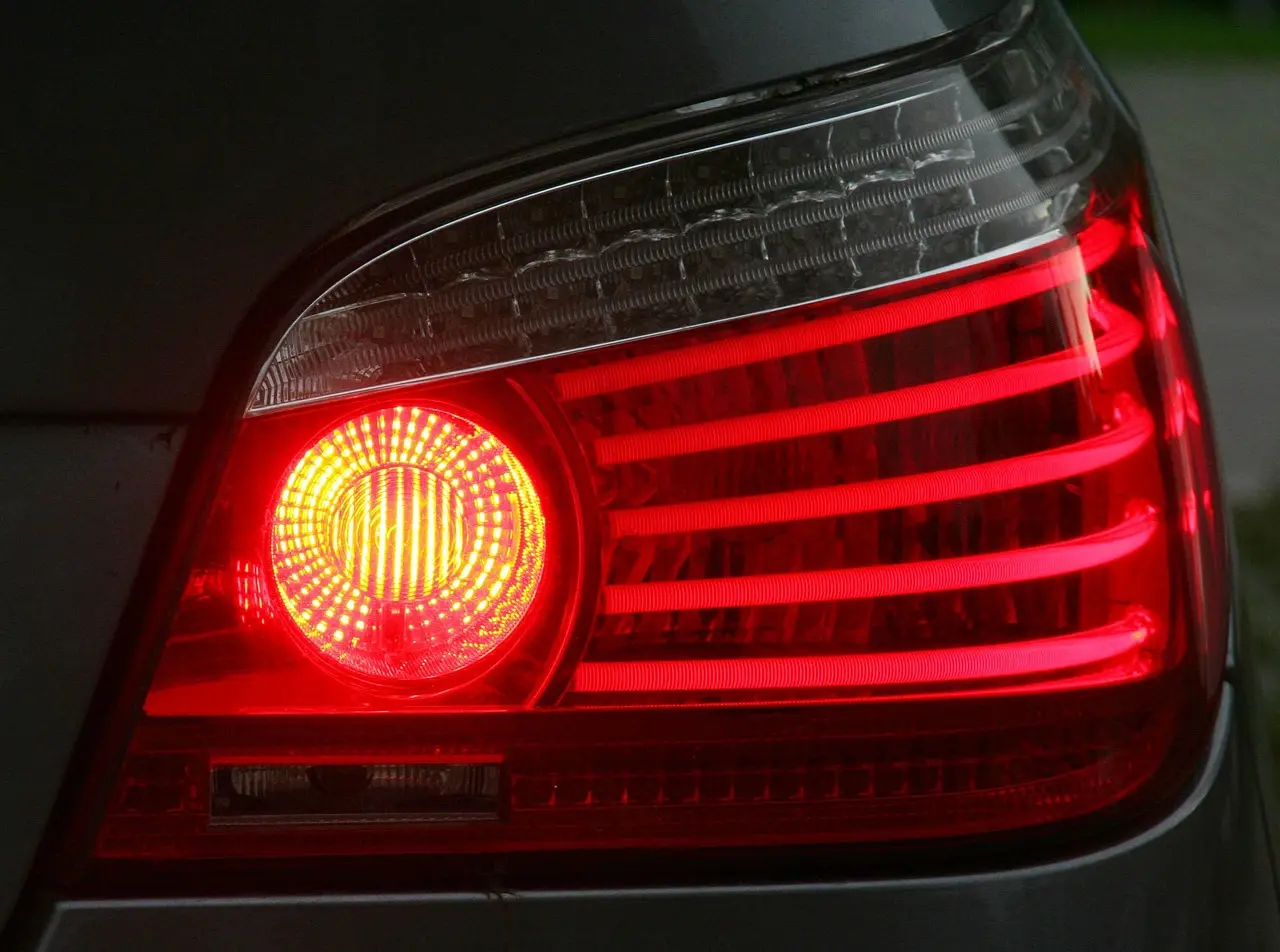
The safest brake-light bulb is the correct-fit bulb that reaches full brightness fast, matches your vehicle’s socket and voltage, and carries the right SAE/DOT approval; choose CAN-bus-compatible LEDs only if your car supports them. A bad fit can leave drivers behind you with a dim, delayed, or warning-triggering stop lamp. This guide compares top bulb choices by visibility, response time, and compatibility so you can buy the right one.
Quick comparison
| Product | Badge | Best for | Price | ||
|---|---|---|---|---|---|
 |
BANGO 7443 LED Bulb Red Brake Tail Light, 7440 7441 7444BANGO | Our pick | 7443 · 4-pack · Red LED | $9.99
Price as of 23 Oct 2026
|
View |
 |
Kadiby 2 Pack 3157 4157 Bulb, P27/7W Brake/Tail/Turn SignalKadiby | Pair with it | 3157/4157 · 2-pack · Multi-fit | $6.99
Price as of 23 Oct 2026
|
View |
 |
SEALIGHT 3156 3157 LED Bulb Red Brake Lights,3056 3457ASEALIGHT | Also great | 3156/3157 · 2-pack · Red LED projector | $20.99
Price as of 23 Oct 2026
|
View |
 |
LEDYOTRY 1157 2357 LED Brake Tail Light Bulb, 12V-24V SuperLEDYOTRY | Also great | 1157/2357 · 2-pack · Red LED | $8.99
Price as of 23 Oct 2026
|
View |
Use the table to sort by failure mode first: poor visibility, response lag, or fitment trouble. Brightness matters, but only after socket family, vehicle compatibility, lens condition, and CAN bus behavior are checked.
How we chose
Fitment comes first. Every pick here maps to a common socket family or broad multi-fit listing, but you still need to confirm make, model, year, lamp location, and base style before buying.
Next comes real-world visibility through tinted, aged, or slightly cloudy lenses. LED bulbs can help, but only if the beam pattern reaches the reflector and fills the lens evenly.
Electrical behavior matters too. We favored bulbs that reduce response lag or keep steady output without creating hyper-flash, CAN bus warnings, or uneven brightness.
Finally, heat control and durability matter. Aluminum bodies, built-in IC drivers, and lower draw can help long-term reliability, especially in hot housings and stop-and-go traffic.
Brake light bulb decision matrix
| Socket family | Voltage | LED or halogen suitability | Likely resistor need | Pair replacement advice | Common failure symptoms |
|---|---|---|---|---|---|
| 7440 / 7443 | 12V systems; some LED listings cover 12V–24V | LED works well if the socket is clean and the car accepts the bulb type; halogen is simpler for direct replacement | May need a load resistor or flasher relay on some vehicles | Replace in pairs when one side looks dimmer or when matching color and output matters | Dim lamp, hyper-flash, CAN bus warning, uneven brightness |
| 3156 / 3157 | Usually 12V; some LED upgrades are sold for 12V–24V | Good for LED upgrades in reflector housings that already have enough depth and clear lens space | Possible on load-sensitive systems | Pair replacement is wise for even rear lighting | Dim output, warning light, faster one side than the other |
| 1157 / BAY15D | Usually 12V; some LED options support 9V–30V working range | LED and halogen both work, but base orientation must match the socket | Often needed with LED on vehicles that monitor lamp load | Replace both sides to keep stop/tail output matched | Dim lamp, hyper-flash, no tail function, warning message |
| 2057 / 2357 / 7528 variants | Common 12V fitment variants | Halogen is often the safer low-complexity choice; LED can work if the variant and polarity are correct | Sometimes needed with LED, especially on monitored circuits | Pair replacement helps avoid mismatched output | Uneven brightness, one lamp out, incorrect stop/tail intensity |
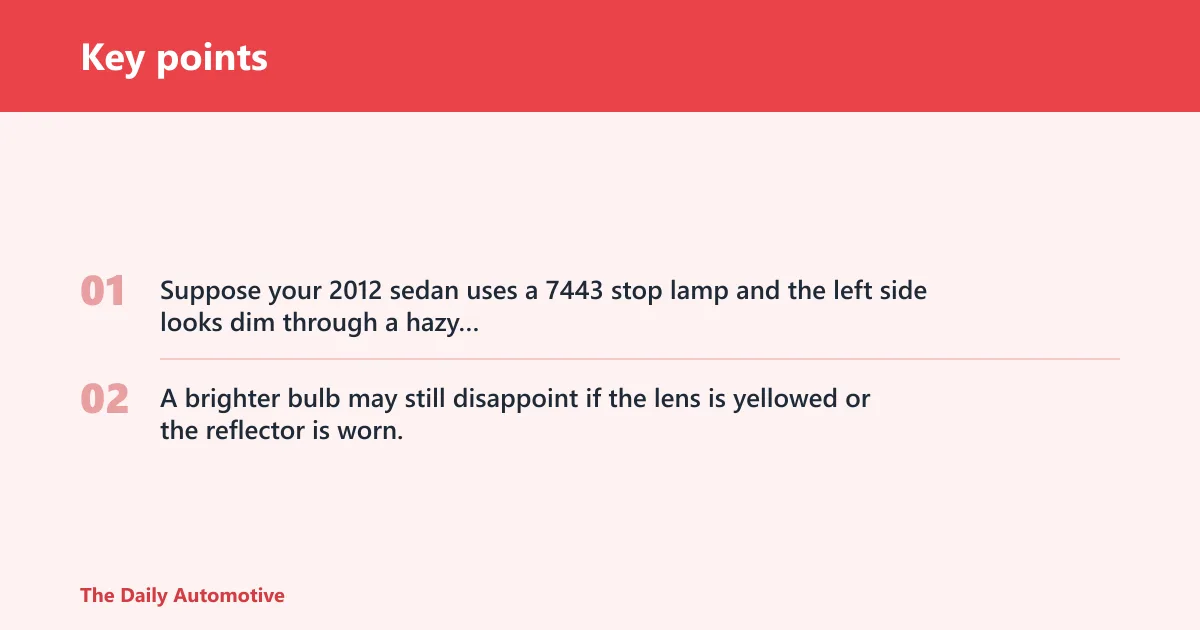
Suppose your 2012 sedan uses a 7443 stop lamp and the left side looks dim through a hazy lens. A brighter bulb may still disappoint if the lens is yellowed or the reflector is worn, so the safer fix may be new bulbs plus lens cleaning, not brightness alone.
BANGO 7443 LED bulb: best for fast response
The BANGO 7443 LED bulb fits drivers who want a simple red LED upgrade for a 7443-style brake/tail socket and want faster illumination than a halogen bulb. Based on the manufacturer’s details, it offers a 360° beam angle and is sold as a 4-pack, which helps if both rear lamps need replacement.
Its strongest point is visibility through the whole lens, not just straight ahead. That matters when the lamp sits in an older housing or when you want the stop signal to fill the reflector more evenly.
The drawback is the usual LED tradeoff: some vehicles may still need load resistors or a flasher relay, and a 7443-style LED is only useful if your vehicle actually takes that base family. Brightness cannot fix the wrong socket.
Kadiby 3157 bulb: best budget halogen replacement
The Kadiby 3157/4157 bulb is the straightforward choice for drivers who want a low-cost halogen-style replacement and do not want to deal with LED warnings or added electrical parts. It suits common 3157/4157 brake-tail-turn applications when the vehicle calls for that family.
Its main advantage is simplicity. For older cars, fleet vehicles, and anyone who wants a known replacement path, a halogen bulb can be the safer low-complexity option because it avoids the compatibility questions that come with LED upgrades.
The tradeoff is less efficiency and less dramatic response speed than LED. It also does not solve a worn lens or reflector, so a cheap bulb can still look dull if the housing is tired.
SEALIGHT 3156/3157 LED bulb: best for older housings
The SEALIGHT 3156/3157 LED bulb is aimed at drivers who want a stronger stop signal in a 3156 or 3157 socket family and care about beam shape as much as raw output. The brand describes a projector-style design and efficient heat dissipation, which makes it a sensible pick for older housings that need more controlled light distribution.
This is the one to consider when you want LED performance without scattering light into unused areas of the lens. A cleaner beam can help in traffic, rain, or at dusk when the stop lamp has to read clearly from behind.
The drawback is still fitment and electrical behavior. LED swaps can trigger hyper-flash or a CAN bus warning on some vehicles, and the price is higher than a basic halogen pair.
LEDYOTRY 1157 LED bulb: best for mixed fitments
The LEDYOTRY 1157 LED bulb is described as a fit for buyers who need a broader working range and compatibility with several related bases, including 1157, 2357, 2057, 7528, and BAY15D applications when the socket matches. The listed 12V-24V coverage makes it useful for more than one vehicle class.
Its appeal is flexibility. It is a practical option for a DIY upgrader or a budget buyer trying to cover a common stop/tail socket without buying a more specialized bulb for every vehicle.
The downside is the same as with most universal-leaning LED listings: you still need to verify socket family and lamp location, and the fit may not be ideal in every housing. Universal claims do not replace a confirmed-fit check.
Which one should you buy?
Choose the BANGO 7443 LED if your vehicle uses a 7443-style socket and you want a fast-on red LED with broad front-to-back visibility. Choose the Kadiby 3157 if you want the simplest low-cost halogen replacement and do not want to deal with warning lights or extra wiring.
Pick the SEALIGHT 3156/3157 if your older housing needs better beam control and you are willing to pay more for a more focused LED setup. Pick the LEDYOTRY 1157 if your car uses an 1157-family base, or one of the listed variants, and you want one bulb family that covers more than one application.
For commuters, the safest default is the bulb that matches the factory socket and avoids electrical surprises. For fleet use, simple halogen often wins because it keeps maintenance predictable. For an older car owner with hazy lenses or tired reflectors, new bulbs help only after the housing is cleaned or restored. For a DIY upgrader, LED makes sense when the vehicle accepts it cleanly. For a budget buyer, the lowest-cost correct-fit halogen usually beats a mismatched “bright” bulb.
Picture a commuter driving home at 7 p.m. in light fog behind a truck. A bright LED with poor beam spread can still disappear in glare if the lens is cloudy, while a correctly matched halogen bulb in a clean housing may read more clearly from behind.
Are LED brake light bulbs better for safety?
LED brake light bulbs can be better for safety when the vehicle accepts them cleanly and the beam pattern fills the lens well. They reach full brightness fast and often draw less power, but they can also create new problems such as hyper-flash, CAN bus warnings, or uneven output in the wrong socket.
Where LEDs help most
LEDs are strongest in stop-and-go traffic, nighttime braking, and situations where a quicker stop signal matters. That instant-on behavior is useful when a following driver is close and needs the brake signal without delay.
They also help when the bulb is behind a lens that can use a more focused or 360-degree output pattern. A well-matched LED can make the stop lamp easier to read without adding heat.
When LEDs create new problems
LEDs can create trouble on vehicles that watch lamp load closely. The result may be hyper-flash, a dashboard warning, or a bulb that appears to work but still upsets the lighting module.
They can also look worse than expected in a cloudy lens or worn reflector. A brighter source does not fix poor optics.
What to check before swapping
Confirm socket family, voltage, and lamp location first. Then check whether the vehicle needs a resistor or relay and whether the LED is marked for 360-degree output or a compatible working range.
If the housing is heat-damaged, corroded, or badly faded, fix that first. The bulb can only do so much.
Brake light fitment and compatibility guide
Which brake light bulb fits your car depends on the exact make, model, year, socket family, and lamp location. A base can fit one position and fail in another, so the owner’s manual and a confirmed-fit tool matter more than a guess based on appearance.
7440, 7443, 3156, 3157, and 1157 differences
These families look similar but are not interchangeable by default. The guide recommends verifying the bulb type such as 7440/7443, 3157, or 1157 before buying, because the wrong base can lock in poorly, sit loosely, or light the wrong circuit.
That is especially important when the socket also carries tail and brake functions. A bulb that works in one socket position may fail in another because the contacts or indexing differ.
2057, 2357, and 7528 variants
These variants matter when the vehicle uses a close cousin of the common 1157-style family. They may fit physically, but the stop and tail output can vary, so the safe move is to match the exact part your vehicle calls for.
Do not assume a near match is close enough. Brake lamps are a safety circuit, not a place for guesswork.
Make, model, year, and socket checks
- Check the owner’s manual or door-jamb lighting chart.
- Confirm the exact bulb number for the stop lamp and the tail lamp separately.
- Match the socket family, not only the glass shape.
- Look for CAN bus notes or load-sensitivity warnings.
- Inspect the lens, reflector, and socket before buying a brighter bulb.
A common first-timer mistake is choosing brake lights by brightness alone without checking vehicle compatibility or weather resistance. A round-looking LED may still be the wrong base, the wrong voltage, or the wrong polarity for the car.
When a confirmed-fit tool is essential
Use a confirmed-fit tool whenever the vehicle has LED monitoring, a mixed filament setup, or a stop/tail bulb that shares the socket with turn signals. It is also essential if the same bulb family appears in multiple trims with different wiring.
That extra check is cheaper than a return and safer than gambling on a “universal” listing.
Why LEDs trigger errors
LED brake bulbs can trigger errors because they draw less current than halogen and because some lighting systems expect a certain electrical load. When the car sees less load than expected, it may report a bulb-out warning or cause hyper-flash.
Hyper-flash and load mismatch
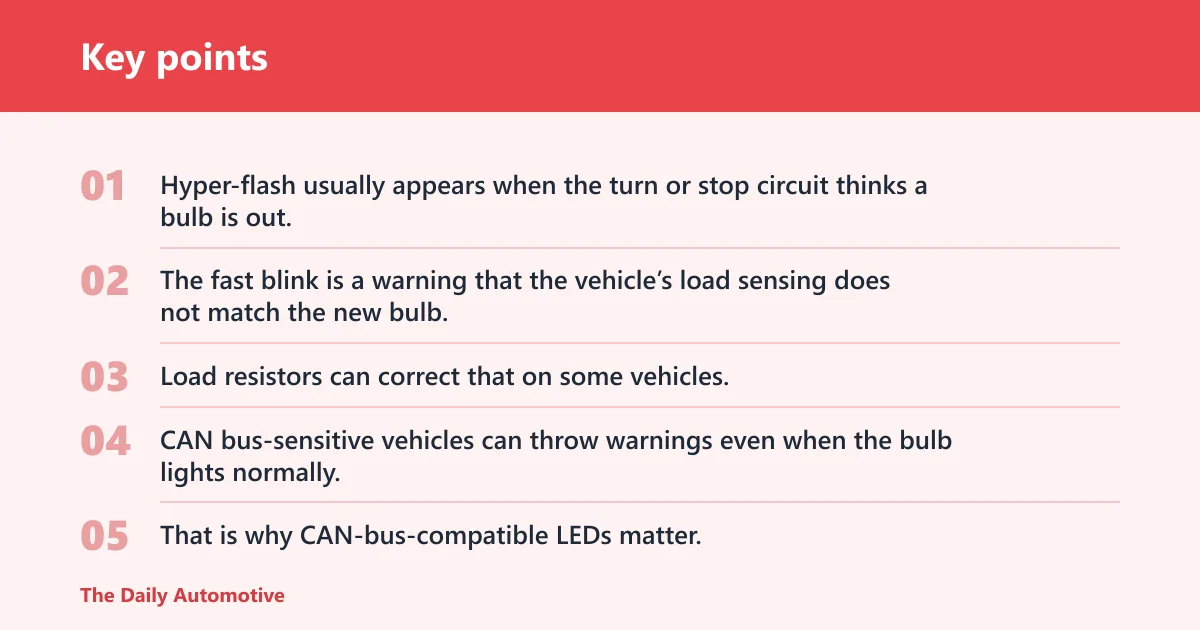
Hyper-flash usually appears when the turn or stop circuit thinks a bulb is out. The fast blink is a warning that the vehicle’s load sensing does not match the new bulb.
Load resistors can correct that on some vehicles, but they add heat and must be mounted properly. They are a fix, not a feature to ignore.
When resistors or a flasher relay are needed
Some LED brake bulbs may require load resistors or a flasher relay. That is most common when the vehicle uses bulb-out monitoring or when the turn signal and stop lamp share the same load-sensitive circuit.
Install the resistor only if the vehicle needs it, and mount it away from plastic and wiring that cannot take heat.
Heat and electrical load considerations
LEDs draw less power, which can reduce heat in the bulb itself. Good LED bulbs often use aluminum bodies and built-in IC drivers to stabilize current and help with heat dissipation, which supports long-term reliability.
That said, the resistor you add may create heat elsewhere. A cooler bulb does not mean the whole system runs cooler.
Halogen long-life bulbs: best for simple replacements
Halogen long-life miniature bulbs are the safer low-complexity choice when you want steady brightness, easy installation, and a replacement that behaves like the original. They do not offer the instant-on advantage of LED, but they are often the least troublesome option for a basic brake light repair.
Why steady output still matters
Halogen brightness is predictable, and the light output does not depend on electronics, polarity tricks, or extra load parts. For drivers who value dependable function over a technology upgrade, that predictability is useful.
That is especially true in older housings where the lens and reflector already limit performance. A correct halogen bulb may do the job without adding complexity.
Durability versus brightness tradeoff
Long-life halogen bulbs usually trade some brightness for extended service life. That is a fair trade for many commuters and fleet buyers who want fewer bulb changes.
SYLVANIA 7443 Long Life Miniature bulbs are sold as a two-pack, which fits the usual recommendation to replace both sides together when you want even output.
When halogen is the better call
Choose halogen when your car is sensitive to LED load changes, when you want a direct swap, or when the brake lamp housing is already marginal and you want the fewest variables possible. Halogen is also a good choice if you do not want to add resistors or chase warning messages.
If the vehicle is older and the lenses are not pristine, a sensible halogen replacement can be the most reliable safety move.
How bright should brake light bulbs be?
Bright enough to be seen clearly through the lens, reflector, and any light haze. More output is not always better if the beam is scattered, the lens is yellowed, or the light washes out in fog or sun glare. The goal is legible stop-tail signal visibility, not raw output alone.
Beam pattern matters as much as output
A 360-degree output pattern can help fill the housing more evenly and reduce dark spots. That matters in older reflectors and in lenses that are tinted or slightly cloudy.
Some LED listings claim 360° luminous output or similar coverage, which can help when the bulb sits inside a deep lens.
What lens condition can hide
A dull lens can erase the benefit of a stronger bulb. A worn reflector can do the same. Corroded sockets can also reduce output by adding resistance or causing intermittent contact.
That is why a brighter bulb can still look poor if the housing is tired.
Road use scenarios
In heavy traffic, response speed is valuable because following drivers get the brake signal sooner. At night, beam spread matters more because the lamp has to read clearly without blinding the driver behind you.
In towing or in an older car with faded plastic, even a good LED may need a restored lens to show its full advantage.
Frequently asked questions
What are the best brake light bulbs for safety?
The best brake light bulb is the correct-fit bulb that matches your socket family, voltage, and vehicle monitoring system. For many cars, that means either a quality halogen long-life bulb for simple reliability or a CAN-bus-compatible LED for faster response and lower draw. Fitment comes before brightness.
Are LED brake light bulbs better than halogen for safety?
LED bulbs can improve safety when they fit correctly and light the lens evenly, because they reach full brightness faster and often offer better response time. Halogen is still safer in some vehicles because it avoids warning lights, hyper-flash, and compatibility problems that can cancel out the benefit.
Which brake light bulb fits my car?
Use the owner’s manual, a confirmed-fit lookup, and the exact bulb number for the stop and tail positions. Check the make, model, year, socket family, and lamp location. A bulb may look right and still be wrong if the base, contacts, or monitoring system do not match.
Do LED brake lights need resistors or a flasher relay?
Some do. If your vehicle watches lamp current closely, an LED swap may trigger hyper-flash or a warning light, and a load resistor or flasher relay may be needed. Not every car needs them, so verify before buying rather than assuming an LED is plug-and-play.
Should brake light bulbs be replaced in pairs?
Yes, if you want matched brightness and color on both sides. Pair replacement helps keep the rear lighting even, especially with halogen bulbs that dim over time. It is also useful when you are upgrading to LED and want both sides to behave the same way.
Can I use 7440, 7443, 3157, or 1157 brake bulbs interchangeably?
No, not by default. These families can look similar, but their bases, contacts, and circuit behavior differ. A bulb that fits one socket may fail in another or light the wrong function, so confirm the exact part number for the brake and tail position before buying.
CAN bus warnings?
CAN bus-sensitive vehicles can throw warnings even when the bulb lights normally. That is why CAN-bus-compatible LEDs matter, and why some buyers should stay with halogen if they want the simplest path.
If your dashboard is picky about lamp current, do not assume every LED is plug-and-play.
Products related to this article
Sponsored / affiliate links. As an Amazon Associate I earn from qualifying purchases. I may earn additional commission from eligible campaigns.