Is VW a European Car? A Straight Answer on the Brand’s True Identity
You see a VW Golf in your rearview mirror and the thought crosses your mind: is this really a European car, or just a foreign brand that happens to sell well here? It’s a fair question. The badge says Volkswagen, but the one you’re looking at might have been built in Mexico. The parts might have come from China. The design, though, feels distinctly different from a Ford or a Toyota.
This article clears up the confusion. You’ll walk away knowing exactly what makes a car ‘European’ in the first place, where VW actually builds its vehicles, and why the brand’s engineering philosophy ties it to Europe far more than its global factory list suggests. We’ll also tackle the common myths—like the idea that every VW rolls out of a German plant—and look at what the future holds for the company’s electric lineup.
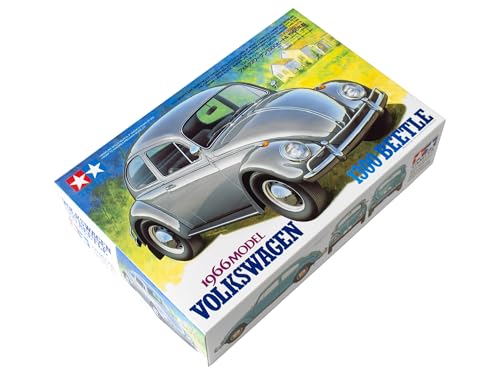
TAMIYA
Tamiya 24136 1/24 Volkswagen 1300 Beetle 1966…
- package height : 7.111 cm
- package length : 29.718 cm
- package width : 19.05 cm
Quick Answer: Is VW a European Car?
Yes, Volkswagen is a European car brand. It’s headquartered in Wolfsburg, Germany, and its engineering, design language, and corporate culture are deeply rooted in European automotive traditions. The company is a founding pillar of the European Union’s auto industry and operates under German corporate law.
But here’s the nuance: not every Volkswagen you buy is built in Europe. Many models sold in North America come from plants in Mexico, and VW has massive operations in China. That doesn’t change the brand’s origin or its DNA. It just makes it a global manufacturer with a European soul.
What ‘European Car’ Really Means
People toss around ‘European car’ like it’s a single, clear category. It isn’t. There are two distinct ways to look at it: legal and stylistic.
Legally, a European car is one designed and engineered by a company headquartered in a European Union member state or a country culturally tied to Europe (like the UK or Switzerland). The car must meet EU safety and emissions regulations to be sold there. Volkswagen Group, with its headquarters in Wolfsburg, fits this definition perfectly. So do Audi, Porsche, Skoda, and SEAT—all brands under the VW umbrella.
Stylistically, ‘European’ refers to a set of design and driving priorities. European cars tend to favor handling precision over straight-line comfort. They often use smaller-displacement engines with turbochargers to balance power and fuel economy. The interior design leans toward functional minimalism rather than flashy chrome. You see this in a VW Golf or a Passat. It’s a different philosophy than the soft-riding, big-V8 approach of many American cars or the value-focused, feature-heavy approach of many Asian brands.
So when someone asks if VW is a European car, they usually mean both things: the legal origin and the driving character. VW delivers on both counts.
VW’s German Heritage and Headquarters
Volkswagen was founded in 1937 in Wolfsburg, Germany. The city itself was built around the factory. That’s not a marketing slogan; the company and the town grew up together. The headquarters are still there today, and it remains one of the largest automotive manufacturing complexes in the world.
This German base matters for a few reasons. First, German engineering has a reputation for precision and durability. VW’s vehicle lineup reflects that, with tight panel gaps, solid door-closing thuds, and engines that are designed to run for hundreds of thousands of miles when maintained. Second, being in Germany means VW is subject to strict EU regulations on emissions, safety, and recycling. These rules shape how the cars are designed from the ground up.
VW also owns Audi, Porsche, Skoda, and SEAT. This gives the group a massive footprint in the European automotive industry. When you buy a VW, you’re buying into that corporate ecosystem, not just a standalone brand.
Where Are Volkswagens Actually Manufactured?
This is where the ‘European car’ question gets tricky. VW is a global manufacturer with plants on nearly every continent. The brand’s identity is European, but its production map is worldwide.
European Production Hubs
Germany hosts the main plants in Wolfsburg, Dresden, and Zwickau. These facilities build models like the Golf, the ID.3, and the ID.4. Other European plants in Spain, Portugal, and the Czech Republic handle different models. For example, the SEAT factory in Martorell, Spain, builds the VW Taigo and the Polo for certain markets. The plant in Bratislava, Slovakia, assembles the Touareg.
If you buy a VW in Europe, there’s a good chance it was built in a European plant. The supply chain is local, which reduces shipping costs and carbon footprint.
Global Factories Outside Europe
Here’s the reality for North American buyers: most VWs sold in the US and Canada come from the Puebla plant in Mexico. That includes the Jetta, the Tiguan, and the Golf GTI (until recently). The Chattanooga, Tennessee plant assembles the Atlas and the ID.4 for the US market. VW also has massive joint ventures in China, producing cars for the world’s largest auto market.
Does the Mexican-built Jetta feel less German? Honestly, no. The build quality standards are the same. The parts are sourced globally. The engineering is done in Germany. The factory in Puebla just executes the design. But it’s worth knowing that ‘Made in Germany’ doesn’t apply to every VW on the lot.
How VW Compares to American and Asian Brands
To understand VW’s European identity, put it next to a typical American or Asian car. The differences are noticeable within the first few minutes of driving.
| Aspect | Volkswagen (European) | Typical American Brand (Ford, Chevy) | Typical Asian Brand (Toyota, Honda) |
|---|---|---|---|
| Design Philosophy | Functional, restrained, focused on driver ergonomics | Bold, truck-inspired, often larger and more imposing | Efficient, value-driven, sometimes conservative |
| Driving Dynamics | Firm suspension, precise steering, feels planted on highways | Softer ride, more body roll, comfort-oriented | Balanced, predictable, less engaging but reliable |
| Engine Choices | Small turbocharged 4-cylinders, diesels in Europe, now EVs | V6s and V8s common, focus on torque and towing | Hybrids and naturally aspirated 4-cylinders |
| Safety Standards | Meets strict EU crash tests, often adds tech as standard | Meets US NHTSA standards, focuses on large vehicle safety | Excellent reliability, strong safety scores, but sometimes lags on standard tech |
| Interior Feel | Minimalist, high-quality materials, firm seats | Spacious, often more plastic, but user-friendly | Practical, durable, but rarely exciting |
This table is a generalization, of course. The Ford Mustang handles well. The Honda Civic is fun to drive. But the average product from each region follows these patterns. VW’s commitment to a taut ride and precise controls is a direct result of its European testing grounds, where autobahn speeds and tight mountain passes demand different engineering choices than wide, straight American highways.
VW’s Impact on the European Automotive Market
Volkswagen Group is not just a participant in the European auto industry; it’s the dominant force. The group accounts for roughly a quarter of all new car registrations in Europe. That’s a staggering number when you consider the competition from Stellantis, Renault, and BMW.
This influence extends to regulations. VW’s push for electric vehicles, through its ID. series, has forced other manufacturers to accelerate their own EV plans. The company’s massive investment in battery technology and charging infrastructure shapes the entire market. When VW sneezes, the European automotive industry catches a cold.
There’s also a cultural angle. In Germany, VW is ‘the people’s car’—that’s what the name means. It’s the car your grandfather drove, the car you learn to drive in, the car that takes the family on holiday to Italy. This cultural weight gives the brand a level of loyalty that’s hard to replicate elsewhere. It’s not just transportation; it’s part of the social fabric.
Common Myths About VW’s Origin
Let’s clear up a few misconceptions that float around online and at car meets.
Myth 1: All VWs are made in Germany. We covered this. Many are built in Mexico, China, and the US. The design is German, but the assembly is global.
Myth 2: VW is a luxury car brand. It’s not. Audi is the luxury arm of the group. VW sits in the mainstream segment, competing with Toyota, Honda, and Ford. Some models like the Touareg or the Arteon have upscale features, but the brand’s core lineup is mass-market.
Myth 3: VW’s diesel scandal means the brand is untrustworthy. The Dieselgate scandal in 2026 was a serious ethical failure. It cost the company billions and damaged its reputation. But it doesn’t change the brand’s European identity. It’s a cautionary tale about corporate behavior, not a statement about where the cars come from.
Myth 4: European cars are unreliable. This used to be true for some older models, but modern VWs are competitive with Japanese rivals in reliability surveys. The maintenance costs can be higher, and parts are sometimes pricier, but the gap has narrowed significantly.
Why VW’s European Identity Matters to Buyers
Why should you care about any of this? Because the brand’s origin affects your ownership experience.
European engineering means the car will likely handle better on winding roads. It means the safety systems are designed to meet rigorous EU standards. It means the interior will be built with a certain level of material quality, even in base models. It also means the electronics might be over-engineered—some VW owners complain about finicky infotainment systems that are more complex than they need to be.
Resale value is another factor. VW’s brand reputation in the US market is solid but not stellar. A Golf or Jetta holds its value reasonably well, but not as well as a Toyota Corolla. That’s a trade-off you accept for the driving experience.
If you’re a fan of the brand’s heritage, you might enjoy a hands-on connection to it. Building a model kit of a classic VW Beetle is a great way to appreciate the design philosophy up close. The Tamiya 1/24 VW Beetle kit lets you assemble a 1966 model piece by piece, which gives you a real feel for the car’s simple, functional lines. It’s a relaxing weekend project and a nice nod to the brand’s roots. Check the current price on Amazon if you’re curious.
Looking ahead, VW’s European identity is only getting stronger with its EV transition. The ID. series is designed in Germany, built on a dedicated electric platform, and engineered to meet Europe’s aggressive carbon reduction targets. The brand’s future is tied to European environmental policy, which is a different path than many American or Asian competitors.
Final Thoughts: A European Icon with a Global Footprint
So, is VW a European car? Yes, in every meaningful way. The headquarters are in Germany. The engineering philosophy is European. The brand is a cornerstone of the EU’s automotive industry. The fact that some models are built in Puebla or Chattanooga doesn’t dilute that.
- VW is legally a European company, headquartered in Wolfsburg, Germany.
- Its design DNA—firm handling, turbocharged engines, minimalist interiors—is distinctly European.
- Most VWs sold in the US are built in Mexico or Tennessee, not Germany.
- VW Group controls Audi, Porsche, Skoda, and SEAT, making it a dominant force in Europe.
- The ID. electric series reinforces the brand’s European regulatory and engineering focus.
- VW is not a luxury brand; it’s a mainstream brand with some upscale models.
- Don’t assume ‘European’ means ‘unreliable’—modern VWs hold up well, though maintenance costs run a bit higher than Japanese rivals.
If you’re considering a VW, you’re buying a piece of European automotive culture, regardless of which factory stamped the VIN. That’s not a bad thing. It’s just a fact you should know before you sign the papers. And if you’re curious about how VW’s engineering compares to other racing-focused machines, take a look at our IndyCar vs F1 comparison for a sense of how European engineering principles play out at the highest level of motorsport.
One last note on ownership: European cars have their quirks. The infotainment systems can be laggy. The cupholders are sometimes an afterthought. But the driving dynamics are worth it for many people. Just like any vehicle, proper maintenance matters to keep it running well. A VW is a rewarding car to own if you appreciate the engineering. It’s not perfect, but it has character.
Products related to this article
Sponsored / affiliate links. As an Amazon Associate I earn from qualifying purchases. I may earn additional commission from eligible campaigns.