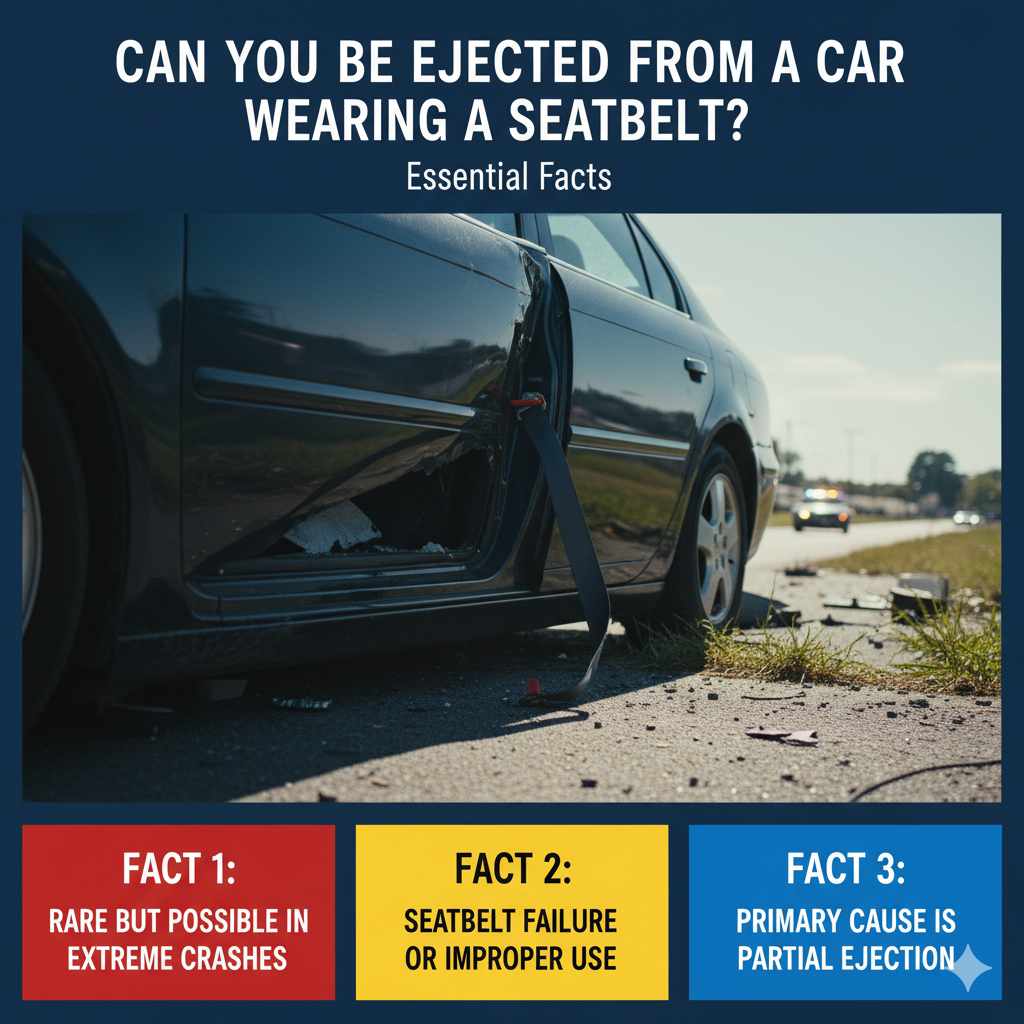
Can You Be Ejected From A Car Wearing Seatbelt? Essential Facts
Yes, it is extremely rare, but theoretically possible, to be ejected from a car even when wearing a seatbelt. Modern seatbelts and vehicle safety systems are designed to keep occupants securely inside during a crash, drastically reducing ejection risk. Ejection typically occurs in severe accidents involving rollovers or extreme structural compromise.
Imagine the scene: a sudden jolt, the unsettling feeling of unrestrained movement, and then a terrifying realization. We all strap in for safety, but a nagging question can sometimes surface: “Can you actually be thrown from a car even if you’re wearing your seatbelt?” It’s a disturbing thought, and one that might make you grip the steering wheel a little tighter. As your trusted automotive guide, I’m here to cut through the fear and give you the clear, straightforward facts. You’re not alone if this question has crossed your mind, and understanding the reality can actually boost your confidence on the road. Let’s explore how seatbelts work, what happens in accidents, and the slim chance of ejection, so you can drive with peace of mind.
Understanding Seatbelt Technology: Your First Line of Defense
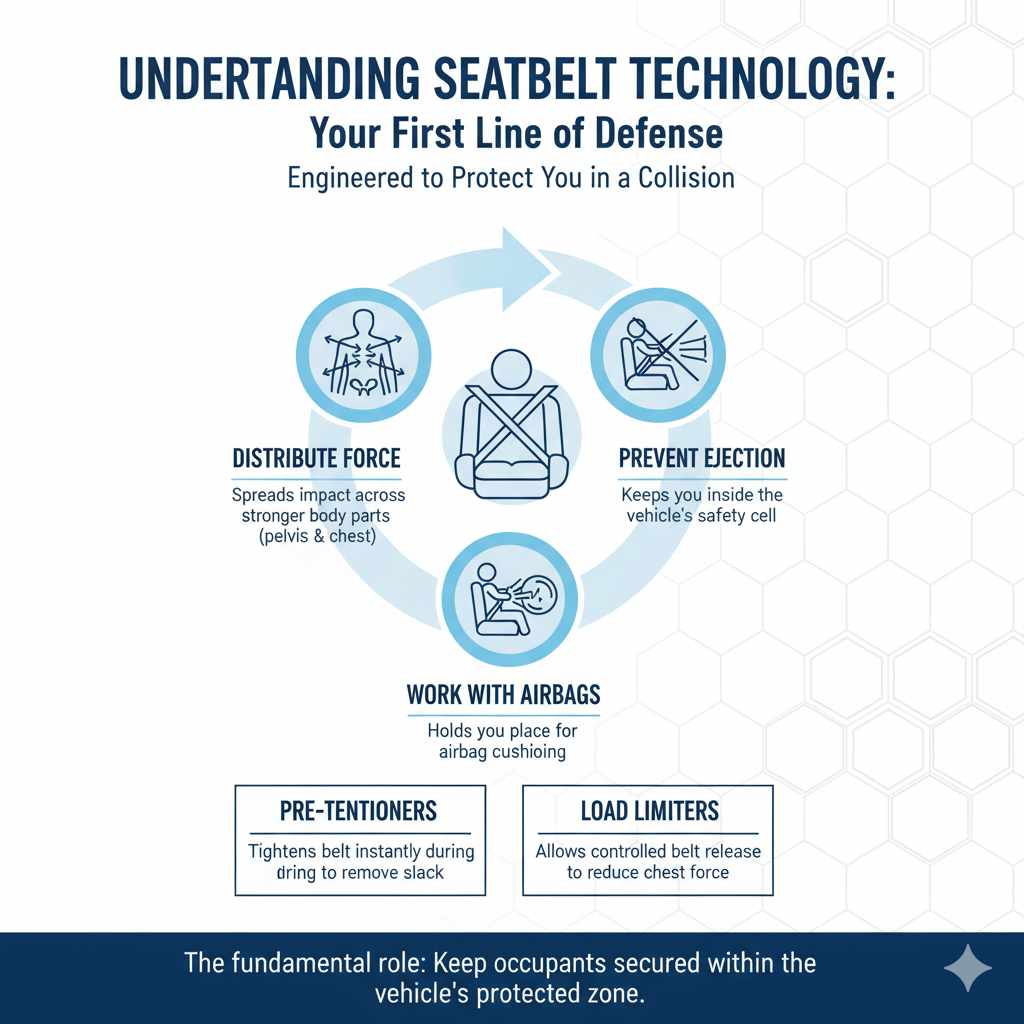
Seatbelts are one of the most fundamental safety features in any vehicle, and for good reason. They are engineered to work in conjunction with other safety systems, like airbags, to protect you during a collision. The primary goal of a seatbelt is to restrain you, preventing your body from moving forward violently and impacting the car’s interior or being thrown through a window.
When you buckle up, the seatbelt system is designed to do a few critical things:
- Distribute Force: In a crash, a seatbelt spreads the impact forces across the stronger parts of your body, such as your pelvis and chest, rather than focusing them on a single point.
- Prevent Ejection: This is its most crucial role. By keeping you secured in your seat, it drastically reduces the likelihood of being thrown from the vehicle.
- Work with Airbags: Airbags deploy to cushion you, but they are most effective when you are already held in place by a seatbelt. Without a seatbelt, you could be thrown into the path of an inflating airbag with tremendous force, leading to injury.
Modern seatbelts often include advanced features like pre-tensioners, which tighten the belt instantly during a crash to remove slack, and load limiters, which allow a small amount of give to reduce the force on your chest after the initial impact. These technologies work together to provide the best possible protection.
The Mechanics of Car Crashes and Ejection
Car accidents are complex events. The forces involved, the speed of impact, the angle of collision, and the structural integrity of the vehicle all play significant roles in what happens to the occupants. While seatbelts are incredibly effective, there are extreme circumstances where their limitations, or the vehicle’s structural failures, might come into play.
Ejection from a vehicle is a terrifying outcome, but it’s important to understand that it is a rare event, especially in modern vehicles. The statistics clearly show that wearing a seatbelt dramatically reduces the risk of ejection and, consequently, serious injury or fatality.
For instance, data from the National Highway Traffic Safety Administration (NHTSA) consistently shows that seatbelt use is one of the most effective ways to prevent death and serious injury in motor vehicle crashes. Their research indicates that in rollovers, which are the type of crashes most associated with ejection, seatbelts are vital in keeping occupants inside the vehicle and protected.
When is Ejection Most Likely to Occur?
Even with a seatbelt, ejection is marginally more likely in specific, severe crash scenarios:
- Severe Rollover Accidents: These are the most common scenarios where ejection might occur, even with seatbelts. The vehicle can roll multiple times, forcefully dislodging an occupant.
- Major Structural Compromise: In extremely high-impact collisions, the vehicle’s structure itself can be compromised to the point that doors open, windows shatter, and restraint systems may fail to keep occupants fully contained.
- Improper Seatbelt Use: While not a failure of the belt itself, if a seatbelt is not worn correctly (e.g., lap belt over the stomach instead of hips, or shoulder belt behind the back), its effectiveness is severely diminished.
It’s crucial to remember that these are extreme cases. For the vast majority of everyday driving and even moderate to severe crashes, your seatbelt is a robust safety device designed to keep you exactly where you need to be: in your seat.
The Role of Vehicle Design and Safety Standards
Automakers invest heavily in vehicle safety, and regulations require them to meet stringent standards. These standards ensure that vehicles are designed to protect occupants in a variety of crash scenarios.
Modern cars are built with crumple zones that absorb impact energy, strong safety cages that maintain the occupant compartment’s integrity, and advanced restraint systems. These elements work in harmony with seatbelts.
How Vehicle Safety Enhances Seatbelt Effectiveness:
- Reinforced Roof Structures: Help prevent roof collapse during rollovers, maintaining space for occupants and ensuring seatbelts can do their job.
- Side-Impact Protection: Strengthened door beams and side airbags add layers of protection, further securing you within the cabin.
- Door Latch Systems: Designed to prevent doors from opening unintentionally during a crash, a critical factor in preventing ejection.
The continuous evolution of automotive engineering means that each new generation of vehicles generally offers improved protection over the last. Safety ratings, like those provided by the Insurance Institute for Highway Safety (IIHS), can give you a good idea of how well a specific vehicle is designed to protect occupants.
Statistics: Seatbelt Use and Ejection Risk
Numbers often paint a clearer picture than words. When we look at the data regarding seatbelt use and ejection, the protective power of these simple devices becomes undeniably clear.
Numerous studies and real-world crash data consistently show a dramatic reduction in ejection and fatality rates among seatbelted occupants compared to those who are unbelted.
Here’s a look at what the data suggests:
| Scenario | Risk of Fatality (with seatbelt vs. without) | Risk of Ejection (with seatbelt vs. without) |
|---|---|---|
| All Crashes | Significantly Lower | Significantly Lower |
| Rollover Crashes | Dramatically Lower | Dramatically Lower |
According to NHTSA, seat belts save thousands of lives each year. For example, in 2017 alone, seat belt use saved an estimated 14,955 lives in passenger vehicles. Furthermore, the risk of ejection for unbelted occupants in a crash is several times higher than for belted occupants. In rollover crashes, this difference is even more pronounced, with seatbelts playing a crucial role in keeping people inside the vehicle.
The takeaway from these statistics is that while no safety system is 100% foolproof against every conceivable scenario, seatbelts are overwhelmingly effective at preventing ejection and saving lives. Wearing your seatbelt correctly every time is the single most important thing you can do to protect yourself in a car crash.
What to Do If You Experience a Serious Accident
If you find yourself in a serious accident, your immediate actions are critical for your well-being and safety. Even if you believe you haven’t been ejected, assessing your condition and seeking proper care is paramount.
Here’s a simple guide to follow if you’re involved in a significant collision:
- Stay Calm and Assess: Take a deep breath. Check yourself for injuries. If you can move, do so carefully to a safe location away from traffic, if possible.
- Check on Others: If you are able, check on other passengers in your vehicle and, if safe to do SO, on occupants of other vehicles involved.
- Call for Help: Dial emergency services (911 or your local equivalent) immediately. Provide them with your location, the number of vehicles and people involved, and any apparent injuries.
- Do Not Move Injured Individuals (Unless Necessary): Unless there is an immediate danger (like fire), do not move someone who appears seriously injured, especially if there’s concern for neck or spinal injury.
- Cooperate with First Responders: When emergency personnel arrive, follow their instructions.
- Document the Scene (If Safe): If you are able and it is safe, take photos of the accident scene and vehicles for insurance purposes.
Remember, even if you feel okay immediately after a crash, some injuries might take time to manifest. It’s always a good idea to get checked out by a medical professional, especially after a significant impact.
Ensuring Maximum Seatbelt Effectiveness: Your Role as a Driver
While car manufacturers and safety regulations play a huge part, your active participation in using and maintaining your seatbelt system is crucial.
Here’s how you can ensure your seatbelt does its job to the best of its ability:
- Wear It Correctly, Every Time: The lap belt should be low and snug across your upper thighs/hips (not your stomach). The shoulder belt should be across your chest and shoulder, not across your neck or tucked behind your back or under your arm.
- Ensure Proper Fit for All Occupants: Make sure children are in appropriate car seats or booster seats that position the seatbelt correctly. Adjust car seats according to manufacturer instructions.
- Check for Damage: Periodically inspect your seatbelts for any signs of wear, fraying, or damage to the webbing, retractors, or buckle. If you notice any issues, have them repaired by a qualified mechanic immediately.
- Avoid Modifying Seatbelts: Never install or use devices designed to bypass or alter the normal function of seatbelts. These are illegal and unsafe.
- Understand Seatbelt Pre-Tensioners and Load Limiters: These are key safety features you usually don’t see. If your vehicle has been in a moderate to severe crash, these systems might have deployed. They may need to be inspected and possibly replaced by a professional.
By being mindful of these points, you are actively contributing to your safety and the safety of your passengers.
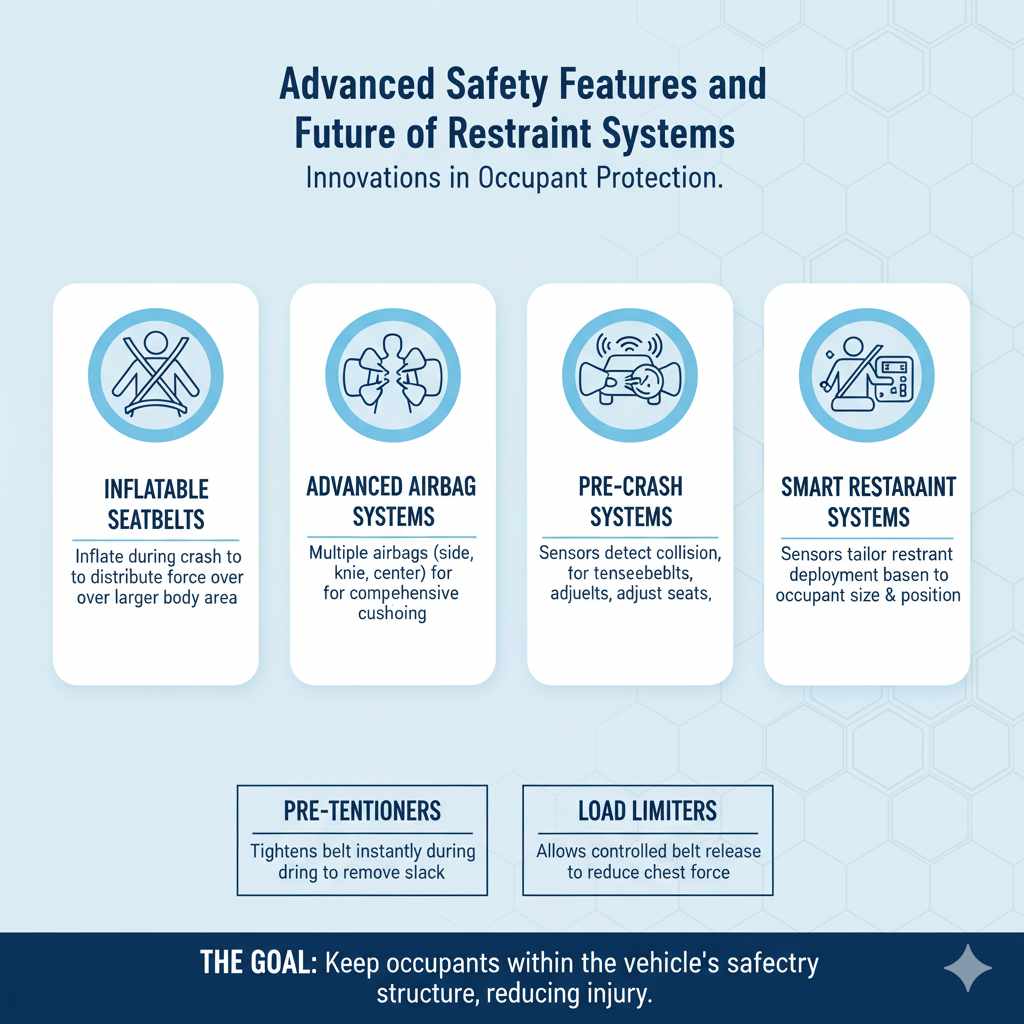
Advanced Safety Features and Future of Restraint Systems
The world of automotive safety is constantly evolving. Beyond the standard seatbelt, new technologies are being developed and implemented that further enhance occupant protection.
Automakers are continuously researching and developing more sophisticated restraint systems to minimize injury and prevent ejection even in the most severe crash conditions. Some of these advancements include:
- Inflatable Seatbelts: These function like traditional seatbelts but can inflate in a crash to distribute impact forces over a larger area of the body, reducing pressure on the chest.
- Advanced Airbag Systems: Vehicles now often feature multiple airbags, including side curtain airbags, knee airbags, and even front-center airbags designed to prevent occupants from colliding with each other.
- Pre-Crash Systems: Some vehicles use sensors to detect an imminent collision and can automatically tense seatbelts, adjust seats, or even close windows to prepare occupants for impact.
- Smart Restraint Systems: Future systems may use sensors to monitor occupant size and position to tailor restraint deployment for optimal safety for each individual.
While these technologies add layers of protection, the fundamental role of the seatbelt in keeping you secured within the vehicle’s protected zone remains unchanged. The goal is always to keep occupants inside the vehicle’s safety structure, and seatbelts are the primary mechanism for achieving this.
Frequently Asked Questions (FAQs)
Q1: Are seatbelts truly effective if a car rolls over multiple times?
A1: Yes, seatbelts are highly effective even in rollover accidents. While ejection is more likely in rollovers than in frontal or side impacts, wearing a seatbelt dramatically reduces this risk and is crucial for preventing severe injury or fatality by keeping you secured inside the vehicle.
Q2: What if my car door flies open during a crash? Can I still be ejected?
A2: If a car door opens during a crash, the risk of ejection increases. However, modern vehicle doors are designed with robust latching systems to stay secured. Seatbelts are designed to keep you in your seat even if a door were to become unlatched, but an open door does present a higher risk.
Q3: Can seatbelts injure me if I don’t wear them correctly?
A3: Yes, improper seatbelt use can lead to injuries. For example, wearing the lap belt over your stomach instead of your hips can cause internal injuries. The shoulder belt should not be behind your back or under your arm. Always ensure the belts are worn correctly across the strong bones of your pelvis and collarbone/shoulder.
Q4: What happens if my seatbelt is damaged?
A4: A damaged seatbelt compromised its ability to protect you. Look for fraying, cuts, or issues with the retractor mechanism. If you notice any damage, it’s essential to have it inspected and repaired or replaced by a professional mechanic as soon as possible.
Q5: Is it possible that the seatbelt itself could break in an extreme crash?
A5: Seatbelt systems are rigorously tested to withstand immense forces, far beyond what most common crashes produce. While theoretically possible in the most extreme, catastrophic impacts where the vehicle’s structure is completely compromised, seatbelt failure is extremely rare. The system is designed to hold under intense stress.
Q6: Do airbags make seatbelts unnecessary?
A6: Absolutely not. Airbags and seatbelts work together as a system. Airbags are designed to cushion occupants after the seatbelt has already secured them in place. Without a seatbelt, an airbag can actually cause injury due to the force of its deployment.
Conclusion
The question of whether you can be ejected from a car while wearing a seatbelt brings up a fundamental concern about safety. The clear answer, supported by extensive research and real-world data, is that while extremely rare, it is theoretically possible in the most severe and unusual accident scenarios, particularly rollovers. However, the effectiveness of seatbelts in preventing ejection is overwhelmingly proven.
Your seatbelt is your most critical safety device and a vital component that works in concert with your vehicle’s advanced safety features. By ensuring you and all your passengers wear seatbelts correctly, every single time, you are taking the most impactful step to protect yourselves. Stay safe on the road, and drive with confidence, knowing that your seatbelt is your steadfast guardian!