Can You Carry A Balance On Amex? Essential Guide
Yes, you can carry a balance on many American Express cards, but it’s not always the best financial move. While some Amex cards are designed for full balance payments, others offer features like Amex’s “Pay Over Time” which allows you to carry a balance on eligible purchases. Understanding your specific card’s terms is key.
Ever looked at your American Express statement and wondered if you can spread out payments, just like with other credit cards? It’s a common question, and the answer isn’t always a simple “yes” or “no.” Many people associate Amex with elite rewards and premium perks, sometimes picturing them as cards that demand full payment each month. But the reality is a bit more nuanced! If you’re trying to figure out if your Amex card gives you the flexibility to carry a balance, you’ve come to the right place. We’ll break it down so you can feel confident about managing your Amex account. Let’s explore how carrying a balance on your Amex card works and what you need to know.
Understanding Your Amex Card Options
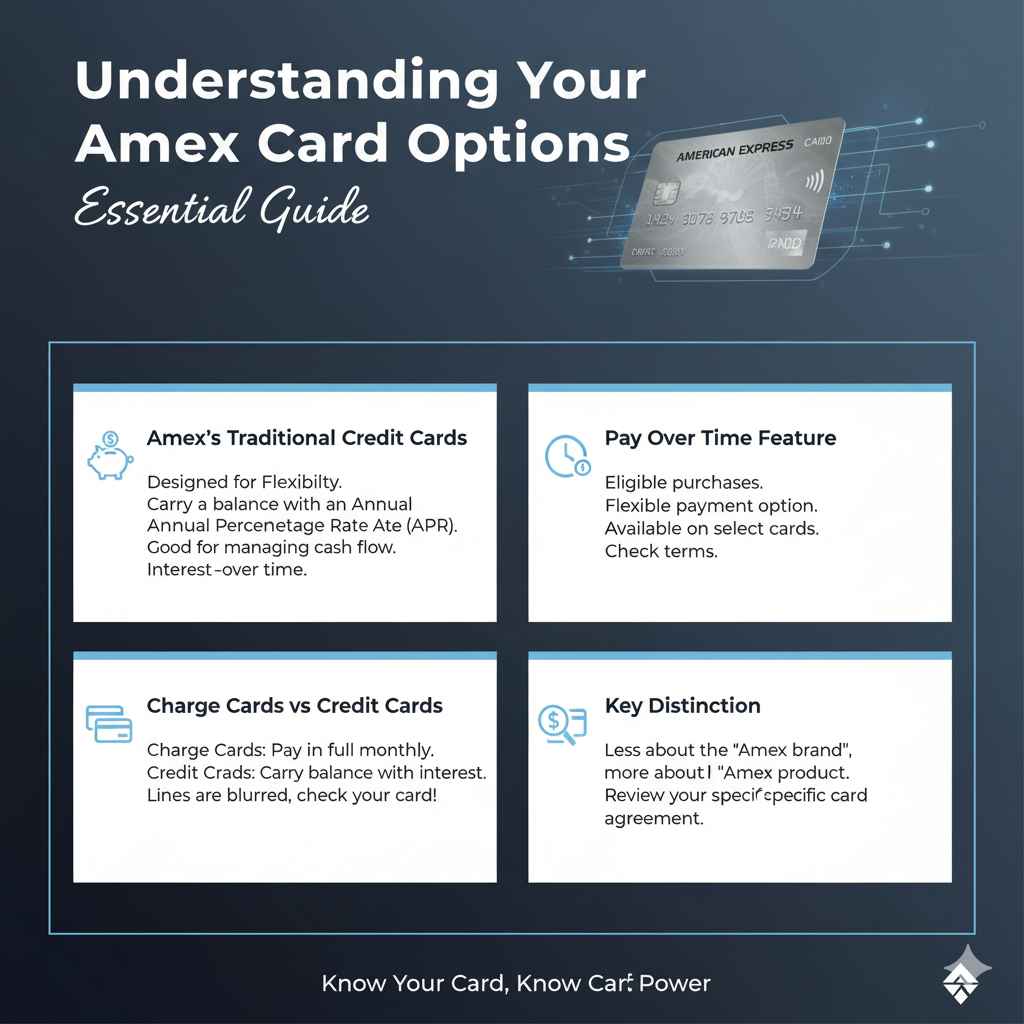
American Express offers a diverse range of credit cards, and their features vary significantly. This means how you handle a balance can depend entirely on the specific card you hold. Some Amex cards, often those targeted at business owners or those seeking premium travel benefits, are typically designed to be paid in full each month. These often function more like charge cards, although many have evolved to include features that allow for balance carrying.
Other Amex cards, particularly those in their standard credit card portfolio, are built with more traditional credit functionalities. These cards may inherently allow you to carry a balance from month to month. The key really is to identify which type of Amex card you have and what its specific terms and conditions permit. It’s less about the “Amex brand” and more about the “Amex product” in your wallet.
Amex’s Traditional Credit Cards: Designed for Flexibility
American Express offers several credit cards that function much like cards from other issuers, allowing you to carry a balance. These cards typically come with an annual percentage rate (APR), which is the interest you’ll pay on any outstanding balance that isn’t paid off by the due date. If your Amex card has an APR listed on your statement, it’s a strong indicator that carrying a balance is an option.
These cards are designed for consumers who may want or need to spread out payments for larger purchases or manage cash flow. It’s important to remember that carrying a balance on any credit card, including these Amex options, will incur interest charges. This means the total cost of your purchases will increase over time.
Amex “Pay Over Time” Feature
A significant feature offered by American Express is “Pay Over Time.” This feature gives eligible card members the ability to carry a balance for certain purchases beyond their minimum payment due. It’s not offered on all Amex cards, and eligibility can depend on your account history and the specific card product. Think of it as a flexible payment option integrated into some of their cards.
With “Pay Over Time,” you’ll see specific purchases on your statement that are eligible for this feature. You can choose to pay the minimum due, the full statement balance, or an amount in between. If you choose to pay less than the full statement balance, the remaining eligible purchases can be carried over to the next billing cycle, subject to an APR. This provides a middle ground for those who don’t want to pay off everything immediately but also aren’t looking to finance their entire balance at a standard interest rate.
Charge Cards vs. Credit Cards: A Key Distinction
Historically, American Express was best known for its charge cards, such as The Platinum Card® or the American Express® Gold Card (though many now have expanded payment options). A true charge card typically requires you to pay the entire balance in full by the due date each month. If you don’t, you could face late fees and potential account restrictions. There isn’t usually an interest charge because you’re not carrying a balance in the traditional sense.
However, the lines have blurred. Many of American Express’s most popular cards, even those that were once purely charge cards, now offer “Pay Over Time” options or have been reclassified as credit cards. This means that even if you have a card that historically acted like a charge card, you might still have the ability to carry a balance on eligible purchases. Always check your specific card agreement or account details to confirm.
How to Check if You Can Carry a Balance on Your Amex
Figuring out if you can carry a balance on your American Express card is straightforward once you know where to look. The most reliable sources of information are your official card documents and your online account portal. Don’t guess; get the facts directly from American Express.
Here’s how to do it:
1. Review Your Card Member Agreement
When you were approved for your American Express card, you received a Card Member Agreement (often called the Cardholder Agreement or Terms and Conditions). This legal document contains all the details about how your card works, including information on how balances are handled and any applicable interest rates. Look for sections discussing payment options, minimum payments, and Annual Percentage Rates (APRs).
If you can’t find the physical copy, don’t worry. You can usually access a digital version:
- Log in to your Amex online account.
- Navigate to the “Account Services” or “Account Details” section.
- Look for a link to “Card Member Agreement,” “Terms and Conditions,” or “Guides to Benefits.”
Reading the agreement might sound daunting, but focus on the parts related to payments and interest. Keywords to search for include “APR,” “minimum payment,” “statement balance,” and “carrying a balance.”
2. Check Your Online Account or Amex App
American Express provides robust online tools and a mobile app that give you real-time information about your account. This is often the quickest way to understand your current balance-carrying capabilities.
Here’s what to look for when you log in:
- Statement Balance vs. Minimum Payment Due: Your monthly statement will clearly show your “Statement Balance” (the total amount due if you paid in full by the due date) and your “Minimum Payment Due” (the smallest amount you must pay to avoid late fees). If there’s a significant difference between these two and your card doesn’t explicitly state it’s a charge card requiring full payment, you likely have the option to pay somewhere in between.
- “Pay Over Time” Section: Many eligible cards will have a dedicated section on the account summary page or within the payment options that highlights “Pay Over Time” eligible purchases. This visually confirms that you have the flexibility to carry balances on certain items.
- Account Details/Features: Sometimes, a general overview of your card’s features will mention if it supports carrying a balance or has features like “Plan It” (another Amex payment option).
3. Look for an APR (Annual Percentage Rate)
The presence of an APR specifically for purchases is a strong indicator that your card allows you to carry a balance. If your card has a “Purchase APR,” it means that if you don’t pay your statement balance in full by the due date, interest will be calculated on the remaining balance based on this rate. Charge cards, which mandate full payment, typically do not have a Purchase APR.
You’ll usually find the APR information in:
- Your monthly statement
- The “Account Details” section online
- Your Card Member Agreement
Note that different APRs might apply to different types of balances (e.g., purchases, balance transfers, cash advances). For carrying a balance on everyday spending, the Purchase APR is the most relevant.
4. Contact American Express Customer Service
If you’re still unsure after reviewing your documents and online account, the most direct way to get an answer is to call American Express customer service. They can look up your specific account and provide a definitive explanation of your card’s features and payment options.
Have your card number ready and be prepared to ask specific questions like:
- “Does my card allow me to carry a balance on purchases?”
- “Which purchases are eligible for the ‘Pay Over Time’ feature?”
- “What is my purchase APR?”
Customer service representatives are there to help clarify these details for you.
When Can You NOT Carry a Balance on Amex?
While American Express has become more flexible, there are still scenarios and card types where carrying a balance is either not possible or not advisable.
Traditional Charge Cards
As mentioned, some American Express cards are structured as true charge cards. These cards are designed around the concept of paying the balance in full each month. They do not typically have a purchase APR because carrying a balance isn’t an intended feature. Examples historically included cards like the American Express® Green Card or Centurion® Card (though product features change). If your card is a charge card, you must pay the full statement balance by the due date.
Specific Promotions or Introductory Offers
Sometimes, introductory offers or specific promotions on Amex cards might have unique terms. For example, a 0% introductory APR offer might apply only to new purchases for a set period, and after that, your regular APR would kick in. It’s crucial to read the terms of any special offer carefully to understand how it affects balance carrying during and after the promotional period.
Not All Purchases are Eligible for “Pay Over Time”
Even on cards that feature “Pay Over Time,” not every single transaction may be eligible. Amex may set a minimum purchase amount (e.g., $100) or exclude certain transaction types. You’ll usually see which purchases are eligible directly on your statement or in your online account. If a purchase isn’t marked as eligible for “Pay Over Time,” you’ll likely need to pay it off in full by the due date, similar to a traditional charge card.
Exceeding Your Credit Limit (Though Amex Can Be More Flexible Here)
While not as common with Amex compared to some other issuers, credit card accounts do have limits. If you were to reach your credit limit, you would typically not be able to make new purchases, and you would need to bring your balance down. However, American Express is known for its potentially “unlimited” or “no pre-set spending limit” on some of its cards, managing spending based on your credit history and spending patterns. This means hitting a hard limit is less frequent, but it’s still a factor to be aware of.
Understanding Interest Charges (APRs)
If your Amex card allows you to carry a balance, the most important concept to grasp is the Annual Percentage Rate (APR). This is the cost of borrowing money from American Express.
Purchase APR
This is the most common APR you’ll encounter. It applies to purchases you make with your card. If you don’t pay off your entire statement balance by the due date, interest will be charged on the remaining balance. The interest calculation typically starts from the date the purchase was made, or from the end of the grace period, depending on your card terms. Keeping this rate in mind is crucial if you plan to carry a balance.
Other APRs to Be Aware Of
While the Purchase APR is key for carrying balances on spending, other APRs might apply:
- Balance Transfer APR: If you transfer a balance from another card to your Amex, a specific APR will apply. This can sometimes be a promotional rate (e.g., 0% for a period) or a standard rate.
- Cash Advance APR: Taking cash out using your credit card (a cash advance) usually incurs a very high APR, often with no grace period, meaning interest starts accruing immediately. It’s generally advisable to avoid cash advances if possible.
- Late Payment Fee APR: If you miss a payment, you might be subject to apenalty APR, which is often much higher than your standard APR.
How Interest is Calculated
Interest is typically calculated daily. You can estimate your monthly interest by:
- Finding your Average Daily Balance (this is the average amount you owed on your card throughout the billing cycle).
- Converting your APR to a daily rate (APR divided by 365).
- Multiplying the Average Daily Balance by the daily rate, and then by the number of days in the billing cycle.
This calculated amount is what you can expect to see added to your balance as interest charges. It quickly adds up!
The Pros and Cons of Carrying a Balance on Amex
Deciding whether to carry a balance on your American Express card is a financial decision that comes with both potential benefits and significant drawbacks. It’s essential to weigh these carefully based on your personal financial situation.
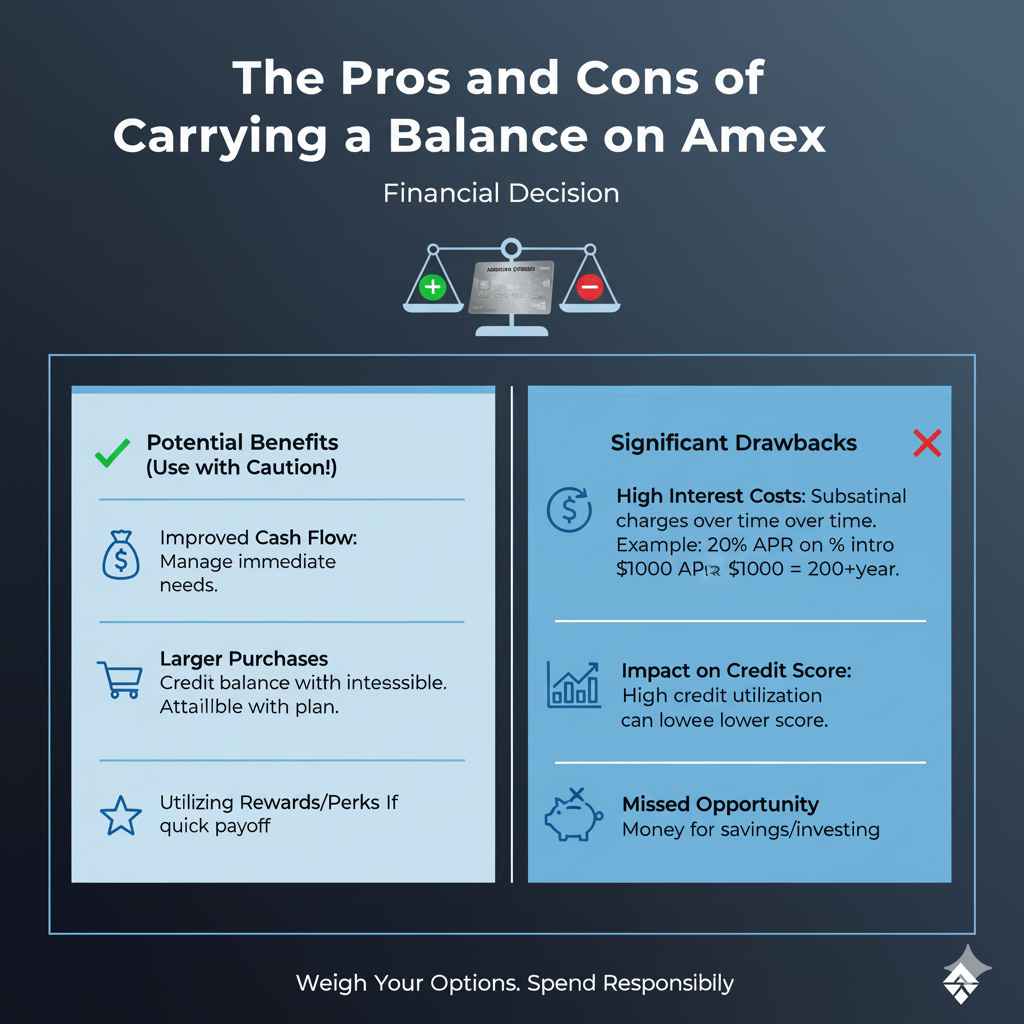
Potential Benefits (Use with Caution!)
- Improved Cash Flow: In a pinch, carrying a balance can help you manage immediate cash flow needs or cover an unexpected expense without depleting your savings.
- Making Larger Purchases More Accessible: If you need to make a significant purchase but can’t pay for it all at once, a card that allows carrying a balance can make it more attainable, provided you have a plan to pay it off.
- Utilizing Rewards/Perks: For some cardholders, the value of the rewards or perks earned on their Amex card might outweigh the interest costs, especially if they have a 0% introductory APR or can pay off the balance quickly.
Significant Drawbacks
- High Interest Costs: This is the biggest downside. American Express cards, like most credit cards, carry APRs that can lead to substantial interest charges if balances are carried for extended periods. This means you’ll end up paying significantly more than the original purchase price. For example, a 20% APR on $1,000 for a year could cost over $200 in interest alone.
- Impact on Credit Score: While carrying a balance isn’t inherently bad for your credit score, a high credit utilization ratio (the amount of credit you’re using compared to your total available credit) can negatively impact your score.
- Debt Accumulation: If not managed responsibly, carrying a balance can lead to a cycle of debt that becomes difficult to escape. The interest charges can compound, making it harder to pay down the principal amount owed.
- Missed Opportunity: The money spent on interest could have been used for other financial goals, such as investing, saving, or paying down other debts.
Responsible Balance Carrying Strategies for Amex Users
If you find yourself needing or choosing to carry a balance on your Amex card, employing smart strategies is crucial. Responsible management ensures you minimize costs and avoid falling into debt.
Create a Strict Payment Plan
Don’t just pay the minimum. Set a realistic goal for paying off your balance and stick to it. Aim to pay more than the minimum required each month. A good target is to pay off the carried balance within a few months, especially if you don’t have a 0% introductory APR. Use a budget planner or calendar reminders to ensure you never miss a payment and always pay on time.
Prioritize Paying Down High-Interest Balances
If you have balances on multiple cards or different types of balances on your Amex (purchase vs. cash advance), focus on paying off the one with the highest APR first. This is known as the “debt avalanche” method, and it saves you the most money on interest over time. You can find resources on debt management strategies from organizations like the Consumer Financial Protection Bureau (CFPB), a U.S. government agency dedicated to making markets work better for consumers.
Leverage 0% Intro APR Offers Wisely
If your Amex card or another card offers a 0% introductory APR on purchases or balance transfers, use it strategically. Make sure you understand the duration of the offer and have a solid plan to pay off the entire balance before the regular, potentially higher, APR kicks in. Treat the 0% period as an interest-free loan and have a clear payoff schedule.
Avoid New Purchases While Carrying a Balance
If you’re already carrying a balance and paying interest, resist the temptation to add more charges to the card. This will only increase the amount you owe and the interest you’ll accrue. Focus all your efforts on paying down the existing debt before making any new purchases on that card.
Consider Amex “Plan It”
American Express offers a feature called “Plan It” which allows you to split eligible purchases into fixed monthly payments over a chosen period. Each “Plan It” plan has a fixed fee instead of an APR, and the payments are listed separately on your statement. This can be a more predictable way to pay off a specific large purchase if you prefer a fixed payment structure over standard interest charges.
American Express Cards That Often Allow Carrying a Balance
While specific features can change and depend on your individual account, several American Express card families are generally known for offering the ability to carry a balance through features like “Pay Over Time” or by being structured as traditional credit cards.