Average Car Loan APR in 2026: Rates by Credit Score
The average APR on a car loan in the United States is 6.39% for new vehicles and 11.43% for used vehicles, according to Experian’s Q1 2026 State of the Automotive Finance Market report. Used-car borrowers pay nearly double what new-car buyers do, and both numbers move with the broader interest-rate environment and each lender’s own risk pricing.
That gap is bigger than it sounds. On a typical $30,000 loan paid off over 60 months, moving from a super-prime rate near 4.55% to a deep-subprime rate near 16% adds roughly $10,000 in extra interest and about $170 to every monthly payment. Even a one- or two-point swing in APR, spread across a 60-to-72-month term, is worth thousands of dollars by the time the car is paid off.
This guide breaks down the current average APR by credit tier and vehicle type, explains what actually moves your rate beyond your credit score, and walks through the practical steps that get you a lower number before you sign anything.
What Counts as a Good APR on a Car Loan Right Now?
A good APR depends entirely on which credit tier you fall into, since the spread between the best and worst rates is enormous. As a general benchmark for 2026: anything under roughly 6% on a new-car loan, or under roughly 9% on a used-car loan, is a strong rate for most borrowers with decent credit. Anything at or below the national averages of 6.39% (new) and 11.43% (used) is at least reasonable. Rates meaningfully above those averages usually mean a lower credit tier, a longer loan term, or a lender that isn’t your best option.
A 700 credit score sits solidly in Experian’s “prime” tier (661-780), one full step above the overall market average. Expect a rate noticeably better than the 6.39% new-car or 11.43% used-car averages, though still above the 4.55% and 6.30% that super-prime borrowers (781+) typically see.
RUN THE NUMBERS YOURSELF
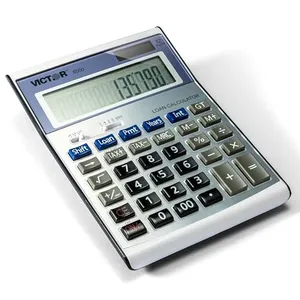 |
Victor 6500 Executive Desktop Loan Calculator – $28.95 Since a one- or two-point APR difference can be worth thousands over a loan term, it helps to plug in a lender’s actual quoted rate and term yourself instead of trusting a dealer’s payment estimate.
|
Average Car Loan APR by Credit Score in 2026
Experian scores auto borrowers into five credit tiers using VantageScore 4.0, and the APR gap between the top and bottom tiers is roughly four times wider on used cars than the spread most buyers expect. Here’s where the two extremes and the overall market average land for Q1 2026:
| Credit Tier | Score Range | Avg. New-Car APR | Avg. Used-Car APR |
|---|---|---|---|
| Super Prime | 781-850 | 4.55% | 6.30% |
| All Credit Tiers (Market Average) | — | 6.39% | 11.43% |
| Deep Subprime | 300-500 | 16.01% | 21.77% |
The three tiers in between follow a predictable ladder rather than jumping straight from best to worst:
- Prime (661-780): The largest single group of borrowers. Rates land comfortably below the 6.39%/11.43% national averages shown above.
- Nonprime (601-660): Rates start climbing above the national average, and lenders begin asking harder questions about income and debt load.
- Subprime (501-600): Rates climb sharply here, often landing in double digits even on a new car.
- Deep Subprime (300-500): The highest bracket, averaging 16.01% on new cars and 21.77% on used cars — more than triple the super-prime rate.
Source: Experian State of the Automotive Finance Market, Q1 2026.
New Car APR vs Used Car APR: Why the Gap Is So Wide
Used-car APRs run nearly double new-car APRs across every credit tier, and the reason comes down to risk and collateral value rather than the borrower alone. A new car is a known quantity — the lender can look up exactly what it’s worth and how fast it depreciates. A used car’s value is harder to pin down, it depreciates less predictably, and it’s more likely to need costly repairs that could make a struggling borrower stop paying. Lenders price all of that uncertainty into the rate.
The dollar figures reflect the same divide. In Q1 2026, the average new-car loan amount was $43,925 with an average monthly payment of $770, while the average used-car loan amount was $27,070 with an average monthly payment of $531. Smaller loan balances on used cars don’t offset the higher rate enough to close the payment gap by much — the APR difference does most of the work. If you’re weighing new against used purely on financing cost, it’s worth reading through why interest rates run higher on used cars in more detail before you decide.
What Actually Moves Your APR (Beyond Credit Score)

Credit score gets the most attention, but it’s not the only lever that moves your rate:
- Loan term: The average new-car loan now runs 69.48 months and the average used-car loan runs 67.73 months — both close to six years. Longer terms usually carry a higher APR because the lender’s money is at risk for longer, and 35.55% of new-car loans in Q1 2026 already stretch past six years, up from 30.83% a year earlier. A shorter term almost always means a lower rate, even before you factor in the interest you save by paying the balance down faster.
- Down payment: A larger down payment lowers the amount you’re financing and reduces the lender’s risk, which can translate into a lower APR and definitely lowers your total interest paid.
- Where you finance: Dealership financing, banks, credit unions, and online lenders don’t all price risk the same way. Credit unions in particular often beat dealer-arranged financing for the same credit profile, so it’s worth getting a rate quote before you ever sit down at the dealership.
- Manufacturer promotions: Automakers sometimes offer 0% or low-APR financing on select new models, but these deals are usually reserved for super-prime credit and often can’t be combined with cash-back rebates — run the math on both options before choosing.
If you want to see exactly how term length and APR interact on a specific loan amount, it’s worth working through how to calculate car loan interest manually so you can compare offers on your own terms instead of trusting a dealer’s payment sheet.
APR vs Interest Rate: What Is the Real Difference
The interest rate is the cost of borrowing the principal, expressed as a percentage. APR (Annual Percentage Rate) includes that interest rate plus most of the lender’s fees — things like origination charges — rolled into one annualized number. Because of that, APR is almost always equal to or slightly higher than the plain interest rate on the same loan.
That distinction matters when you’re comparing offers from different lenders. Two loans can advertise the same interest rate but have different APRs once fees are factored in, and the one with the lower APR is the genuinely cheaper loan. Always compare APR to APR, never interest rate to interest rate, and never interest rate to APR.
How to Get the Best Car Loan APR

- Check your credit report before you shop. Dispute any errors first — a wrong late payment or an account that isn’t yours can knock you into a worse tier for no reason.
- Get pre-approved by a bank or credit union before visiting a dealership. A pre-approval gives you a real rate to compare against, and it puts you in a negotiating position instead of accepting whatever the dealer’s finance office offers first.
- Rate-shop within a short window. Multiple auto loan inquiries within about two weeks are typically counted as a single inquiry by credit scoring models, so comparing three or four lenders in that window barely dents your score.
- Choose the shortest term you can comfortably afford. It usually carries a lower APR outright and guarantees you pay far less total interest.
- Put down as much as you reasonably can. A bigger down payment shrinks the loan, lowers the lender’s risk, and can move you into a better pricing tier.
- Negotiate the price and the financing separately. Agree on the vehicle’s price first, then negotiate the loan terms on their own — bundling both makes it easy to overpay on one to feel like you won on the other.
If your credit needs work before you apply, it’s also worth reading up on whether applying for a car loan hurts your credit and, once you’ve financed the car, how to pay it off faster to cut down on total interest paid.
Frequently Asked Questions
What Is a Good Car Loan APR in 2026?
A good car loan APR is one that sits at or below the current national averages of 6.39% for new cars and 11.43% for used cars. Borrowers with super-prime credit (781+) typically see 4.55% on new cars and 6.30% on used cars, which is closer to what “excellent” looks like. Your actual rate depends on your credit tier, loan term, down payment, and lender, so it’s always worth comparing at least two or three offers before deciding what counts as good for your situation.
Is 7% a High Interest Rate for a Car in 2026?
Not anymore. In 2026, a 7% APR is close to or slightly above the new-car national average of 6.39% and well below the used-car average of 11.43%. For a new-car loan it’s a reasonable, middle-of-the-road rate; for a used-car loan it’s actually a good deal. Whether 7% is high for you specifically still depends on your credit tier and what similar borrowers are being offered elsewhere.
What Is a Good APR for a 72-Month Car Loan?
A good APR on a 72-month new-car loan for a borrower with strong credit typically falls between roughly 4.5% and 6.5%, close to the super-prime and national-average figures above. Keep in mind that longer terms like 72 months usually carry a somewhat higher APR than a 48- or 60-month loan on the same vehicle, and you’ll pay meaningfully more total interest over the life of the loan even if the monthly payment looks smaller.
What APR Will I Get With a 700 Credit Score for a Car?
A 700 credit score falls in Experian’s “prime” tier (661-780), which sits one step above the overall market average. Expect an APR noticeably better than the national averages of 6.39% (new) and 11.43% (used), though still somewhat above the 4.55%/6.30% rates reserved for super-prime borrowers with scores of 781 and up. The exact number varies by lender, loan term, and vehicle type, so it’s worth getting quotes from more than one source.
Why Are Car Loan APRs So High Right Now?
Auto loan rates broadly track the interest-rate environment set by the Federal Reserve and the wider bond market, on top of each lender’s own risk pricing for a given borrower and vehicle. When broader borrowing costs rise, auto loan APRs tend to follow; when they ease, rates typically come down as well, though not always right away or by the same amount.
Does 0% APR Car Financing Really Exist?
Yes, but it’s limited. Automakers occasionally offer 0% or very low APR promotions on select new models, and these are almost always reserved for buyers with super-prime credit. They typically can’t be combined with manufacturer cash-back rebates, so it’s worth running the numbers both ways — sometimes taking the rebate and financing at a normal rate elsewhere saves more money than the 0% deal.
Conclusion
The average car loan APR in 2026 is 6.39% for new vehicles and 11.43% for used vehicles, but where you actually land depends heavily on your credit tier, loan term, down payment, and where you finance. Super-prime borrowers pay a fraction of what deep-subprime borrowers pay for the same vehicle, and even modest improvements — a shorter term, a bigger down payment, or simply shopping more than one lender — can move your rate meaningfully.
Before you sign anything, get pre-approved, compare APR to APR (not interest rate to APR), and run the numbers on your specific loan amount and term. A lower APR is one of the few parts of buying a car you have real control over, and it’s worth the extra half hour of comparison shopping.
Products related to this article
Sponsored / affiliate links. As an Amazon Associate I earn from qualifying purchases. I may earn additional commission from eligible campaigns.
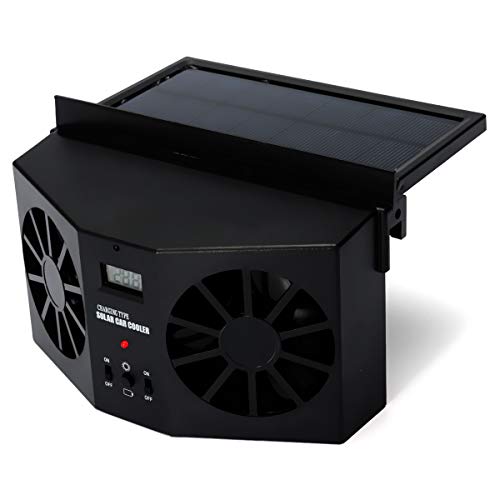 Solar Powered Car Window Fan - Universal Solar Car Front/Rear Window Exhaust Fan Car Window Cooler Fan Air Ventilator Exhaust Radiator, Eliminate Smell (Black)
 2026 Upgrade Crystal Coating for Car, Plastic Parts Crystals Coating, Plastics Parts Crystal Coating Plastic Restorer with Spong, Long Duration Refurbish Coatings Agent for Automotive Plastics (4)