What Happens If Your Car Gets Repossessed? Rights & Next Steps
Your car is gone from the driveway, and you don’t know what happens now. A repossession takes the vehicle, but it doesn’t erase the loan — you may still owe money, your credit takes a hit, and you have a short window to act.
In most states, a lender can send a tow truck the day after you default, with no court order and no advance warning — a legal process called “self-help repossession.” What happens next depends on what you do in the first few days: whether you can get the car back, how much you’ll owe if you can’t, and how long the mark stays on your credit report.
Quick answer: After a repossession, the lender sends the car to a storage lot, then typically sells it at auction. You can often get it back by paying the past-due amount (reinstatement) or the full loan balance (redemption) before the sale. If the sale doesn’t cover what you owe, you’re responsible for the difference — called a deficiency balance — and the repossession stays on your credit report for up to seven years from your first missed payment.
How Car Repossession Works
Missing loan payments is the most common trigger, but letting your insurance lapse or breaking another term of your loan agreement can also count as default. Most auto loan contracts technically let a lender start repossession after a single missed payment, though in practice most lenders wait 60 to 90 days — roughly two to three missed payments — before sending a tow truck, since repossession is expensive and a last resort for them, too. If you’re trying to figure out exactly how much room you have, our guide on how many car payments you can miss before repossession breaks down the timeline lender by lender.
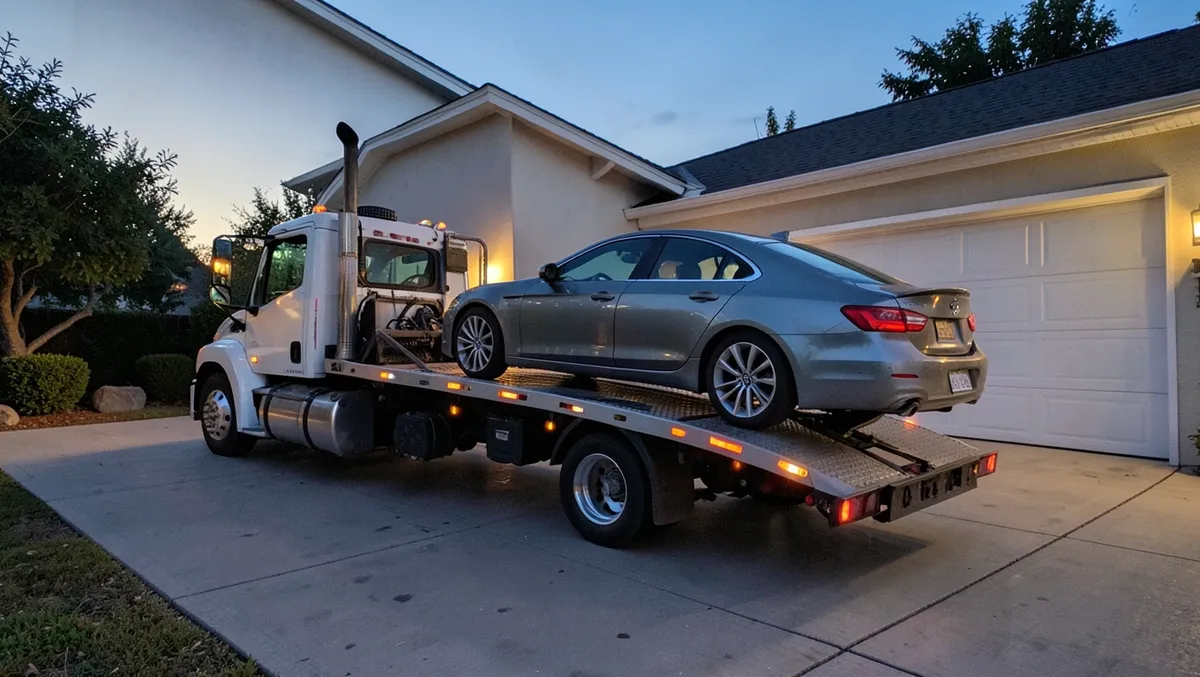
Under a rule called “self-help repossession” (Uniform Commercial Code § 9-609), lenders in nearly every state don’t need a court order or a warning to take the car back — they just can’t “breach the peace” while doing it. That means a repo agent can tow a car from an open driveway or a public street, often at night when you’re less likely to be home, but they generally can’t cut a lock, enter a closed garage, or continue once you or someone present tells them to stop. A handful of states, including Wisconsin, require lenders to send a notice before repossessing at all, so check your own state’s rules if this matters to you.
Once the car is hooked up, it’s typically taken straight to a storage yard or impound lot, not directly to auction. You’ll owe towing and storage fees to get it back, on top of whatever you were already behind on.
Immediate Steps to Take
Call your lender the same day, even if it feels pointless. Ask exactly why the car was taken, where it’s being stored, what you owe to get it back, and how much time you have before it goes to auction. Lenders would often rather work out a payment plan than deal with the cost of selling a used car, so it’s worth asking directly about reinstating your loan or negotiating new terms.
Pull out your loan agreement and read the default and repossession sections. It should spell out any grace period, late fees, and whether your state or contract gives you the right to reinstate the loan rather than pay it off in full. For a detailed hour-by-hour breakdown of what to do in the first two days — including handling a wrongful repossession — see our 48-hour repossession action plan.
Don’t forget what was inside the car. You’re entitled to get back loose personal items — clothing, tools, electronics, car seats — that were in the vehicle when it was taken; the lender has no legal claim to your belongings, only the car itself. Contact the lender right away, since waiting too long can let the storage facility start charging you a separate fee just to retrieve your things. Permanent add-ons or modifications you installed in the car generally don’t count and stay with the vehicle.
Getting Your Car Back: Reinstatement vs. Redemption
There are two different ways to get a repossessed car back, and they aren’t the same thing.
| Option | What You Pay | Result | Is It Guaranteed? |
|---|---|---|---|
| Reinstatement | Past-due payments, late fees, plus repossession/towing costs | Loan resumes on its original terms, as if the missed payments never happened | Only if your state or loan contract allows it — not guaranteed everywhere |
| Redemption | The entire remaining loan balance, plus repossession and storage fees, in one payment | Loan is paid off in full and you own the car outright | Yes, in nearly every state, until the car is sold |
Reinstatement is usually the cheaper path if your state or contract allows it, and lenders often give you around 15 days after repossession to do it, though the exact window varies by state. Redemption costs more upfront since you’re clearing the whole loan, but it’s available almost everywhere and it ends the moment the lender sells the car. Either way, be upfront with your lender about your financial situation — some will lower the amount due, waive certain fees, or restructure the loan rather than push the sale through.
Your Legal Rights During and After Repossession
Repossession laws vary significantly by state, so treat the following as a general guide, not legal advice for your specific situation — if you think your lender broke the rules, a consumer-protection attorney or your state attorney general’s office can tell you exactly where you stand.
- The “breach of the peace” limit. A repo agent can take a car from an open driveway or street without your permission, but they can’t use physical force, threaten you, break a lock, or keep going after you or someone present clearly objects and tells them to stop.
- Notice after repossession. Most states require the lender to send you written notice within a few days of the repossession explaining your right to redeem or reinstate the loan, along with details of any planned sale. If the lender skips this notice, you may be able to challenge a later deficiency claim.
- The sale must be “commercially reasonable.” Lenders can’t dump the car for pennies to inflate your deficiency balance — the sale (usually at auction) has to reflect a fair market price, and the notice should include how any deficiency was calculated.
- Your belongings are yours. As covered above, loose personal items left in the car must be returned to you, generally without a fee if you collect them promptly.
One common misconception worth clearing up: the repossession itself is governed by state UCC law and the breach-of-peace standard above, not the federal Fair Debt Collection Practices Act, since your original lender usually isn’t classified as a “debt collector” under that law. If a third-party collection agency gets involved after the sale to chase a deficiency balance, though, FDCPA protections against harassment and false statements do apply to them.
Financial Impact: Credit Score and Deficiency Balance
Credit Score Consequences
A repossession, along with the missed payments that led to it, gets reported to the credit bureaus and can drop your score anywhere from roughly 50 to 150 points, with steeper drops for people who had strong credit going in. It can legally stay on your credit report for up to seven years — but that clock starts from the date of your first missed payment that led to the default, not the day the tow truck showed up. That distinction matters if you’re trying to figure out when a repossession will actually fall off your report.
Deficiency Balance
After the lender sells your car, usually at auction, they apply the proceeds to what you owe. If the sale price doesn’t cover the loan balance plus repossession and sale costs, you’re on the hook for the difference — the deficiency balance. For example, if you owed $10,000 and the car sold for $7,000, you could still owe roughly $3,000 (plus fees), and the lender can sue you or send it to collections to recover it. If you had GAP insurance on the loan, it may cover some or all of a deficiency — it’s worth checking your paperwork before assuming you’re stuck with the full amount.

Alternatives to Repossession
If a repossession looks unavoidable, it’s worth knowing that “voluntary” doesn’t mean “less damaging” — a common myth. Voluntarily returning the car to your lender still shows up as a repossession on your credit report, stays for the same roughly seven years, and causes a similar drop in your score as having it towed. The real benefits of surrendering it yourself are avoiding towing and storage fees getting tacked onto your deficiency balance, and skipping the stress of a surprise tow — not a smaller credit hit. Call your lender first to arrange it and confirm what you’ll still owe.
Loan modification is another route: your lender may lower your interest rate, extend the loan term to shrink your monthly payment, or temporarily defer a payment or two. It’s not guaranteed, but most lenders would rather adjust the loan than absorb the cost of repossessing and reselling the car.
If you still have some equity or can bridge the gap with savings, selling the car yourself — even with a loan still attached — before you default can be cheaper than letting it get repossessed and sold at auction. Our guide on how to sell your car with a loan still on it walks through how that process works.
Preventing Future Repossession
Track your income and expenses for a month and write down every recurring bill. Look for anywhere you can trim costs, and route that money toward your car payment or a small emergency fund — even a few hundred dollars of buffer can be the difference between missing one payment and missing three.
If you see trouble coming, contact your lender before you miss a payment, not after. Explain what’s going on, ask about payment options, and keep a written record of every call and email. Lenders are generally far more flexible with borrowers who reach out early than with ones who go silent.
Seeking Professional Help
A nonprofit credit counselor, particularly one accredited by the National Foundation for Credit Counseling, can review your full budget, help you negotiate with lenders, and often offer this advice for free or at low cost. It’s a good first stop if the problem is a temporary cash crunch rather than a legal dispute.
A consumer-protection or bankruptcy attorney is worth calling if you think the lender breached the peace, skipped a required notice, or otherwise broke the rules during repossession — they can sometimes recover damages or force the return of your car. Filing for bankruptcy can also pause an in-progress repossession or help you keep the car under a repayment plan; our guide on what happens to your car loan if you file bankruptcy covers how that works. Many attorneys offer a free initial consultation, so it costs nothing to find out where you stand.

Frequently Asked Questions
How Long Does a Car Repossession Affect Your Credit?
A repossession can stay on your credit report for up to seven years, measured from the date of the first missed payment that led to the default, not the day the car was actually towed. Your score can drop anywhere from about 50 to 150 points depending on how strong your credit was beforehand.
Do I Still Owe Money After Repossession?
Yes, if the auction sale price doesn’t cover your remaining loan balance plus repossession and sale fees, you owe the difference. This is called a deficiency balance, and the lender can pursue you for it through collections or a lawsuit.
When Your Car Gets Repossessed, Where Does It Go?
It’s typically taken to a storage yard or impound lot first, not sold immediately. The lender then usually sells it at auction after the notice and redemption period required in your state has passed.
What Happens If My Car Gets Repossessed and I Don’t Want It Back?
The lender will sell it, typically at auction, and you’ll still owe any deficiency balance left after the sale. It will still be reported as a repossession on your credit report even if you never try to get the car back.
Can a Repo Agent Take My Car Without Warning?
In most states, yes — this is called self-help repossession, and lenders generally don’t need a court order or advance notice to tow a car once you’re in default. The exception is a handful of states, such as Wisconsin, that require notice before repossession, and the agent can never breach the peace to do it, such as by breaking into a locked garage.
Is Voluntary Repossession Better for My Credit Than an Involuntary Repo?
Not really. Both are reported as repossessions, stay on your credit report for about the same seven years, and cause a similar score drop. Voluntarily surrendering the car mainly helps you avoid extra towing and storage fees on your deficiency balance, not a smaller credit hit.
Can I Get My Personal Belongings Back After a Repossession?
Yes. You’re entitled to loose personal items left in the car, such as clothing, tools, or electronics, and the lender generally can’t charge you a fee to return them if you contact them promptly. Anything permanently installed or added to the vehicle typically stays with the car.
How Many Payments Can I Miss Before My Car Gets Repossessed?
There’s no single legal number — most contracts technically allow repossession after one missed payment, though most lenders wait until you’re 60 to 90 days behind. See our full breakdown of how many car payments you can miss before repossession for a state-by-state look at notice requirements.
Conclusion
A repossession is a serious financial setback, but it isn’t the end of the story. Call your lender immediately, find out whether reinstatement or redemption is realistic for your budget, and don’t forget to retrieve any personal items left in the car. If the numbers don’t work, talk to a nonprofit credit counselor or an attorney before assuming you have no options.
Whatever happens with this vehicle, the mark on your credit report will fade over time as long as you stay current on everything else. Build a small emergency cushion, communicate with lenders before you fall behind, and use this experience to plan ahead for your next car purchase.
Products related to this article
Sponsored / affiliate links. As an Amazon Associate I earn from qualifying purchases. I may earn additional commission from eligible campaigns.
![iPhone Car Charger,USB C Fast Car Charger[Apple MFi Certified] Apple Car Charging 38W Dual Port CarCharger Cigarette Lighter Adapter 2x3ft PD&QC 3.0 Lightning Cable for iPhone 14/13/12 Pro/11/Airpods](https://m.media-amazon.com/images/I/41XizrssoiL._SL500_.jpg)