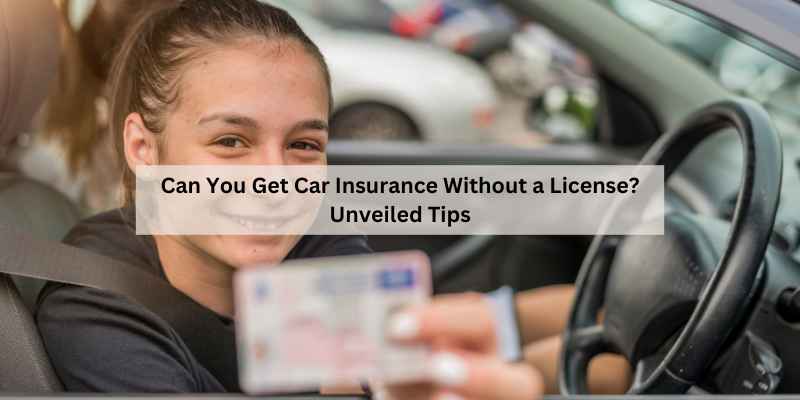
Can You Get Car Insurance Without a License? (Legal Workarounds)
Picture this: your license just got suspended, but you still own a car sitting in the driveway. Or maybe you’re buying a vehicle for your teenager who only has a learner’s permit. Or perhaps you’re a snowbird who spends half the year abroad and let your license lapse. The common thread? You need insurance on a car you can’t legally drive.
Most people assume insurance without a license is impossible. That’s not true. Insurers will write a policy for an unlicensed owner — but the rules are strict, the process is different, and one wrong move can leave you with zero coverage when you need it most. This article walks through the exact legal workarounds, the DMV conflicts you’ll hit, and what it actually costs.

Samsill
Samsill Car Registration and Insurance Holder, Owner's…
- Compact Size for Cars, Trucks, and SUVs: Measures approximately 10 x 7.5 x 1 inches and fits easily in most glove boxes or console…
- Organize Vehicle Documents: Keep your registration, insurance cards, owner’s manual, service records, receipts, emergency contacts…
- 7 Interior Storage Pockets: Designed with multiple compartments for cards, folded documents, manuals, receipts, and small vehicle…
You’ll learn the four legal ways to insure a car without a license, how to handle an SR-22 if your license was suspended, and the permit holder loophole that most agents don’t volunteer. I’ll also cover the traps that void coverage, including the excluded driver mistake that could haunt you.
Before we dive in, a quick practical note: once you get the policy sorted, you’ll need to keep your documents organized. The Samsill car document holder is a simple faux-leather organizer that fits a glove box and keeps your registration, insurance cards, and SR-22 paperwork in one zippered place. It won’t fix your license situation, but it saves you from digging through a pile of receipts when a cop asks for proof.
Can You Legally Insure a Car Without a License?
Yes, but the word “legally” does a lot of work here. The insurance contract itself doesn’t require the named insured to hold a valid driver’s license. What matters is that the car is registered, the policy is active, and anyone who actually drives it is either listed on the policy or excluded from it.
Here’s the catch: every state requires the vehicle owner to maintain financial responsibility (liability coverage) to register a car. If you can’t get insurance, you can’t register. If you can’t register, you can’t get plates. And if you have no plates, you can’t legally park it on public streets, let alone drive it.
Some states, like New Hampshire and Virginia, allow you to pay an uninsured motorist fee instead of carrying insurance. But that fee only covers your liability if you cause an accident — it does nothing to protect your own vehicle. And it’s not available in most states.
The bottom line: you can insure a car you don’t drive, but you need to structure the policy correctly. Let’s look at why you’d even bother.
Why You Might Need Car Insurance Without a License
There are more reasons than you’d think, and they’re not all about people who lost their license for bad behavior.
- You own a car but can’t drive it. Medical conditions, vision loss, or a temporary injury can take you off the road. The car still needs insurance if it’s registered and parked anywhere except a locked private garage.
- You’re buying a car for someone else. Parents buy cars for teenagers all the time. If the teen has a permit or license, you can be the owner and they can be the primary driver.
- Your license is suspended or revoked. You’ll need an SR-22 filing to get it reinstated, and most states require proof of insurance before they’ll even process the paperwork.
- You’re a snowbird or expat. You keep a car at your second home but spend months abroad. Your license expired while you were away, and now you need to renew it — which requires insurance.
- You’re building a classic car collection. Collector cars often sit in garages for years. You don’t need a license to own one, but you need insurance to protect it from fire, theft, or vandalism.
Each situation calls for a different policy structure. That’s what the next section covers.
The 4 Legal Ways to Get Car Insurance Without a License
These are the four structures that work. They’re not equally convenient or cheap, so pick based on your actual situation.
List a Licensed Driver as the Primary Named Insured
The most common approach: put the car in your name, but list a licensed driver as the named insured on the policy. That person becomes the policyholder. You can be listed as an additional interest or simply as the registered owner.
This works well when the licensed driver lives in your household. A spouse, adult child, or roommate can hold the policy. The insurer underwrites that person’s driving record, not yours. Your own driving history doesn’t matter because you’re not a rated driver on the policy.
But there’s a problem: the insurance company will ask about everyone in the household who has a license. If you live there and have a suspended license, the insurer may require you to be listed as an excluded driver — meaning you’re specifically not covered. We’ll get to why that’s dangerous later.
If you don’t live with a licensed driver, this option gets harder. Insurers generally won’t let someone insure a car they don’t have regular access to. That’s a red flag for fraud.
Get a Non-Owner Policy (If You Don’t Own the Car)
A non-owner policy is liability coverage for someone who drives but doesn’t own a vehicle. It follows you, not the car. If you borrow a friend’s car and crash it, your non-owner policy pays for the damage you cause to others.
Here’s the twist: you don’t need a license to buy a non-owner policy in most states. You need a valid reason to drive — like a permit or a pending license reinstatement. Insurers issue these policies to unlicensed drivers who need to maintain continuous coverage to avoid a lapse on their record.
The limitation: non-owner policies don’t cover the car itself. No collision, no comprehensive, no roadside assistance. If you own a vehicle, this policy won’t insure it. It’s strictly for liability when you occasionally drive someone else’s car.
Non-owner policies are also cheap — usually $200 to $400 per year. That’s because the insurer’s risk is limited to your occasional driving, not daily commuting.
Use a Business or LLC to Own and Insure the Vehicle
Here’s the workaround that most people don’t know about. If you form a limited liability company (LLC), the LLC can own the car and insure it under a commercial policy. You, as the LLC’s owner, don’t need a license because you’re not the driver.
The LLC names a licensed employee or contractor as the primary driver. The car gets registered in the LLC’s name. The business pays the premiums, which can be a tax deduction if the vehicle is used for business purposes.
This structure has real pitfalls. Commercial auto policies cost 20-40% more than personal policies. You’ll need to file annual reports and pay state fees to keep the LLC active. And if you ever drive that car yourself — even once — you’re driving an uninsured vehicle because you’re not listed as a driver on the policy. That’s a criminal offense in most states.
Also, the IRS takes a dim view of using an LLC to disguise personal expenses. If the car is really for personal use, claiming it as a business expense can trigger an audit. This workaround is legitimate only if the vehicle serves a genuine business purpose.
Get Parked-Car Coverage Only
Some insurers offer “comprehensive-only” or “storage” policies for vehicles that aren’t being driven. This covers fire, theft, vandalism, hail, and animal damage — but not liability or collision.
This is the cheapest option, often $100 to $300 per year. But it’s only legal if the car is not driven and not parked on public roads. Many states require you to surrender the plates and keep the car in a garage or driveway.
If you’re storing a classic car or a vehicle while you’re overseas, this is the right call. But it won’t satisfy a DMV insurance requirement, and it won’t help you get your license reinstated.
How to Handle a Suspended or Revoked License (SR-22 Requirements)
If your license is suspended, the insurance game changes. You’ll likely need an SR-22, which isn’t insurance itself — it’s a certificate your insurer files with the DMV proving you carry the state’s minimum liability coverage.
Not every insurer offers SR-22 filings. The ones that do will typically require you to pay the full premium upfront or set up a payment plan with a higher down payment. SR-22 filings usually cost $15 to $50 per filing, plus the policy premium itself.
Here’s the catch: you generally can’t get an SR-22 on a policy where you’re not a named insured. The SR-22 is tied to your name and your driving record. So if you’re unlicensed and suspended, you need to be on the policy — which means you need a licensed co-signer or a non-owner policy with an SR-22 endorsement.
Non-owner SR-22 policies exist. They’re designed exactly for this scenario: you need to prove financial responsibility to get your license back, but you don’t own a car. Once your license is reinstated, you can keep the non-owner policy or switch to a standard auto policy.
One more thing: an SR-22 isn’t permanent. Most states require you to maintain it for three years. If you let the policy lapse, the insurer notifies the DMV, and your license gets suspended again. Set up automatic payments.
The Permit Holder Loophole: Insuring a Car with a Learner’s Permit
If you have a learner’s permit, you’re in a much better position than someone with a suspended license. Most major insurers — including GEICO, Progressive, and State Farm — will issue a standard policy to a permit holder as the named insured.
The logic is simple: a permit holder is legally allowed to drive with a licensed adult in the car. That’s a legitimate risk for the insurer. You’ll pay more than a fully licensed driver — expect a 15-25% surcharge — but you’ll have a real policy in your name.
State rules vary. Some states, like New York and California, explicitly allow permit holders to own and insure cars. Others, like Michigan and Texas, require the permit holder to be listed with a licensed co-owner. A few states, like Massachusetts, have no clear rule — which means the insurer decides case by case.
Before you buy a policy, call the insurer and ask three questions:
- Do you write policies for permit holders as the named insured?
- Will you accept my permit as a valid ID for underwriting?
- Do I need a licensed co-signer on the policy?
If the first answer is no, move to the next insurer. There’s no point fighting an underwriter who’s decided against it.
Step-by-Step: How to Register a Car Without a License
Registering a car without a license hits a wall at the DMV. Many states require the registered owner to provide a valid driver’s license. If you don’t have one, you’ll need a co-registrant.
Here’s the exact order of operations that works in most states:
- Get the insurance first. You need an active policy before the DMV will process registration. If you’re using a licensed co-owner, that person must be on the policy as a named insured.
- Gather your documents. You’ll need the title, proof of insurance, a completed registration form, and a valid ID. If you don’t have a license, a passport or state ID card works.
- Bring your co-registrant. The licensed co-owner must be present at the DMV or sign a notarized power of attorney. They’ll need their own license and proof of insurance.
- Pay the fees. Registration fees, title transfer fees, and sales tax vary by state. Expect to pay $50 to $300 depending on the vehicle’s value.
- Get your plates. Once registered, the car gets plates. If you’re not driving it, you can keep it in a garage without issue.
The conflict: your insurance policy might list only the licensed driver, but the title might be in your name. That’s fine. The DMV cares that someone with a valid license is on the registration. The insurer cares that the named insured is the primary driver. These can be two different people.
If your state requires the registered owner to hold a license, you have two options: add a co-owner to the title, or transfer the title entirely to the licensed driver. The second option means giving up ownership, which is a bigger commitment than most people want.
For a state-by-state breakdown of registration rules, check out our guide on putting a car in your name without a license.
How Much Does Insurance Cost Without a License? (Real Estimates)
Costs vary wildly by state, insurer, and the driver’s record. But you need real numbers, not vague “higher than normal” talk. Here are typical annual premiums for a 2026 Honda Civic with basic liability coverage in a mid-cost state like Ohio or Colorado.
| Scenario | Policy Type | Annual Premium | Notes |
|---|---|---|---|
| Licensed driver, clean record | Standard personal auto | $800 – $1,200 | Baseline for comparison |
| Permit holder, no accidents | Standard personal auto | $1,000 – $1,500 | 15-25% surcharge for permit status |
| Unlicensed owner, licensed co-driver | Personal auto, co-insured | $1,100 – $1,600 | Co-driver’s record drives the rate |
| Unlicensed owner, no co-driver | Comprehensive-only (parked) | $150 – $400 | No liability, not street-legal |
| Unlicensed driver, no car | Non-owner policy | $200 – $500 | Liability only, no collision |
| Suspended license, SR-22 required | Non-owner or personal with SR-22 | $1,200 – $2,800 | SR-22 adds $15-$50 filing fee |
Those SR-22 numbers look scary, but here’s the reality: the SR-22 itself isn’t what costs more. It’s the fact that you have a suspension on your record, which classifies you as high-risk. The suspension stays on your record for three to five years, and your rates reflect that.
One honest caveat: if you have a DUI or multiple at-fault accidents, expect to pay double or triple the numbers above. High-risk drivers with SR-22s often pay $3,000 to $5,000 per year. It’s not fair, but it’s how the math works.
Common Mistakes That Void Your Coverage (The Excluded Driver Trap)
The most dangerous mistake in this whole process is the excluded driver endorsement. When you’re unlicensed and living with a licensed driver, the insurer may require you to sign an exclusion form. That form says you’re not allowed to drive the insured vehicle — ever.
If you sign it and then drive anyway, you have zero coverage. Not just for yourself — for everyone. If you crash into another car, the insurer can deny the claim entirely because the policy was voided by an excluded driver operating the vehicle. You’d be personally liable for all damages, medical bills, and legal fees.
Can you undo an exclusion? Yes, but only if you get licensed and the insurer approves. You’ll need to contact your agent, provide your new license number, and request the exclusion be removed. The insurer may require a new application or a rate increase. Some insurers won’t remove an exclusion mid-policy; you may need to wait until renewal.
Other mistakes that void coverage:
- Lying about who lives in your household. Insurers rate policies based on all licensed residents. If you hide an unlicensed driver, that’s misrepresentation, and claims can be denied.
- Letting an unlicensed person drive “just once.” There’s no such thing as a one-time exception. If they’re not on the policy, they’re not covered.
- Buying a policy in someone else’s name for a car you own. This is called “fronting,” and insurers cancel policies for it. The named insured must have an insurable interest — meaning they own the car or have a legal stake in it.
- Driving with a permit without a licensed adult. Your permit allows supervised driving only. If you’re caught alone, your permit gets revoked, and your policy becomes void because you’re no longer legally allowed to drive.
If you’re unsure whether a situation is covered, call your agent before you drive. A five-minute phone call can save you from a denied claim that ruins your finances.
Frequently Asked Questions
Can I drive my own car if I’m listed as an excluded driver?
No. Absolutely not. An excluded driver endorsement means you are specifically not covered under the policy. If you drive the car and cause an accident, the insurer will deny the claim, and you’ll be personally responsible for every dollar of damage. You could also face criminal charges for driving without insurance. If you need to drive, get licensed first, then request to have the exclusion removed.
Can I insure a car with an out-of-state license?
Yes, but the car must be registered in the same state where you hold your license. Insurers underwrite based on the vehicle’s garaging address, and they verify that address against your license. If you have a Florida license but the car is garaged in Ohio, the insurer will either refuse to write the policy or require you to register the car in Ohio. If you’re moving, update your license first, then insure the car in the new state. Our guide on insurance coverage for other cars explains how policies follow the car, not the driver, in most cases.
Will my rates drop once I get my license back?
Yes, but not instantly. When you get your license back, your rates will still reflect your suspension and any underlying violations for three to five years. The good news: once your license is valid and you’re listed as a driver, you can switch from a non-owner policy to a standard policy, which costs less per month. You’ll also avoid the SR-22 surcharge once the filing period ends. Over time, with a clean driving record, your rates will gradually fall back to normal.
Can I get car insurance with a permit in every state?
No. Most states allow it, but a few — like Massachusetts and Michigan — have no clear statutory rule, so it’s up to the individual insurer. Some insurers will write a policy for a permit holder; others won’t. You may need to shop around or use a licensed co-signer. Call the insurer’s underwriting department directly and ask about their permit policy before you apply.
What happens if I get caught driving without a license but with insurance?
You’ll still face a ticket for driving without a license, which carries fines of $100 to $1,000 depending on the state. The insurance doesn’t make it legal — it just means you’re financially responsible if you crash. In some states, driving without a license is a misdemeanor, and repeat offenses can lead to jail time. The bigger risk: if you’re in an accident, the insurer may deny the claim because you were driving illegally, even if you’re listed on the policy.
What to Do Next: A Quick Action Plan
You now know the legal structures, the costs, and the traps. Here’s what to do with that information:
- If you own a car but can’t drive it, get comprehensive-only coverage and keep the car off public roads.
- If you have a permit, call three insurers and ask if they’ll write a policy in your name. Expect a surcharge.
- If your license is suspended, get a non-owner policy with an SR-22 filing to start the reinstatement clock.
- If you’re buying a car for someone else, put the licensed driver on the title and the policy as a co-owner.
- Never sign an excluded driver form unless you’re certain you’ll never drive that car.
- Keep your insurance and registration documents organized in a glove box holder so you’re never caught fumbling at a traffic stop.
- Revisit your policy the day your license is reinstated — you can likely lower your premium immediately.
Insurance without a license isn’t a loophole or a gray area. It’s a standard product that insurers sell every day, but only to people who structure it correctly. Follow the steps above, ask the right questions, and you’ll stay legal while you sort out your license situation.
Products related to this article
Sponsored / affiliate links. As an Amazon Associate I earn from qualifying purchases. I may earn additional commission from eligible campaigns.