Can You Open the Oil Cap When a Car Is Hot? Here’s the Deal.
Figuring out whether Can You Open the Oil Cap When a Car Is Hot? can be tricky, especially if you’re new to car maintenance. Many folks wonder about this, and it’s a common question that pops up when dealing with a hot engine. The heat and pressure can make it seem risky. Don’t worry, though; it’s manageable, and we’re going to break it down simply. We’ll look at the reasons behind this question and give you straightforward steps so you know exactly what to do. Let’s get started!
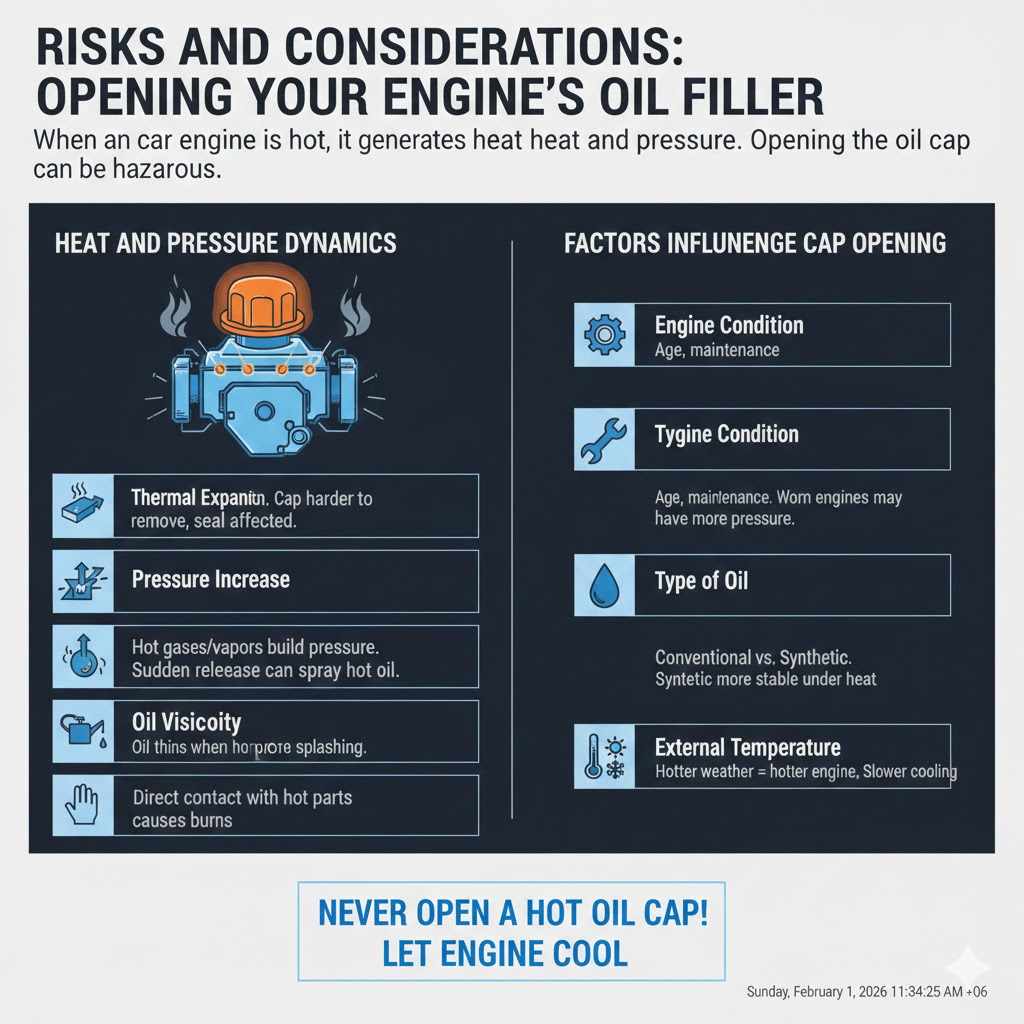
Risks and Considerations: Opening Your Engine’s Oil Filler
The question of Can You Open the Oil Cap When a Car Is Hot? circles around the potential dangers of dealing with a hot engine. When a car engine runs, it generates a lot of heat. This heat not only warms up the engine components but can also increase the pressure inside the engine, especially within the crankcase. The oil filler cap serves as a seal, meant to keep everything inside, like oil and engine gases.
If you attempt to open the oil cap when the engine is very hot, you might face some challenges and potential hazards. Understanding these risks is vital before you try anything.
One of the primary concerns is the possibility of getting burned. The engine components, including the oil cap, become extremely hot during operation. Touching any of these parts without proper precautions can cause burns. Additionally, when you open the oil cap, hot oil or gases might escape under pressure.
These can spray out and cause burns, or at the very least, make a mess. There could be pressure buildup inside your engine from heat, which increases when it is running. Opening the cap quickly might release the pressure suddenly, which can cause oil to spray out, or even blow the cap off. While not likely, this could lead to injury.
Heat and Pressure Dynamics
The core issue boils down to heat and pressure. The engine’s operating temperature ranges from around 195 to 220 degrees Fahrenheit. This is hot enough to cause discomfort and potential injury. If the engine is under strain, like after a long drive or climbing a hill, the temperature and pressure could be even higher. Engine oil also heats up, becoming less viscous, and potentially more prone to splashing or spraying when the cap is opened.
Thermal Expansion: Metals expand when heated. The engine block, oil pan, and the oil cap itself expand, potentially making the cap more difficult to remove or reseal properly.
Engine components change size with heat. The cap may become harder to open, and the seal might be affected.
Pressure Increase: Hot engine gases and oil vapors build up pressure inside the crankcase. Opening the cap releases this pressure suddenly, potentially causing a spray of hot oil.
The buildup of pressure can result in a sudden release of hot oil or gases. This is the main reason why you should avoid opening the cap on a hot engine.
Oil Viscosity: Engine oil thins when heated. This makes it less effective at lubricating engine parts and more likely to splatter when exposed to rapid pressure changes.
Hotter oil flows differently. It can splash easily, making a mess when you open the oil cap.
Risk of Burns: Direct contact with any hot engine part, including the cap, can cause burns.
Burning yourself is a real risk. Avoid touching anything on the engine, including the oil cap, until it has cooled down.
Factors Influencing Cap Opening
Several factors determine how difficult or dangerous it is to open the oil cap. The age and condition of the engine play a big role. A well-maintained engine might have less pressure and better sealing. However, an older engine could have more wear and tear, potentially causing pressure buildup. The type of oil used also affects its behavior at high temperatures. Synthetic oils generally perform better under heat than conventional oils. Your car’s cooling system also impacts the engine’s temperature, which affects the risks involved.
Keep in mind the type of oil you’re using. Conventional oils might break down more when they get hot, leading to more residue and potential pressure buildup. Synthetic oils tend to be more stable. Also, the external temperature will play a role, because your engine cools differently when it is hotter outside. For example, a car driven in Phoenix, Arizona, will likely have a hotter engine after being turned off versus a car in a cooler climate.
Step-by-Step Guide: Safely Opening the Oil Cap
If you have to open the oil cap on a hot engine, there are ways to do it safely. Here’s a step-by-step method to minimize risks. It’s important to understand this process and follow each step with care. This guide will help you open the cap safely, avoiding potential injuries. This is a practical approach that puts safety first, minimizing the risks associated with the question, Can You Open the Oil Cap When a Car Is Hot?
Prepare for the Task
Before you even think about touching the oil cap, make sure you’re prepared. You’ll need some basic tools and supplies. Having these ready will keep you from running around while the engine is hot. Gather the following items.
Safety Glasses: These protect your eyes from oil spray.
Safety glasses are a must. They’re important when dealing with potential spray.
Heat-Resistant Gloves: These will help prevent burns if you accidentally touch a hot part.
Wear protective gloves to handle hot surfaces without any issues.
Clean Rags or Paper Towels: These are helpful for wiping up any spills or mess.
You’ll need these to clean up spills and avoid making a mess.
The Right Oil and Funnel (if adding oil): If you plan to add oil, have the correct type and a funnel ready.
If you’re adding oil, have everything on hand before you open the cap.
Opening the Oil Filler Cap in a Smart Way
Once you have everything ready, follow these steps with care to open the oil cap safely. Slow and steady wins the race. Take your time, and don’t rush the process. Be mindful of the heat and any potential pressure release.
Wait for the Engine to Cool: The best approach is to let the engine cool down for at least 30 minutes. This significantly reduces the risk of burns.
Allow the engine time to cool. This reduces the risk of burns and other issues. If you can, wait at least an hour.
Locate the Oil Filler Cap: Find the oil filler cap. It’s usually on top of the engine and is easily recognizable. It’s often marked with an oil can symbol.
Find the oil filler cap. Check your car’s manual if you can’t find it.
Check for Pressure: Before opening, gently try to twist the cap. If it resists a lot, there might be pressure. Don’t force it. If it resists, wait longer.
Test the cap gently. If there’s resistance, wait for it to cool down more.
Loosen the Cap Slowly: Carefully twist the cap counterclockwise. Do this slowly to release any pressure gradually.
Loosen the cap slowly. This helps avoid sudden pressure release.
Listen for Pressure Release: As you loosen the cap, listen for any hissing sounds or the release of pressure. If you hear anything, stop and let it subside before proceeding.
Listen carefully as you loosen the cap. Be ready to stop if you hear pressure releasing.
Remove the Cap: Once you’re sure there’s no pressure, carefully remove the cap. Place it somewhere clean, where it won’t pick up dirt.
After releasing the pressure, fully remove the cap, being careful to avoid hot parts.
Check the Oil (if needed): Check the oil level. If the level is low, add the correct type of oil using a funnel.
Inspect the oil and add more if the level is low.
Replace the Cap: Put the cap back on, tightening it until it’s snug, but not overly tight.
Replace the cap firmly. Don’t overtighten it.
Troubleshooting Difficulties
Sometimes, even after following the steps, you might run into problems. The cap might stick, or you might hear hissing. Here’s how to handle common issues.
Stuck Cap: If the cap is stuck, try using a rubber-gloved hand or a wrench (with a cloth to protect the cap) to get a better grip. Do not force it.
If it is stuck, apply some extra grip. Avoid using too much force.
Hissing Sound: If you hear hissing, stop and wait. Let the pressure escape slowly before removing the cap.
Stop loosening the cap if you hear hissing. Wait until the sound goes away before continuing.
Spilled Oil: If oil spills, quickly wipe it up with a rag or paper towel. Avoid getting oil on your skin.
Clean up spills quickly. Dispose of the rags properly.
Difficult Removal: If you still can’t open the cap after several tries, consider having a mechanic do it. You could cause damage or injury.
If you’re struggling, get help from a mechanic.
Common Mistakes and How to Avoid Them
Knowing what not to do is just as important as knowing what to do. Making mistakes can lead to unnecessary risks. Avoiding these common errors will significantly improve your safety. Paying attention to these things will help you when considering Can You Open the Oil Cap When a Car Is Hot?
Rushing the Process
One of the biggest mistakes is rushing. It is easy to want to get the job done quickly, but haste can lead to mistakes. Patience is your best friend when dealing with a hot engine. Rushing can lead to burns or spills.
Trying to Open the Cap Immediately: Do not attempt to open the oil cap right after turning off the engine.
Wait for the engine to cool down. Rushing can lead to problems.
Forcing the Cap: If the cap is difficult to turn, don’t force it. You might damage the cap or other components.
Don’t force the cap open. Proceed carefully to avoid damage.
Ignoring Safety Gear: Skip using gloves or safety glasses. Always wear protective gear.
Always use safety gear, even if the engine seems cool.
Ignoring Warning Signs
Listen to your car. If the engine is making unusual noises or seems to be under stress, it could mean something is wrong. Don’t ignore these warning signs. Ignoring these warning signs can lead to dangerous situations.
Hissing or Spraying: If you hear hissing or see oil spraying, stop immediately. You might be dealing with too much pressure.
Stop if you hear hissing or see oil spray. It’s a sign that there’s pressure.
Resistance: If the cap is hard to turn, there could be pressure. Don’t force it.
If you meet resistance, don’t force the cap open.
Unusual Smells: If you smell burning oil, something might be wrong. Get it checked by a mechanic.
Unusual smells could indicate a serious problem. It is best to have it looked at.
Improper Oil Handling
Handling oil incorrectly can cause issues. It’s essential to use the correct type of oil and handle it carefully. You don’t want to add the wrong type of oil to your engine. The same holds true for spilling oil on engine components or other parts. Improper oil handling can also cause engine damage.
Using the Wrong Oil: Always use the type of oil recommended for your vehicle.
Use the correct oil. Check your car’s manual or ask a mechanic.
Overfilling: Avoid overfilling the oil. Overfilling can cause damage.
Do not overfill the oil. Check the oil level carefully.
Spilling Oil: Be careful not to spill oil, which can damage parts or be a fire hazard.
Handle oil carefully to avoid spills. Clean up any spills promptly.
When to Seek Professional Assistance
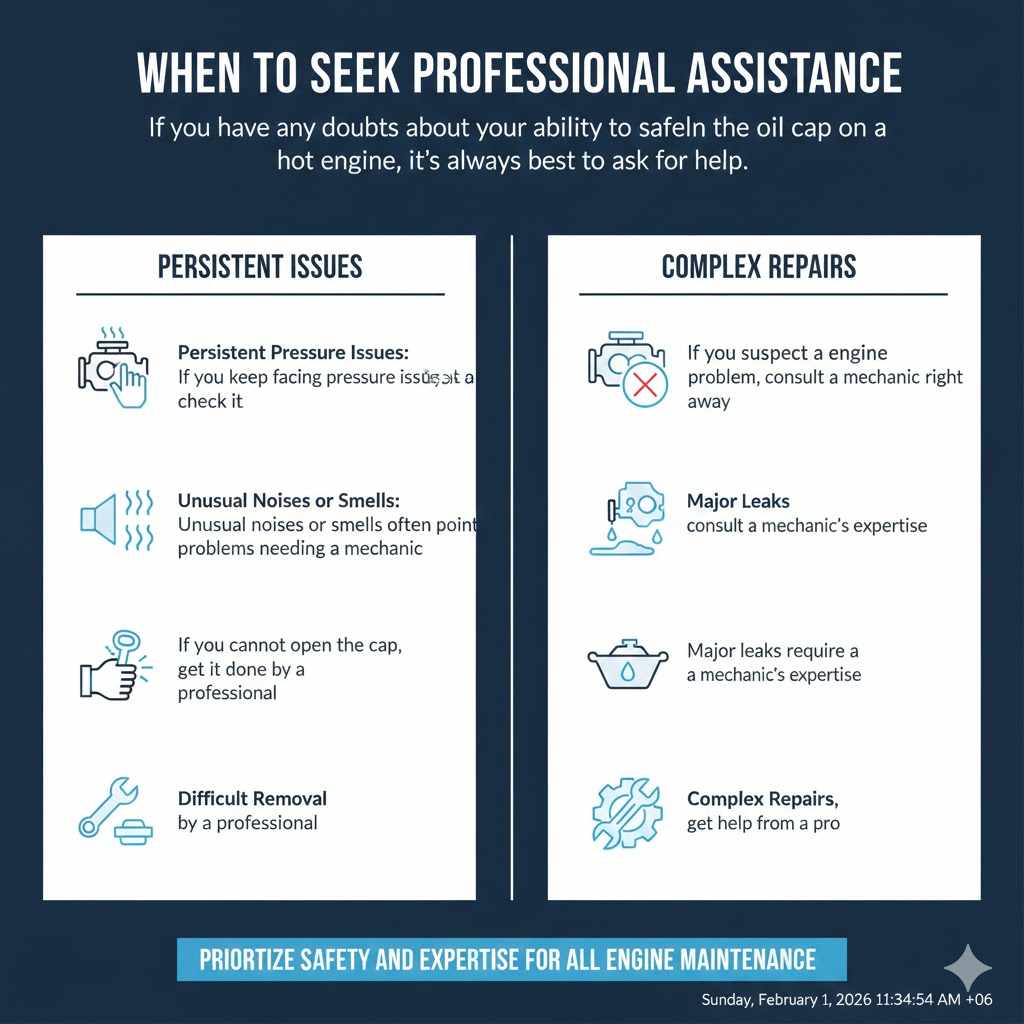
While you can handle many basic maintenance tasks, there are times when you should call for professional help. If you have any doubts about your ability to safely open the oil cap on a hot engine, it’s always best to ask for help. This is about prioritizing safety and getting the job done correctly. Recognizing when to involve a professional can save time, money, and potential injury.
Persistent Issues
If you encounter any of these problems, don’t hesitate to seek help from a mechanic. A professional can diagnose the problem and fix it quickly.
Persistent Pressure Issues: If you continue to hear hissing or struggle with the cap after the engine has cooled down, get professional help.
If you keep facing pressure issues, ask a mechanic to check it.
Unusual Noises or Smells: Any strange noises or burning smells should be checked by a professional.
Unusual noises or smells often point to problems needing a mechanic.
Difficult Removal: If you are unable to open the cap, don’t force it.
If you cannot open the cap, get it done by a professional.
Complex Repairs
Some issues might require more expertise. A mechanic has the tools and training to deal with complicated problems. Addressing more involved issues can prevent more serious damage. Sometimes, the problem could be something more than just a cap.
Engine Problems: If you suspect a larger engine issue, consult a mechanic immediately.
If you suspect an engine problem, consult a mechanic right away.
Major Leaks: Major oil leaks need immediate attention from a professional.
Major leaks require a mechanic’s expertise.
Complex Repairs: If you are not comfortable doing the work yourself, have a mechanic do it.
If the job seems complex, get help from a pro.
Frequently Asked Questions
Question: Is it ever okay to open the oil cap on a hot engine?
Answer: It’s generally best to wait until the engine cools down to minimize risks, but if necessary, it can be done with caution by following the steps outlined in this guide.
Question: What’s the main danger of opening the oil cap when the engine is hot?
Answer: The primary risk is the potential for burns from hot engine components, hot oil, or escaping gases and pressure.
Question: How long should I wait for the engine to cool before opening the cap?
Answer: It’s best to wait at least 30 minutes to an hour, or even longer if the engine has been under heavy load or it’s a very hot day. The longer you wait, the better.
Question: What should I do if the oil cap is stuck or difficult to open?
Answer: If the cap is stuck, try using a rubber-gloved hand or a wrench (with a cloth) for grip. If it’s too difficult, seek help from a mechanic to avoid damaging the cap.
Question: What if I hear a hissing sound when trying to open the cap?
Answer: Stop immediately and wait for the hissing to stop. This indicates pressure. Slowly loosen the cap to release the pressure safely before removing it completely.
Final Thoughts
You now know how to tackle the question, Can You Open the Oil Cap When a Car Is Hot? Remember, safety comes first. While opening the oil cap on a hot engine can be risky, by understanding the potential hazards and taking the right precautions, you can do it safely. Always wait for the engine to cool down whenever possible, and follow the steps carefully.
If you’re unsure or uncomfortable at any point, don’t hesitate to seek help from a professional. Taking a little extra time and care can make a big difference, protecting you and your car. Go forth with confidence and maintain your vehicle the right way!