Best Car Hoses for Engines: We Compared
Match the hose to the system: vacuum uses small-diameter silicone or rubber lines, fuel needs SAE J30R9 or J30R14 hose with the right pressure rating, and swaps usually need AN-size PTFE kits for ethanol and heat. Wrong material or size can cause vacuum leaks, fuel seepage, hard starts, lean running, and heat-related failures that cost time and parts. This guide compares hose kits, clamps, fittings, and fuel-system tools by pressure, temperature, and compatibility so you can buy the right parts the first time.
Quick comparison
| Product | Badge | Best for | Price | ||
|---|---|---|---|---|---|
 |
Multipurpose Vacuum Line Kit,6PCS 5Ft Vacuum HoseOFBAND | Our pick | 70PCS Kit · Silicone · Vacuum Hoses | $19.99
Price as of 20 Oct 2026
|
View |
 |
30pcs Assorted Fuel Line Quick Connector Set, Fuel LineDekiphox | Also great | 30pcs Set · PA12 Nylon · Fuel Line Connectors | $26.99
Price as of 20 Oct 2026
|
View |
 |
3/8" ID (10mm) Silicone Heater Hose Kit, 50FT Blue, 5SATUGUOJI | Upgrade pick | 50FT · Blue Silicone · Heater Hose | $112.77
Price as of 20 Oct 2026
|
View |
For vacuum work, the silicone kit fits best because it covers small diameters and includes connectors in some kits. For fuel and swap plumbing, PTFE or braided fuel line is the better match, depending on whether you need ethanol resistance, higher pressure margin, or a more budget-friendly hose route.
How we chose
The comparison starts with system fit. Vacuum lines, fuel supply, LS swap plumbing, turbo feed and return, and coolant or air routes all ask different things from a hose.
Then comes margin. Working pressure matters, but burst pressure matters too, especially on EFI systems where pressure spikes and heat soak can expose a weak hose.
Fuel and chemical compatibility came next. A hose that is fine for gasoline can still be a poor choice for E85, ethanol blends, or hot underhood routing.
Finally, kit contents and installation risk matter. Hose length, fittings, connectors, bend radius, clamp choice, abrasion protection, and heat shielding all change whether a kit is easy to live with or a repeat repair.
Silicone vacuum hose kit: best for vacuum lines
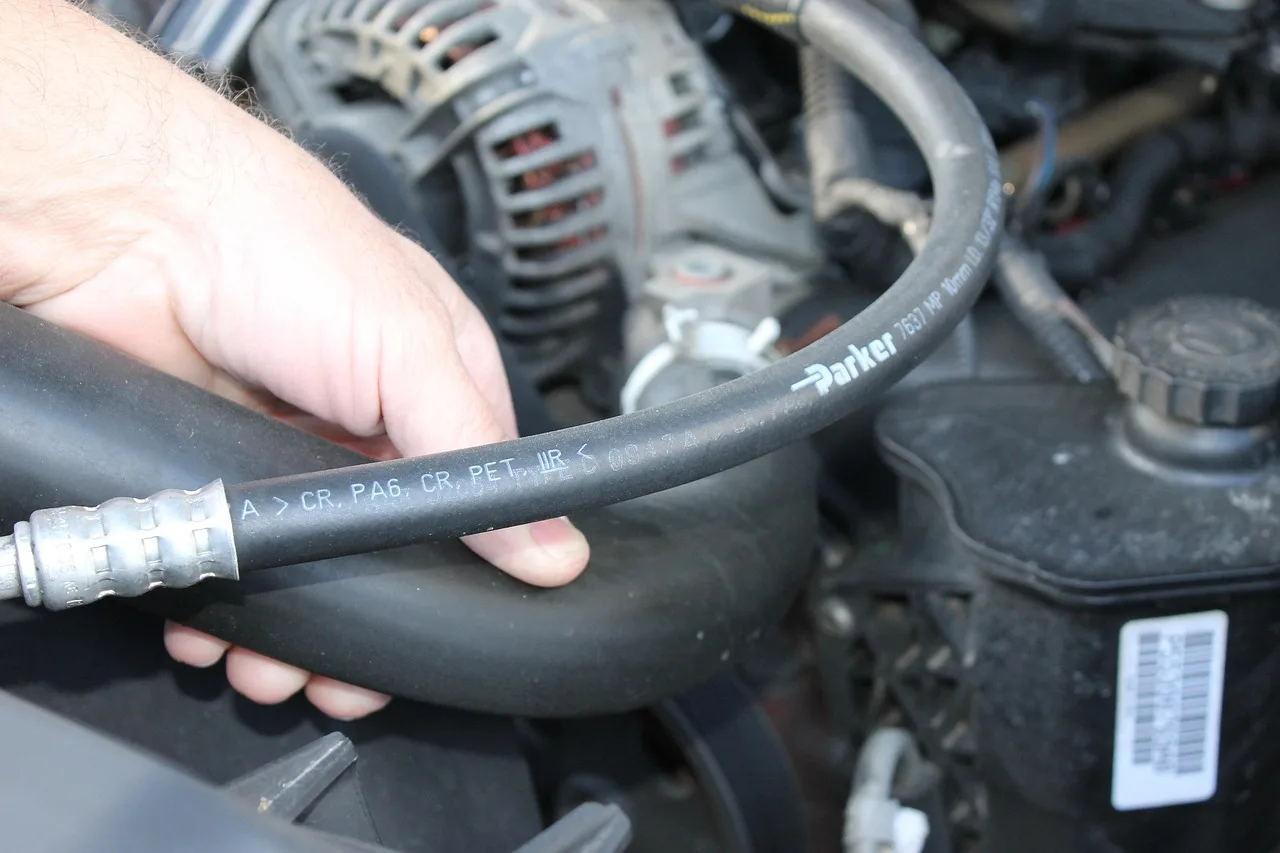
Choose this for vacuum lines, boost references, small engine-bay plumbing, and other low-volume circuits where fit and routing matter more than fuel compatibility. The OFBAND kit covers six hose sizes from 1/8″ to 3/8″, uses a uniform 3mm wall thickness, and is rated from -40°F to 392°F with up to 130 PSI tolerance.
That spread makes it useful for vacuum, air, and coolant bypass style tasks where you want one kit to cover multiple small lines. Some kits also include connectors, which reduces the number of separate parts you need to source.
The drawback is simple: this is not a fuel-line answer. For fuel systems, especially ethanol or EFI use, the material choice and hose construction need a more specific match.
Where it fits best
Use it for manifold vacuum, brake-control signal lines, emissions hoses, small bypass circuits, and custom routing where the hose ID must match a nipple precisely. It is also a practical choice when you want a neat bundle of sizes instead of buying one length at a time.
Where it fails if you choose wrong
If the line is too large, it can weep or pull loose. If it is too small, it can kink, collapse, or harden under heat and vibration. A vacuum hose problem often shows up as rough idle, unstable idle speed, or a system that cannot hold vacuum.
PTFE fuel line kit: best for high-pressure fuel
For high-pressure fuel, PTFE is the safer material choice when you need chemical resistance and heat tolerance together. The Medoon PTFE fuel line kit is 26 feet long, uses 6AN sizing, supports up to 3000 PSI working pressure, and is compatible with E85 in the product details; the stated burst pressure is 10,000 PSI.
That pressure margin matters on EFI systems. Working pressure tells you what the hose is meant to handle in service; burst pressure tells you the ceiling before failure. You want both, but the service pressure is the number that must match the system.
Its limits are practical, not theoretical. PTFE is stiffer than many rubber-style hoses, so routing and end fitting quality matter. Bend radius, support, and abrasion protection become part of the install, not an afterthought.
Best use cases
Use PTFE for EFI feed lines, return lines, turbo oil or fuel-adjacent plumbing where chemical exposure is a concern, and swap builds that may see ethanol blends. It is especially useful when the route passes near heat sources or sharp edges.
What to watch
PTFE is less forgiving during installation than softer hose types. Poorly made cuts, a tight bend, or the wrong fittings can create leaks even when the pressure rating looks generous on paper.
CPE braided fuel hose: best for LS swaps
CPE braided hose is a common LS swap choice when you need gasoline and diesel compatibility without moving all the way to PTFE. The EVIL ENERGY kit is 20 FT long, uses stainless steel braided construction, and is rated around 750 PSI working pressure. The product details also note that it is not recommended for E85 or ethanol fuels.
That makes the use case clear. It fits many swap builds where the fuel system is not running on ethanol and the installer wants a strong, familiar braided line with a moderate pressure margin. The braid helps with abrasion resistance and routing protection.
The drawback is compatibility. If the build may see E85, or if the owner wants the widest chemical margin, PTFE is the safer bet. CPE braided hose is good value, but it is not the universal answer.
Why it appears in swap builds
LS swaps often need a custom route from tank to engine, plus serviceable fittings and enough length to handle changes in rail position, filter placement, and regulator location. A braided hose kit solves that more cheaply than many all-PTFE setups.
Where it can fall short
Heat and chemical exposure are the pressure points. Even with stainless braid, the inner liner still has compatibility limits. If the fuel formulation changes, the hose choice may need to change too.
Which one should you buy?
Start with the system, not the brand. If you need vacuum lines, buy the silicone vacuum kit. If you need an EFI feed line that may see ethanol, choose PTFE. If you are doing an LS swap on gasoline or diesel and want a lower-cost braided route, the CPE hose is the better fit.
For older carbureted engines, small vacuum lines and low-pressure fuel plumbing may be enough. For EFI and LS swap builds, the hose has to match higher pressure, tighter leak control, and hotter routing. That is where PTFE and proper fittings pull ahead.
A common first-timer mistake is buying hose by outside look instead of by system role. A 3/8-inch-looking hose can still be wrong if it needs to carry high-pressure EFI fuel, or if the line is exposed to ethanol and heat.
Quick picks by need
- Vacuum lines: OFBAND silicone vacuum kit for multiple small sizes and included connectors in some kits.
- High-pressure EFI fuel: Medoon PTFE fuel line kit for pressure margin and E85 support.
- Budget-conscious LS swap fuel routing: EVIL ENERGY CPE braided hose for gasoline or diesel use.
How to choose
- Match the line to the system. Vacuum, fuel feed, return, turbo feed, and coolant lines do not share the same demands.
- Check the size first. Vacuum lines are small-diameter; fuel lines are commonly built around AN sizing or the vehicle’s OE connection standard.
- Look at working pressure, then burst pressure. A hose for EFI should have room above normal operating pressure.
- Check chemical compatibility. Gasoline, diesel, ethanol, and E85 can change the right answer.
- Plan the route. Length, bend radius, clamp style, and heat shielding affect durability as much as the hose material does.
Vacuum line connector set: best for reducing leak points
This connector set is for automotive, engine, air, and water applications. The Dekiphox kit uses PA12 nylon connectors, covers SAE standard sizes 7.89mm, 9.49mm, and 9.89mm to ID 8mm, and is meant for automotive, engine, air, and water applications.
Its strength is practical: fewer improvised joints. A vacuum or small-line system with the right connector usually seals better than a line stretched over the wrong barb or jammed onto a questionable adapter.
The drawback is scope. This is a connector kit, not a hose solution. It helps route and join lines, but it does not replace the need to choose the right hose material for the system.
When connectors matter most
Use a set like this when a build mixes hose sizes, when an old line hardens and needs a clean transition, or when a swap adds extra vacuum and auxiliary circuits. It is also useful when you want serviceable joints instead of cut-and-clamp repairs.
Leak-point reduction in practice
Every extra splice is another chance for a vacuum leak. A connector set helps standardize the route, which is useful on engine bays where service access is already tight.
Engine hose matrix
| Use case | Recommended material | Common size range | Pressure guidance | Fuel compatibility | Temperature tolerance | Common failure symptoms |
|---|---|---|---|---|---|---|
| Vacuum lines | Silicone or rubber vacuum hose; silicone when heat exposure is higher | 1/8 inch to 3/8 inch | Low pressure; seal integrity matters more than extreme pressure | Not for fuel | Match the bay; silicone kits may run from -40°F to 392°F | Idle instability, vacuum leaks, hard starts, line collapse, cracking |
| EFI fuel lines | PTFE fuel hose | Often 6AN on custom routes | High-pressure EFI margin; one kit supports 3000 PSI working pressure and 10,000 PSI burst pressure | Gasoline and, in some kits, E85 and ethanol | One PTFE kit runs from -76°F to 446°F | Fuel seepage, odor, weeping at fittings, hot restart issues |
| LS swap fuel systems | PTFE for widest compatibility; CPE braided hose for gasoline or diesel swaps | Common custom lengths such as 25 feet or 20 feet | Use a margin above rail pressure and regulator set point | PTFE can suit E85 in some kits; CPE example is not recommended for E85 or ethanol | Heat resistance should match the underhood route | Pressure drop, seepage, line hardening, ethanol degradation, heat-related leaks |
| Turbo feed and return | PTFE or the correct oil/fuel-rated braided hose | Application-specific, usually AN-sized | Needs strong pressure margin and safe routing near heat | Depends on fluid: oil, fuel, or coolant | High heat tolerance is important near turbine housings | Heat soak damage, cracking, fitting loosening, abrasion wear |
| Coolant and air lines | Silicone hose with suitable clamps; reinforced hose for pressure | Commonly larger than vacuum lines | Must hold system pressure without ballooning | Not for fuel unless the hose is rated for that use | Silicone heater hose kits may run from -4°F to 428°F | Swelling, soft spots, leaks at clamps, abrasion, burst at hot spots |
How to choose a hose that handles heat and pressure
Start by separating working pressure from burst pressure. Working pressure is the operating target. Burst pressure is the failure ceiling. On high-pressure EFI systems, the gap between those two numbers is the margin that protects against spikes, heat soak, and assembly variation.
Then check the chemical exposure. Gasoline, diesel, and E85 do not stress the same materials in the same way. PTFE is the safer choice when ethanol compatibility matters most. CPE braid can be the budget-friendly answer when the fuel stays with gasoline or diesel.
Heat matters as much as pressure. A line that survives pressure can still fail near exhaust manifolds, turbine housings, or hot coolant paths if the material choice or routing is poor.
Say your LS swap uses a 58 PSI regulator and a custom return line near the firewall. PTFE is the safer call if the route is hot and the fuel may change later. If the system stays gasoline-only and the route is cooler, a CPE braided kit can be enough.
Installation risks that cause repeat failures
- Clamp choice: A clamp that is too aggressive can cut soft hose; one that is too weak can let the hose creep.
- Bend radius: Too tight a bend can kink a hose or collapse the inner path.
- Abrasion: A braided line still needs protection where it touches brackets, tabs, or bodywork.
- Heat shielding: Routing near headers or turbo parts without shield can shorten hose life fast.
Fuel pressure regulator and routing details
One LS swap kit includes a fuel pressure regulator set at 58 PSI. That is useful when you are building an EFI LS fuel system that needs stable delivery and a matched return setup. Pairing the regulator with a fuel filter makes the whole system easier to keep stable.
Routing length matters too. Common custom-build lengths include 10 ft, 20 ft, 25 ft, and 26 ft. Those lengths are useful because swaps rarely follow factory hose paths, and a kit that is too short creates bad bends and extra joints.
For older carbureted engines, you may not need the same pressure margin or line type as EFI. For newer EFI and swap builds, the regulator, filter, line length, and hose construction need to be selected together.
Frequently asked questions
What are the best car hoses for engines?
The best hose depends on the system. Silicone vacuum hose is the right fit for small vacuum and air lines, PTFE is the strongest choice for high-pressure EFI fuel and ethanol exposure, and CPE braided hose is a practical option for some gasoline or diesel swap builds. A good hose is the one that matches the job.
Which hose material is best for engine vacuum lines?
Silicone is usually the best choice for vacuum lines when heat and routing flexibility matter. It handles small diameters well, and a kit with multiple sizes makes it easier to match fittings without forcing a loose or undersized line. Rubber can work, but it is more likely to harden or crack with age.
Are silicone hoses better than rubber hoses for cars?
For heat-exposed engine-bay use, silicone usually has the edge. It tolerates a wider temperature range and resists hardening better than many basic rubber hoses. That said, hose choice still depends on the system. Fuel lines, for example, need material compatibility more specific than a general silicone vacuum hose can provide.
What size hose do I need for my engine vacuum lines?
Vacuum lines should match the nipple or barb size closely, with no stretching that leaves the hose loose and no oversizing that causes leaks. A kit with sizes from 1/8 inch to 3/8 inch covers many common engine vacuum routes. If the line kinks or will not seal, the size is wrong.
Can I use PTFE hose for an LS swap?
Yes. PTFE is often the better LS swap choice when you want chemical resistance, heat tolerance, and room for ethanol or E85. A PTFE kit with 6AN sizing and a strong working-pressure rating is a good match for custom EFI fuel systems. It costs more and is stiffer to route, but it is easier to justify in a demanding build.
What hose works best for gasoline, diesel, or E85?
For gasoline and diesel, CPE braided hose can be a practical fit when the kit is rated for that fuel and the build does not need ethanol support. For E85 or ethanol blends, PTFE is the safer choice. Do not assume one hose type covers all three fuels unless the product details say so clearly.
Products related to this article
Sponsored / affiliate links. As an Amazon Associate I earn from qualifying purchases. I may earn additional commission from eligible campaigns.