What Is the Oil Pan in a Car? Function, Materials & Upper Pan Explained
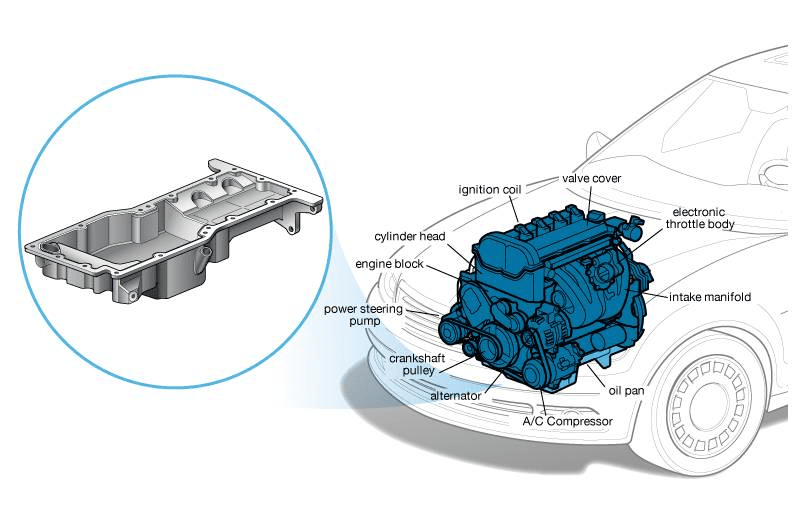
The oil pan (also called the sump) is the metal reservoir bolted to the bottom of the engine that stores the engine’s oil supply and lets it drain back down after circulating through the moving parts. It’s typically stamped steel or cast aluminum, sealed to the engine block with a gasket, and fitted with a drain plug for oil changes. Without it, there’d be nowhere for oil to collect between pump cycles — and the engine would seize from lack of lubrication within minutes.
I’ve replaced more oil pan gaskets than I can count over the years, and the failure pattern is almost always the same: heat cycling hardens the old gasket material until it cracks, and a slow drip under the car is usually the first sign something’s wrong. Below, I’ll cover what the oil pan actually does, what it’s made of, how two-piece “upper oil pan” designs work, and what to do when yours starts leaking.
Quick Answer
The oil pan is the reservoir bolted under the engine that holds and stores engine oil, letting it drain back down after lubricating moving parts. It’s usually stamped steel or cast aluminum, sealed with a gasket, and drained through a plug during oil changes. Some engines use a two-piece design with a metal “upper pan” bolted to the block and a lower sump pan (sometimes composite) that holds the bulk of the oil.
Oil Pan Basics
The oil pan sits at the very bottom of the engine, directly below the crankshaft. Gravity pulls oil down from the cylinder head and block passages into this reservoir after it’s done lubricating everything, and the oil pump picks it back up from there to recirculate. Most passenger car oil pans are stamped steel or cast aluminum, though some newer engines use a two-piece design (more on that below).
Two parts matter most for basic maintenance: the drain plug, a bolt at the lowest point of the pan that a mechanic removes to drain old oil during a change, and the oil pan gasket, a thin seal between the pan and the block that prevents oil from leaking out at the mating surface.
Functionality And Purpose
The oil pan’s main job is simple but critical: it’s the only place in the engine where the full oil supply collects and rests between pump cycles. When the engine is off, essentially all the oil drains down into the pan. When it starts, the oil pump draws from the pan through a pickup tube (usually fitted with a strainer screen) and pushes oil up through the engine’s oil galleries to the crankshaft bearings, camshaft, and cylinder walls.
Without a functioning pan, there would be no reservoir for the pump to draw from at all — oil would simply run off the engine and away, and bearings would run dry within seconds of startup. The pan’s shape and depth are engineered specifically so oil stays covering the pickup tube even under hard cornering or braking, which is why some performance and off-road vehicles use pans with internal baffles or trap doors to prevent oil from sloshing away from the pickup under sustained lateral G-forces.
Common Materials
Most oil pans are stamped steel or cast aluminum, and each trades off differently. Steel pans are cheap to produce, resist dents from road debris well, and are the default on many economy and older vehicles. Aluminum pans weigh less (helping fuel economy and reducing unsprung weight) and dissipate heat roughly three times better than steel, which is why they show up more often on performance engines and modern platforms focused on weight savings.
A smaller number of vehicles use composite (reinforced plastic) material, but not as a full standalone pan — it’s typically the lower half of a two-piece design, discussed in the section below. Full composite pans genuinely don’t rust, but plastic dissipates heat far worse than aluminum or steel, so it’s paired with a metal upper section rather than replacing metal outright.
| Material | Weight | Heat Dissipation | Typical Use |
|---|---|---|---|
| Stamped Steel | Heaviest | Baseline | Economy cars, older engines |
| Cast Aluminum | Lighter, ~30-40% less than steel | ~3x better than steel | Modern engines, performance applications |
| Composite Lower Pan | Up to 45% lighter than a legacy aluminum pan | Worse than aluminum, doesn’t rust | Two-piece designs (paired with a metal upper pan) |
Oil Pan Components
Beyond the pan itself, three parts do most of the work. The gasket seals the mating surface between the pan and the engine block — older gaskets were cork or rubber-based, which harden and crack from repeated heat cycling, so most manufacturers now use RTV silicone sealant instead since it doesn’t stiffen with age the way cork does. The drain plug is the bolt at the pan’s lowest point, removed to drain oil during a change; over-tightening it is a common mistake that strips the pan’s threads. The oil pickup tube extends from the oil pump down into the pan with a strainer screen on the end, filtering out debris before oil re-enters circulation.
Our Pick: Best Oil Pan Gasket Sealant
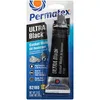
Permatex 82180 Ultra Black Maximum Oil Resistance RTV Silicone Gasket Maker, Sensor Safe a
Best for: Resealing an oil pan without a manufacturer-specific gasket, or supplementing an old-style cork/rubber gasket.
Why we picked it: Oil-resistant RTV silicone that doesn’t harden and crack with heat cycling the way old cork gaskets do — the same reason most manufacturers switched to it.
Main drawback: Needs a clean, oil-free surface to bond properly; won’t fix a warped or cracked pan.
View Our Pick on Amazon
 Visbella High Temperature RTV Silicone Gasket Maker, Sealed Check on Amazon |
 Permatex 85080 Ultra Black Maximum Oil Resistance RTV Silico Check on Amazon |
 MANNOL 9913 Gasket Maker, Thermostat, High-Temp RTV Silicone Check on Amazon |
Installation And Maintenance
The oil pan in a car holds the engine oil at the bottom of the engine. Regular checks ensure no leaks. Proper installation and maintenance keep the engine running smoothly.
Proper Installation Steps
- Park on a flat surface and lift the vehicle safely with a jack and jack stands.
- Drain the old oil completely before removing the old pan.
- Remove the old pan and clean the mating surface on the engine block thoroughly — any leftover gasket material or RTV residue will cause the new seal to leak.
- Inspect the gasket (or apply fresh RTV sealant per the manufacturer’s spec) before installing the new pan.
- Torque the bolts evenly in a criss-cross pattern to the manufacturer’s spec — over-tightening warps the pan and causes leaks just as often as under-tightening.
- Refill with the correct oil and filter, then run the engine and check for leaks before driving.
Signs Of Wear And Damage
Watch for oil leaks under the car, especially a dark spot forming near the front-center of where the engine sits. Other warning signs include a rapidly dropping oil level between changes, a burning oil smell (oil dripping onto a hot exhaust component), visible dents or cracks from road debris, and surface rust that’s progressed past the paint into the metal itself.
Troubleshooting Issues
Most oil pan leaks trace back to one of four causes: a hardened or damaged gasket, bolts that have loosened from vibration over time, physical damage from road debris (a rock or speed bump strike can crack or dent the pan), or corrosion that’s progressed through the metal from years of road salt exposure.
The fix depends on the cause: a worn gasket gets replaced (this is the most common repair, running roughly $500-$800 including labor per RepairPal and AutoNation Mobile Service estimates, with 1-5 hours of labor depending on the vehicle), loose bolts get re-torqued to spec, small dents or pinholes can sometimes be sealed or welded on a metal pan, and significant cracks or corrosion damage call for full pan replacement rather than a patch repair.
Innovations And Future Trends
The clearest recent shift in oil pan design isn’t full plastic replacing metal — it’s the rise of the two-piece oil pan, which pairs a rigid metal upper section with a separate lower sump. This directly answers a common question: an “upper oil pan” is the section that bolts to the engine block and transmission bellhousing, forming a structural mounting point, while the lower pan bolts beneath it and holds the bulk of the oil.
Real Vehicles Using Two-Piece Designs
This isn’t a future concept — it’s already in production. The Mercedes-Benz C-Class (since 2007) uses an aluminum upper pan with a DuPont Zytel composite lower pan. Ford’s 6.7L Power Stroke diesel trucks (F-250/F-350, since 2009) use a two-piece thermoplastic design, one of the first of its kind in North America. The Jeep Grand Cherokee’s 5.7L Hemi (since 2009) uses a composite lower pan engineered with internal baffling to keep oil covering the pickup tube even on steep off-road grades.
Why Composite Lower Pans, Not Full Plastic Pans
Composite lower pans genuinely don’t rust and can cut weight by up to 45% compared to a legacy aluminum pan, which is a real benefit for fuel economy. But plastic dissipates engine heat far worse than aluminum or steel, so manufacturers pair it with a metal upper section rather than building a full-composite pan. Despite some claims floating around online, plastic hasn’t overtaken metal as the more common oil pan material — stamped steel and cast aluminum remain the standard, and composite only appears as one half of a hybrid design on specific engine families.
Data point: Oil pan gasket replacement runs roughly $500-$800 total in the US (RepairPal, AutoNation Mobile Service), with labor typically 1-5 hours — 2-4 hours on most domestic and Japanese cars, up to 5-6 hours on trucks like a 4WD F-150 5.0L, and 10-15 hours on some diesel trucks where the transmission or subframe has to come out for access.
“Nine times out of ten, when I pull an old oil pan gasket, it’s brittle and cracked rather than torn — that’s heat cycling doing its job over years of driving, not a sudden failure. RTV silicone lasts a lot longer than the old cork gaskets it replaced.”
— Md Meraj, The Daily Automotive
Frequently Asked Questions
How Much Does It Cost To Replace An Oil Pan?
Oil pan gasket replacement (the more common repair) runs about $500-$800 total, including $40-$150 in parts and $443-$650 in labor, per RepairPal and industry estimates. A full oil pan replacement costs more depending on the vehicle and whether the pan is aluminum, steel, or a two-piece composite design. Labor time ranges from 1-2 hours on simple applications to 10-15 hours on some diesel trucks where the subframe or transmission has to be dropped for access. Always get a shop-specific quote, since access difficulty varies enormously by engine layout.
What Happens If An Oil Pan Is Damaged?
A damaged oil pan leads to oil leaks, which starve the engine of lubrication over time. Left unaddressed, this can cause increased wear on bearings and cylinder walls, overheating, and in severe cases full engine seizure. Catching a leak early — a dark spot under the car, a dropping oil level, or a burning smell — is far cheaper than the engine damage that follows from ignoring it.
How Often Does An Oil Pan Need To Be Replaced?
Oil pans don’t have a fixed replacement interval the way filters or belts do. Replace one only when it’s damaged, leaking, or corroded through — a healthy pan can last the life of the vehicle. Regular oil-change inspections are the best way to catch gasket or pan issues before they become expensive.
Can I Drive My Car With A Leaking Oil Pan?
Driving with a leaking oil pan is risky — a slow drip can become a fast one, and running the engine low on oil causes lasting damage within minutes. If you must drive a short distance, check the oil level first and again immediately after, then get the leak repaired as soon as possible rather than treating it as routine.
What Is the Upper Oil Pan?
On engines with a two-piece oil pan design (like the Mercedes-Benz C-Class or Jeep Grand Cherokee 5.7L Hemi), the “upper oil pan” is the metal section that bolts directly to the engine block and transmission bellhousing, acting as a structural mount. A separate lower pan (sometimes composite) bolts beneath it and holds the majority of the oil. If you’re working on a single-piece pan design, there’s no “upper” section to speak of — that terminology only applies to two-piece systems.
Conclusion
The oil pan is a simple part with an outsized job: it’s the only reservoir in the engine where oil collects and rests between pump cycles, and without it there’d be nothing for the oil pump to draw from. Whether yours is stamped steel, cast aluminum, or a two-piece design with a composite lower section, the maintenance advice is the same — watch for leaks, don’t ignore a dropping oil level, and get gasket issues fixed before they turn into engine damage.
Products related to this article
Sponsored / affiliate links. As an Amazon Associate I earn from qualifying purchases. I may earn additional commission from eligible campaigns.