Why Does My Car Burn Oil So Fast? Causes, Signs & Fixes
A car usually burns oil fast because of worn piston rings, leaking valve seals or gaskets, a stuck PCV valve, or a failing turbocharger seal — each one lets oil slip into the combustion chamber or exhaust, where it burns off instead of staying in the crankcase. Most automakers consider consumption of up to one quart every 1,000 to 2,000 miles to be within a normal range, so if you’re adding oil more often than that, something mechanical needs attention. Below are the specific causes, how to tell them apart, and what each repair typically costs.
What Does It Mean When a Car Burns Oil?
BEST FOR HIGH-MILEAGE OIL LEAKS & SMOKING
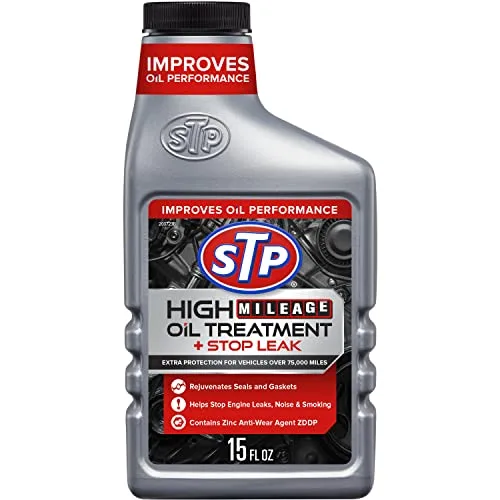 |
STP High Mileage Oil Treatment + Stop Leak (15 oz) – $7.18 A pour-in additive that conditions worn seals and gaskets, aimed at the exact valve-seal and gasket leaks covered in this guide.
|
When a car is “burning oil,” the engine is consuming oil faster than it should. Oil isn’t meant to disappear — it’s supposed to stay in the engine, lubricating parts like the pistons, crankshaft, and valves. If a car is burning oil, that oil is either getting burned during combustion or leaking out somewhere else in the engine. Needing to top off the oil every few weeks between scheduled changes is a clear sign of a developing problem, and ignoring it accelerates engine wear.
Burning oil usually shows up as a dropping level on the dipstick, blue or gray smoke from the exhaust, or a burning smell. If oil needs topping off more often than the interval in your owner’s manual — typically every 3,000 to 5,000 miles for conventional oil — the engine is very likely burning oil somewhere. The sections below cover the most common reasons why.
Common Reasons Your Car Burns Oil
Several different problems can cause an engine to guzzle oil. Here are the most common culprits, roughly ordered from cheapest to fix to most expensive.
Worn Piston Rings
Piston rings seal the combustion chamber, keeping oil in the crankcase and out of the fuel-air mixture. Over time — especially in high-mileage cars with high mileage — these rings wear down and lose their seal. Worn rings let oil slip past into the combustion chamber, where it burns off during the power stroke, often showing up as blue smoke from the tailpipe under acceleration.
Fixing worn piston rings isn’t cheap. It typically requires an engine rebuild, which runs $2,000 to $5,000 depending on the vehicle. Regular oil changes with quality oil slow the wear, but once the rings are worn, only a mechanical repair — not an additive — fully solves it.
Damaged Valve Seals or Guides
Valve seals and guides control oil flow around the engine’s valves. When they wear out or crack, oil seeps into the combustion chamber, especially while the car sits overnight. A puff of blue smoke on cold startup that clears up after a minute or two driving is the classic symptom of bad valve seals.
Replacing valve seals is less invasive than a piston-ring repair, but still runs $1,000 to $2,000 at a shop. Using the oil viscosity your manual recommends helps slow the leak, and a high-mileage oil additive with seal conditioners can buy time if it’s caught early.
Leaking Gaskets
Gaskets seal sections of the engine, like the valve cover or oil pan. A worn gasket lets oil escape, either dripping onto the ground or burning off on hot engine parts, which produces a burning smell rather than exhaust smoke. An oil spot on the driveway, or oily residue around the valve cover or oil pan under the hood, usually points to a gasket rather than an internal engine problem.
A leaking gasket is usually the cheapest fix on this list — the part itself runs about $20, and a shop job typically costs $100 to $500 depending on which gasket it is and how much labor it takes to reach it. Left alone, a gasket leak eventually drops oil pressure low enough to damage the engine.
Incorrect Oil Type
Using the wrong oil can make an engine burn through it faster. A viscosity thinner than what the manufacturer specifies — say, a quick-lube shop filling a car that calls for 5W-30 with 10W-40 instead — can slip past worn seals more easily or burn off faster at operating temperature. Always use the oil type and viscosity listed in the owner’s manual. Synthetic oils generally hold up better in modern engines and resist breakdown at high heat. Mixing different oil brands between top-offs isn’t dangerous, but it can dilute the additive package meant to protect seals, so it’s worth sticking to one oil consistently between changes.
Turbocharger Issues
A turbocharger relies on engine oil to lubricate its fast-spinning shaft and bearings. When the turbo’s internal seals wear out, oil can leak into the intake or exhaust side, where it burns off and often produces smoky exhaust along with a drop in oil level. A full turbocharger replacement typically costs $1,000 to $2,500, though a seal-only rebuild can be cheaper if the core turbo housing is still good.
Sticking to the oil change interval, and letting a turbocharged engine idle for 30 to 60 seconds after hard driving instead of shutting it off immediately, helps the turbo cool down gradually and extends seal life.
Faulty PCV (Positive Crankcase Ventilation) Valve
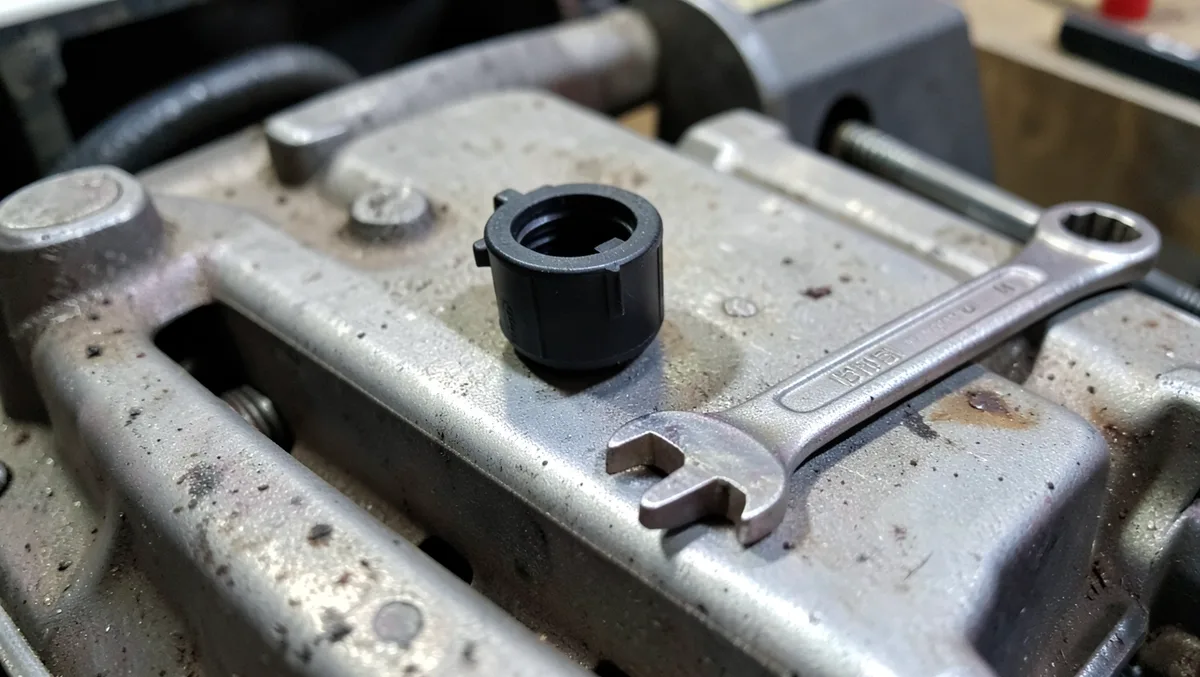
A part that’s easy to overlook is the PCV valve. It’s designed to vent pressure that naturally builds up inside the crankcase and route those vapors back into the intake to be burned normally. When the PCV valve sticks closed or gets clogged with sludge, pressure builds up inside the engine and forces oil past seals and gaskets that would otherwise hold up fine — so a $10 to $20 part can end up looking exactly like a much more expensive seal or gasket failure. A full breakdown of how the PCV system works is worth reading before troubleshooting a leak. Replacing the valve is usually a 10-to-15-minute job with a socket wrench, making it one of the cheapest things worth ruling out before assuming the worst.
High Mileage and Engine Wear
Older engines burn more oil simply because more parts have worn down at once — piston rings, valve seals, and gaskets all lose some sealing ability over hundreds of thousands of miles. Consumption of around a quart every 1,000 to 2,000 miles is common on a high-mileage engine and isn’t automatically a sign of impending failure, though it’s worth monitoring closely. High-mileage oils with seal-conditioning additives can slow the loss, but a badly worn engine eventually needs a rebuild or replacement to stop burning oil for good.
Driving Habits
How a car is driven affects how much oil it burns. Frequent high-speed driving and hard acceleration put extra heat and stress on the engine, which burns oil faster. Short trips where the engine never fully reaches operating temperature can also increase oil consumption, since condensation builds up in the crankcase and mixes with the oil before it burns off. Moderate, steady driving with time to fully warm up reduces both effects.
Signs Your Car Is Burning Oil
Here are the signs that point to an engine burning oil rather than just needing a routine oil change. See our full guide to spotting these warning signs early for a closer look at each one.
- Low Oil Levels: Check your dipstick regularly. If the oil level drops between changes, you’ve got a problem.
- Blue or Gray Exhaust Smoke: This happens when oil burns in the combustion chamber. It’s most noticeable when starting the car or accelerating.
- Burning Smell: A smell like burnt oil usually means oil is leaking onto hot engine parts rather than burning inside the cylinders.
- Poor Engine Performance: Burning oil can foul spark plugs, leading to misfires or sluggish acceleration.
- Oil Spots Under the Car: Leaks often leave puddles where you park.
Don’t ignore these signs. Oil residue that fouls a spark plug can cause a misfire severe enough to strand the car, turning a cheap fix into a tow bill plus a repair.
How to Diagnose the Problem
Diagnosing why a car burns oil takes a bit of detective work. Here’s the order that narrows it down fastest:
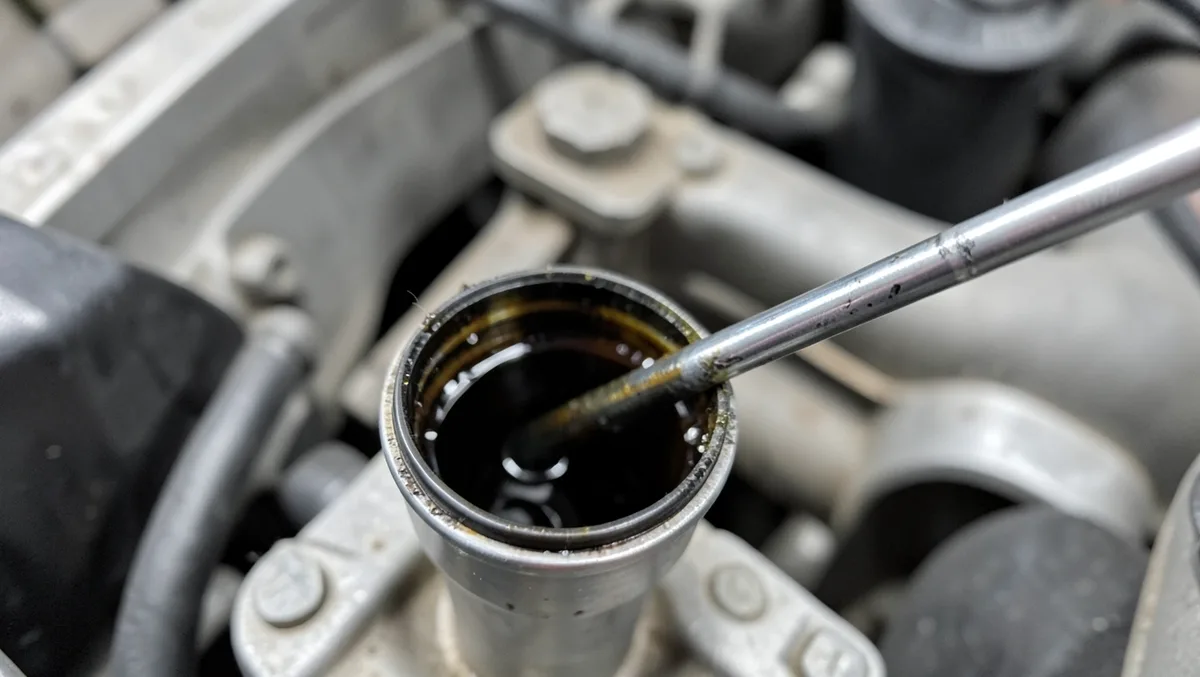
- Check the Oil Level: Pop the hood and use the dipstick to check the oil level. Do this when the engine is cool and on level ground. If it’s low, note how much you need to add.
- Look for Leaks: Check under the car for oil spots. Look around the engine for oily residue, especially near the valve cover or oil pan.
- Inspect the Exhaust: Start the car and look for blue or gray smoke. If it’s worse when you rev the engine, it’s likely burning oil internally rather than leaking externally.
- Monitor Driving Conditions: Notice if oil burns faster during certain types of driving, like high-speed trips or short commutes.
- Visit a Mechanic: If you can’t pinpoint the issue, a professional can run tests like a compression test or leak-down test to check piston rings and valves.
Working through these steps before paying for repairs usually narrows down the cause and can save an unnecessary shop visit.
How to Fix a Car That Burns Oil
Fixing oil burning depends on the cause. Here’s a table summarizing each issue, the fix, and a typical cost range:
| Issue | Fix | Estimated Cost |
|---|---|---|
| Worn Piston Rings | Engine rebuild or replacement | $2,000–$5,000 |
| Damaged Valve Seals | Replace valve seals | $1,000–$2,000 |
| Leaking Gaskets | Replace gaskets | $100–$500 |
| Incorrect Oil Type | Switch to the manufacturer-recommended oil | $20–$50 (cost of an oil change) |
| Turbocharger Issues | Replace turbo seals or the turbocharger | $1,000–$2,500 |
| Faulty PCV Valve | Replace the PCV valve | $10–$50 |
| High Mileage/Wear | Use high-mileage oil, or a full rebuild in severe cases | $10–$5,000 |
Minor issues like a leaking gasket or a stuck PCV valve are within reach of a home mechanic with a basic toolkit. Bigger problems like worn piston rings or a failing turbocharger are better left to a trusted shop. Whichever the cause, using quality oil and sticking to the maintenance schedule going forward helps prevent a repeat.
Preventing Oil Burning in the Future
Prevention is cheaper than any repair on the table above. Here’s how to keep a car from burning oil in the first place:
- Regular Oil Changes: Stick to the interval in the owner’s manual. Most modern engines do well on synthetic oil changed every 5,000 to 7,500 miles.
- Use the Right Oil: Check your manual for the recommended viscosity and type. Synthetic oils are often better for modern engines.
- Check Oil Levels Monthly: Checking the dipstick every few weeks catches a developing leak before it becomes expensive.
- Drive Smart: Avoid aggressive driving and short trips. Let the engine warm up fully to reduce oil contamination.
- Maintain Your Turbo: If the car has a turbo, keep up with oil changes and avoid shutting off the engine right after high-speed driving.
Staying ahead of these five habits is the cheapest way to avoid the repair costs listed above.
When to Seek Professional Help
Some oil-burning problems are beyond a DIY fix. Heavy exhaust smoke, unusual engine noises, or needing to add oil every week are all signs it’s time to call a mechanic. Ignoring the problem and simply topping off the oil repeatedly risks letting burnt oil residue foul the oxygen sensors and catalytic converter — a catalytic converter replacement alone typically runs $900 to $2,500. A qualified mechanic can run a compression or leak-down test to pin down the exact cause before it gets that far.
Conclusion
A car that burns oil fast is a solvable problem once you know what to look for. From worn piston rings to a $15 PCV valve, the causes range from cheap fixes to full engine rebuilds, and the signs — smoke, low oil levels, a burning smell — usually point toward which one applies. Regular maintenance, the right oil, and catching a leak early are what keep an oil-burning problem from turning into a much bigger repair bill. The FAQs below cover the most common follow-up questions.
FAQs
Why is there blue smoke coming from my car’s exhaust?
Blue smoke almost always means the engine is burning oil, most often due to worn piston rings, bad valve seals, or a failing turbocharger. Check the oil level and get a mechanic to run a compression or leak-down test for an exact diagnosis.
How often should I check my car’s oil level?
Check it about once a month, or before any long trip. It’s the fastest way to catch oil loss early. Always check with the engine cool and the car parked on level ground for an accurate reading.
Can using the wrong oil cause my car to burn oil?
Yes. An oil viscosity thinner than what the manufacturer specifies can slip past worn seals more easily or burn off faster at operating temperature. Check the owner’s manual for the correct type, usually listed as something like 5W-30 or 10W-40.
Is it safe to drive if my car is burning oil?
It depends on how much oil it’s losing. Consumption around a quart every 1,000 to 2,000 miles is within the range most automakers consider normal, but anything faster than that needs attention soon to avoid engine damage.
Can I fix a leaking gasket myself?
A valve cover or oil pan gasket is one of the more DIY-friendly repairs on this list. The part itself usually costs around $20, and swapping it just takes basic hand tools and a repair manual for the specific engine.
What’s the best oil for a high-mileage car?
High-mileage synthetic oils with seal-conditioning additives are usually the best choice for older engines, since they help reduce leaks and oil burn-off. Check how long different oil types actually last before settling on one, and confirm the correct viscosity in the owner’s manual.
Products related to this article
Sponsored / affiliate links. As an Amazon Associate I earn from qualifying purchases. I may earn additional commission from eligible campaigns.