Can You Return a Car to a Dealership? A Legal Playbook for Unwinding a Bad Deal
You signed the paperwork on Saturday, drove the car home, and by Monday morning you realize the monthly payment is $150 more than you budgeted. Or the transmission shifts like it’s made of gravel. Or you just plain hate the color. The first question everyone asks in this situation is simple: can you return a car to a dealership?
The honest answer is usually no. Most states treat a signed car contract as final. There’s no federal law that lets you change your mind after driving off the lot. But there are several narrow, specific situations where you can force the dealership to take the car back — and a few more where you can negotiate a return even without a legal right to one. This article walks through each of those paths, step by step, with the exact language to use and the paperwork to ask for.

You’ll leave this page knowing the difference between returning a car and unwinding a deal, how spot delivery and lemon laws actually work, and whether your financial situation is better served by selling the car yourself instead of fighting the dealership.
If you’re in the middle of this mess, you might also appreciate stepping back to understand how we got here as a country. Car Country: An Environmental History is a fascinating look at how car-centric life shaped American law and consumer expectations. It won’t get you out of your contract, but it will make you feel less alone in the system.
The Short Answer: No, You Can’t Just Return It (But Here’s When You Can)
Walk into any dealership and ask to return a car you bought three days ago. The sales manager will likely laugh, then show you the signed purchase agreement. That document is a binding contract. Unless you have a specific legal right to cancel, the dealership has no obligation to take the vehicle back.
That said, there are five situations where a return is possible:
- Spot delivery falls through. If you drove off with the car before financing was final and the bank rejects your loan, the dealer must unwind the deal.
- The car is a lemon under state law. Most states have statutes covering new cars with serious defects that can’t be fixed after a reasonable number of attempts.
- The dealer committed fraud. If they rolled back the odometer, hid a salvage title, or lied about the financing terms, you can rescind the contract.
- The dealership has a voluntary return policy. Chains like CarMax and Carvana advertise return windows, but independent dealers rarely do.
- The dealer agrees to a negotiated return. This is pure business. They might take the car back for a restocking fee if you push the right way.
Notice what’s not on that list: buyer’s remorse. Hating the color or realizing you can’t afford the payment is not a legal reason to return a car. The contract doesn’t care about your feelings.
The FTC Cooling-Off Rule: Why It Doesn’t Apply to Car Dealerships
People often cite the FTC’s Cooling-Off Rule, which gives you three days to cancel certain purchases. That rule applies to door-to-door sales over $25, and sometimes to sales at temporary locations like fair booths. It does not apply to vehicles bought at a dealership. Cars are explicitly exempt.
So if you bought the car at the dealership’s physical location, you have zero federal cooling-off protection. Even if the dealer has a sign saying “3-day money-back guarantee,” that’s a voluntary policy, not a legal right. Read the fine print. Many of those guarantees come with a 15% restocking fee and a mileage cap of 200 miles.
State laws vary, but none of them give you a general right to cancel a car purchase. A few states like California have specific rules for used cars with serious mechanical failures within 30 days, but those are warranty claims, not returns. You get the car fixed, not your money back.
Spot Delivery: When the Dealer Legally Must Take the Car Back
Spot delivery is the practice of letting you drive home before the bank approves your loan. The dealer hands you the keys, you sign a temporary agreement, and they promise to call you when financing goes through. It’s a gamble. If the bank rejects your application, the dealer has to cancel the deal.
This is one of the few times you have a genuine legal right to return the car. The contract usually includes a clause saying the sale is contingent on financing. If the financing falls through, the contract becomes void. The dealer must take the car back and refund your down payment.
Here’s the catch: they might try to offer you a different loan with a higher interest rate instead of unwinding the deal. You don’t have to accept it. You can demand a full refund and return the car. But you’re also responsible for any damage or excess mileage put on the car while you had it. The dealer can charge you for that.
If you’re in this situation, gather all your paperwork immediately. Look for the phrase “conditional delivery” or “subject to financing approval.” That language is your ticket out. If the dealer refuses to unwind the deal, contact your state’s attorney general’s office.
Lemon Law: The Only “Return” That Forces a Refund
Lemon laws are state-specific statutes that cover new cars with substantial defects. The threshold varies, but most states require the manufacturer to buy back the car if they can’t fix the same problem after four attempts or the car has been out of service for 30 days or more.
Important distinction: lemon law claims go against the manufacturer, not the dealership. You don’t return the car to the salesperson. You file a claim with the manufacturer’s arbitration program, and if that fails, you can sue. The remedy is a refund of the purchase price minus a deduction for your usage, or a replacement vehicle.
Lemon laws rarely apply to used cars. Most states have separate used-car warranty laws, but they’re weaker and usually just require the dealer to repair the problem. A few states like New Jersey and Minnesota have strong used-car lemon laws, but they only cover cars under a certain age and mileage.
If you think you have a lemon, document everything. Keep every repair order, every date the car was in the shop, and every conversation with the service department. You’ll need that paper trail to prove your case.
The “As-Is” Clause: Your Biggest Hurdle and How to Navigate It
Used cars are often sold “as-is,” which means the dealer makes no promises about the car’s condition. You buy it with every existing defect, known or unknown. This clause is ironclad in most states. It kills warranty claims, and it kills return requests based on mechanical problems.
The only way around an as-is clause is to prove fraud. If the dealer knew about a blown head gasket and covered it up, that’s fraud. If they told you the car had a new transmission when it didn’t, that’s fraud. But you have to prove they knew. An honest mistake is not fraud.
What to do if you signed an “As-Is” agreement
First, get a second opinion from an independent mechanic. If the car is unsafe to drive, that’s a safety issue, not a contract issue. You may have a claim under the Magnuson-Moss Warranty Act if there was any written warranty, even a limited one. That federal law gives you the right to sue for attorney’s fees if the dealer breaches a warranty.
Second, check your state’s implied warranty laws. Some states like Massachusetts don’t allow as-is sales on used cars at all. Others require a specific form with the words “as-is” printed in bold. If the dealer didn’t use the exact form, the clause might be unenforceable.
Third, consider a demand letter. A certified letter from a lawyer stating your intent to sue for fraud or breach of warranty often gets the dealer’s attention. Most dealerships don’t want litigation over a $10,000 used car. They’d rather buy it back than pay legal fees.
How to Negotiate a Return (The Script That Works)
You have no legal right to return the car, but you can still try. Dealerships are businesses. They’ll take a return if the math works for them. The key is to make it easy and profitable for them to say yes.
Step 1: Talk to the Sales Manager, Not the Salesperson
The salesperson is a commission earner. They have zero authority to approve a return, and they’ll fight you because a return cancels their commission. Go straight to the sales manager. That’s the person who can actually make a decision.
Start the conversation with a calm, factual tone. Say this: “I need to unwind this purchase. I understand there’s no cooling-off period, but I’m asking for a voluntary return. I’m prepared to pay a restocking fee to cover your costs.” This shows you know your rights and you’re being reasonable.
Step 2: Offer a Restocking Fee
Dealers lose money on returns. They have to re-list the car, run it through inspection, and eat the depreciation from the miles you added. Offer to cover that cost. A restocking fee of 5-10% of the purchase price is common. On a $20,000 car, that’s $1,000 to $2,000.
You’re buying your way out of the contract. It’s not fair, but it’s practical. The dealer’s alternative is to keep a customer who’s angry and likely to leave bad reviews. Most managers would rather take a small fee and move on.
Step 3: Get Everything in Writing
If the manager agrees, get the terms in writing before you hand over the keys. The document should state the return date, the restocking fee amount, and the refund method. Don’t accept a verbal promise. You need a signed agreement that says the original contract is void.
Also confirm who holds the title. If the bank funded the loan, the title is in the bank’s name. The dealer can’t just take the car back. The bank has to sign off on the cancellation. This process takes a few days, so be patient but persistent.
The Trade-In Trap: What Happens to Your Old Car?
If you traded in your old car as part of the deal, returning the new one gets complicated. The dealer has likely already sold your old car to a wholesaler. You can’t get it back. Instead, the dealer will offer you the trade-in value as a credit or a check.
This is where you need to be careful. Your old car might be worth more than the trade-in allowance they gave you. When the deal is unwound, you have leverage to renegotiate that value. The dealer needs to make you whole, so push for the actual wholesale value, not the lowball number they originally gave you.
If you still owe money on your old car, that loan doesn’t disappear. The bank that financed your trade-in expects payment regardless. You’ll need to factor that into the settlement. The dealer should roll the remaining balance into the refund calculation, but you have to ask for it explicitly.
The Financial Math: Return vs. Sell vs. Keep
Before you fight for a return, run the numbers. Sometimes keeping the car is cheaper than the alternative. Here’s a simple framework:
- Return: You pay a restocking fee (5-10%), get your down payment back, but you’re out the sales tax and registration fees you already paid. Those aren’t refundable in most states.
- Sell privately: You take a hit on depreciation the moment you drive off the lot. A car loses about 20% of its value in the first year. If you sell after a month, you’ll get maybe 85% of what you paid. But you avoid the restocking fee and you’re free of the dealership.
- Keep: If the problem is the monthly payment, refinancing might lower it. If the problem is a mechanical issue, a warranty might cover it. Keeping the car avoids all transaction costs.
| Option | Upfront Cost | Time Required | Best For |
|---|---|---|---|
| Negotiated Return | 5-10% restocking fee | 1-3 days | Buyer’s remorse, dealer willing to cooperate |
| Private Sale | 15-20% depreciation loss | 2-8 weeks | Getting maximum value, avoiding dealer interaction |
| Keep & Refinance | Refinance closing costs | 1-2 weeks | Affordability issues, otherwise happy with car |
| Lemon Law Claim | Legal fees (if any) | 2-6 months | New car with persistent defects |
Here’s a real-world example. You bought a $25,000 car, put $2,000 down, and financed the rest. A week later you want out. The dealer offers a return with a 7% restocking fee ($1,750). You’ve also lost $500 in registration fees. Total cost to return: $2,250. If you sell the car privately, you might get $22,000, losing $3,000 plus the registration fees. The return is cheaper. But if the dealer wants a 15% fee ($3,750), selling privately is the better move.
Do this math before you walk into the dealership. Know your walk-away number. If the restocking fee exceeds your depreciation loss, you’re better off selling the car yourself. If you have negative equity on the loan, meaning you owe more than the car is worth, a return is almost always better because it wipes out that gap.
Frequently Asked Questions (FAQs)
Can I return a car within 3 days if I signed a contract?
No. The FTC Cooling-Off Rule doesn’t apply to car dealerships. You have no federal right to cancel. Some dealers offer voluntary return policies, but they’re rare and usually come with fees and mileage limits. Check your contract for any mention of a return or exchange policy.
What happens if I refuse to return the car after spot delivery falls through?
The dealer can repossess the vehicle. Since the financing wasn’t finalized, the dealer still owns the car. They’ll send a tow truck and you’ll be liable for any damage. It’s better to return it voluntarily and negotiate the refund terms than to have it taken.
Does the Magnuson-Moss Warranty Act help me return a car?
Not directly. That law regulates warranties and gives you the right to sue for breach of warranty. It doesn’t create a return right. But if the dealer promised a warranty and didn’t deliver, or if they violated the terms, you can use that law to force a refund or repair.
Can I return a car to CarMax or Carvana?
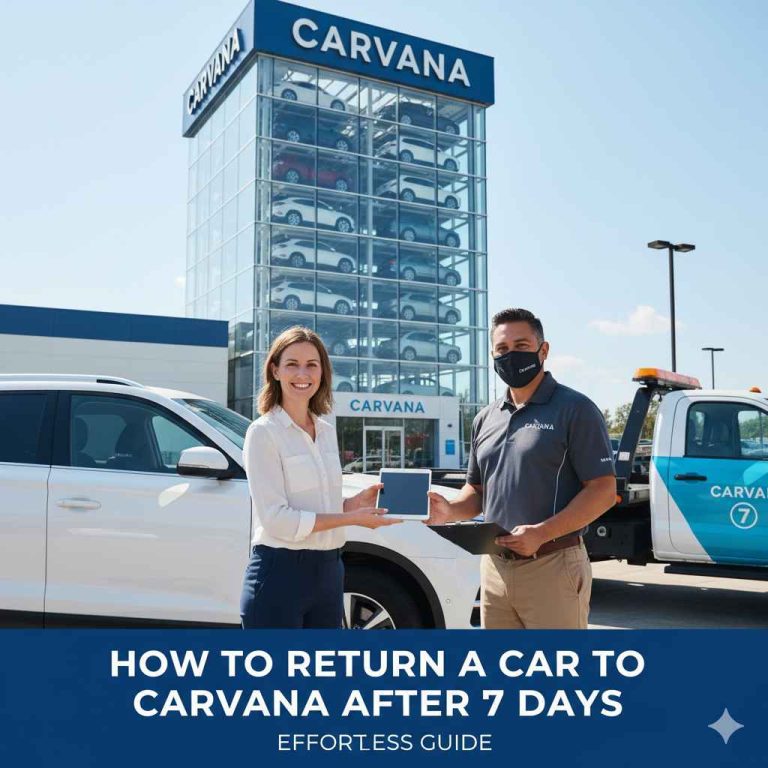
CarMax has a 30-day return policy, but it’s not a full refund. They deduct for mileage and damage. Carvana offers a 7-day return window with no questions asked. These are voluntary policies, not legal rights. Read the terms carefully, especially the mileage limits and condition requirements.
What’s the difference between returning a car and unwinding a deal?
Returning a car implies a voluntary agreement. Unwinding a deal, legally called rescission, means the contract is declared void. Rescission happens when there’s fraud, illegal terms, or a failed condition like financing. With rescission, you’re entitled to a full refund. With a return, you’re subject to the dealer’s terms.
Who signs off on the return if I have a loan?
The bank that holds the title. The dealership can’t cancel the contract without the lender’s approval. The bank will issue a payoff amount, and the dealer will refund your down payment minus any fees. This process takes a few days. Don’t expect a same-day resolution.
The Bottom Line: Your Action Plan
You walked in hoping for a simple answer. Here’s the truth: you can’t return a car just because you changed your mind. But you have options, and they depend on the specifics of your situation.
- Check your contract for a financing contingency. If the bank hasn’t funded the loan, you have leverage.
- Document every defect and repair attempt. This is your ammunition for a lemon law claim or a fraud case.
- Talk to the sales manager, not the salesperson. Use the script above and offer a restocking fee.
- Run the return vs. sell vs. keep math. Compare the restocking fee against your depreciation loss.
- Get every agreement in writing. Verbal promises are worthless.
- If the dealer refuses, escalate. Contact your state attorney general and a consumer protection lawyer.
- Consider the long game. A negative Google review from a calm, factual customer sometimes works better than a shouting match in the showroom.
One last thought: this experience is common. Millions of people buy cars they regret. The system is designed to make you feel locked in, but you’re not a prisoner. You have legal rights, negotiation power, and the ability to walk away from a bad deal. Use this playbook, stay calm, and remember that the dealership wants to avoid a scene as much as you want to avoid a $500 monthly payment on a car you hate.
Products related to this article
Sponsored / affiliate links. As an Amazon Associate I earn from qualifying purchases. I may earn additional commission from eligible campaigns.
 Auto Car Dent Repair Puller Head Paintless-Dent Repair Removal Kit for Slide Hammer Pulling Tab Adapter Pulling Tabs Car Aluminum-alloy Puller Head Adapter Screw Glue-tabs for Slide Hammer and
 Car Key Battery Replacement for Mercedes-Benz C-Class (2018-2025 C 300 C 350e C 43 AMG C 63 AMG Remote Batteries CR2032 3V Pack of 2)