State Farm Drive Safe & Save Review: Is It Worth It?
State Farm Drive Safe & Save is worth it if you drive low miles, avoid hard braking and late-night trips, and can live with telematics; the discount can reach up to 30%, but heavy stop-and-go commuting can shrink it at renewal. Pick the wrong fit, and the savings can be smaller than the privacy tradeoff or disappear after the first policy term. This guide explains how the program works, who is most likely to keep the discount, and when to skip it.
This guide is part of our Car laws and compliance guide series.
Verdict: is State Farm Drive Safe & Save worth it?
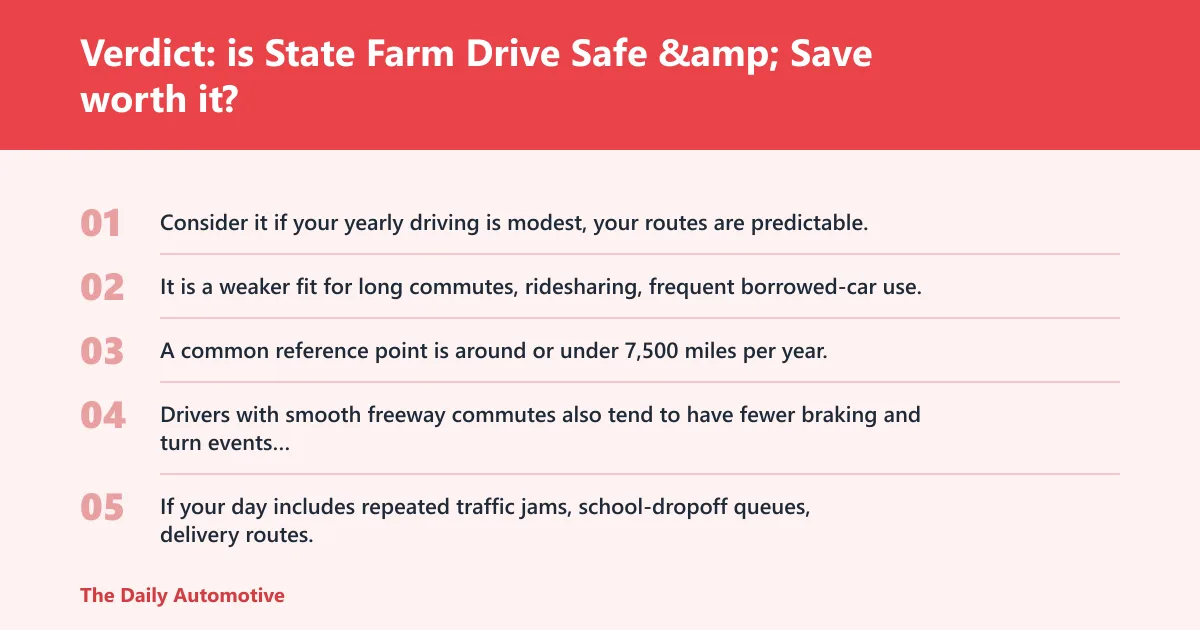
Consider it if your yearly driving is modest, your routes are predictable, and you are fine with a phone app and in-car beacon tracking trips over time. It is a weaker fit for long commutes, ridesharing, frequent borrowed-car use, or anyone who wants a one-time discount and no more data collection.
Who should consider enrolling now
Low-mileage drivers are the clearest match. A common reference point is around or under 7,500 miles per year, since mileage can affect premiums and driving less gives the program fewer chances to record risky events. Drivers with smooth freeway commutes also tend to have fewer braking and turn events than stop-and-go traffic.
Who should skip or compare other discounts first
If your day includes repeated traffic jams, school-dropoff queues, delivery routes, or a lot of urban merging, the renewal discount can drift downward even if you are otherwise cautious. Skip first if you value privacy highly, if your policy depends on switching cars often, or if you already have a strong bundle or safe-driver discount elsewhere.
Why renewal risk matters more than the signup discount
The 10% sign-up discount is only the opening move. The real question is whether your driving pattern keeps enough favorable data in the system to hold the renewal discount, because State Farm recalculates it at renewal and says the program can use up to 12 months of driving data.
📊 State Farm advertises savings of up to 30% with Drive Safe & Save. Source: Statefarm.
What State Farm Drive Safe & Save actually is
Drive Safe & Save is a usage-based telematics discount program. State Farm advertises savings of up to 30%, offers a 10% discount for signing up and finishing setup, and lists the program cost as $0. The catch is that the discount changes at each renewal, so the price can move up or down later.
How the advertised savings and signup discount differ
The signup discount is tied to enrollment and setup. The larger advertised savings depend on what the program records after that, during the policy term and at renewal. That distinction matters because a driver can start with a decent discount and still lose part of it if the tracked data looks unfavorable later.
Where state availability can change the answer
State Farm says Drive Safe & Save is not offered in California or Rhode Island. Availability can also depend on the policy and vehicle setup. That makes a quick state check worth doing before you compare the discount against another insurer’s telematics offer.
How the app and Bluetooth beacon track your trips
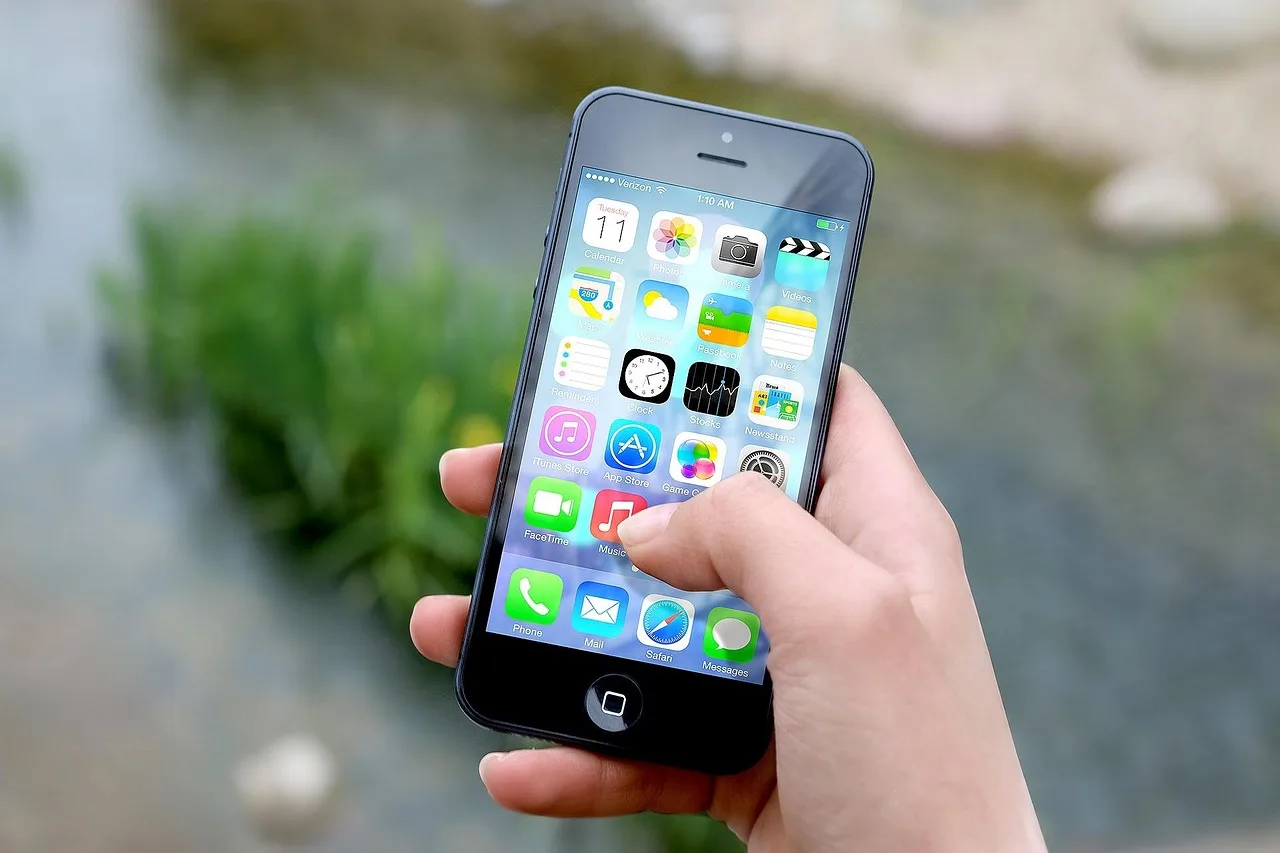
The system uses the State Farm mobile app plus a Bluetooth beacon in the vehicle. The app records trips in the background with required phone permissions, while the beacon helps identify the insured car so the program can connect the right phone trip to the right vehicle.
What the State Farm mobile app records in the background
The app runs trip detection while you drive and shows route and driving events inside the app. Because it works in the background, you need to grant phone permissions before setup is complete. If those permissions are not active, the program may miss trips or fail to classify driving correctly.
What the Bluetooth beacon does in the vehicle
The beacon stays in the car and helps the app know which vehicle is being driven. That matters if you have more than one car in the household or if the phone is near multiple vehicles. It reduces confusion about which trips should count toward your discount calculation.
Why phone permissions matter before you enroll
Location, motion, and related phone permissions are not a small setup detail. They are the input that lets the app record trips and identify events. If you do not want background collection, that is the first sign the program may not fit your comfort level.
What does Drive Safe & Save monitor?

Drive Safe & Save monitors hard braking, quick acceleration, sharp turns, speeding 8 mph or more over the posted limit, and phone use during trips. Those events feed the discount calculation at renewal, so the program is not simply a “safe driver” badge. It is a data score tied to real road behavior.
Hard braking, quick acceleration, and sharp turns
These events often show up in congested driving, short trip patterns, and hurried lane changes. One hard brake can be harmless. A steady pattern of them during a six-month policy period is what can weaken the renewal outcome.
Speeding 8 mph or more over the limit
State Farm flags speeding when a driver goes 8 mph or more over the posted limit. That threshold is specific enough to matter on suburban arterials and freeways where speeds drift upward without much notice. It also means minor overages may not matter as much as sustained faster driving.
Phone use during trips and why it matters
Phone use is one of the clearest privacy and discount risks because it is both a monitored behavior and a common daily habit. A driver who checks navigation, messages, or alerts while moving can create more recorded events, and those events can weigh against the discount later.
How are discounts calculated at renewal?
The sign-up discount is only the starting point. State Farm says the discount changes at each renewal, and renewals are typically every 6 months. Because the program can use up to 12 months of driving data, behavior from one policy period can carry into the next and affect the price you see later.
Why the renewal recalculation can change the price
A renewal review can move the discount down if the system sees more speeding, braking, and phone-use events, or if mileage runs high. It can also move up if the driving data stays calm and your use is limited. That variability is why telematics is not a fixed coupon.
Why up to 12 months of data can matter across a 6-month policy term
If the system is considering up to 12 months of driving data across a policy that renews every 6 months, a rough stretch of driving can linger. A six-week period of winter stop-and-go or a long road-trip season can matter more than drivers expect when the renewal review arrives.
Driver-fit checklist: which commute pattern wins?

The best fit is the driver whose real commute pattern stays calm, short, and predictable. Mileage alone does not decide everything, but it can swing the result enough that two equally careful drivers get different discounts. The scenarios below show where the program tends to help or hurt.
| Driver profile | What matters most | What helps the discount | Red flags at renewal |
|---|---|---|---|
| Low-mileage commuter | Annual mileage, smooth routing, fewer recorded events | Under 7,500 miles per year, limited hard braking, few late-night trips, consistent one-car use | Frequent stop-and-go traffic, phone use, borrowed-car confusion, missed app permissions |
| Mixed suburban driver | How often short trips and errands create starts, stops, and turns | Moderate mileage, steady speeds, fewer sharp turns, clean phone habits | School-run traffic, repeated lane changes, occasional speeding 8 mph or more over the limit |
| High-mileage or stop-and-go driver | Trip frequency, congestion, and renewal-time data accumulation | Very careful braking, low phone use, minimal speed variation | Long commutes, delivery or ridesharing work, repeated congestion, the need to switch cars often |
Low-mileage commuter: when the program is most likely to pay off
This is the strongest fit. Suppose a driver logs 6,000 miles a year, leaves home at steady times, and mostly drives a single sedan on predictable roads. That driver has fewer chances to trigger events, which can help the renewal discount stay above the signup discount.
Mixed suburban driver: when the result is less predictable
Mixed-use driving can go either way. Picture a 14-mile commute plus errands, daycare pickup, and weekend store runs. That pattern creates enough short trips, turns, and merges that the discount can drift if the app sees repeated braking or moderate speeding.
High-mileage or stop-and-go driver: where savings can shrink fast
Long commutes and urban congestion create more recorded events. A common first-timer mistake is assuming careful intent will overpower constant traffic. It usually will not, because the program tracks the road pattern as much as the driver’s attitude.
Borrowed cars, ridesharing, and other edge cases
If the car is borrowed often, the beacon may still identify the insured vehicle, but the driving style behind the wheel can vary a lot. Ridesharing and delivery work also produce more starts, stops, and phone activity. Those patterns can pull the renewal discount downward even if the policyholder personally drives cautiously on weekends.
Pros and cons of State Farm Drive Safe & Save
The appeal is simple: low-mileage, low-event drivers can get a meaningful discount with no direct program fee. The cost is also simple: ongoing tracking, renewal-time fluctuation, and the possibility that the discount looks good at signup but weakens later.
Pros
- Advertised savings can reach up to 30%.
- There is a 10% discount for signing up and finishing setup.
- The listed cost of the program is $0.
- Low-mileage drivers can benefit when their trips are short and steady.
- The app can show route and driving events, which some drivers may find useful.
Cons
- Trips are recorded in the background with required phone permissions.
- Discounts change at renewal, so the result is not fixed.
- High mileage, stop-and-go commuting, and phone use can hurt the outcome.
- Deleting the app can jeopardize the discount.
- State availability is limited, including no offer in California or Rhode Island.
What can happen if you delete the app or lose setup access
Deleting the app can jeopardize the discount because the program depends on ongoing trip collection. If the app stops recording, the system may lose the driving data it needs to support the renewal calculation. That is a major difference from a one-time coupon.
Frequently asked questions
Is State Farm Drive Safe & Save worth it?
It is worth it for drivers with low annual mileage, predictable routes, and comfort with ongoing trip tracking. It is less attractive for heavy commuters, delivery drivers, and anyone who wants a discount without background data collection. The renewal risk matters more than the signup discount.
How much can you save with State Farm Drive Safe & Save?
State Farm advertises savings of up to 30%, and it also offers a 10% discount for signing up and finishing setup. Actual savings depend on your driving pattern, mileage, and renewal-time data. The app score itself is not directly tied to the discount amount.
What does State Farm Drive Safe & Save track?
It tracks hard braking, quick acceleration, sharp turns, speeding 8 mph or more over the limit, and phone use during trips. The State Farm mobile app records trips in the background, and the Bluetooth beacon helps identify the insured vehicle. Those inputs shape renewal pricing.
Does Drive Safe & Save raise your rate at renewal?
State Farm says the discount changes at each renewal, so it can shrink or rise based on the driving data it collects. That means the effective rate can be higher than expected if the program sees more risky events or heavier mileage than it did at signup.
Is Drive Safe & Save available in my state?
State Farm says the program is not offered in California or Rhode Island. Outside those states, availability can still depend on policy and vehicle details. Check eligibility before enrolling, because a discount that is unavailable where you live is not useful for comparison shopping.
What happens if I delete the Drive Safe & Save app?
Deleting the app can jeopardize the discount because the program depends on background trip collection and the permissions that support it. If the app stops recording, the system may not have enough data for renewal. That can weaken or disrupt the discount calculation going forward.
Products related to this article
Sponsored / affiliate links. As an Amazon Associate I earn from qualifying purchases. I may earn additional commission from eligible campaigns.