Car AC Hissing Noise From Vents Explained Troubleshooting
If you hear a hissing noise coming from your car’s air conditioning vents, you’re not alone. Many drivers face this, and it can be a bit confusing if you’re not sure what’s causing it. The good news is that this sound often points to a specific issue, and we can usually fix it without a huge hassle. In this guide, we’ll explore why the Car AC Hissing Noise From Vents Explained happens, breaking down the common culprits and how you might fix them yourself. Let’s get started!
The Mystery of the Hissing Sound
A hissing noise from your car’s AC can be annoying, but it’s important to figure out what’s causing it. This sound often indicates that something isn’t working as it should within the AC system. It could be due to a leak, a clog, or even just some trapped air. Identifying the source is the first step toward getting cool air back into your car. The sound can vary – sometimes it’s a quiet whisper, other times a more pronounced hiss. Whatever the volume, it’s a sign that something is amiss, and you shouldn’t ignore it.
Common Culprits Behind the Hiss
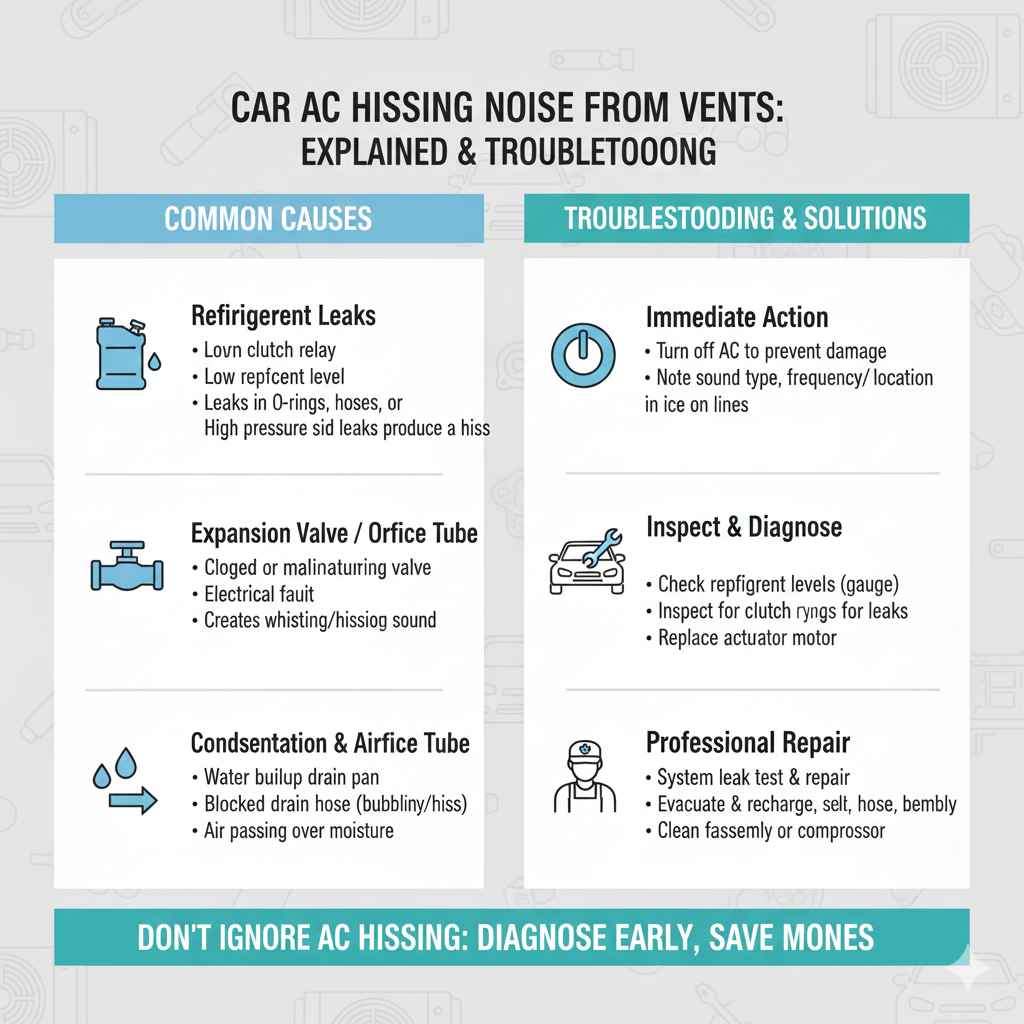
Several factors can lead to a hissing sound when your AC is turned on. Some of these are relatively easy to resolve, while others might require a mechanic’s touch. Recognizing these issues is the starting point for effective troubleshooting. The most common causes involve refrigerant, the core of how your AC works. It’s the lifeblood of the cooling system, and any disruption in its flow can cause problems, including that pesky hiss. Let’s explore the typical issues that might cause it:
Refrigerant Leaks: Refrigerant leaks are a frequent cause of hissing. The refrigerant, also known as Freon, is what makes the air cold. If there’s a leak in the system, the refrigerant escapes, and you’ll often hear a hissing sound.
Refrigerant is a gas that changes between a liquid and a gas to cool your car’s air. If there is a leak, this gas escapes, and the system loses its cooling abilities. It often happens in places where parts connect, such as hoses, seals, or the AC compressor. Common signs include a weak cooling effect, and possibly water or oil stains around AC components. Without enough refrigerant, your AC simply can’t function correctly, making the hissing sound even more noticeable. To find the source, a technician usually uses a special dye that highlights the leak points under UV light. Fixing leaks often involves replacing the faulty parts and refilling the refrigerant.
Air in the System: Air trapped inside the AC system can create a hissing sound. When air mixes with the refrigerant, it can change the pressure and performance. This can reduce the cooling capacity of the AC unit.
Your air conditioning system is designed to work with refrigerant only, and any air trapped inside can cause problems. Air gets in during repairs or if there’s a leak. This air takes up space that refrigerant should fill, impacting how well your AC cools. You will likely feel a decrease in cooling power, and the hissing will start. Getting rid of the trapped air usually involves a process called evacuation. A mechanic removes the air, adds refrigerant, and seals the system so it can function efficiently again.
Expansion Valve Issues: The expansion valve regulates the flow of refrigerant. If it’s blocked or not working well, it can cause hissing. This part is key for controlling how much refrigerant enters the evaporator, which is what actually makes the air cold.
The expansion valve is a tiny but essential part of your AC. It manages the flow of refrigerant to the evaporator, where the refrigerant changes from liquid to gas and absorbs heat, cooling the air. A faulty valve may create a hissing sound, and the AC could blow warm or inconsistent air. Clogs can happen because of dirt or debris in the system. Replacing the expansion valve and cleaning out the system are ways to fix this. Ignoring a faulty expansion valve can lead to more serious problems, so getting it checked out quickly is important.
Compressor Problems: If the AC compressor is struggling, it can create a hissing sound. The compressor pumps refrigerant throughout the system, and when it fails, it can’t do its job properly.
The compressor is the heart of your car’s AC. It compresses refrigerant, making it flow through the system to cool the air. When it has issues, the compressor might hiss. The sound might get louder as the compressor works harder. Compressor failure can happen because of internal damage, lack of lubrication, or general wear and tear. Compressor replacement is usually a job for a professional, as it requires special tools and expertise. After the compressor is replaced, the system must also be thoroughly cleaned to avoid future failures.
Understanding How Your Car’s AC Works
Your car’s air conditioning system is a closed loop, and each component plays a special role in the cooling process. This process turns hot air into cool air through a series of steps. Knowing these steps helps in seeing why a problem in one area can lead to a hissing sound or cooling trouble. Understanding the AC’s setup is essential for troubleshooting any noise it may produce, making it easier to identify the source of the problem.
Key Components and Their Roles
Several components work together to make the AC function. Each part of the system is designed to handle a certain job in cooling the air. These parts work hand-in-hand to get the job done. Here’s a look at the important pieces that make up your AC system, and how they contribute to the cooling action:
Compressor: This is like the heart of the system, pumping refrigerant around the system.
The compressor’s job is to compress the refrigerant, turning it into a high-pressure gas. This high-pressure gas is then pumped into the condenser. Without a functioning compressor, the AC cannot cool the air because the refrigerant won’t move.
Condenser: The condenser is where the refrigerant releases heat and changes into a liquid. It’s usually located in front of the radiator.
Think of the condenser like a radiator for your AC. As hot, high-pressure refrigerant flows through the condenser, it loses heat to the air passing over it. This change turns the refrigerant from a gas into a high-pressure liquid, which is essential for the cooling cycle. The condenser has fins that increase surface area, improving heat exchange. A faulty condenser can lead to poor cooling, which may increase the chance of hearing unusual sounds.
Expansion Valve/Orifice Tube: This valve controls the flow of refrigerant, changing its pressure and temperature before it reaches the evaporator.
The expansion valve is a critical control point in the AC system, lowering the pressure of the liquid refrigerant before it enters the evaporator. This pressure drop causes the refrigerant to expand, which cools it further. A blocked or broken expansion valve can affect the cooling capacity, leading to poor AC performance and other problems.
Evaporator: Inside the car, the evaporator absorbs heat from the air, cooling it down. This is where the magic happens, and the air gets cold.
The evaporator is located inside your car’s dashboard. It is where the liquid refrigerant absorbs heat from the air inside the car, creating the cooling effect. As the refrigerant absorbs heat, it turns into a gas, removing heat and cooling the air that is blown into the cabin. The evaporator’s fins help maximize the surface area for efficient heat exchange.
Refrigerant: This special fluid absorbs and releases heat, allowing the AC system to cool the air.
Refrigerant, once commonly called Freon, is the key ingredient that makes your AC work. It’s a special fluid that changes between a liquid and a gas, absorbing heat when it evaporates (turns into gas) and releasing it when it condenses (turns back to liquid). It moves through the system, absorbing heat from the air inside your car (at the evaporator) and releasing heat outside your car (at the condenser).
The Cooling Process Explained
The air conditioning system is a continuous cycle. It takes hot air and makes it cold by constantly moving refrigerant. Each step in the cycle builds on the last, ensuring that you get a cool and comfortable ride, even in hot weather. Knowing the cooling process helps understand how the parts work together and why specific problems, such as a hiss, happen.
Compression: The compressor squeezes the refrigerant, raising its pressure and temperature.
The compressor takes low-pressure, gaseous refrigerant and compresses it. This step increases its pressure and temperature. The refrigerant becomes hot and ready to move to the next part of the process.
Condensation: The hot, high-pressure refrigerant flows to the condenser, where it releases heat and turns into a high-pressure liquid.
The condenser, often located in front of the radiator, cools the hot refrigerant. The hot refrigerant releases its heat, turning from a gas into a high-pressure liquid. This is like how the radiator cools the engine, but in the case of the AC, the air absorbs the heat.
Expansion: The high-pressure liquid refrigerant moves through the expansion valve or orifice tube, which lowers its pressure and temperature.
The expansion valve lowers the pressure and the temperature of the refrigerant. This prepares the refrigerant to absorb heat inside the vehicle. The sudden drop in pressure causes the refrigerant to expand, getting cooler.
Evaporation: The cold, low-pressure refrigerant enters the evaporator, where it absorbs heat from the air inside the car. This cools the air, and the refrigerant turns back into a gas.
Inside the evaporator, located in the dashboard, the cool, low-pressure refrigerant absorbs heat from the cabin air. The air is then cooled and blown into the car. As the refrigerant absorbs heat, it changes back into a gas, ready to start the cycle all over again.
Cycle Repeat: The low-pressure, gaseous refrigerant goes back to the compressor, and the cycle continues.
The gaseous refrigerant returns to the compressor, where the cycle restarts. This continuous process keeps the car cool as long as the AC is running.
Diagnosing the Car AC Hissing Noise
Diagnosing the cause of a hissing noise helps you determine the right steps to fix the problem. You might find some issues yourself, but others need a professional touch. The following steps will assist you in figuring out what’s causing the hiss in your AC. Accurate diagnosis saves time and gets your AC back to working properly.
Performing a Visual Inspection
Before any major work, a quick look around can help spot obvious issues. This involves checking for visible damage, leaks, or anything out of place. This may help point you in the right direction. While a visual check might not solve every problem, it can often reveal the most obvious causes, such as visible oil stains that hint at refrigerant leaks.
Check for Leaks: Look for oily spots on AC components, as this could suggest refrigerant leaks.
Refrigerant leaks are often visible because the refrigerant carries lubricating oil throughout the system. Look closely at the compressor, hoses, and condenser for signs of oil. Leaks are typically found at connections or seals. If you find oily residue, this usually signals a leak and should be addressed promptly to maintain the system’s performance. Keep an eye out for these spots regularly.
Inspect Hoses and Connections: Examine hoses and connections for cracks, breaks, or loose fittings.
Carefully check all the AC hoses and their connections for any signs of wear, damage, or looseness. Hoses can crack over time due to heat and pressure. Loose connections often lead to leaks. Look at the fittings and connectors where the hoses attach to various components. Tightening any loose fittings or replacing damaged hoses or connections can resolve the hissing or cooling issues. Regularly checking these parts can prevent larger problems later.
Check the Compressor: Listen near the compressor for the hissing sound, and check for any unusual noises.
The compressor is a common source of AC issues. When the AC is on, listen closely near the compressor for the hissing sound. Look for other unusual noises, such as clanking or grinding, which suggest mechanical failure. The compressor may also have visible signs of wear, like oil leaks. If the hissing is loudest near the compressor or other weird noises are present, professional inspection is recommended, and the compressor might need replacement.
Testing the AC System’s Performance
Checking the AC’s cooling power is a quick way to find any issues. This helps to see if your AC is still cooling the car effectively. Measure the temperature, and see how the airflow is. Performing a quick test helps to know if the AC is cooling and if it is, how well it is working. This is usually done with a thermometer and by feeling the airflow coming out of the vents. This simple test is a good starting point to identify whether the AC is functioning properly. This simple test will give you important information to know if the AC needs further investigation.
Temperature Check: Use a thermometer to measure the air temperature coming out of the vents.
Insert a thermometer into an air vent when the AC is running on full blast. Note the temperature reading after a few minutes. A well-functioning AC should produce air that is significantly cooler than the outside air. If the air is not cool, or if the temperature is close to the outside air temperature, it indicates a problem such as low refrigerant or an issue with the system.
Check Airflow: Feel the airflow from the vents; weak airflow may signal a clog or fan issue.
While the AC is on, feel the airflow from the vents. Reduced or weak airflow often points to an issue, such as a blockage in the system or a problem with the blower fan. Blockages could include debris in the evaporator or a faulty fan motor. Check for any restriction that may be blocking the air. If the airflow is weak or uneven, you may need a system inspection by a technician to locate the issue.
Listen for Unusual Noises: Besides hissing, listen for other sounds like clanking or rattling.
Pay attention to any additional unusual noises, besides the hissing, while the AC is running. Clanking or rattling may indicate mechanical issues with the compressor or other moving parts. These sounds often suggest the need for immediate attention. Identify the location of any additional sounds, and this may help to narrow down the source of the problem. If you hear any strange noises, it’s best to have a professional check the system.
Professional Inspection and Troubleshooting
Sometimes, DIY fixes won’t be enough. Certain problems are best left to the experts. Trained professionals can use specialized tools and techniques to identify and fix issues that the average person can’t. They possess the knowledge and equipment necessary for in-depth checks, like refrigerant leak detection and system flushing. Seeking professional help ensures your AC is properly repaired and ready to run efficiently.
Refrigerant Leak Detection: Technicians can use specialized tools to detect refrigerant leaks.
Professionals use specialized tools, such as electronic leak detectors or UV dye, to find refrigerant leaks. The electronic detectors can locate very small leaks by sensing escaping refrigerant. UV dye is injected into the system, and the technician uses a UV light to find where the dye has leaked, showing the leak locations. These tools are much more effective at identifying leaks that may be difficult to spot during a visual inspection. Accurate leak detection is key to a proper AC repair.
Pressure Testing: The system is tested under pressure to pinpoint leaks or blockage.
Pressure testing involves applying compressed air or nitrogen to the AC system to check for leaks or blockages. This test is performed with a gauge to measure pressure drops. Any significant drop in pressure indicates a leak or obstruction. Pressure testing helps to identify problems, especially in areas where visual inspection is limited. By testing the system’s ability to hold pressure, technicians can assess its overall condition and identify issues.
Component Testing: Each component is tested to see if it’s working correctly, helping find specific problems.
Professionals will test each component of the AC system to confirm it is working correctly. This may involve using multimeters, pressure gauges, and other tools to measure performance. The compressor, condenser, evaporator, and other parts are tested to evaluate their functionality. Component testing allows the technician to identify specific issues, such as a faulty compressor or a clogged expansion valve. With proper testing, the technician can make accurate repairs.
Can You Fix the Car AC Hissing Noise Yourself?
You may be able to fix some AC problems yourself, especially if the issue is straightforward, but it depends on your comfort level with car repairs. Some tasks are simple, such as replacing a hose. Other tasks, like fixing refrigerant leaks or repairing the compressor, require specific tools and knowledge. Weigh the difficulty of the repair against your experience and the tools you have. If the problem seems complex or requires specialized equipment, getting professional help is the best option.
DIY Tasks for AC Troubleshooting
Some simpler AC problems can be handled at home if you have the right tools and are comfortable doing basic car repairs. These tasks usually involve checking for loose connections, replacing filters, or other quick fixes. These fixes don’t require a lot of special equipment or experience. Being able to do these tasks may save you some money and give you a better understanding of how your AC works.
Checking for Loose Connections: Tighten any loose connections you find on hoses or fittings.
Inspect the AC hoses and fittings, and use a wrench or pliers to tighten any loose connections. Loose connections can lead to leaks, creating hissing sounds and reducing the AC’s cooling power. You do not need a lot of skill for this; however, make sure you don’t over-tighten, which could cause damage. This step can often resolve minor issues. Regular checks help to prevent future problems.
Replacing Cabin Air Filter: A clogged filter can affect airflow; replacing it can improve performance.
The cabin air filter is responsible for cleaning the air that goes through your AC. It can become clogged with dust and debris, reducing airflow and affecting how well the AC cools the car. Replacing the filter is a simple job, often accessible behind the glove compartment. Replacing the filter improves the airflow and can help make your AC run more efficiently. Checking the filter regularly ensures that it keeps working well.
Checking the Condenser for Debris: Remove any leaves or debris blocking airflow through the condenser.
Check the condenser, which is usually in front of the radiator, for leaves, bugs, and other debris that can obstruct airflow. Reduced airflow reduces the AC’s cooling ability. Use a brush or compressed air to clean the condenser, and make sure that the fins are clear. This quick check can significantly improve AC performance. Keeping the condenser clean allows for proper heat exchange, making your AC function effectively.
When to Seek Professional Help
While some troubleshooting is safe to do yourself, there are tasks where a professional’s experience is needed. Handling refrigerant, working on the compressor, and fixing other system components needs special skills. To make sure you’re being safe and the job is done right, it’s best to call in a professional when the repair goes beyond simple checks.
Handling Refrigerant: Refrigerant can be harmful; handling it requires proper training and equipment.
Refrigerant, once commonly known as Freon, can be hazardous and can harm the environment if released into the atmosphere. Working with refrigerant requires training, the correct tools, and knowledge to prevent harm. Always have a professional manage refrigerant to ensure safety and compliance with all laws and regulations. Incorrect handling may result in legal penalties.
Compressor and Expansion Valve Replacement: These repairs typically require specialized tools and expertise.
Replacing the compressor and expansion valve is usually not a job for a novice. These repairs involve removing and replacing key components of the AC system, and you’ll need special tools, such as refrigerant recovery equipment and pressure gauges. Incorrect installation or improper handling of parts can lead to system failure and other problems. Leave these repairs to the professionals to be sure that the job is done right and the AC system functions correctly.
Complex Electrical Issues: Electrical problems can be tricky; professionals have the experience to fix them.
AC systems have electrical components, such as wiring, sensors, and control modules. Electrical issues can be hard to diagnose and fix because they require special diagnostic tools and understanding of how the car’s electrical system works. A professional has the experience and equipment to find and fix electrical problems, preventing further damage to your car. Don’t attempt these repairs unless you have a good understanding of electrical systems.
Addressing the Car AC Hissing Noise: Possible Solutions
Once you’ve found the cause of the hissing, you can start to address it. Based on the diagnosis, you’ll need a suitable plan to get your AC working again. The actions you take will vary based on the root cause and the level of damage. From simple fixes, like replacing a hose, to more involved tasks, here are some options to resolve your AC issues.
Repairing or Replacing Damaged Components
When you have found damaged parts, you’ll need to repair or replace them. The repairs might involve replacing a leaky hose, fixing the condenser, or getting a new compressor. Making these repairs ensures that the AC system functions correctly and has no leaks. This is a vital step in fixing the hissing and restoring the cooling power.
Fixing Refrigerant Leaks: Locate and repair leaks, then recharge the system with refrigerant.
If you find a leak, the first step is to fix it. This may involve replacing the faulty parts, such as hoses or seals. After you have fixed the leak, the system needs to be recharged with the right amount of refrigerant. A professional can use the appropriate tools to remove any remaining refrigerant and fill the system. Make sure you fully understand how to fix the leak, and that you have the right tools. Failing to do so can cause more problems or be unsafe. Always consult a professional if you feel unsure about any part of the process.
Replacing the Compressor: If the compressor is faulty, it may need to be replaced.
If the compressor is not working properly, such as when you hear loud noises, or it’s not compressing the refrigerant, it might need to be replaced. Compressor replacement often requires an expert. The technician removes the old compressor, installs the new one, and flushes the system to eliminate contaminants. Then, the technician adds the right amount of refrigerant to make it work. Replacing the compressor is an important fix if it’s making the hissing sounds and not doing its job.
Replacing the Expansion Valve: A faulty expansion valve can prevent cooling.
If the expansion valve is clogged or broken, the AC will not work properly. The expansion valve regulates the flow of refrigerant. Replacement is often best handled by a professional, who can ensure the new valve is installed correctly and the system is operating optimally. Before installing a new valve, the technician should also inspect the system for debris. Replacing the expansion valve can restore proper cooling function.
Clearing Blockages and Obstructions
Blockages or debris can create hissing noises and affect how your AC works. You may need to clean and clear the components to restore the cooling. Regular cleaning and upkeep helps your AC operate efficiently. This usually involves flushing the system and making sure that there is proper air flow.
Flushing the AC System: Clear out debris or contaminants that may be causing problems.
Flushing the AC system means using a special cleaning solution to eliminate debris, particles, and other contaminants that can clog the system. Debris can block the expansion valve or other parts, which causes hissing sounds and poor cooling. A professional usually does the flushing, using special equipment to move the cleaning solution through the system. This step is important for getting rid of contaminants and allowing the AC to run smoothly.
Cleaning the Condenser and Evaporator: Remove any dirt or debris that is stopping proper airflow.
Make sure the condenser and evaporator are clear of any dirt or debris that is stopping airflow. Clogged condensers and evaporators will stop the AC from functioning efficiently. Using compressed air or a brush is a good way to get rid of any blocks. Doing this regularly keeps the AC working and gives you good cooling. Regular cleaning prevents performance problems and increases the life of your AC system.
Checking and Cleaning the Blower Motor and Vents: Clear out debris to help improve airflow.
You should inspect the blower motor and the vents for any signs of obstruction. Debris can accumulate in these areas, reducing airflow and affecting cooling. Use a vacuum cleaner or compressed air to remove debris. This improves the performance of the AC and helps deliver cool air through the vents. This simple maintenance step is important to ensure the efficient operation of your AC and to provide proper airflow.
Recharging and Testing the System
Once repairs are complete, the AC system needs to be tested and recharged to confirm it works correctly. Recharging makes sure the AC has the right amount of refrigerant. Before adding refrigerant, any leaks should be fixed. This step guarantees the AC’s effective operation. It also ensures that you can get cool air in the car.
Evacuating the System: Remove air and moisture before recharging.
Before recharging, it’s essential to remove any air and moisture that may have gotten into the system. This is done by vacuuming the system. Removing air and moisture helps to ensure that the AC functions properly. Proper evacuation removes contaminants that might have entered during the repair. Use a vacuum pump to create a vacuum, eliminating the air and moisture before recharging the AC.
Adding the Correct Refrigerant: Use the right type and amount of refrigerant as specified by the manufacturer.
Use the specific type and correct amount of refrigerant the car maker recommends. Putting in the incorrect refrigerant type may cause damage. When you add the refrigerant, make sure you follow the manufacturer’s instructions. A professional can easily do this, but make sure you fully understand what is needed. Having the right amount of refrigerant is vital for the proper operation of the AC, and getting this step right helps to ensure effective cooling.
Testing Performance: Run the AC and check for cool air and proper function.
After recharging, run the AC to check that it works. Verify that cool air is coming from the vents. Use a thermometer to check the temperature of the air. If the AC is working correctly, there should be a good amount of cold air, with a big difference from the outside temperature. Listen for any sounds, and make sure that the airflow is strong. This ensures that the AC is working as expected and providing you with cool air.
Frequently Asked Questions
Question: Why is my AC hissing only when it’s turned on?
Answer: The hissing only when you turn the AC on often means there is an issue with refrigerant flow, such as a leak or blockage that starts to become active when the system is running.
Question: What does a hissing sound from my car’s AC indicate?
Answer: A hissing noise from your car’s AC commonly suggests that there’s a leak in the refrigerant, air in the system, or a problem with the expansion valve.
Question: How can I tell if my AC has a refrigerant leak?
Answer: You might notice oily spots around the AC components, a decrease in cooling power, or the hissing sound; these may indicate a refrigerant leak.
Question: Can I add refrigerant to my car’s AC myself?
Answer: You can add refrigerant, but make sure you understand the instructions and use the right type and amount. Make sure to fix any leaks first.
Question: When should I bring my car to a mechanic for AC issues?
Answer: If you’re not comfortable with car repairs or the problem seems complex, or you notice more unusual noises, it’s best to seek help from a professional.
Final Thoughts
If your car’s AC is hissing, you now know a bit more about what might be going on. This often means there is an issue with your refrigerant, a potential leak, or something blocking the system. Sometimes the fix is as simple as tightening a connection, while at other times, a professional inspection is needed. Armed with this information, you can explore the issue to see what might be going on. Always make sure safety is a priority, and do not hesitate to ask a professional when you’re not sure of something. Take action, and get back to enjoying a comfortable, cool ride!