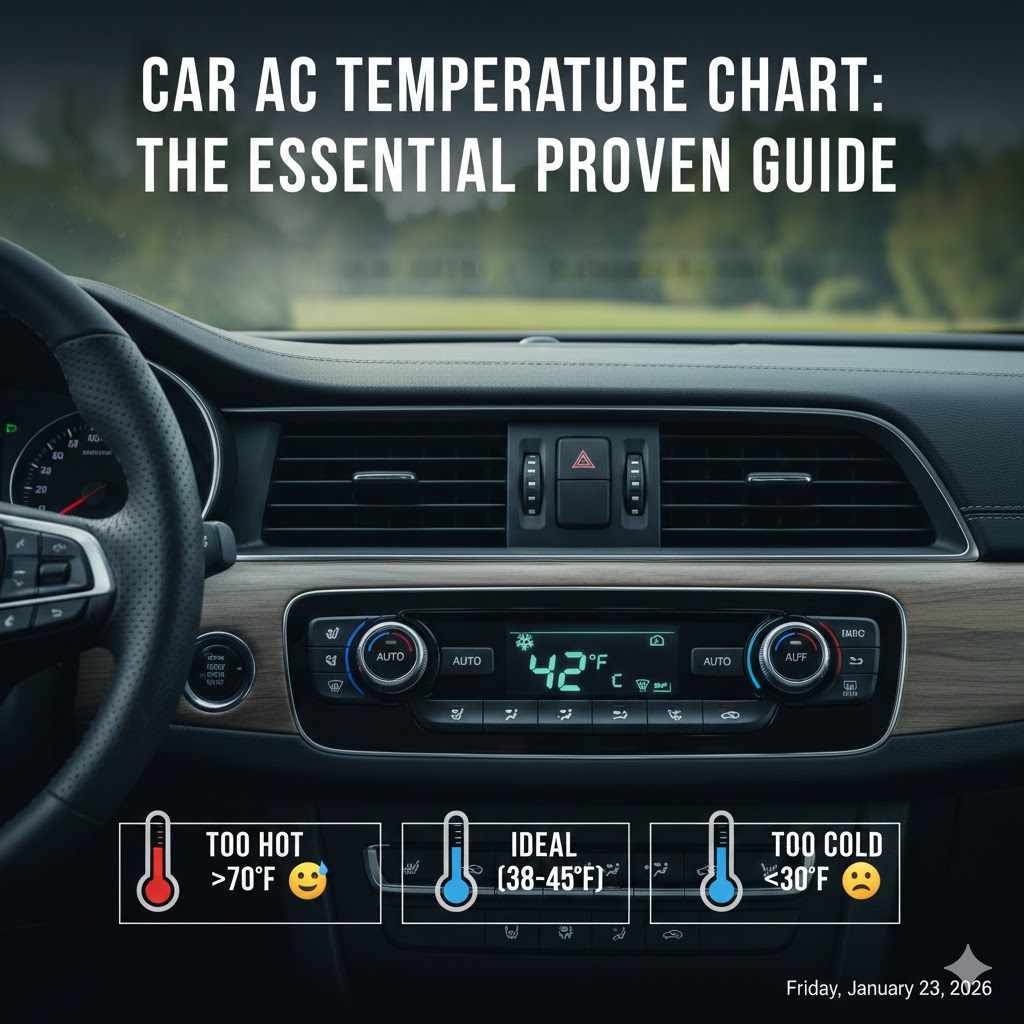
Car Ac Temperature Chart: The Essential Proven Guide
A proper car AC temperature chart shows that the air from your vents should be 35-40°F (about 20°C) cooler than the outside air. For example, on a 90°F day, your AC should blow air between 45-55°F. This simple test helps you quickly check if your AC is working correctly without any special tools.
Is your car’s air conditioner blowing warm air on a hot day? It is one of the most frustrating feelings. You turn the knob, expect a blast of cold air, but get a weak, lukewarm breeze instead. You might wonder if it’s a big, expensive problem. The good news is, you can find out for yourself.
You don’t need to be a mechanic to check your AC’s health. There is a simple and proven tool called a car AC temperature chart. This guide will walk you through every step of using one. We will make it easy to understand, so you can feel confident about your car. Let’s learn how to find out what’s really going on with your AC.
What is a Car AC Temperature Chart and Why Do You Need One?
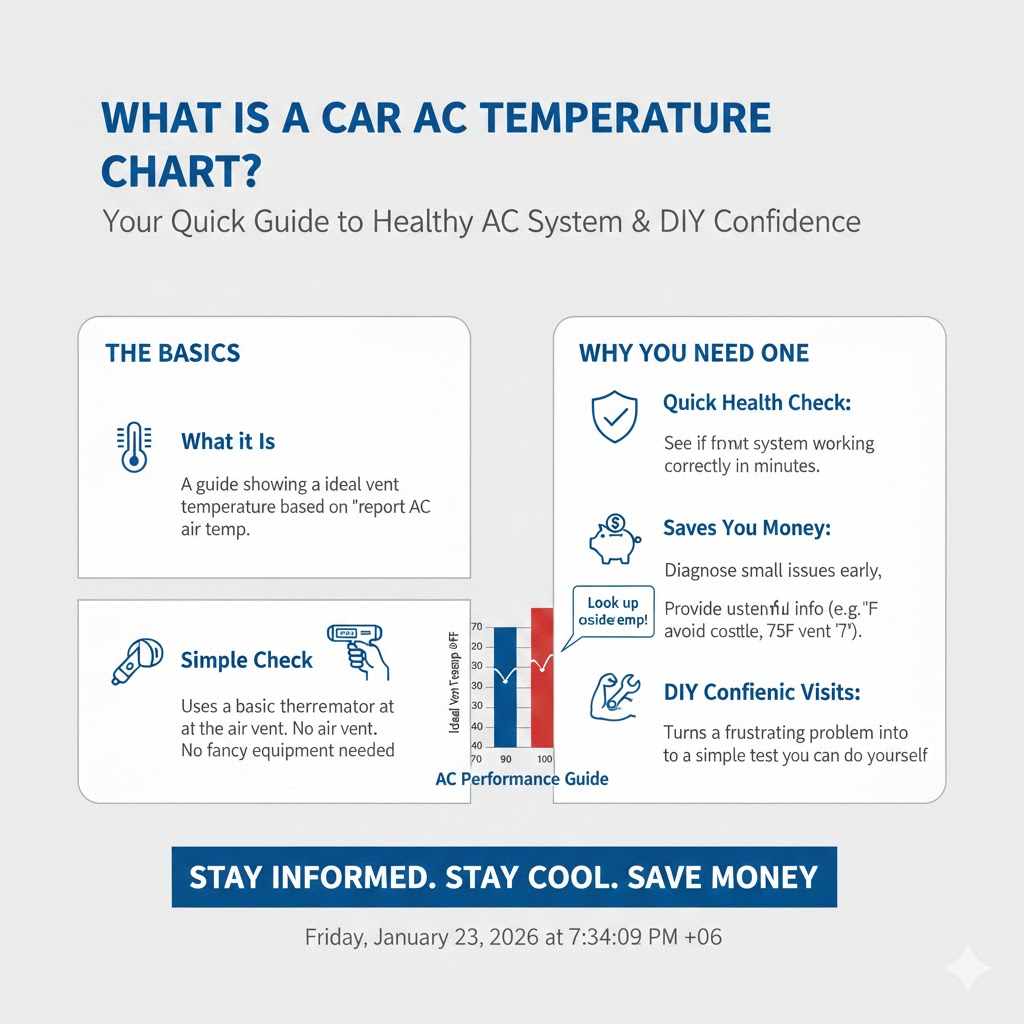
Think of a car AC temperature chart as a report card for your air conditioning. It’s a simple guide that tells you how cold the air coming out of your vents should be, based on the temperature outside. It’s a powerful tool for any car owner, especially if you are new to car care.
Here’s why it’s so helpful:
- It’s a quick health check. In just a few minutes, you can get a clear idea if your AC system is working as it should.
- It saves you money. Before you rush to a mechanic, this chart helps you see if there’s a real problem. Sometimes, the issue is small and easy to fix.
- It gives you confidence. When you do need a mechanic, you can go in with useful information. You can say, “It’s 90 degrees outside, but my vent air is only 75 degrees.” This helps the mechanic diagnose the problem faster.
- It’s incredibly simple. You don’t need fancy equipment. All you need is a basic thermometer and the chart in this guide.
In short, this chart removes the guesswork. It turns a frustrating problem into a simple test you can do yourself.
Understanding the Basics: How Your Car’s AC Works
You don’t need to know every nut and bolt, but a basic idea of how your AC works can be very helpful. Think of your car’s AC system like a refrigerator. Its job is not to create cold air, but to move heat from inside your car to the outside.
It does this using a special gas called refrigerant. This refrigerant cycles through a few key parts:
- Compressor: This is the heart of the system. It pumps the refrigerant and puts it under high pressure.
- Condenser: Located at the front of your car, usually in front of the radiator. It looks like a small radiator itself. Here, the hot, high-pressure refrigerant releases its heat into the outside air.
- Evaporator: This part is hidden inside your dashboard. The now-cool refrigerant flows into it, and as your car’s fan blows cabin air over it, the refrigerant absorbs the heat from the air.
- The Result: The air that comes out of your vents is now much colder because its heat has been removed.
When one of these parts isn’t working right, or if the refrigerant level is low, the system can’t move heat effectively. That’s when you feel warm air coming from your vents.
Your Step-by-Step Guide to Using a Car AC Temperature Chart
Ready to test your AC? This process is fast, easy, and will give you clear results. Just follow these simple steps.
What You’ll Need (The Tools)
You only need one simple tool for this test. Don’t worry, it’s cheap and easy to find.
- A Thermometer: The best kind is a digital probe thermometer, often used for cooking. A simple dial thermometer will also work. You can find these at most grocery or hardware stores.
- The Chart: We have provided a clear chart for you in the next section!
Step 1: Prepare Your Car
First, we need to set up the car for an accurate test.
- Park your car in a safe place. If it’s a very sunny day, try to find a shady spot. This prevents the sun from heating up the dashboard and giving you a false reading.
- Close all the doors and windows. We want to measure the AC’s performance inside a closed cabin.
- Start the engine and let it run.
Step 2: Set Your AC to the Right Settings
To get the best reading, we need to push the AC system to work its hardest.
- Turn the AC on MAX. Set the temperature control to the coldest possible setting.
- Turn the fan to HIGH. Set the fan speed to its highest level.
- Select “Recirculate” mode. This button usually has a symbol of a car with a looping arrow inside it. This setting re-cools the air already inside your car, which allows the AC to get much colder.
- Choose the dash vents. Direct the airflow to the vents in the middle of your dashboard.
Step 3: Measure the Temperature
Now it’s time to get our reading.
- Let the AC run on these settings for at least 5 minutes. This gives the system time to stabilize and reach its coldest temperature.
- Take your thermometer and gently insert it into one of the center dash vents. Push it in about 2-3 inches to get an accurate reading of the air coming out.
- Wait for the thermometer’s reading to settle. This might take a minute or two.
- While you wait, check the outside air temperature. Most modern cars display this on the dashboard. If not, you can use a weather app on your phone.
Step 4: Compare Your Readings to the Chart
This is the moment of truth! Take the temperature from your vent and the temperature from outside and compare them to the chart below. This will tell you the health of your AC system.
The Car AC Performance Temperature Chart
Use this chart to see if your AC is in good shape. Find the current outside (ambient) temperature in the left column. The right column shows the acceptable temperature range for the air blowing from your center vent. A healthy AC system will produce a temperature drop of about 35-40°F (or around 20°C) compared to the outside air.
| Outside Air Temperature | Expected Center Vent Temperature |
|---|---|
| 70°F (21°C) | 35-40°F (2-4°C) |
| 80°F (27°C) | 40-45°F (4-7°C) |
| 90°F (32°C) | 45-50°F (7-10°C) |
| 100°F (38°C) | 50-55°F (10-13°C) |
| 110°F (43°C) | 55-60°F (13-16°C) |
Note: High humidity can make your AC work harder, so your vent temperature might be a few degrees higher on a very humid day. This is normal.
What Do Your Results Mean? Interpreting the Numbers
So, you have your numbers. What do they tell you? Let’s break it down into three simple zones.
Reading is in the Green Zone (Perfect!)
If your vent temperature falls within the range on the chart, congratulations! Your AC system is working properly. The refrigerant level is likely good, and the main components are doing their job. You can enjoy the cool air with peace of mind.
Reading is a Little High (Yellow Zone)
What if your vent temperature is 5-10 degrees warmer than the chart suggests? For example, it’s 90°F outside, but your vent is blowing at 60°F. This means your AC is working, but not as well as it should.
This could be caused by a few minor issues you might be able to fix yourself:
- A Clogged Cabin Air Filter: This is a very common and easy fix. The cabin air filter cleans the air entering your car. When it gets clogged with dust and leaves, it restricts airflow, making your AC feel weak. Replacing it is often a 10-minute job.
- A Dirty Condenser: Check the condenser at the front of your car. If it’s covered in bugs, dirt, or leaves, it can’t release heat properly. You can gently rinse it with a garden hose (never a pressure washer!) to clean it.
Reading is Way Too High (Red Zone)
If your vent temperature is more than 15 degrees warmer than the chart recommends, or if it’s blowing barely cool or warm air, there is a definite problem with your AC system. You now have solid data to show that it’s not just your imagination.
Common causes for this include:
- Low Refrigerant: This is the most common cause of a poorly performing AC. Low refrigerant almost always means there is a leak somewhere in the system.
- Failing Compressor: The compressor can wear out over time. If it’s not pumping correctly, the system won’t cool.
- Electrical Problems: A blown fuse, bad relay, or faulty sensor can prevent the AC clutch from engaging.
- Blend Door Actuator Issue: This is a small motor in your dash that directs air. If it’s stuck on the “heat” side, you’ll get warm air no matter what.
For these “Red Zone” issues, it’s usually best to see a qualified mechanic. But now, you are not going in blind. You have performed a real diagnostic test and can confidently explain the problem.
Common Causes of a Warm Car AC (And What You Can Do)
Let’s look a little deeper into the most common AC problems.
Low Refrigerant (The Most Common Culprit)
Your AC system is a sealed loop. The refrigerant shouldn’t just “run out.” If it’s low, there is a leak. While you can buy DIY AC recharge kits, use them with caution. Adding too much refrigerant can damage your system. Furthermore, these kits don’t fix the underlying leak. The U.S. Environmental Protection Agency (EPA) also has strict rules about handling refrigerants because they can be harmful to the environment. A professional will find and fix the leak before refilling the system properly.
Clogged Cabin Air Filter
This is the first thing you should check if your AC feels weak. The cabin air filter is usually located behind the glove box and is designed to be replaced easily. A new filter costs very little and can make a huge difference in airflow and cooling performance. Check your car’s owner’s manual for its location and replacement schedule.
Dirty or Blocked Condenser
The condenser sits right at the front of your car, where it can easily get clogged with debris. A blocked condenser is like trying to run a race while wearing a winter coat—it just can’t get rid of heat. Cleaning it is simple maintenance you can do at home. Just be gentle with the fins, as they can bend easily.
Failing Compressor or Other Components
If you hear strange noises like grinding or squealing when you turn on the AC, it could be a sign of a failing compressor. Problems with the compressor, its clutch, or other major components are more complex. These issues require specialized tools and knowledge, making them a job for a trusted mechanic.
Tips for Keeping Your Car AC Running Cold All Summer
A little prevention goes a long way. Follow these tips to keep your AC in top shape:
- Run it Regularly: Even in the winter, run your AC for about 10 minutes every few weeks. This helps circulate the refrigerant and oil, which keeps the seals lubricated and prevents them from drying out and causing leaks.
- Replace the Cabin Air Filter: Change it once a year or as recommended in your owner’s manual. This is the cheapest and easiest way to maintain good AC performance.
- Keep it Clean: Regularly wash the front of your car to keep the condenser free of bugs and grime.
- Park in the Shade: When possible, park in the shade or use a sunshade. A cooler car puts less strain on the AC system when you first start it up.
- Start Smart: On very hot days, open the windows for a minute or two when you first start driving to let the hot air escape. Then, close them and turn on the AC with the recirculate function.

Frequently Asked Questions (FAQ)
What should my car AC temp be?
A healthy car AC should blow air that is about 35-40°F (around 20°C) colder than the outside air. You can measure this by placing a thermometer in your center dashboard vent.
How cold should car AC be in 90 degree weather?
On a 90°F day, the air coming from your car’s vents should be between 45°F and 50°F. If it’s much warmer than that, your AC system may need service.
Why is my car AC not blowing cold air but the fan is working?
This usually points to a problem in the cooling system itself, not the fan. The most common causes are low refrigerant (due to a leak), a faulty AC compressor, or a problem with the condenser. The fan simply blows air; the AC system is what cools it.
Can I fix my car’s AC myself?
You can perform simple maintenance like changing the cabin air filter or cleaning the condenser. For issues like refrigerant leaks or replacing major parts like the compressor, it is best to see a professional, as these jobs require special tools and training.
How often should I get my car AC serviced?
You don’t need to service your AC on a fixed schedule if it’s working well. It’s best to have it checked if you notice it’s not cooling as effectively as it used to. A quick temperature test each spring can help you catch problems early.
Is it normal for the AC to drip water under the car?
Yes, this is completely normal! The AC system removes moisture from the air inside your car. This moisture (water) collects on the evaporator and then drains out through a tube underneath your car. Seeing a small puddle of water under your car on a hot, humid day is a sign that your AC is working correctly.
Does car AC use a lot of gas?
Yes, using your car’s AC does increase fuel consumption. The AC compressor is run by the engine, which requires extra power and therefore extra fuel. According to the U.S. Department of Energy, using the AC can reduce fuel economy, especially in stop-and-go traffic. However, on the highway, using the AC is often more efficient than opening the windows, which creates drag.
Conclusion
That hot, stuffy feeling from a weak car AC can ruin any drive. But now, you are armed with the knowledge to fight back. The car AC temperature chart is your first and best tool for understanding what’s happening inside your dashboard. It transforms a frustrating mystery into a simple, confidence-building check you can perform in your own driveway.
You’ve learned how to prepare your car, take an accurate reading, and interpret the results like a pro. Whether your AC is in the green, yellow, or red zone, you now know what the next steps are. This simple guide proves that you don’t need to be an expert to take control of your car’s health. You have the power to diagnose issues early, save money, and ensure you and your passengers have a cool, comfortable ride all summer long.