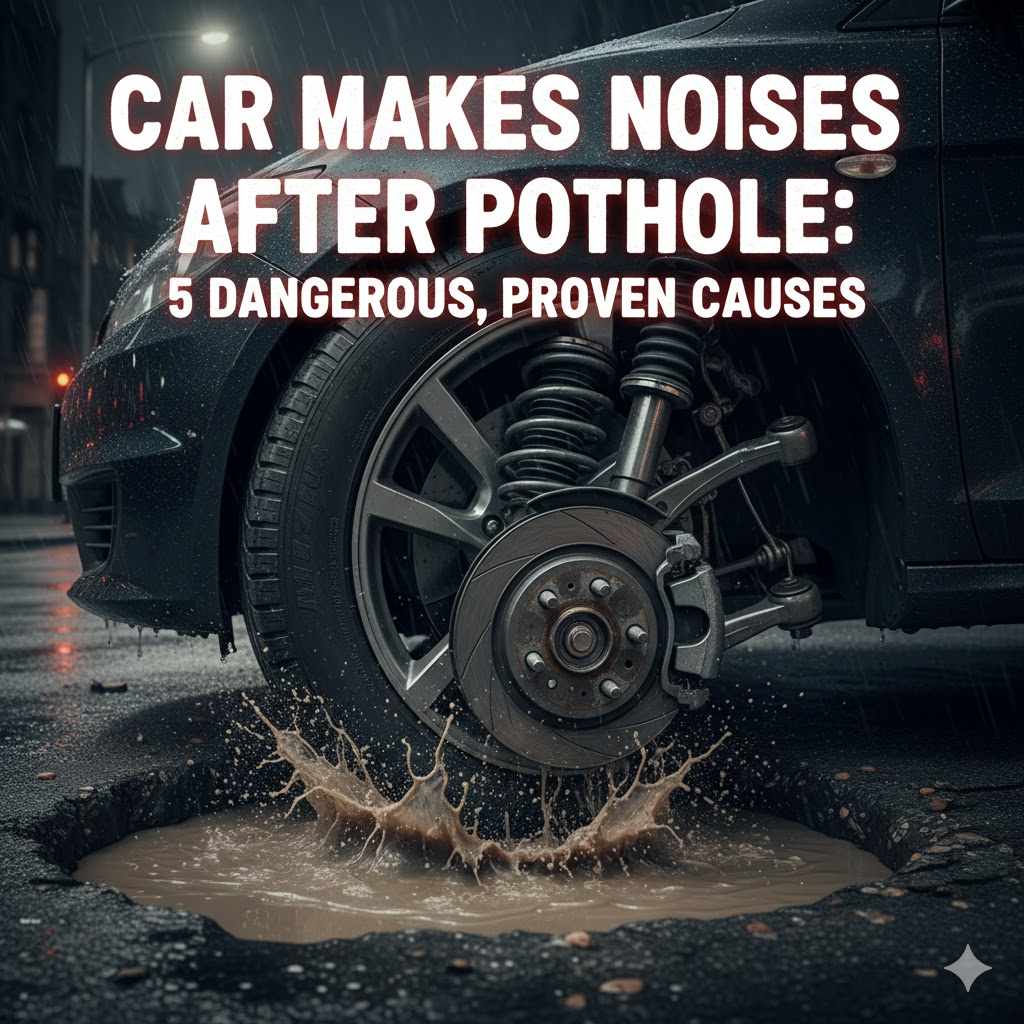
Car Makes Noises After Pothole: 5 Dangerous, Proven Causes
If your car makes noises after hitting a pothole, it’s often a sign of dangerous damage. The most common causes are a damaged tire or wheel, bent suspension parts like struts or control arms, a bad wheel alignment, a broken steering component like a tie rod, or a loose exhaust pipe. Do not ignore these sounds; get your car inspected immediately.
That sudden, jarring THUMP! Hitting a pothole is never fun. But the real worry starts when your car begins making strange noises afterward. A new clunk, rattle, or grinding sound can make any driver nervous. You start wondering, “Is my car safe to drive? Is this going to be an expensive fix?”
Don’t worry, I’m here to help. Those noises are your car’s way of telling you something is wrong, and listening is the first step. In this guide, we’ll walk through the five most common and dangerous reasons your car is making noise after a pothole encounter. I’ll explain everything in simple terms, so you can understand the problem and make a smart decision about getting it fixed.
Understanding Why Potholes Are So Harmful
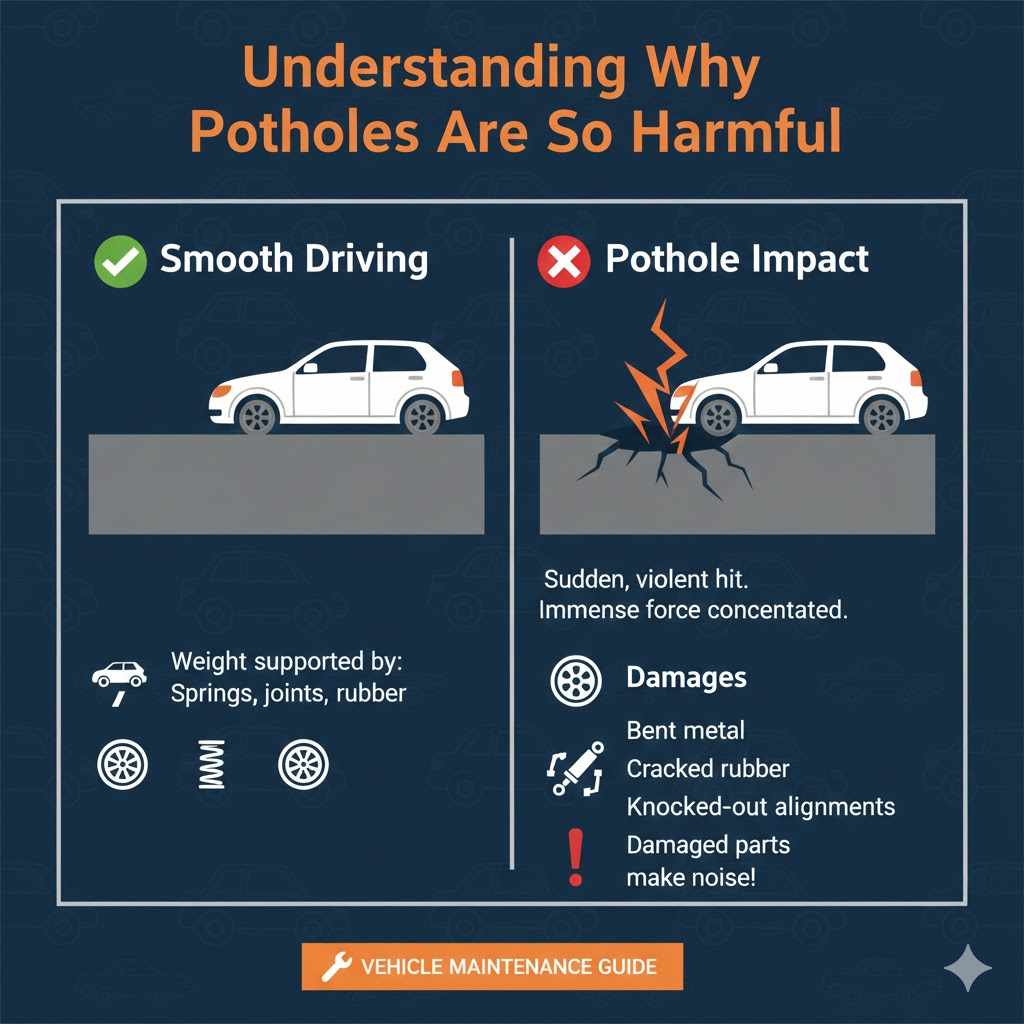
Before we dive into the specific noises, let’s quickly understand what happens when your tire hits a pothole. Imagine your car cruising along smoothly. Its weight is supported by a complex system of springs, joints, and rubber. When you hit a pothole, that entire system takes a sudden, violent hit. The force can be immense, like hitting your car’s underside with a sledgehammer.
This impact sends a shockwave through the tire, wheel, suspension, and steering components. While these parts are designed to be tough, the sharp, hard edge of a pothole can concentrate all that force into one small spot, leading to bent metal, cracked rubber, and knocked-out alignments. The noise you hear afterward is the sound of a damaged part that is no longer working correctly.
Cause 1: Damaged Tires and Wheels
The first and most obvious victim of a pothole is the tire and the metal wheel (or rim) it’s mounted on. This is your car’s first line of defense, and it takes the full force of the impact. Damage here is common and can be very dangerous if ignored.
What It Sounds and Feels Like
- Thumping or Womp-Womp Noise: A rhythmic thumping that gets faster as you speed up often points to a bulge or “aneurysm” on the tire’s sidewall. This is a weak spot where the internal layers of the tire have been damaged.
- Hissing Sound: If you hear a hissing noise, especially right after the impact, you likely have a puncture. The tire is losing air.
- Vibration or Shaking: A serious vibration felt in the steering wheel or through the whole car can mean the wheel itself is bent. It could also mean the impact knocked off the small metal weights used to balance your wheel, throwing it off-kilter.
Why It’s Dangerous
A tire bulge is a ticking time bomb. The weak spot can fail at any moment, leading to a sudden and dangerous tire blowout, especially at high speeds. A bent rim can cause a slow leak, prevent the tire from holding air properly, and lead to excessive vibration that damages other suspension parts over time. According to the National Highway Traffic Safety Administration (NHTSA), tire failure is a contributing factor in thousands of crashes each year.
What You Can Do
- Pull Over Safely: As soon as you can, find a safe place to stop.
- Visually Inspect: Look closely at the tire that hit the pothole. Run your hand carefully along the sidewall (the side of the tire) to feel for any bumps or bulges. Look at the metal rim for any cracks, dents, or flat spots.
- Check Tire Pressure: If you have a tire pressure gauge, check the pressure. A rapid loss of pressure confirms a leak.
- Change to the Spare: If you see a bulge or a bent rim, it’s safest to put on your spare tire before driving any further. Do not drive on a tire with a visible sidewall bulge.
Cause 2: Bent or Broken Suspension Components
Your car’s suspension is like its skeletal system. It connects the wheels to the car’s body and is designed to absorb bumps for a smooth ride. Key parts include struts, shock absorbers, and control arms. A hard pothole hit can bend or break these critical components.
What It Sounds and Feels Like
- Clunking or Knocking: A deep clunking sound, especially when you go over smaller bumps or turn, is a classic sign of a damaged suspension part. This could be a broken ball joint or a damaged control arm.
- Rattling or Banging: A loose, rattling noise from one corner of the car suggests a part has been knocked loose or broken, like a sway bar link.
- Bouncy Ride: If your car suddenly feels extra bouncy or “floaty” after the pothole, you may have damaged a strut or shock absorber. You might see oily fluid leaking from the strut body.
- The Car Leans: If you notice one corner of the car is sitting lower than the others, you could have a broken spring or a completely failed strut.
Why It’s Dangerous
The suspension’s job is to keep your tires planted firmly on the road. When a part is damaged, your car loses its ability to handle properly. It might sway uncontrollably during turns, nosedive when you brake, or even lose traction on a bumpy road. A failed control arm or ball joint can cause you to lose control of the wheel entirely, leading to a serious accident.
What You Can Do
While a full suspension diagnosis is best left to a mechanic, you can do a quick check.
- The “Bounce Test”: When the car is parked, push down hard on the corner of the car that hit the pothole. Push a few times to get it bouncing, then let go. If it bounces more than two or three times before settling, the shock absorber or strut is likely worn out or damaged.
- Visual Check: Look under the car at the suspension components. Do you see any parts that are obviously bent or broken? Are there any fresh leaks of oily fluid around the tall, spring-like struts?
| Noise Description | Possible Cause | Urgency Level |
|---|---|---|
| Rhythmic Thumping (gets faster with speed) | Tire Sidewall Bulge | High – Stop driving immediately |
| Clunking or Knocking Over Bumps | Suspension Damage (Control Arm, Ball Joint) | High – Inspect as soon as possible |
| Scraping or Grinding | Bent Brake Dust Shield or Damaged Undercarriage | Medium – Inspect soon |
| Loud Roaring or Rattling from Underneath | Damaged Exhaust System | Medium – Can be a safety hazard (fumes) |
| Squealing or Humming While Driving Straight | Wheel Alignment is Off / Wheel Bearing Damage | Medium – Affects tire life and handling |
Cause 3: Knocked-Out Wheel Alignment
Wheel alignment refers to the precise angles of your wheels as set by the manufacturer. These angles ensure your tires meet the road perfectly flat. A forceful pothole impact can easily knock these sensitive angles out of whack, leading to a “bad alignment.”
What It Sounds and Feels Like
A bad alignment doesn’t always make a loud, dramatic noise itself. Instead, it creates symptoms that can lead to noises.
- Car Pulling to One Side: The most common symptom. You have to hold the steering wheel at a slight angle to keep the car driving straight.
- Crooked Steering Wheel: Even when you’re driving straight, the steering wheel logo is off-center.
- Squealing Tires: You might hear your tires squealing when you make gentle turns, as they are being dragged sideways across the pavement instead of rolling smoothly.
- Vibrating or Humming: Over time, a bad alignment causes uneven tire wear. This “choppy” wear pattern can create a humming or vibrating noise that gets worse with speed.
Why It’s Dangerous
While not as immediately catastrophic as a broken steering part, a bad alignment is still a serious safety issue. It compromises your car’s handling and stability, especially in emergency maneuvers or bad weather. It also rapidly destroys your tires, wearing them out unevenly and increasing the risk of a blowout. A car that constantly pulls to one side is tiring to drive and can drift out of its lane if you’re not paying close attention.
What You Can Do
Finding a bad alignment is about feeling, not just listening.
- Find a Straight, Flat Road: On a safe, empty road, briefly let go of the steering wheel for a second or two. Does the car immediately start drifting to the left or right?
- Check Your Steering Wheel: When driving straight, look at the steering wheel. Is it centered?
- Inspect Your Tires: Look at the tread on your front tires. Do you notice the inside or outside edges are wearing down much faster than the center? This is a tell-tale sign of a bad alignment.
Cause 4: Damaged Steering System Components
Your steering system connects your steering wheel to your front wheels. A key part of this system is the “tie rod,” a slender rod that quite literally ties the steering rack to the wheel. Because they are relatively thin, tie rods are very vulnerable to being bent or broken by a hard pothole impact.
What It Sounds and Feels Like
- Clunking or Popping When Turning: A distinct clunking noise that happens only when you turn the steering wheel is a strong indicator of a damaged tie rod end.
- Loose or Sloppy Steering: The steering wheel feels disconnected or has a lot of “play.” You have to turn it more than usual to get the car to respond.
- Shaky Steering Wheel: A bent tie rod can cause the steering wheel to shake or vibrate, especially at certain speeds.
Why It’s Dangerous
This is one of the most dangerous potential outcomes of hitting a pothole. A damaged tie rod can fail completely without warning. If the tie rod breaks, you will instantly lose all steering control over one of your front wheels. That wheel can turn in any direction on its own, almost certainly causing a complete loss of control of the vehicle. This is a critical safety failure.
What You Can Do
If you suspect steering damage, you need to be extremely cautious.
- The Wiggle Test (With the car OFF): In a safe, parked location, try wiggling the steering wheel back and forth quickly about an inch or two. Do you hear a clunking noise coming from the front of the car?
- Listen Closely During Turns: Drive slowly in an empty parking lot and make some sharp turns. Listen for any pops, clunks, or grinding sounds that only happen when turning.
- Get a Professional Opinion: Due to the extreme danger associated with steering failure, if you have any suspicion of a problem, have the vehicle towed to a mechanic. Do not risk driving it.
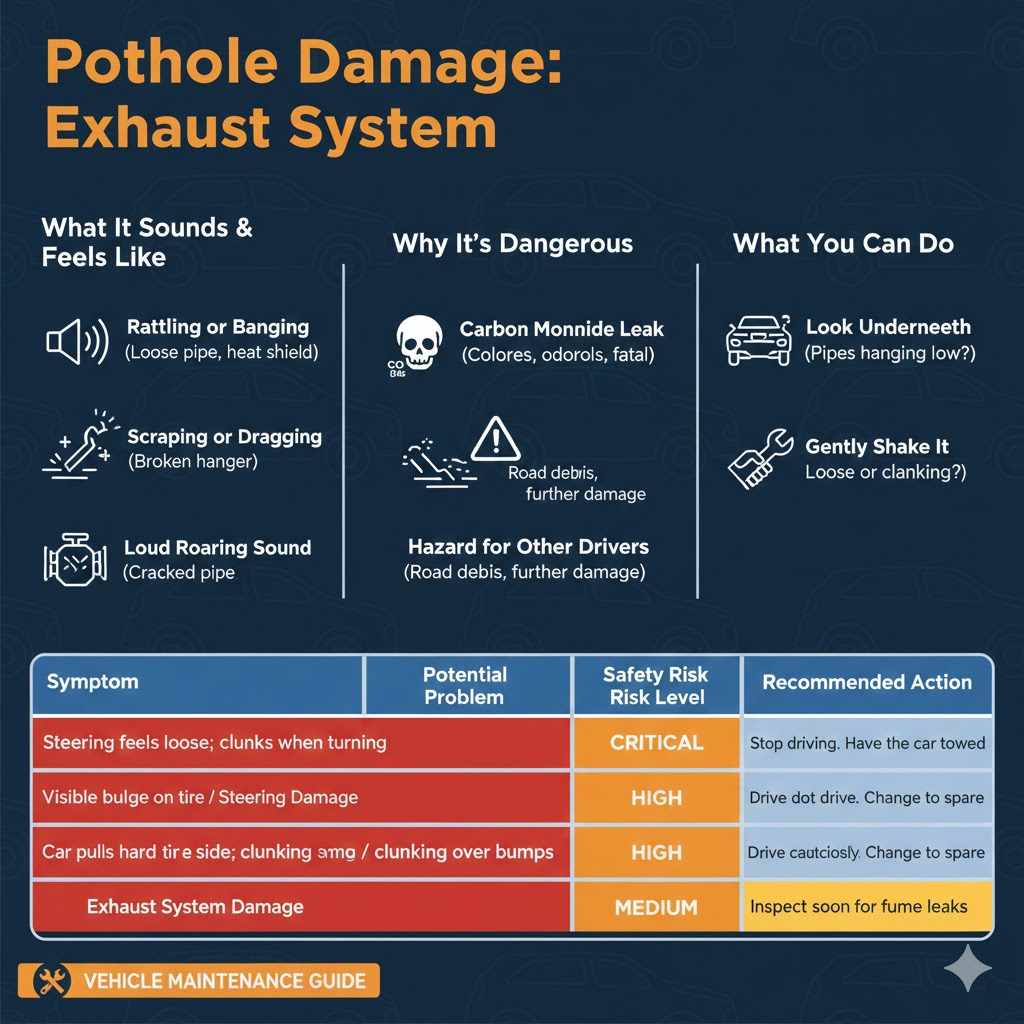
Cause 5: A Damaged Exhaust System
Your car’s exhaust system is a long series of pipes and mufflers that run along the underside of your vehicle. Because it hangs low, it’s a prime target for deep potholes. An impact can break the rubber hangers that hold it in place, dent the pipes, or even crack the muffler.
What It Sounds and Feels Like
- Rattling or Banging from Under the Car: This is the most common sound. It’s caused by a loose pipe or heat shield banging against the car’s frame as you drive. It’s often loudest at idle or low speeds.
- Scraping or Dragging Noise: If a hanger breaks completely, a section of the exhaust pipe can hang down and scrape along the road.
- Loud Roaring Sound: If the pothole impact cracked or separated a pipe, you’ll hear a much louder engine noise, similar to a race car or a tractor. The sound will be most obvious when you accelerate.
Why It’s Dangerous
While not as immediate a threat to vehicle control, a damaged exhaust is still a serious problem. A broken exhaust pipe can leak dangerous carbon monoxide fumes. These colorless, odorless gases can find their way into the passenger cabin, causing dizziness, headaches, and in severe cases, can be fatal. Furthermore, a dragging exhaust pipe can catch on road debris, potentially causing further damage or creating a hazard for other drivers.
What You Can Do
This is often the easiest problem to spot.
- Look Underneath: When the car is parked and completely cool (the exhaust gets extremely hot), take a look underneath. Do you see any pipes hanging lower than they should be?
- Gently Shake It (When Cool): If you can safely reach it, gently try to shake the muffler or tailpipe. It should have a little bit of movement on its rubber hangers, but it shouldn’t be loose and clanking against anything.
The table below summarizes the severity of these different issues.
| Symptom | Potential Problem | Safety Risk Level | Recommended Action |
|---|---|---|---|
| Steering feels loose; clunks when turning | Tie Rod / Steering Damage | CRITICAL | Stop driving. Have the car towed for inspection. |
| Visible bulge on tire sidewall | Tire Failure Imminent | CRITICAL | Do not drive. Change to the spare tire. |
| Car pulls hard to one side; clunking over bumps | Suspension Damage / Bad Alignment | HIGH | Drive cautiously to a mechanic for inspection. |
| Loud engine roar; rattling from underneath | Exhaust System Damage | MEDIUM | Get it inspected soon to prevent fume leaks. |
Frequently Asked Questions (FAQ)
1. Is it safe to drive my car if it’s making noise after a pothole?
It’s best not to. A new noise is a sign that something is broken or loose. Some noises, like those from steering or suspension damage, indicate a critical safety failure could happen at any time. The safest course of action is to have the car inspected by a professional mechanic before driving it further.
2. How much does it cost to fix pothole damage?
The cost varies wildly depending on the damage. A simple wheel alignment might cost $80 – $150. Replacing a single tire can be $100 – $300. However, repairing suspension components like a control arm or strut can range from $400 to over $1,000 per corner, depending on your car’s make and model.
3. Can hitting a pothole cause my check engine light to come on?
It’s possible, but not common for most of the issues listed above. However, a very severe impact could damage an oxygen sensor in the exhaust pipe or another sensitive engine component, which would trigger the check engine light. If the light comes on, it’s another good reason to get the car scanned for trouble codes.
4. How can I avoid pothole damage in the future?
You can’t avoid them all, but you can reduce your risk. Keep your tires properly inflated, as this provides a better cushion. Stay alert and scan the road ahead. Leave plenty of space between you and the car in front so you can see and react to road hazards. Avoid driving through puddles, as they can hide deep potholes.
5. What should I do immediately after hitting a huge pothole?
First, grip the steering wheel firmly to maintain control. Once you are through it, pull over to a safe location as soon as possible. Do a quick visual inspection of your tires and wheels. Listen for any new noises as you slowly start driving again. If anything feels or sounds wrong, call for a tow.
6. Does my car insurance cover pothole damage?
In many cases, yes. Pothole damage is typically covered under the “collision” portion of your auto insurance policy. However, you will have to pay your deductible first. You should weigh the cost of the repair against your deductible to decide if filing a claim is worth it, as it could potentially raise your rates.
Conclusion: Your Car is Talking, So Please Listen
Hitting a pothole is a frustrating and sometimes scary experience. The noises that follow are your car’s way of crying for help. While it’s tempting to turn up the radio and hope the sound goes away, that’s the worst thing you can do. The five causes we’ve covered—from bad tires to broken steering parts—all have serious safety implications.
Remember that you don’t need to be a master mechanic to be a smart car owner. Your job is to notice when something is different. A new clunk, a persistent rattle, or a shaky steering wheel are all important clues. By paying attention to these warnings and taking them seriously, you are taking the single most important step in keeping yourself, your passengers, and others on the road safe.
When in doubt, have it checked out. A small inspection fee is a tiny price to pay for peace of mind and can prevent a minor issue from turning into a major failure on the highway. Drive safe, listen to your car, and tackle those road battles with confidence.