Car Ramps for a Trailer: How to Pick the Right Length and Weight Rating
Car ramps for a trailer are the metal inclines that let you drive or winch a vehicle up onto a raised trailer deck instead of lifting it. Picking the right pair comes down to three numbers: ramp length (which sets your loading angle), weight rating per ramp, and your trailer’s deck height — get any one of those wrong and you risk a bumper strike, a scraped undercarriage, or a ramp that folds under load.
Below is how the length-to-angle math actually works, how much weight capacity you really need (it is not just the number printed on the box), and a real ramp pick with the specs to back it up.
What Are Car Ramps for a Trailer, and How Do They Work?
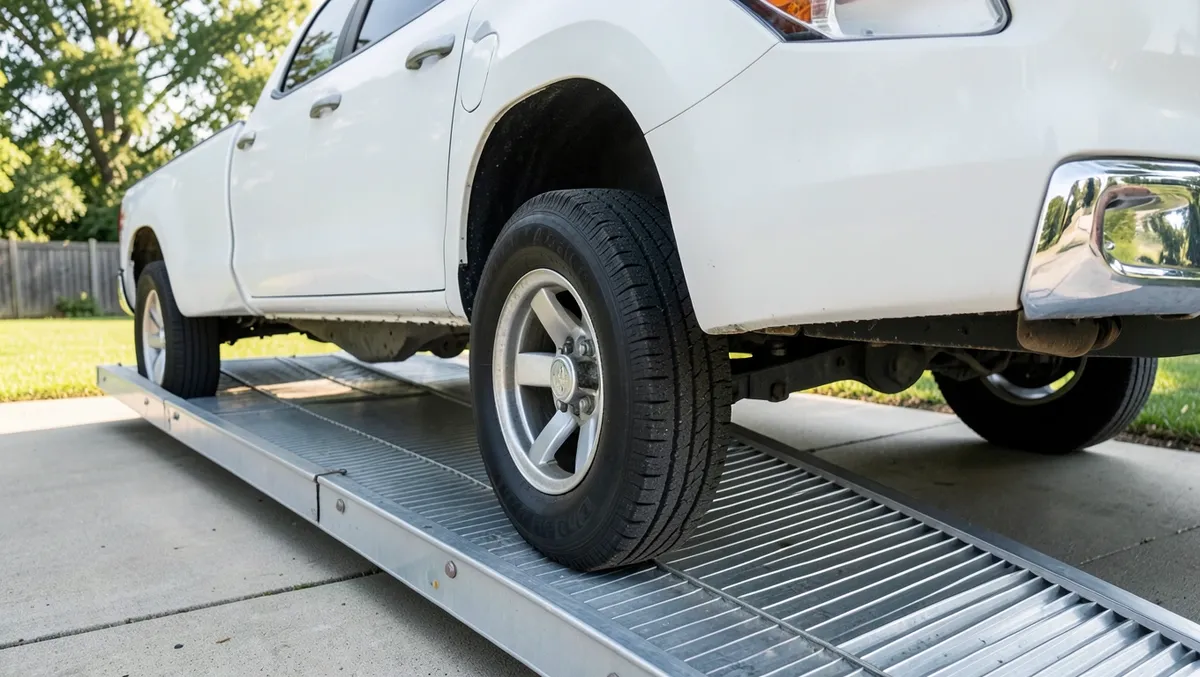
Trailer loading ramps are a pair of rigid inclines, usually aluminum or steel, with a hooked or curved top edge that hangs over the rear lip of an open trailer deck or truck bed. You back the trailer up to flat ground, unfold or set the ramps in place, then drive (or winch) the vehicle straight up them onto the deck. Most have a raised or perforated tread surface for grip, since a wet or oily ramp with a smooth surface is one of the most common causes of a slipped load.
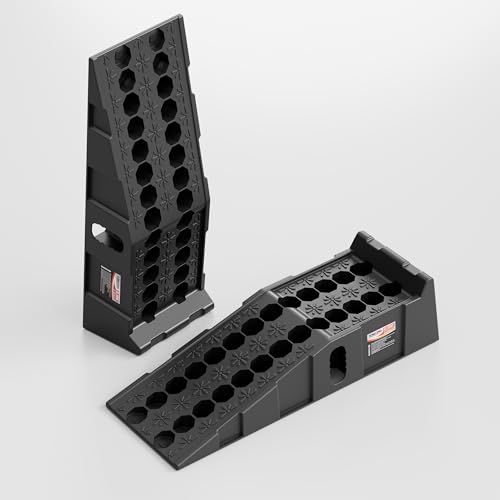
They are a different product from the short, low-rise ramps used for DIY oil changes and undercarriage work — those only lift one end of the car a few inches off the ground on flat pavement. Trailer ramps span a much bigger vertical gap, from the ground up to a full trailer deck, which is why length and angle matter so much more here.
GENTLEST-ANGLE PICK FOR CARS
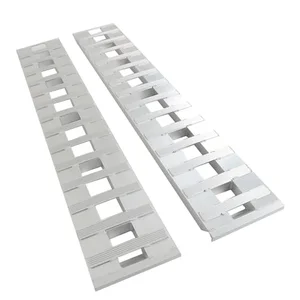 |
labwork 84″ x 14″ Aluminum Trailer Ramps (Pair) – $257.99 At 84 inches long, this is the longest of the common off-the-shelf aluminum ramp lengths, so it gives you the shallowest, safest loading angle for a car.
|
How Long Should Your Ramps Be? The Angle Is What Actually Matters
Ramp length is not really about the vehicle you are loading, it is about the angle it creates against your trailer’s deck height. The rule of thumb from trailer and ramp manufacturers is to keep the loading angle around 8 to 12 degrees for a car, and closer to 8 degrees if the car sits low or has a front air dam or splitter. Trucks and SUVs with more ground clearance can usually handle 12 to 15 degrees without a problem.
You can estimate the angle yourself with one formula: ramp length ≈ deck height ÷ tan(angle). A typical open car trailer has a deck height of around 24 inches off the ground. Here is what that means for the ramp lengths actually sold for this job:
| Ramp Length | Approx. Angle at a 24″ Deck Height | Realistic Use |
|---|---|---|
| 60 inches | ~21.8° | Motorcycles, ATVs, riding mowers — too steep for most cars |
| 72 inches | ~18.4° | Trucks and SUVs with good ground clearance |
| 84 inches | ~15.9° | Cars with average clearance; still steeper than the ideal 8-12° range |
| 96-108 inches | ~11.8-14.0° | Low-clearance cars, sports cars, cars with front splitters |
Here is the honest catch: most “trailer ramps” sold on Amazon in the 60-84 inch range, including the three compared on this page, are really general-purpose loading ramps first designed for motorcycles, ATVs, and lawn tractors, with “car” and “trailer” added to the listing title because the same hooked design also works for a car in a pinch. None of them get you into the ideal 8-12° range on a full-height 24-inch trailer deck. If you regularly load a low car or a vehicle with a front splitter, look specifically for ramps in the 9 to 12 foot range, or a trailer with a tilt bed or dovetail that removes the ramp angle problem entirely.
How Much Weight Capacity Do You Actually Need?
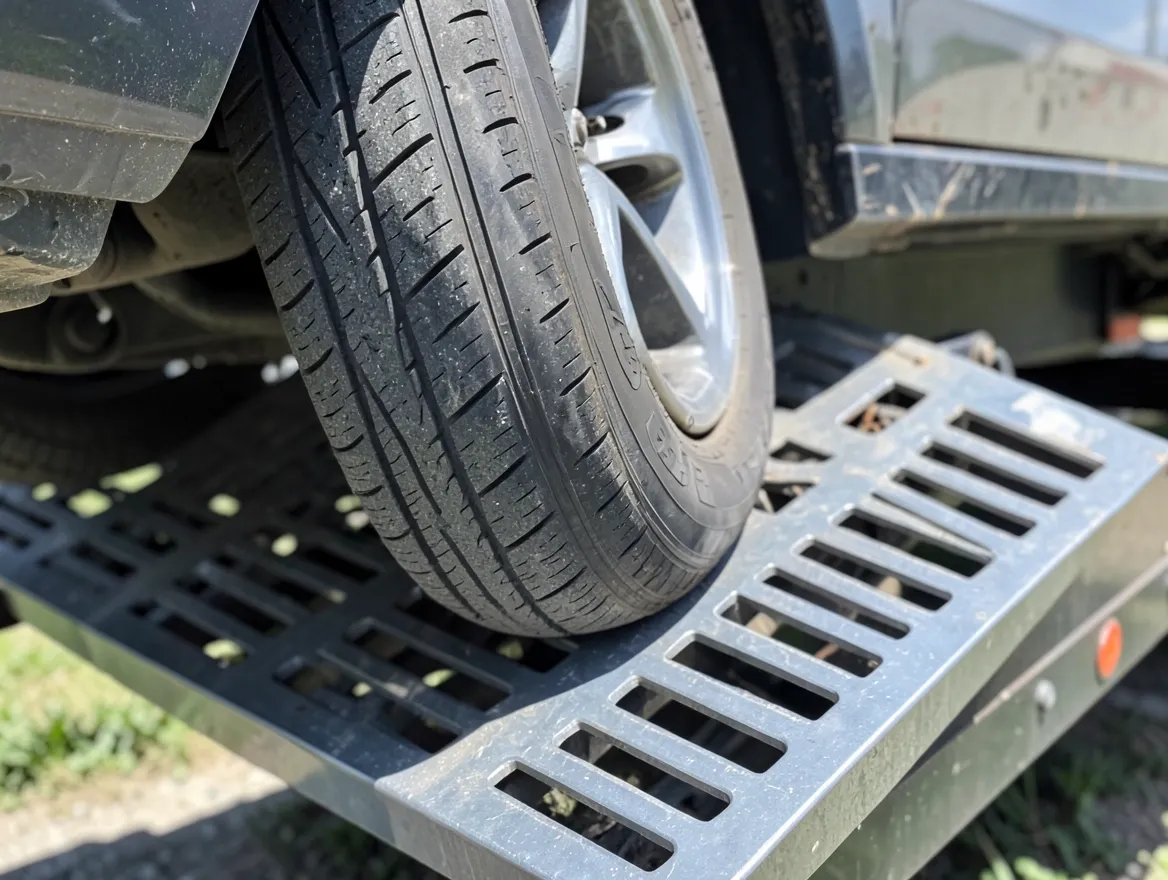
Do not just match the ramp’s rated capacity to your car’s total curb weight. A ramp pair supports one axle at a time as the car climbs, so the number that matters is your heaviest single axle weight, not the full vehicle weight. A common rule of thumb: each ramp should comfortably clear half of your heaviest axle load, with at least a 20 percent safety margin built in.
As an example, a 4,000 lb car with a 2,200 lb front axle load needs each ramp to hold roughly 1,100 lb at minimum, and comfortably more once you add the margin. Most of the aluminum ramps sold for this job are rated in the 1,500 to 3,000 lb-per-ramp range, so weight capacity is rarely the limiting factor for a typical car — the angle usually is.
Ramp Material: Aluminum vs. Steel
- Aluminum: Lighter, easier for one person to carry and set up, and naturally corrosion-resistant. Most consumer trailer ramps sold today, including all three compared here, are aluminum for this reason. It flexes slightly more under a heavy load than steel of the same thickness.
- Steel: Stiffer and often cheaper for the same weight rating, but noticeably heavier to lift and prone to rust if the coating chips, especially if the ramps live outdoors or near salted winter roads.
- Folding vs. solid: Hinged, folding ramps store in a smaller footprint but have a hinge point that needs to stay clean and greased. Solid one-piece ramps are simpler but longer to store.
How to Load a Car onto a Trailer with Ramps Safely
- Park the trailer on flat, level, dry ground and set the parking brake or wheel chocks on the trailer before doing anything else.
- Hook each ramp securely over the rear lip of the trailer deck. Push down on each one before you load to confirm the hook is fully seated and will not slide.
- Set the ramp spacing to match your car’s wheelbase width, not the trailer’s full width, so both tires track straight up the center of each ramp.
- Approach dead straight-on, in a low gear, at a slow walking pace. Do not steer once your front tires are on the ramps — a mid-ramp steering correction is one of the most common ways a car slips off the side.
- Keep a spotter outside the vehicle who can see both ramps and call out if a tire drifts off-center.
- Once the car is fully on the deck, set the parking brake, chock the wheels, and secure it with rated tie-down straps before you remove or fold up the ramps.
Car Ramps for a Trailer vs. Ramps for Oil Changes
It is easy to search “car ramps” and land on the wrong product. Short service ramps, the kind used for an at-home oil change or brake job, are rated for a completely different job: lifting one end of the car a few inches on flat ground so you can slide underneath it. They are not built or rated to bridge the gap up to a trailer deck. If that is what you are actually shopping for, our guide on whether service ramps are safe to work under a car covers the weight-rating rules for that different product.
Frequently Asked Questions
What Are Car Ramps for a Trailer Used For?
They give a vehicle a driveable incline from the ground up to a raised trailer deck or truck bed, so you can load or unload it without a winch, forklift, or tow truck.
How Do I Choose the Right Car Ramps for a Trailer?
Match the ramp length to your trailer’s deck height so the loading angle stays close to 8-12 degrees, confirm each ramp’s weight rating comfortably covers half your car’s heaviest axle load, and pick a width that fits your tires with some margin on both sides.
What Is the Ideal Ramp Angle for Loading a Car?
Most manufacturers recommend 8 to 12 degrees for cars, and closer to 8 degrees for low-clearance or lowered vehicles. Trucks and SUVs with more ground clearance can typically handle up to about 15 degrees.
How Much Weight Can Car Ramps Hold?
Most consumer aluminum trailer ramps are rated between roughly 1,500 and 3,000 lbs per ramp. What matters most is that this exceeds half of your car’s heaviest single axle weight, plus a safety margin, since each ramp only supports one axle at a time during loading.
Are Car Ramps Easy to Store?
Most aluminum ramps are lightweight enough to carry, and folding designs cut their storage length roughly in half. Longer, one-piece ramps built for a gentler angle take up more space and may need to be stored flat or hung on a wall.
Can Car Ramps Be Used on Uneven Ground?
No. Ramps need a flat, stable, dry surface at both the trailer and ground contact points. Loading on a slope or soft ground can shift the ramp’s footing mid-load, which is a common cause of a car sliding off.
Quick Buying Checklist
- Length: The longer the ramp, the shallower and safer the angle — buy the longest ramp your storage space and budget allow.
- Weight rating: Should exceed half your car’s heaviest axle weight, plus a real safety margin.
- Width: Match to your tire width with a few extra inches of margin on each side for steering error.
- Surface: Look for a raised, perforated, or cross-hatched tread, not a smooth or painted surface.
- Attachment: A hooked top edge that seats securely over your specific trailer or truck bed lip, not a loose flat end.
Conclusion
The right car ramps for a trailer come down to matching ramp length to your deck height so the angle stays manageable, confirming the weight rating covers your car’s axle load with margin, and setting them up on flat ground every time. Get those three things right and loading a car onto a trailer is a straightforward, one-person job; get the angle wrong and even a well-rated ramp can lead to a bumper strike or a scraped undercarriage.
Products related to this article
Sponsored / affiliate links. As an Amazon Associate I earn from qualifying purchases. I may earn additional commission from eligible campaigns.