Best Paint Remover for Car Paint: 3 Picks Compared
The best paint remover for car paint depends on the coating and the panel. Use a citrus gel for light paint and varnish, a methylene-free stripper for smaller automotive parts, and a heavy-duty aircraft-type remover only for large, stubborn restorations. Pick the wrong one and you waste time, damage plastic or aluminum, or leave residue that ruins primer adhesion. This guide compares the three stripper types by coverage, coating hardness, dwell time, and safety tradeoffs so you can choose fast.
Three professional paint strippers reviewed


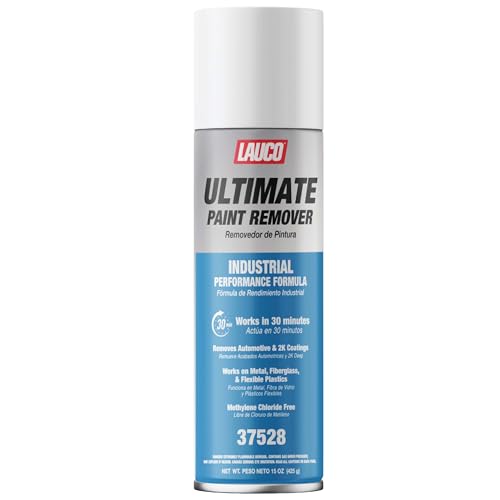
Klean-Strip Aircraft Ultra Paint Remover is the top overall pick for full-panel stripping because it is built for difficult automotive coatings and is reported to strip to bare metal in 30 minutes or less. Use it when a panel has epoxy, urethane, or other stubborn layers that lighter removers struggle to soften.
Top pick: Klean-Strip aircraft ultra paint remover
This is the strongest choice in the group, and it also brings the harshest chemical burden. The formula uses hazardous chemicals including tetrahydrofuran and methanol, so keep it on metal panels with strong ventilation and full protective gear, not on trim cleanup or indoor garage touch-ups.
Best safer choice: Lift Off Automotive Paint Stripper
Lift Off Automotive Paint Stripper is the better fit when you want a safer route and still need a stripper aimed at automotive work. It is framed as a fast professional option, which makes it better for controlled spot stripping, smaller panels, and jobs where odor and handling matter.
Best budget pick: Jasco Premium paint and epoxy Remover
Jasco Premium Paint and Epoxy Remover is the budget-oriented pick for prep work that still needs real stripping power. It is sold in a 16 oz size and is listed for paint, epoxy, varnish, lacquer, and shellac, which can make it a practical middle ground when you are not tackling a full restoration panel.
Quick picks by job
For a full panel with tough 2K coatings, start with Klean-Strip Aircraft Ultra Paint Remover. For smaller parts or mixed-material pieces where control matters more than raw power, Lift Off Automotive Paint Stripper is the easier choice. For budget stripping on prep work, Jasco Premium Paint and Epoxy Remover is the practical starting point.
- Full panel and tough 2K coatings: Klean-Strip Aircraft Ultra Paint Remover
- Small spots and mixed materials: Lift Off Automotive Paint Stripper
- Budget stripping for prep work: Jasco Premium Paint and Epoxy Remover
Other options worth knowing
Klean-Strip Aircraft Stripper is the heavy-duty automotive coating stripper for tough 2K coatings. Lift Off Paint & Varnish Remover is the DIY-friendly safer option for ordinary paint and indoor projects. Dumond Smart Strip is positioned for many layers, while Citristrip Paint & Varnish Stripper fits users who want an eco-friendly option with a gentler chemical profile.
Safe ‘n Easy Paint Remover Gel is a gel formula meant to cling and reduce mess on metal and wood. Max Strip Paint Remover is also a gel-style choice that helps control drips and spills. Those formats matter on vertical panels, seams, and parts where liquid runoff becomes the real problem.
Paint remover decision matrix
This matrix compares the three picks across the factors that decide real jobs: stripping power, speed, odor and fume burden, control on vertical panels, and best use case. The score is practical, not laboratory-based, and it reflects the product positioning and hazard profile described above.
| Pick | Stripping power | Speed | Odor and fume burden | Control on vertical panels | Best use case |
|---|---|---|---|---|---|
| Klean-Strip Aircraft Ultra Paint Remover | 5/5 | 5/5 | 1/5 | 3/5 | Full panels, 2K epoxy, urethane, restoration work |
| Lift Off Automotive Paint Stripper | 3/5 | 4/5 | 4/5 | 4/5 | Smaller parts, mixed materials, safer pro use |
| Jasco Premium Paint and Epoxy Remover | 4/5 | 3/5 | 3/5 | 3/5 | Budget stripping for paint, epoxy, lacquer, shellac |
Mini cost-per-panel estimate
These estimates are for one medium panel and are meant to help you budget the whole job, not just the can. They include product amount, PPE, masking materials, and the chance of reapplication. Because panel shape, paint thickness, and ambient temperature change the result, the reapplication risk is intentionally shown as low, moderate, or high rather than as a fixed number.
| Pick | Product amount | PPE | Masking materials | Reapplication risk |
|---|---|---|---|---|
| Klean-Strip Aircraft Ultra Paint Remover | About 1 quart for a full-size panel with extra overlap | Chemical gloves, eye protection, respirator | Plastic sheeting, tape, scraper, waste bags | Low on straight metal; moderate on thick 2K layers |
| Lift Off Automotive Paint Stripper | About 1 quart for smaller panels or several parts | Gloves, eye protection, respirator in enclosed spaces | Light masking, scraper, catch materials for runoff | Moderate on older or layered coatings |
| Jasco Premium Paint and Epoxy Remover | One 16 oz container for spots or partial panels | Gloves, eye protection, respirator | Plastic sheeting, tape, scraper, disposal bags | Moderate to high on thick or cured coatings |
Which stripper fits your job?
The right stripper depends on panel size, coating hardness, and how much control you need near edges. Full respray prep calls for a stronger formula. Small parts and brackets need less runoff. Vertical surfaces punish thin liquids because they slide off before they work.
Full panels and total respray prep
For a hood, door, fender, or quarter panel that needs to go back to bare metal, start with Klean-Strip Aircraft Ultra Paint Remover. It is the best fit when the goal is complete removal, not just softening the top coat. That matters most on restoration work and on panels with multiple cure cycles.
Say your quarter panel still carries old urethane and primer near the body line. A stronger stripper can save time, but only if you keep it off trim, seam sealer, and adjacent plastic edge pieces. Mask those edges before you open the can.
Small parts, brackets, and spot repair
For small spots, brackets, and mixed-material parts, Lift Off Automotive Paint Stripper is easier to manage. It gives you more working time and less chemical aggression than the aircraft-type stripper, which helps when the goal is removing coating without chasing drips across the part.
Suppose you are stripping a mirror bracket, a latch piece, or a small repair spot near plastic trim. In that case, the safer, faster professional option is usually easier to control than a heavy aircraft formula that can run into seams.
Horizontal versus vertical surfaces
Horizontal panels are simpler because product stays where you place it. Vertical panels are harder because liquid and thin paste tend to slide, which shortens dwell time on the coating. Gel formulas such as Safe ‘n Easy Paint Remover Gel and Max Strip Paint Remover are better suited to those surfaces because they cling and drip less.
How strong is strong enough?
2K epoxy and urethane usually need the toughest formulas because those coatings are built to resist weather, fuel exposure, and abrasion. Ordinary paint and varnish come off with lighter products, but once the coating system gets harder, safer DIY removers often slow down or fail to reach bare metal in one pass.
2K epoxy and urethane
Klean-Strip Aircraft Ultra Paint Remover and Klean-Strip Aircraft Stripper are the best matches for tough 2K automotive coatings. The Ultra version is the clearest best-overall pick because it is reported to strip to bare metal in 30 minutes or less. That speed is valuable only if you can manage the fumes and protect nearby materials.
The Klean-Strip Aircraft Aerosol is shown as a 15-ounce aerosol spray and a 45-minute option. Aerosol helps reach tight spots, but it usually sacrifices economy and panel-scale control compared with a quart liquid. On large jobs, spray format is better for edges and seams than for entire hood skins.
Ordinary paint and varnish
Lift Off Paint & Varnish Remover is the DIY-friendly safer option for ordinary paint and indoor projects. That makes it a sensible choice for lighter jobs where the coating is not a hard automotive finish. Citristrip Paint & Varnish Stripper also sits in this lighter-duty lane and is listed as the eco-friendly option.
Lacquer, shellac, and mixed coatings
Jasco Premium Paint and Epoxy Remover is the broad budget choice when the coating stack includes lacquer, shellac, varnish, or paint. It is not the fastest route for thick automotive finishes, but it covers more everyday refinish prep than a single-purpose citrus product.
A common first-timer mistake is assuming a gentler remover will handle a cured automotive urethane the same way it handles house paint. It usually will not. The coating type matters more than the label design.
Liquid, aerosol, or gel?
Quart liquid is best for large panels because it covers more area and usually costs less per square foot. Aerosol is best for tight areas, brackets, and seams. Gel is the control choice when you need the product to stay on a vertical panel instead of running into gaps and trim.
Quart liquid for large panels
The quart format makes sense for hoods, doors, and other broad surfaces. KLEAN-STRIP Aircraft Ultra Paint Remover is shown as a quart-sized liquid in the comparison, and the quart form gives you better economy and better control over coverage than aerosol on a full panel.
Aerosol for tight areas
The KLEAN-STRIP Aircraft Aerosol is a 15-ounce spray that fits confined spots, seam edges, and detailed parts. Use it when you need reach, not bulk. It is less efficient for broad panel stripping, but it can help on brackets or areas where a brush would miss contours.
Gel formulas for drip control
Safe ‘n Easy Paint Remover Gel and Max Strip Paint Remover are the right type when the main problem is drip management. Gel clings longer on vertical surfaces, which helps during body-side work or on parts with curves, holes, and undercuts. That matters more than raw speed on some repairs.
How much will each job cost?
Project cost is more than the can. You need PPE, masking, scrapers, disposal bags, and enough product to cover reapplication if the first pass misses a thick area. Stronger formulas may cost more upfront, but repeated passes with a weak remover can cost more in time and cleanup.
Product amount per panel
Plan on a quart for a medium to large panel when using a liquid stripper, and expect a smaller container to work better for spots than for a whole hood or door. The KLEAN-STRIP Aircraft Quart is presented as a budget-friendly DIY option, while the aerosol version is better reserved for narrow zones and touch-up removal.
PPE and masking materials
- Wear chemical-resistant gloves before opening the container.
- Use eye protection any time you brush, scrape, or rinse the panel.
- Use a respirator when ventilation is limited or fumes build up.
- Mask trim, seams, plastic edges, and nearby glass before application.
- Keep plastic sheeting and waste bags ready before the first pass.
Disposal and reapplication risk
High-power removers increase the chance that you will need to reapply in thick spots, especially on older epoxy or urethane. They also create more waste to collect and dispose of properly. Lighter removers may need more time, but they often produce less aggressive cleanup and are easier to manage around mixed materials.
Frequently asked questions
What is the best paint remover for car paint on a full panel?
Klean-Strip Aircraft Ultra Paint Remover is the best fit for a full panel when the goal is bare metal and the coating is tough. It is the strongest overall choice in this group because it is aimed at hard automotive coatings and is reported to strip to bare metal in 30 minutes or less.
Which paint remover strips 2K automotive coatings fastest?
Klean-Strip Aircraft Ultra Paint Remover is the fastest choice here for 2K epoxy and urethane. The comparator coverage puts it at 30 minutes or less to bare metal, while the KLEAN-STRIP Aircraft Aerosol is shown at 45 minutes. Faster is not always better if the panel has plastic edges nearby.
Is an aerosol or quart paint remover better for car parts?
Quart liquid is better for broad panel work because it is more efficient and easier to spread evenly. Aerosol is better for tight parts, seams, and edges where reach matters more than volume. For most body panels, quart liquid gives better coverage and less wasted product.
What safety gear do I need when using automotive paint stripper?
Use chemical-resistant gloves, eye protection, and a respirator when ventilation is limited or fumes are strong. Mask nearby trim and plastic before applying the stripper. Strong aircraft-type formulas deserve the most caution because they can produce heavier fumes and can attack sensitive nearby materials if they run.
Can paint remover damage clear coat, fiberglass, or plastic parts?
Yes. Paint remover can attack clear coat, soften fiberglass resin systems, and stain or deform plastic trim and edge pieces. That is why masking matters before you start. If the panel has seam sealer or mixed materials, test a small hidden area first and keep the remover off adjacent parts.
Are citrus-based paint removers strong enough for car paint?
Citrus-based removers can be strong enough for ordinary paint, varnish, and lighter prep work, but they are usually not the best answer for hard 2K automotive coatings. Citristrip Paint & Varnish Stripper fits the gentler end of the market, so it is better for easier jobs than for full restoration stripping.
How long does automotive paint remover take to work?
It depends on coating thickness, temperature, and product type. The cited comparisons mention 15-minute and 30-minute claims.ims for some products, while the KLEAN-STRIP Aircraft Aerosol is shown at 45 minutes. Thick paint stacks, cool weather, and vertical panels often push the real wait longer, which is why reapplication planning matters.
Products related to this article
Sponsored / affiliate links. As an Amazon Associate I earn from qualifying purchases. I may earn additional commission from eligible campaigns.