Car Sounding Like Airplane During Idle: Causes & Fixes
It can be worrying when your Car Sounds Like an Airplane While Idling. This is a common issue for many car owners, especially those new to vehicle maintenance. The unusual noise can be caused by various things, and it can be tricky to figure out the source. Don’t worry! This guide breaks down the most likely causes and offers straightforward solutions, helping you get your car back to running smoothly. Next, we’ll get straight to the problems and how to solve them.
Possible Reasons Your Car Makes Airplane Sounds
When your car starts sounding like a small aircraft, several things could be going on. This section will explore the common issues that can cause this noise, giving you a better idea of what might be happening under the hood. Pinpointing the exact cause is the first step toward a fix. Let’s look at the usual suspects.
Exhaust System Leaks and Noises
One of the most frequent reasons a vehicle might sound like an airplane is an exhaust leak. The exhaust system has many parts. These parts are connected tightly to carry fumes away from the engine. Over time, these parts, such as the exhaust manifold, catalytic converter, or the muffler, can develop leaks due to corrosion, rust, or physical damage. When there’s a leak, the exhaust gases escape under pressure, often producing a hissing or whooshing sound, similar to that of an airplane.
- Exhaust Manifold Issues: The exhaust manifold collects exhaust gases from all engine cylinders. If a crack develops in the manifold or the gasket fails, you’ll hear the airplane sound.
- Catalytic Converter Problems: A failing catalytic converter can restrict airflow. This restriction can cause sounds and other engine problems. Also, leaks in the converter’s casing can cause the noises.
- Muffler Troubles: The muffler reduces the noise from the engine. Rust, corrosion, or impact damage can create holes or breaks, leading to loud, unusual sounds.
- Downpipe and Pipe Damage: The downpipe and the rest of the exhaust system, including connecting pipes, can also rust or be damaged, causing leaks.
The sounds from exhaust leaks change based on where the leak is and how big it is. A small leak might sound like a hiss, while a larger one could make a loud whooshing or rumbling noise. It’s important to have these leaks checked out and fixed because they can affect your car’s performance and safety. Also, exhaust leaks can allow dangerous gases to enter the cabin.
Vacuum Leaks and Their Effect
Another common cause is a vacuum leak. A car’s engine has a complex vacuum system that supports the smooth operation of many components. This system uses vacuum lines, hoses, and connections to control things like the brakes, fuel system, and emissions controls. A leak in any part of this system can cause an unusual whistling or hissing sound, often described as an airplane-like noise, when the engine is idling. These leaks can also cause issues such as rough idling, stalling, and reduced engine performance.
- Vacuum Hose Degradation: Vacuum hoses are made of rubber or plastic and can become brittle, crack, or dry out over time. These cracks can lead to leaks.
- Loose Connections: Vibrations and movement in the engine bay can sometimes cause vacuum lines to come loose from their fittings.
- Intake Manifold Gasket Problems: A faulty intake manifold gasket can let air into the engine where it shouldn’t be, leading to vacuum leaks.
- PCV Valve Failures: The PCV (Positive Crankcase Ventilation) valve helps regulate pressure in the engine. A faulty PCV valve can cause leaks.
Locating a vacuum leak can be done by listening carefully for the sound. It’s also helpful to inspect all vacuum lines and hoses visually for cracks, damage, or loose connections. A mechanic can often use a smoke test to find leaks. A smoke test involves pumping smoke into the vacuum system, which will escape through any leaks, making them easier to spot.
Trouble with the Air Intake
The air intake system is critical for your engine’s operation, and problems in this system can definitely contribute to the airplane sound. The system brings in air, mixes it with fuel, and then sends it into the engine cylinders. Any disruptions to this process, such as leaks or blockages, can affect how your engine sounds and runs. Problems in this area are common and often result in unusual sounds while idling.
- Air Filter Problems: A clogged air filter can restrict airflow into the engine.
- Intake Manifold Issues: Cracks or leaks in the intake manifold can let unmetered air into the engine, making unusual noises.
- Throttle Body Issues: A dirty or malfunctioning throttle body can cause airflow issues, leading to rough idling or unusual noises.
- Loose Connections in the Air Intake: Any loose connections or cracks in the intake system, from the air filter box to the throttle body, can create leaks and unusual sounds.
The airplane sound can be caused by air rushing through these leaks or blockages. In some instances, a whistling or whooshing noise can indicate a problem in the air intake system. Air leaks in these systems will often cause the engine to run lean, meaning there’s too much air compared to fuel. This can result in decreased performance and potentially damage the engine over time. Regularly checking the air filter, intake hoses, and connections is essential to ensure the system is working well.

Diagnosing the Airplane-Like Noises
Finding out what’s causing your car to sound like an airplane is key to a proper repair. This section will guide you through some steps you can take to identify the source of the noise. It’s important to stay safe and use your senses to figure out where the problem lies. Proper diagnosis helps ensure that you can fix the issue efficiently.
Using Your Ears and Eyes
One of the easiest ways to start diagnosing the airplane sound is to use your ears and eyes. This simple method can provide valuable clues about where the problem might be. Listening carefully and looking for visual clues is a good starting point before you begin any more advanced diagnostics. This approach can help you narrow down the potential causes.
- Listen Carefully: Start by listening to the noise while the car is idling. Try to identify the location of the noise. Is it coming from the front, back, or underneath the car? Does the sound change when you give the engine some gas?
- Check Under the Hood: Open the hood and look at the engine while it’s idling. See if you can pinpoint the source of the noise. Look for any visible signs of leaks, such as cracks or loose connections.
- Inspect the Exhaust: Examine the exhaust system from the engine to the tailpipe. Look for any signs of rust, holes, or soot, which can indicate an exhaust leak.
- Visual Inspection of Vacuum Hoses: Check all visible vacuum hoses and connections for cracks, damage, or loose fittings. This step is essential in ruling out vacuum leaks.
If you’re unsure where to start, you can enlist someone to help you. One person can give the engine gas while the other listens and looks for the noise. Using your senses to identify the source of the sound is an important first step.
Diagnostic Tools and Methods
To diagnose the problem, you may need to use tools or methods. These steps can provide a more in-depth diagnosis beyond visual inspection. These methods allow you to pinpoint the exact issue and provide a reliable path to a solution. Employing these tools helps diagnose complex mechanical issues quickly.
- Smoke Test for Leaks: A smoke test is an effective way to find vacuum leaks and exhaust leaks. The process involves introducing smoke into the system. The smoke will escape through any leaks, making them easy to spot.
- OBD-II Scanner: An OBD-II scanner can read diagnostic trouble codes (DTCs) from your car’s computer. These codes can point to specific issues, like misfires or sensor failures, which can cause the airplane sound.
- Pressure Testing: Pressure testing can be used to check for leaks in systems like the cooling system or intake manifold. This involves pressurizing the system and looking for pressure drops, indicating a leak.
- Professional Inspection: If you’re not comfortable performing these tests, or if the problem is hard to find, a mechanic can perform a comprehensive inspection. This might involve using specialized tools.
Professional mechanics have the tools, skills, and experience to diagnose and fix most car problems. They can save you time, and ensure repairs are done properly. Remember to always use proper safety measures and consult a professional if you’re uncertain about any step.
Using Online Resources and Forums
Utilizing online resources and forums can be very helpful when you’re trying to figure out why your car sounds like an airplane. Many car owners have experienced the same issues, and they often share their experiences online. These resources can provide valuable advice and insights. Learn from others’ experiences, and find solutions from those who have faced similar issues.
- Online Forums and Communities: Search for forums specific to your car’s make and model. These forums are great places to ask questions and get advice from other owners who might have experienced the same sound.
- YouTube Tutorials: Many videos demonstrate car repair and diagnosis. Search on YouTube for videos about the specific sound and your car’s make and model. You might find a video that shows the exact issue you’re facing.
- Repair Manuals: Digital or physical repair manuals can provide detailed information about your car’s systems. These manuals give you repair steps and troubleshooting guidance.
- Websites: Websites often provide articles, guides, and tutorials for car repair. You may be able to find resources specific to the airplane sound problem.
When using these resources, remember to be careful about the information you find. Always cross-reference multiple sources. Consider the advice of experienced mechanics or car experts. Taking advantage of these resources can help you diagnose and fix the issue.
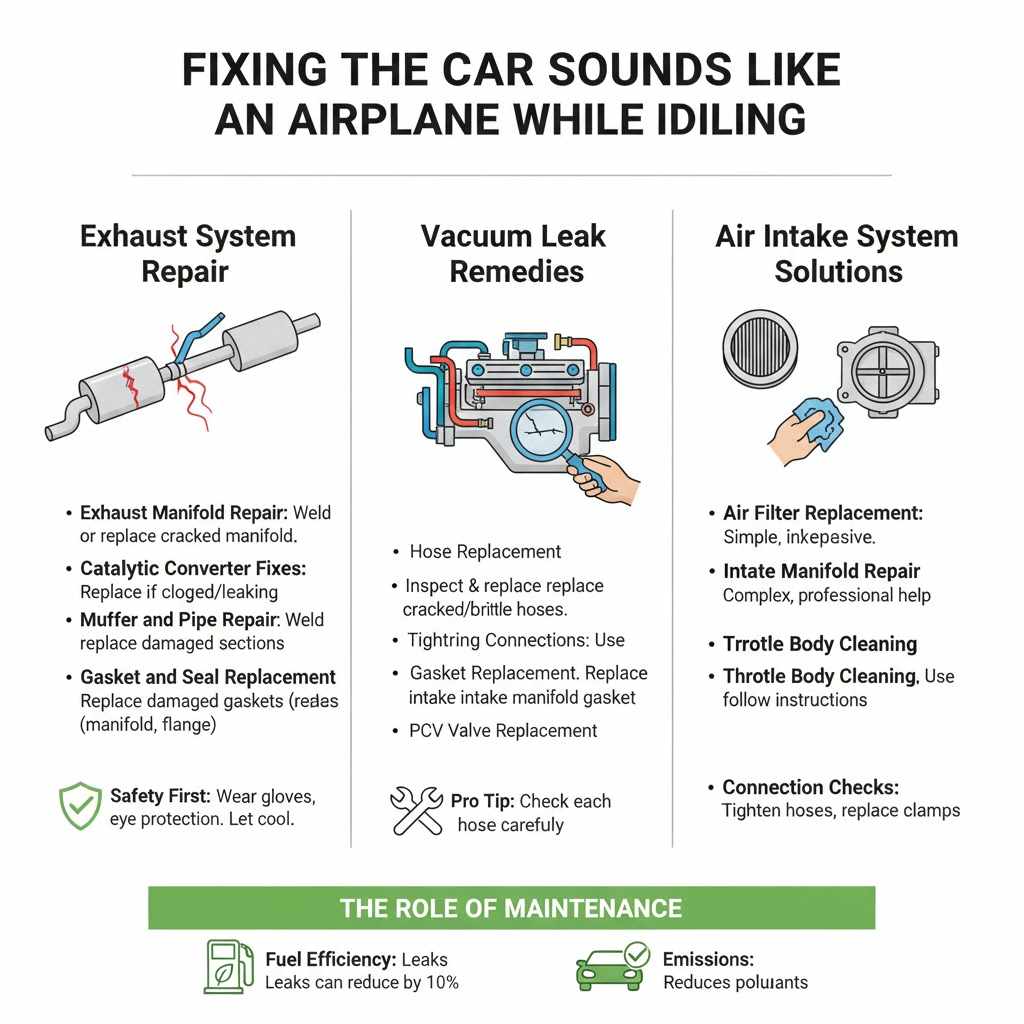
Fixing the Car Sounds Like an Airplane While Idling Issue
After you have identified the source of the airplane-like noise, the next step is to fix it. This section will look at potential solutions for the different causes, from small fixes you can do to more complex repairs that you might need a mechanic to perform. The approach to fixing the issue will depend on what is causing the noise.
Exhaust System Repair
When an exhaust leak is the issue, repairing the exhaust system is important to fix the airplane sound. Depending on the damage, the repairs can range from simple fixes to replacing components. You must address exhaust leaks promptly, as they can get worse over time. Here are some of the actions you can take.
- Exhaust Manifold Repair: If there’s a crack in the exhaust manifold, it might be possible to weld it. In some cases, you might have to replace the manifold. Replacing a manifold can be time-consuming and challenging due to bolt corrosion and restricted space.
- Catalytic Converter Fixes: If the catalytic converter has a leak, you’ll likely need to replace it. A clogged converter can also cause noise.
- Muffler and Pipe Repair: For small holes or rust spots in the muffler or exhaust pipes, you can try welding or using an exhaust repair kit. If the damage is extensive, replace the damaged part.
- Gasket and Seal Replacement: Replace any damaged gaskets or seals in the exhaust system. These include manifold gaskets, flange gaskets, and any seals around the catalytic converter and muffler.
When working on the exhaust system, use safety precautions. Wear gloves and eye protection. Make sure the exhaust system has cooled down before you touch it. Many repairs on the exhaust system need specialized tools, so it is often better to have a mechanic do the work.
Vacuum Leak Remedies
If vacuum leaks cause the airplane noise, you can fix them. The repairs usually involve finding and sealing the leaks. Here are some steps you can take to fix vacuum leaks and stop the unusual noise.
- Hose Replacement: Inspect and replace any cracked, brittle, or damaged vacuum hoses. Measure the length needed. Then, cut the new hose to the right size.
- Tightening Connections: Make sure all vacuum hose connections are secure. Use hose clamps to ensure the hoses are firmly attached.
- Gasket Replacement: If a vacuum leak occurs around the intake manifold, replace the intake manifold gasket. This repair involves removing the intake manifold, replacing the gasket, and reinstalling the manifold.
- PCV Valve
Make sure to take your time and check each hose and connection carefully. Using the proper tools can make these repairs easier. If you’re not comfortable working on your car’s vacuum system, consult a professional mechanic.
Air Intake System Solutions
Resolving issues in the air intake system is key to ending the airplane-like sound. Whether it’s a clogged air filter or a damaged component, addressing the problem promptly can help restore the proper airflow. Here are the necessary steps and actions.
- Air Filter Replacement: Replace a clogged or dirty air filter. This is a simple and inexpensive maintenance task. The air filter should be changed as recommended in your car’s manual.
- Intake Manifold Repair: If there’s damage to the intake manifold, it may need to be repaired or replaced. This can be complex and may need professional help.
- Throttle Body Cleaning: A dirty throttle body can restrict airflow. Clean the throttle body with throttle body cleaner, following the instructions.
- Connection Checks: Check all connections in the air intake system for tightness. Replace any damaged hoses or clamps.
Pay close attention to detail when working on the air intake system. Ensure everything is correctly connected to prevent air leaks and ensure optimal engine performance. Regular maintenance of the air intake system can help prevent issues and prolong the life of your engine.
According to the Environmental Protection Agency (EPA), exhaust leaks can significantly reduce a vehicle’s fuel efficiency. If you’re wondering how significant the impact can be, it’s estimated that a leak can lead to a loss of up to 10% in fuel economy. This loss is because the engine’s performance is compromised by the leak, meaning it needs to work harder to achieve the same power output.
Studies have shown that even minor exhaust leaks can increase emissions by a significant margin. A vehicle with an exhaust leak can release pollutants well above acceptable levels. This can harm air quality and violate emissions standards. Repairing leaks not only restores the performance but also helps to keep the air cleaner and better for the environment. These facts reinforce the need for immediate action.
A car mechanic typically charges between $75 and $150 per hour for labor. The total cost to fix the airplane sound varies widely. Factors include the location of the problem and the amount of time needed to fix it. The cost can be affected by the need for new parts and the labor involved. It’s often helpful to get a repair estimate from a mechanic before starting the work. Also, the repair cost for a vacuum leak might range from $50 to $300.
Frequently Asked Questions
Question: What does a vacuum leak sound like?
Answer: A vacuum leak often sounds like a hissing or whistling noise, similar to air escaping. The sound may change when you apply the throttle.
Question: Can I drive my car with an exhaust leak?
Answer: Driving with an exhaust leak is not safe because it can let harmful gases into the cabin. It can also affect performance and fuel economy. It’s better to get it fixed quickly.
Question: What is a smoke test?
Answer: A smoke test is a diagnostic method used to find leaks in systems like the vacuum or exhaust system. Smoke is introduced into the system, and it escapes through any leaks, making them easy to spot.
Question: How often should I replace my air filter?
Answer: The frequency of air filter replacement depends on the car and conditions, but it’s generally recommended every 12,000 to 15,000 miles or once a year.
Question: Can a bad catalytic converter cause the airplane sound?
Answer: Yes, a failing or clogged catalytic converter can cause unusual noises, including a hissing or rattling sound, and can contribute to the airplane-like noise.
Final Thoughts
Dealing with a Car Sounds Like an Airplane While Idling can be frustrating. You’ve now explored the common reasons why this happens, from exhaust leaks to vacuum and air intake problems. You also learned how to diagnose the issue and the steps you can take to fix it. You can take the right action with this knowledge.
Remember, regular maintenance and attention to unusual sounds are key to keeping your car in good shape. Don’t delay addressing the airplane noise; fix it as soon as possible. By paying attention to the clues your car gives you and following the guidance here, you can resolve the issue and keep your car running smoothly. Take action now and get your car back on the road sounding as it should.