Car Stutters on Acceleration: Quick Fixes and Common Causes
If your Car Stutters on Acceleration: What to Check can feel a bit scary, especially if you’re not a car expert. But don’t worry! Many times, the problem is something simple, and fixing it doesn’t need a mechanic. This post is all about helping you figure out why your car struggles when you try to speed up. We’ll explore some common culprits and show you what to inspect step-by-step, making it easy to diagnose the issue and maybe even fix it yourself. Get ready to become a car detective!
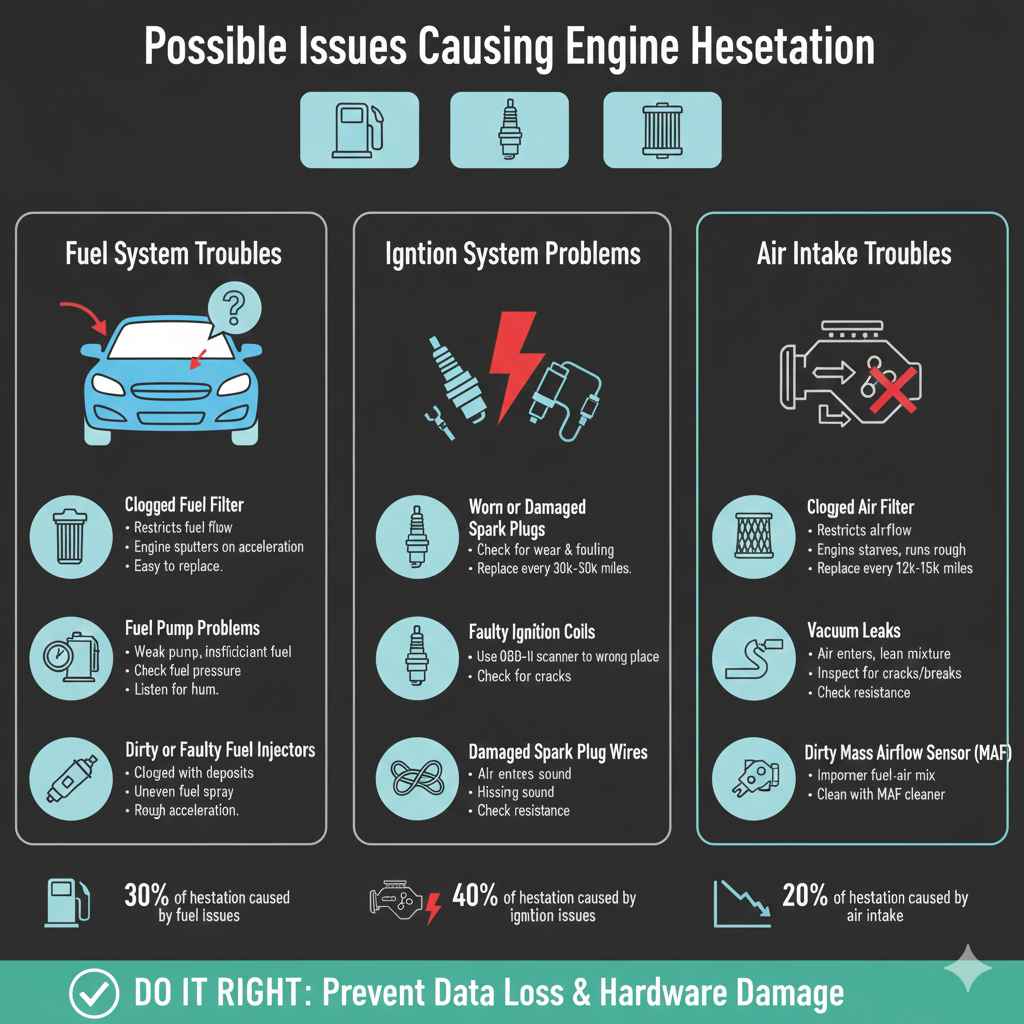
Possible Issues Causing Engine Hesitation
When your car stutters, it means the engine isn’t getting what it needs to run smoothly. This can be caused by various things, from a lack of fuel to a weak spark. Finding the exact problem might take a little investigating, but we’ll break it down into easy-to-understand parts. This helps to pinpoint the source of the stutter and get your vehicle running at its best again. First, we need to know what it can be.
Fuel System Troubles
The fuel system provides gasoline to the engine. If something isn’t working correctly there, your engine might stutter. The fuel filter might be clogged, preventing the right amount of fuel from flowing. The fuel pump, which moves gas from the tank to the engine, could be failing. Also, the fuel injectors spray fuel into the engine, and if these are dirty or faulty, the engine’s performance suffers. Diagnosing issues involves checking these key components. Here’s what to look at.
Clogged Fuel Filter: A clogged fuel filter is like a blocked drinking straw. It restricts the fuel flow. Your engine may not receive enough gasoline, especially when you accelerate, leading to sputtering. This is a common and relatively easy fix.
To inspect, you’ll likely need to locate your fuel filter. You may need to consult your car’s manual. A mechanic might remove the filter to check for debris. If it’s clogged, a simple replacement usually solves the issue. This prevents fuel starvation and gets the engine running smoothly again. Regular filter replacement can also prevent fuel pump problems.
Fuel Pump Problems: The fuel pump acts as a heart of the fuel system, pushing gasoline to the engine. If it fails, the engine might not get enough fuel, causing stuttering during acceleration. The pump might be weak, meaning it can’t deliver enough fuel under load.
To detect pump failure, listen for a humming sound when you turn on the key. No sound? You might have an issue. If you have the tools and experience, check the fuel pressure. Use a fuel pressure gauge to check the pressure while the engine runs. Low pressure indicates a faulty fuel pump that needs to be replaced. Ensure the vehicle’s battery is in good condition; a weak battery can sometimes affect fuel pump performance.
Dirty or Faulty Fuel Injectors: Fuel injectors spray fuel into the engine. Over time, they can get clogged with deposits, affecting the spray pattern. This can lead to an uneven distribution of fuel, and as a result, your engine may stutter. This can make the car run roughly and may make acceleration problematic.
You can sometimes clean injectors with a fuel system cleaner added to the gas tank. For more severe cases, professional cleaning or replacement might be needed. Clogged injectors can also cause your engine to run less efficiently, affecting fuel economy and adding more emissions. Always use the right cleaning solution to avoid damaging your engine.
Ignition System Problems
The ignition system is all about creating the spark that ignites the fuel-air mixture in your engine’s cylinders. If this process is disrupted, the engine might misfire, leading to stuttering when you hit the gas. The spark plugs, ignition coils, and related wires are all part of this system. These systems play key roles in the smooth operation of your engine. Addressing these issues will often fix acceleration problems. Let’s look closer.
Worn or Damaged Spark Plugs: Spark plugs create the spark that starts the combustion process. If they’re worn, dirty, or damaged, they may not ignite the fuel correctly. This can cause misfires and stuttering. Old plugs are a common source of problems.
Inspect them by unscrewing them and checking their condition. Look for wear, fouling (a build-up of deposits), and damage to the electrode. Replacing worn or damaged plugs is a standard maintenance task that’s typically inexpensive. It’s often recommended to replace the plugs at specific intervals, such as every 30,000 to 50,000 miles. Also, check the correct spark plug gap.
Faulty Ignition Coils: Ignition coils are responsible for boosting the voltage to the spark plugs. If a coil fails, the spark plug won’t fire. This can cause a misfire and stuttering. A bad coil can also affect overall engine performance.
You may need specialized tools for diagnosing a faulty coil. If you have the means, use an OBD-II scanner to identify misfires in specific cylinders. Sometimes, the problem may be as easy as looking for cracks or damage to the coil itself. A mechanic may switch coils between cylinders to see if the misfire moves. You will likely need to replace the faulty coil.
Damaged Spark Plug Wires: Spark plug wires transmit the high voltage from the ignition coil to the spark plugs. Over time, these wires can crack or deteriorate, causing the spark to jump to the wrong place. This means the car stutters on acceleration.
Visually inspect the spark plug wires for cracks, breaks, or damage. Replace any damaged wires. Use a multimeter to check the resistance of each wire. If the resistance is too high, the wire may need replacement. Sometimes, moisture can also leak into the wires, causing misfires. Replacing the wires is a simple fix to improve engine performance.
Air Intake Troubles
The engine needs air to run, and the air intake system ensures the engine gets that air. If the air supply is disrupted, the engine can’t burn fuel correctly. This leads to poor performance, including stuttering. Issues like a clogged air filter or a vacuum leak can affect the air intake. Understanding how these issues affect your car is important for a fix.
Clogged Air Filter: The air filter prevents dirt and debris from entering the engine. If it gets clogged, it restricts the airflow. This starves the engine of air, causing a rough engine and hesitation when accelerating.
Check the filter by removing it and inspecting it. If the filter looks dirty, dark, and full of debris, it’s time for a change. It’s typically a simple task, and most auto parts stores sell them. Replace the filter at recommended intervals, usually around every 12,000 to 15,000 miles. A clean air filter boosts fuel efficiency and extends the life of the engine.
Vacuum Leaks: Vacuum leaks happen when air enters the engine through a path it shouldn’t. This can throw off the air-fuel mixture, causing the engine to run lean. The resulting lack of power can cause stuttering.
You can listen for a hissing sound while the engine is running. Inspect all vacuum hoses and connections for cracks, breaks, or loose fittings. Use a can of carb cleaner to spray along the vacuum lines. If the engine speed changes when you spray a spot, you’ve located the leak. Replacing or repairing the affected lines will often solve the problem.
Dirty Mass Airflow Sensor (MAF): The MAF sensor measures the amount of air entering the engine. If it’s dirty or faulty, it sends incorrect readings to the engine control unit. This can lead to an improper air-fuel mixture, causing the car stutters on acceleration.
Carefully remove the MAF sensor and spray it with MAF cleaner. Never use any other type of cleaner, as it can damage the sensor. Reinstall the sensor, and start the car. If the issue is fixed, the cleaning has worked. Consider replacement if cleaning the sensor does not improve the issue. Regularly check the sensor to avoid such issues.
Common Troubleshooting Scenarios
Sometimes, the symptoms can help you narrow down the issue. Different problems can manifest in similar ways, so it’s a matter of matching the symptoms to the potential causes. These scenarios are based on common experiences with cars that sputter during acceleration. Diagnosing your specific situation may require more thorough checks.
Scenario 1: Hesitation Only During Acceleration: Your car runs fine at idle and during steady speeds, but stutters when you press the gas pedal. This often points to a fuel delivery problem or ignition issue.
Possible Causes: Clogged fuel filter, failing fuel pump, or dirty fuel injectors. Also, worn spark plugs or faulty ignition coils could be the problem.
Scenario 2: Stuttering and Check Engine Light: The car stutters, and the “Check Engine” light is illuminated on the dashboard. This means your car’s computer has detected an issue, and it has stored a diagnostic trouble code (DTC).
Possible Causes: Misfires caused by spark plug or ignition coil issues. Vacuum leak or MAF sensor problems. An OBD-II scanner can help determine the specific code and pinpoint the problem.
Scenario 3: Stuttering and Loss of Power: The engine not only stutters, but it also feels sluggish and lacks power, especially when climbing hills or overtaking. This may be a serious problem.
Possible Causes: Clogged fuel filter severely restricting fuel flow. A faulty fuel pump failing to deliver enough fuel. A major vacuum leak or a significant misfire from bad spark plugs or ignition coils.
Testing and Diagnostics
Diagnosing what’s making your car stutter involves a few steps. Here are a few tools and techniques that will help you find the problem. Using these techniques and tools helps you pinpoint the issue and save time. By taking a systematic approach, you can fix your car more effectively.
Using an OBD-II Scanner
An OBD-II scanner is a tool that connects to your car’s computer. It retrieves diagnostic codes that can help you identify problems. This is a very useful tool for pinpointing issues related to engine performance. Using an OBD-II scanner makes troubleshooting much faster and more accurate.
Retrieving Trouble Codes: Plug the scanner into the OBD-II port. This port is usually located under the dashboard near the steering wheel. Turn on the ignition and follow the scanner’s prompts to retrieve the trouble codes.
The scanner will display codes, such as P0301 (misfire in cylinder 1), or P0171 (system too lean). Write these codes down, as they provide clues to the source of the stuttering. Searching these codes online, or consulting your car’s manual, can help you understand what the codes mean.
Live Data Monitoring: Some scanners can display real-time data, such as engine RPM, fuel trim, and sensor readings. Use this data to detect unusual behavior in the system while the engine is running.
Monitor the short-term and long-term fuel trim to determine whether the engine is running rich or lean. Observe MAF sensor readings to see if the sensor is providing accurate air flow measurements. This data helps you determine if a particular sensor is working correctly. This information is invaluable for pinpointing specific failures.
Clearing Codes After Repairs: Once you’ve fixed the issue, use the scanner to clear the diagnostic trouble codes from the system. Then, start your car. If the “Check Engine” light does not return, your fix was successful.
If the code returns, it means the problem still exists. Use the scanner to confirm any additional fault codes that may have been stored. If the problem persists, you may need to check other systems related to the original issue. Clearing the codes is often the final step in the repair process.
Visual Inspection and Basic Checks
Sometimes, simply looking at your car can reveal the issue. Visual inspection can reveal damaged components or other problems. Also, you can perform some basic tests that can provide useful diagnostic information. With some simple tools, you can discover a lot about your car’s issues.
Inspect Spark Plugs and Wires: Remove the spark plugs and examine them for wear, fouling, and damage. Check the spark plug wires for cracks or damage. Replace worn parts as needed.
Make sure the spark plug gap is set correctly, per your car’s manual. Look for any oil or debris around the spark plug wells, which could indicate a leak. Use a spark plug wire tester to check for proper function if you have the tools available. A faulty spark plug may result in misfires, which can lead to stuttering.
Check Air Filter and Vacuum Hoses: Remove the air filter and inspect for dirt and debris. Check all vacuum hoses for cracks, breaks, and loose connections. Replace damaged parts.
Ensure all hoses are securely connected to the fittings, and that there are no visible leaks. Check the rubber hoses to look for hardening or becoming brittle. Replace parts when required. This check helps maintain a smooth engine function. Also, check to make sure the Mass Air Flow (MAF) sensor is clean.
Listen for Unusual Sounds: Start the car and listen for unusual sounds, such as hissing, ticking, or knocking. Listen to the engine when you accelerate, paying close attention to any strange noises. These sounds can provide clues to the location of the problem.
A hissing sound may indicate a vacuum leak. A ticking sound may indicate a valve issue. A knocking sound may indicate internal engine damage. Use a mechanic’s stethoscope to help pinpoint the source of the noise. The sounds can help narrow down the source of your car’s issues.
Fuel Pressure Test
A fuel pressure test verifies that your fuel pump is delivering the correct amount of fuel pressure to the engine. This test is important if you suspect a fuel delivery issue. Performing a fuel pressure test will verify the pump’s performance. The results will determine if you need to replace the fuel pump.
- Locate the Fuel Rail: Find the fuel rail on your engine. The fuel rail is a metal tube that supplies fuel to the injectors. The location is in your vehicle’s service manual.
- Attach a Fuel Pressure Gauge: Connect a fuel pressure gauge to the fuel rail’s test port. This is usually a Schrader valve, like the one on your tires. Remove the cap. Screw the gauge onto the port.
- Check Fuel Pressure: Turn on the ignition. Do not start the car. Read the fuel pressure on the gauge. Compare the reading to your car’s specifications. Consult your car’s service manual for the specified fuel pressure range.
- Start the Engine and Recheck: Start the engine and note the fuel pressure reading. Observe if the pressure is steady while the engine is running. Ensure the pressure remains within the specified range.
- Interpret the Results: If the fuel pressure is too low, the fuel pump may be failing, or the fuel filter could be clogged. If the pressure is too high, there might be a problem with the fuel pressure regulator. Also, if the pressure drops significantly when the engine is running, there may be a fuel leak. Replacing the fuel pump is often needed when the pump’s pressure is out of spec.
According to the U.S. Department of Energy, regular maintenance, including checking and replacing the fuel filter, can improve fuel efficiency by up to 4%.
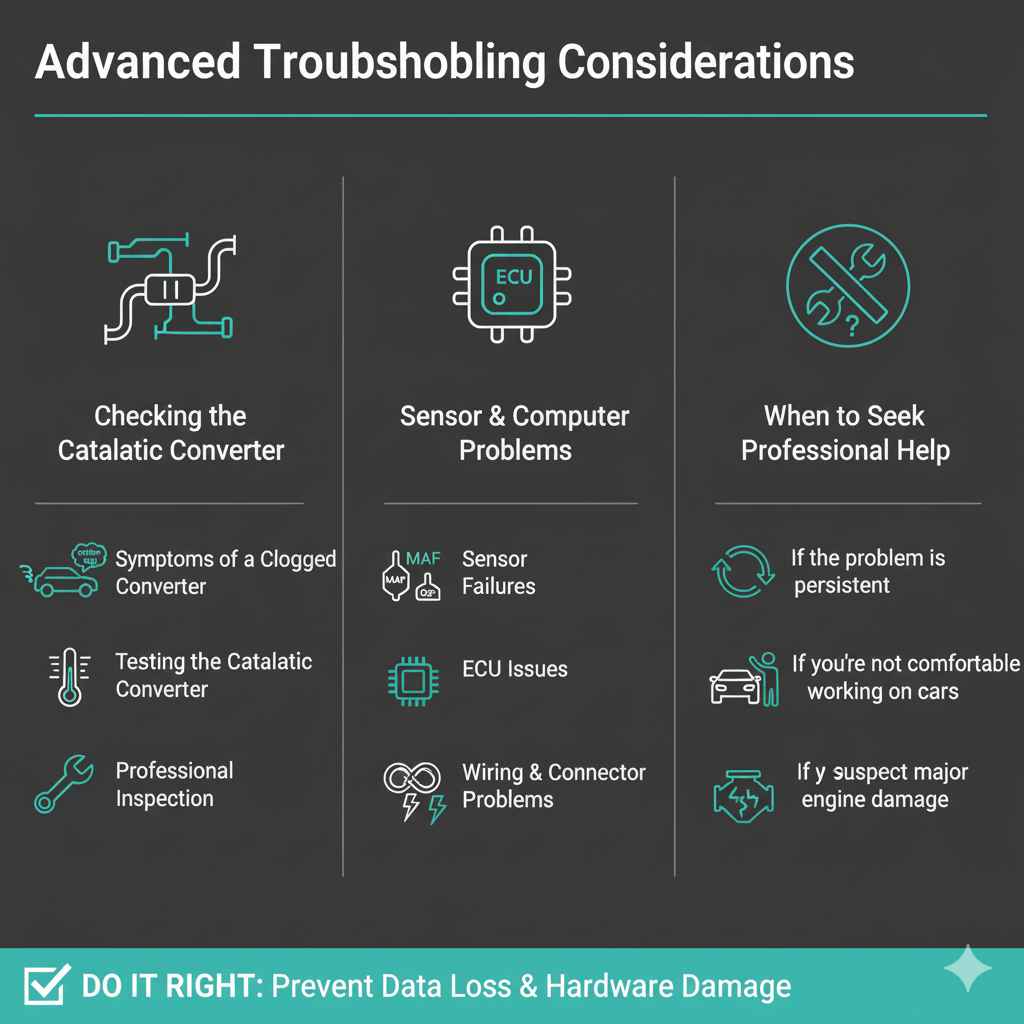
Advanced Troubleshooting Considerations
If the basic checks don’t solve the problem, you may need to look at more advanced diagnostics. This may include using specialized equipment or seeking help from a professional. The more complex systems are best left to those with expertise. These checks require some experience and are designed to solve the more complicated problems.
Checking the Catalytic Converter
A clogged catalytic converter can also lead to acceleration issues. The catalytic converter plays a role in reducing exhaust emissions. If it’s blocked, it can restrict exhaust flow, causing the engine to lose power and stutter. Catalytic converter problems aren’t a frequent occurrence, but they need to be addressed when they occur.
Symptoms of a Clogged Converter: Besides stuttering during acceleration, you might notice sluggish engine performance, a rotten egg smell, or a decrease in fuel economy. The engine may also stall or be hard to start. The exhaust may be excessively hot.
These symptoms can point to a restricted exhaust flow. The exhaust gets trapped, and the engine struggles to perform. Check the car’s manual to find the catalytic converter’s location. A visual check can show if there are any signs of damage or blockage.
Testing the Catalytic Converter: Use an exhaust backpressure test to measure the exhaust restriction. This test involves using a pressure gauge to measure the backpressure in the exhaust system. High backpressure indicates a clogged converter.
You can also use an infrared thermometer to measure the temperature of the exhaust before and after the catalytic converter. A significantly higher temperature reading after the converter may suggest a blockage. You may need to have your car’s converter removed by a mechanic for inspection. Replacement is often required.
Professional Inspection: A mechanic will use specialized tools to diagnose and address catalytic converter issues. They can also determine if the converter needs to be replaced or if the problem is elsewhere. Also, make sure to consider your car’s emissions regulations when replacing the converter.
A mechanic can also inspect the engine for other related issues, such as misfires. Issues can sometimes damage the catalytic converter. You can prevent issues by ensuring proper engine maintenance. You should promptly address any potential problems.
Sensor and Computer Problems
Your car’s computer, or ECU, relies on a variety of sensors to run the engine efficiently. If one of these sensors fails, or if the computer itself has a problem, it can affect acceleration. Many modern vehicles use a complex network of sensors that must work together. Sensor and computer issues require expert help, sometimes. These issues can be more difficult to diagnose.
Sensor Failures: Common sensors that can cause acceleration problems include the Mass Airflow (MAF) sensor, the Oxygen (O2) sensor, and the Crankshaft Position Sensor (CKP). When any of these sensors fail, they can send incorrect data to the ECU. This will lead to poor engine performance.
Use an OBD-II scanner to monitor the sensor data and identify any unusual readings. For example, a faulty MAF sensor can report an incorrect air flow to the engine. Replacement is usually required. Also, check wiring and connections for any damage or corrosion.
ECU Issues: The Engine Control Unit (ECU) manages all engine functions, including fuel, ignition, and emissions control. Although not common, an ECU issue can cause the engine to misbehave. ECU issues can be difficult to diagnose.
Problems with the ECU can manifest as a variety of symptoms, including stuttering. If you’ve eliminated other possible causes, and the issue continues, an ECU problem is possible. ECU issues often require professional diagnostic and repair services. A mechanic can perform specialized tests to determine if the ECU is working properly.
Wiring and Connector Problems: Problems with wiring and connectors can disrupt the signals sent to the ECU or from the sensors. Corrosion, loose connections, or damaged wires can cause incorrect sensor readings or prevent the ECU from controlling the engine correctly.
Inspect all wiring harnesses and connectors for damage or corrosion. Disconnect and reconnect connectors to ensure a proper connection. Use an electrical contact cleaner to clean any corroded connectors. Addressing wiring and connection issues can resolve a lot of the car’s issues. Wiring problems can cause a range of issues.
When to Seek Professional Help
Although you can handle many car problems, some issues are best left to professionals. A mechanic has the training and tools to diagnose and fix more complex issues. Do not hesitate to seek help when dealing with intricate problems. Knowing when to call in the professionals saves time and prevents potential damage to your vehicle. Some jobs are best left to experts.
If the problem is persistent: If you’ve tried the basic checks and fixes, and your car continues to stutter, it may indicate a more complex issue. A professional can quickly pinpoint the underlying cause. Continuing the drive may lead to serious damage.
If you’ve
If you’re not comfortable working on cars: Car repair can be intimidating. If you are not comfortable working with tools or don’t know your way around an engine bay, a mechanic can help. Safety is always the top priority.
Mechanics have experience with a range of problems. They use specialized tools and understand the systems. They can diagnose the issue quickly and safely. This ensures that the repairs are carried out correctly and prevents further damage to the car. Your safety is a priority.
If you suspect major engine damage: Any engine noise, such as knocking or other unusual sounds, could mean major problems. A mechanic can properly diagnose and address the issue before it causes extensive engine damage. Major engine problems are best left to professionals.
Continuing to drive when you suspect engine damage can be very dangerous and can cause severe damage. Mechanics have the knowledge and tools to evaluate internal engine components. They can help avoid catastrophic engine failures. They will provide the best solution to restore your car to its original running state.
According to the National Highway Traffic Safety Administration (NHTSA), properly maintained vehicles have a lower risk of accidents and mechanical failure.
Frequently Asked Questions
Question: What’s the most common cause of a car stuttering on acceleration?
Answer: Often, a clogged fuel filter or worn spark plugs are the most common causes. These are frequently simple fixes.
Question: Can I damage my engine by driving with a stuttering problem?
Answer: Yes, you might. If the issue is fuel-related, your engine could misfire, causing other issues. A severe engine issue is always possible.
Question: Should I replace all spark plugs at once?
Answer: Usually, yes. It’s best to replace all spark plugs at the same time to ensure consistent engine performance.
Question: How often should I replace my fuel filter?
Answer: Check your car’s manual for the recommended interval. Typically, it’s every 20,000 to 40,000 miles.
Question: What’s the difference between a fuel filter and a fuel pump?
Answer: The fuel filter cleans the gasoline, while the fuel pump moves the fuel from the tank to the engine.
Final Thoughts
Figuring out why your Car Stutters on Acceleration: What to Check doesn’t have to be a confusing problem. We’ve explored common culprits, like the fuel system, ignition system, and air intake, plus how to check them. From clogged filters to bad spark plugs, you now know the likely suspects. Troubleshooting steps using an OBD-II scanner and visual inspections are also helpful. Now, you should be able to diagnose a stuttering engine. If you’re confident, give it a shot. Start with the easy things first. If you get stuck, don’t worry. A mechanic can always take over. Your car will be back on the road again soon!