Carbureted 5.3: Your Guide to the Engine You Need
Getting familiar with the Carbureted 5.3: What You Need to Know can seem tough for anyone just starting out. It involves lots of parts and might feel confusing at first. But don’t worry! This guide is made to help you, no matter your experience level. We’ll break down the basics in easy steps, so you can quickly get up to speed. Next up, we will begin our exploration of the engine’s essential elements.
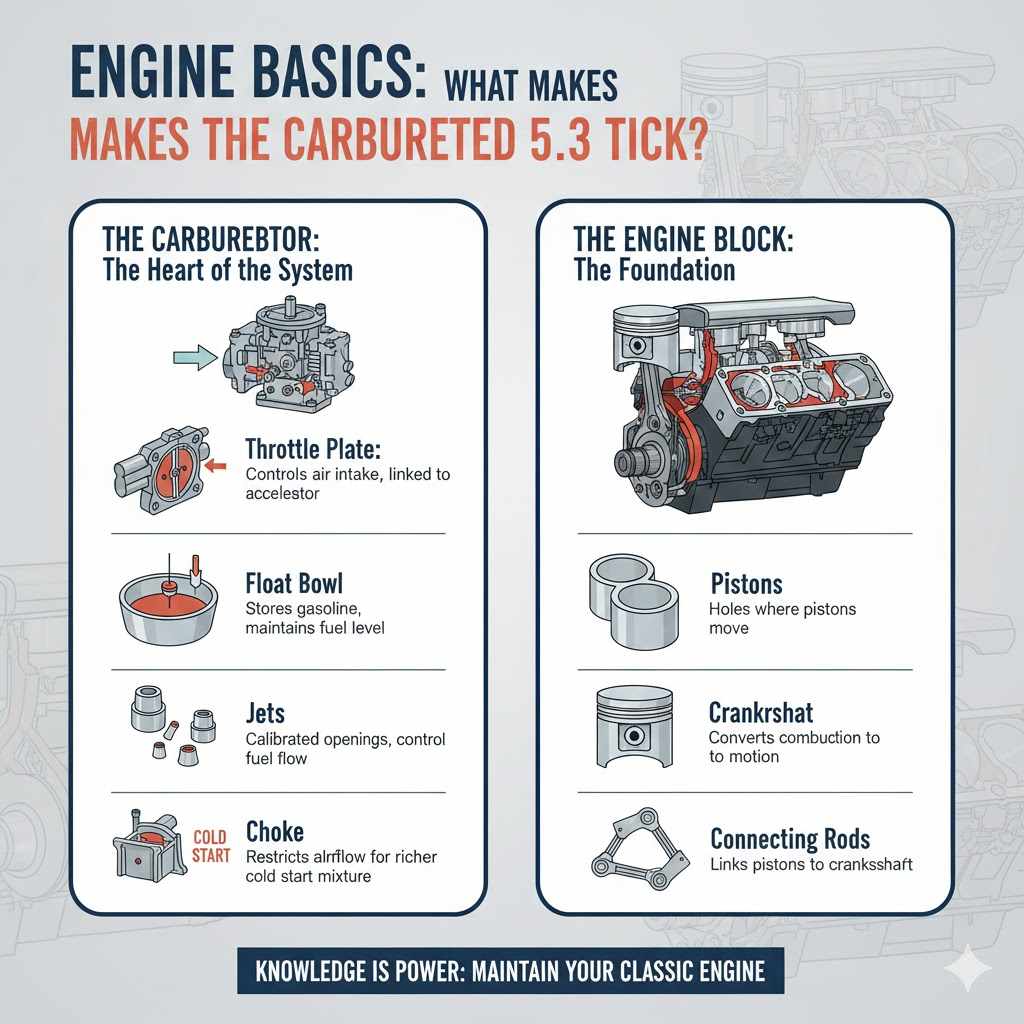
Engine Basics: What Makes the Carbureted 5.3 Tick?
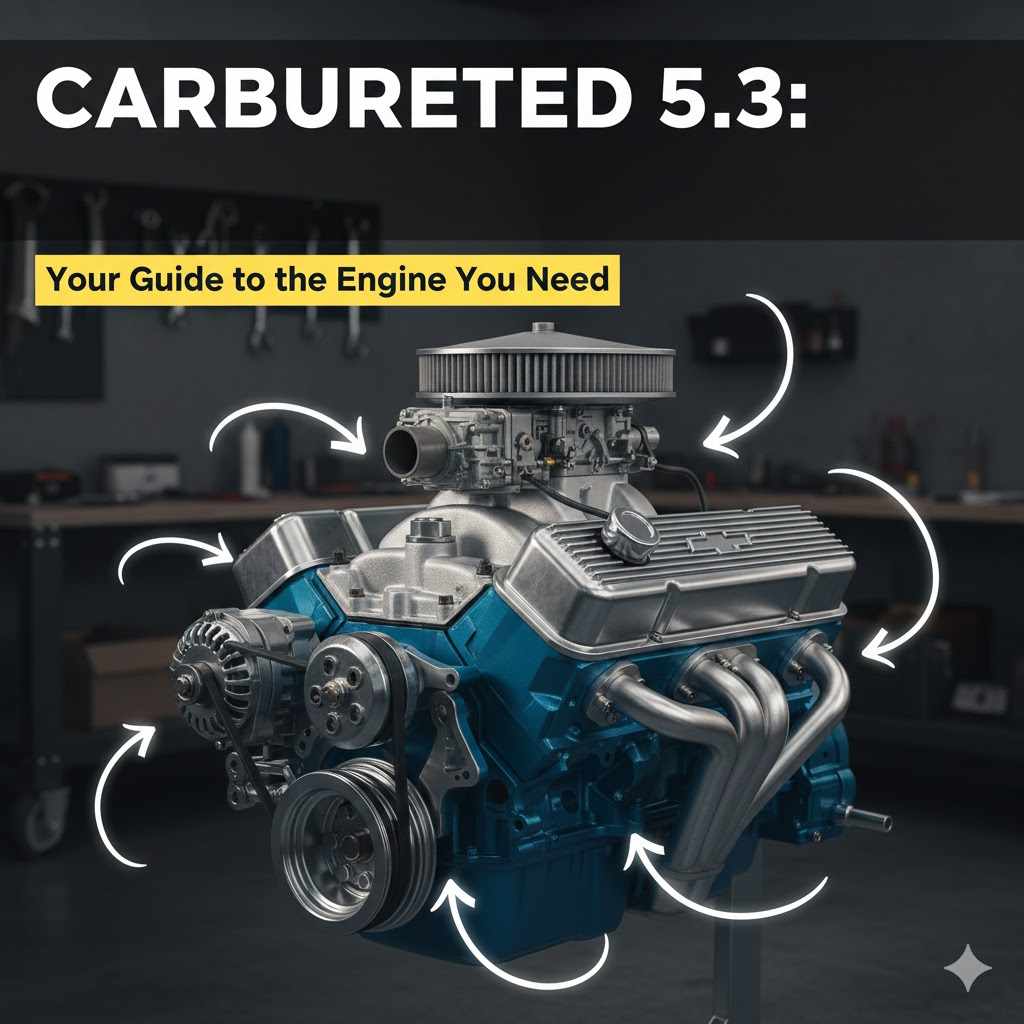
The Carbureted 5.3 engine is a popular choice for many car and truck owners. It’s known for its reliability and power. This engine relies on a carburetor to mix air and fuel. This is a key difference from more modern engines that use fuel injection. It’s super important to know how each part works so you can maintain the engine properly. This section will break down the essential components to start your exploration of the Carbureted 5.3: What You Need to Know.
The Carburetor: The Heart of the System
The carburetor is the engine’s fuel mixer. It blends air and gasoline in the correct amounts before the mixture enters the engine’s cylinders. A well-tuned carburetor is critical for engine performance. A bad mixture can cause the engine to run poorly, stall, or use too much fuel. The carburetor has several important parts that work together to create the right air-fuel mix.
Throttle Plate: This plate controls how much air goes into the engine. When you press the gas pedal, the throttle plate opens. This allows more air into the engine, which is how you get more power.
The throttle plate is linked to the accelerator. A wider opening lets more air through, so you get a stronger response and can go faster. This simple setup is a direct control of your car’s power.
Float Bowl: The float bowl stores gasoline ready for use. It has a float that rises and falls with the fuel level. The float controls a needle valve, which opens and closes to maintain a constant fuel level in the bowl.
The float bowl keeps the fuel ready to go, like a small reservoir. The fuel level is vital; too much or too little can cause issues. A well-adjusted float bowl ensures a consistent fuel supply for smooth engine operation.
Jets: Jets are small, calibrated openings that control the flow of fuel into the carburetor. There are usually multiple jets, each designed to supply fuel at different engine speeds and loads. They are like small nozzles that squirt fuel.
Jets are like the fuel’s gatekeepers. Each jet is sized precisely to provide the right amount of fuel for different situations, from idling to high speeds. Changing the jets can adjust the engine’s performance.
Choke: The choke helps start a cold engine by restricting airflow, making the fuel-air mixture richer. This richer mixture makes the engine easier to start when cold. This is essential for good starts.
The choke is your engine’s starting helper. It closes partially when the engine is cold, making the fuel mixture stronger. This boosts the engine’s chances of starting quickly, especially in cold weather.
The Engine Block: The Foundation
The engine block is the main structure of the engine. It houses the cylinders where the pistons move up and down. The block is usually made of cast iron or aluminum. This structure is very important because it supports all the other parts and has to withstand extreme heat and pressure.
Cylinders: The cylinders are the holes where the pistons move up and down. This movement drives the crankshaft and ultimately powers the wheels.
The cylinders are the heart of the engine’s power. Each one holds a controlled explosion that pushes the piston, which turns the crankshaft. The number of cylinders affects the engine’s power output.
Pistons: Pistons move inside the cylinders, driven by the combustion of fuel and air. They are connected to the crankshaft by connecting rods, converting the up-and-down motion into rotational motion.
Pistons are the workhorses of the engine. The explosion in the cylinder pushes the piston down, turning the crankshaft. The piston’s condition and movement are vital to performance.
Crankshaft: The crankshaft is a rotating shaft that converts the pistons’ up-and-down motion into rotational motion. This rotation powers the vehicle’s transmission.
The crankshaft transforms up-and-down movement into the rotation that drives your wheels. It is a central part that links the engine’s power to the transmission and your car’s movement.
Connecting Rods: These rods connect the pistons to the crankshaft. They transmit the force from the pistons to the crankshaft, allowing the rotational movement.
Connecting rods bridge the gap between the pistons and crankshaft. They take the force from the pistons and make the crankshaft spin. These parts need to be tough to handle the loads.
Fuel and Air: The Engine’s Breath and Food
The Carbureted 5.3: What You Need to Know also includes fuel and air intake. The carburetor controls the mixing of fuel and air. Air is sucked in by the engine and mixed with fuel from the carburetor. This mixture then enters the cylinders, where it’s ignited. A proper mixture is essential for performance.
Fuel System Components
The fuel system delivers fuel to the engine. It includes several essential parts that work together to bring fuel to the carburetor. Each of these parts has a role in getting fuel to where it needs to go.
Fuel Tank: This is where the gasoline is stored. The tank’s design and condition are important for safety. Regular inspection can prevent leaks and other problems.
The fuel tank holds the gasoline your engine will use. It’s usually located at the back of the vehicle for safety. It’s important to keep the fuel tank clean and in good condition.
Fuel Pump: The fuel pump moves gasoline from the fuel tank to the carburetor. There are different types of fuel pumps. Mechanical pumps are often located on the engine itself, and electric pumps are usually inside the fuel tank.
The fuel pump is the fuel’s transport system. Mechanical pumps work off the engine’s movement, while electric pumps use electricity. The pump ensures that the carburetor has a steady supply of fuel.
Fuel Filter: The fuel filter removes dirt and debris from the fuel before it reaches the carburetor. This protects the carburetor from clogging and ensures that the engine runs smoothly.
The fuel filter keeps the fuel clean. It prevents particles from getting to the carburetor, which can cause problems. Changing the filter regularly is key for engine health.
Fuel Lines: These are the pipes or hoses that carry fuel from the tank to the fuel pump and then to the carburetor. They must be durable and resistant to fuel corrosion.
Fuel lines are the fuel’s highway. They carry fuel safely to the pump and the carburetor. Checking for leaks or damage is vital for both safety and engine operation.
Air Intake System
The air intake system provides the air the engine needs. Air filters ensure that only clean air gets into the engine. Proper airflow is essential for the engine’s power and efficiency.
Air Filter: The air filter cleans the air before it enters the engine. It traps dirt, dust, and other contaminants. A clean air filter is very important for the engine’s long-term health.
The air filter is the engine’s protector against dirt. It stops debris from entering the engine. Replacing the filter as needed is key to optimal performance.
Air Intake Manifold: The intake manifold is the part that distributes the air-fuel mixture to the cylinders. It’s usually made of metal or plastic. Proper manifold design is very important for even distribution.
The intake manifold is the air traffic controller. It directs the air-fuel mixture to each cylinder. The design of the manifold impacts engine efficiency.
Throttle Body (or Carburetor): The throttle body or carburetor regulates the amount of air entering the engine. This control is connected to the accelerator pedal.
The throttle body controls how much air enters the engine. It’s directly linked to your accelerator. The wider the throttle, the more air flows in.
Engine Maintenance: Keeping the 5.3 Carbureted Running Right
To keep your Carbureted 5.3: What You Need to Know engine running at its best, regular maintenance is important. This includes things like changing the oil, checking the fluids, and making sure the ignition system is working correctly. Good maintenance can help you avoid problems and extend the life of your engine.
Oil and Fluid Checks
Checking and changing oil and other fluids is basic engine care. The engine’s oil lubricates moving parts and reduces friction. Coolant keeps the engine from overheating. Regular checks are very important to make sure your engine keeps performing well. If any issue is noticed, addressing it quickly will prevent more serious damage.
Oil Changes: Regular oil changes are essential. The oil lubricates the engine parts. Change the oil and filter as recommended in the vehicle’s manual.
Changing the oil regularly keeps the engine lubricated and prevents wear. Oil picks up dirt and contaminants, so changing the oil keeps the engine clean. The manual offers specific guidelines.
Coolant Checks: Check the coolant level regularly. Coolant prevents the engine from overheating. Ensure the coolant is at the recommended level.
Coolant keeps the engine at a safe operating temperature. Low coolant can cause overheating, which can damage the engine. Check the coolant regularly and add more when needed.
Other Fluid Checks: Check other fluids, such as brake fluid and power steering fluid. Ensure all fluids are at the proper levels.
Many other fluids help your car run. Brake fluid ensures the brakes work. Power steering fluid makes steering easier. These levels should be checked often.
Ignition System Inspection
The ignition system creates the spark that ignites the air-fuel mixture in the cylinders. Problems in the ignition system can cause misfires, poor performance, and hard starting. A little regular care can avoid issues.
Spark Plugs: Check the spark plugs regularly. They generate the spark that ignites the fuel-air mixture. Replace them at the recommended intervals.
Spark plugs make the spark to ignite the fuel. Worn-out plugs can cause misfires, reducing power and fuel efficiency. Check and replace them as needed for good starts.
Distributor (if equipped): The distributor is the component that distributes the spark to the spark plugs. Inspect it for wear or damage.
The distributor is the traffic controller for the spark. It sends the spark to each plug at the right time. Check the distributor and replace damaged parts.
Ignition Wires: Inspect the ignition wires. These wires carry the high voltage from the coil to the spark plugs. Replace any cracked or damaged wires.
Ignition wires are the power lines. They carry the high-voltage spark to the spark plugs. Worn wires can cause misfires and performance loss. They need to be in good shape.
Troubleshooting Common Issues with Carbureted 5.3 Engines
Sometimes, even with good maintenance, problems can still arise. Knowing how to identify and fix common issues will help you keep your engine running smoothly. The first step in troubleshooting is always to identify the symptoms. Knowing the root cause helps fix the issue the right way. This section focuses on typical problems that owners of the Carbureted 5.3: What You Need to Know might face.
Starting Problems
Starting problems can be caused by various issues. A few common causes include problems with the battery, fuel system, or ignition system. Knowing how to check these systems will help you find and fix the issue. A systematic approach helps solve the problem more efficiently.
No Start: If the engine won’t start at all, check the battery, starter, and fuel supply. Make sure the battery has enough power to start the engine. Check the fuel lines.
If your engine won’t start, start with the basics. Ensure the battery has enough power, then see if the starter is working. The engine needs fuel, so check those lines.
Hard Starting: If the engine takes a long time to start, check the choke, spark plugs, and fuel system. The choke might not be working correctly, or the spark plugs may be worn.
If the engine struggles to start, check the choke and spark plugs first. The choke helps with cold starts. Old spark plugs can cause a hard start. Verify your fuel situation.
Stalling: If the engine stalls, check the fuel supply and the idle speed. A clogged fuel filter, a vacuum leak, or the idle speed being set too low can cause stalling.
Stalling can be frustrating. Look at the fuel supply and the idle speed settings. A clogged fuel filter or vacuum leak might be to blame. This needs proper adjustment.
Performance Problems
Performance issues can range from a lack of power to rough running. These issues often relate to the fuel system, ignition system, or air intake. Troubleshooting these systems will help you resolve performance problems.
Lack of Power: If the engine lacks power, check the fuel and ignition systems. A clogged fuel filter, incorrect timing, or worn spark plugs can cause a lack of power.
Loss of power can come from different sources. Check the fuel system first, and ensure the engine timing is right. Check your spark plugs.
Rough Running: If the engine runs rough, check for vacuum leaks, spark plug issues, or carburetor problems. A vacuum leak can cause an erratic engine performance.
A rough-running engine usually points to a few common problems. Vacuum leaks, problems with the spark plugs, or issues with your carburetor can all affect smooth running.
Poor Fuel Economy: Poor fuel economy can be caused by a variety of issues. A rich fuel mixture or a clogged air filter can reduce fuel economy.
Bad fuel mileage might mean there is a fuel mixture problem or a blockage. Check the air filter and fuel system. Poor tune-up work can lower fuel mileage.
| Problem | Possible Cause | Solution |
|---|---|---|
| Engine Won’t Start | Dead Battery | Charge or replace battery |
| Engine Runs Rough | Faulty Spark Plugs | Replace Spark Plugs |
| Poor Fuel Economy | Clogged Air Filter | Replace Air Filter |
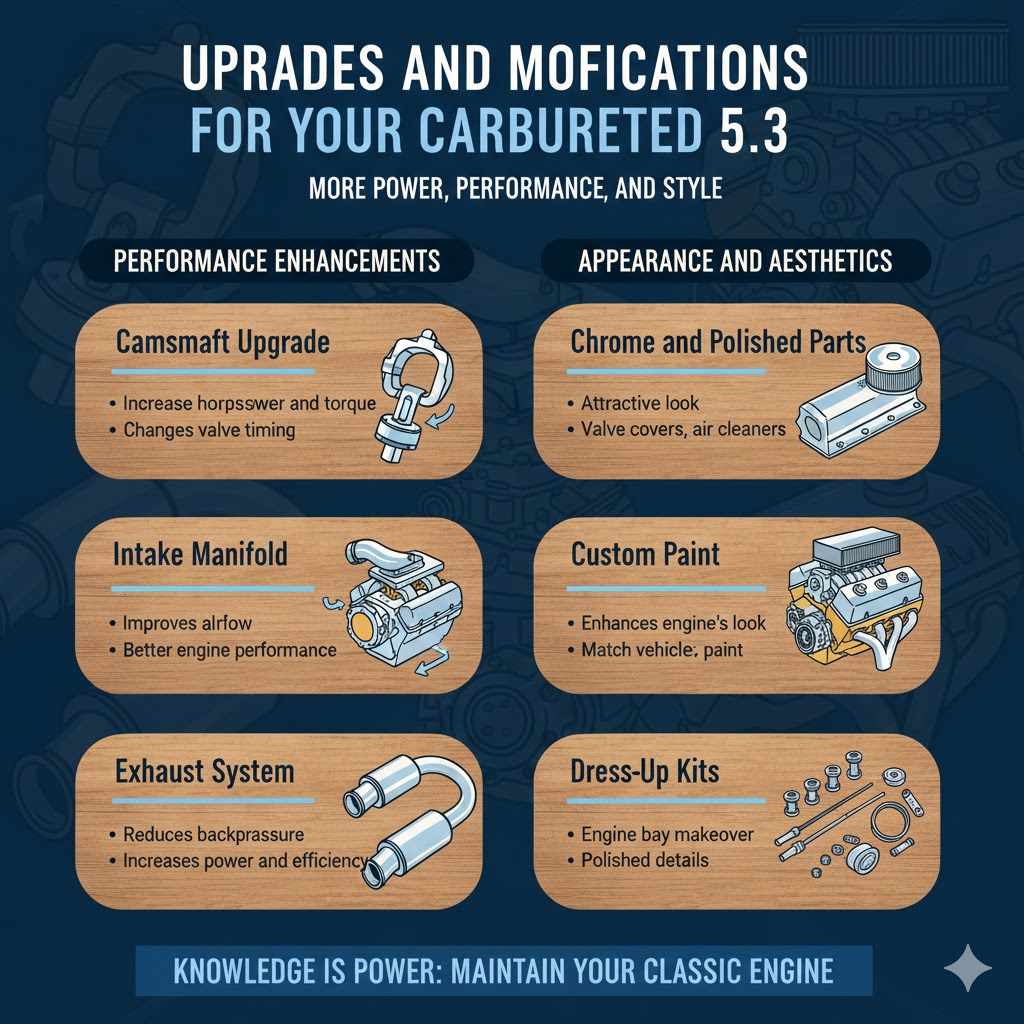
Upgrades and Modifications for Your Carbureted 5.3
After you have your basic engine setup, you might want to consider some upgrades. There are lots of ways to increase the engine’s power, performance, and appearance. However, make sure that any modifications you do will work with the rest of your system. Here are some of the most common upgrades and modifications used to improve your Carbureted 5.3: What You Need to Know.
Performance Enhancements
Upgrades and mods can really change the performance. The right upgrades can improve the engine’s power, throttle response, and overall performance. Always ensure that the upgrades fit your budget and goals.
Camshaft Upgrade: A performance camshaft can significantly increase horsepower and torque. It changes how the valves open and close.
A new camshaft helps the engine breathe better. It controls the valves, which affects how much air and fuel get into the engine. This can greatly increase your power.
Intake Manifold: Upgrading the intake manifold can improve airflow and engine performance. It’s often paired with carburetor upgrades for better results.
Upgrading the intake manifold helps the engine breathe better. Better airflow means more power. This is especially good when paired with carburetor mods.
Exhaust System: A better exhaust system reduces backpressure. This increases power and improves engine efficiency. Larger pipes and performance mufflers are common.
A better exhaust system reduces the restrictions. This can help increase the power of your engine by helping exhaust gases move out of the engine easier. Check your state’s noise laws.
Appearance and Aesthetics
You can also upgrade the engine’s appearance. Many people love to show off their engines. These aesthetic modifications can improve the look and make your engine compartment more attractive. Always balance function and beauty.
Chrome and Polished Parts: Adding chrome or polished parts can make the engine look more attractive. This can include valve covers, air cleaners, and other components.
Adding chrome parts really makes the engine look great. It can be a simple way to boost the overall appearance of the engine. Some of these parts are also available in custom colors.
Custom Paint: Painting the engine block, valve covers, or other parts can enhance the look. Many people choose to match the paint scheme of the vehicle.
Custom paint jobs can change how your engine looks. Choosing the right color can enhance the whole engine and vehicle. It is a way to make the engine reflect your style.
Dress-Up Kits: Dress-up kits often include various components designed to improve the engine’s appearance. These can include bolts, washers, and other decorative elements.
A dress-up kit gives an easy way to give your engine a makeover. These kits include the little details that can make the engine look really polished. This is a fast way to get better looks.
Frequently Asked Questions
Question: What is the main difference between a carbureted and fuel-injected 5.3 engine?
Answer: The primary difference is how the fuel and air are mixed. Carbureted engines use a carburetor to mix air and fuel, while fuel-injected engines use injectors that spray fuel directly into the engine or intake manifold.
Question: How often should I change the oil in my Carbureted 5.3?
Answer: You should change your oil every 3,000 to 5,000 miles, or as recommended in your vehicle’s manual. The frequency can also depend on your driving conditions and oil type.
Question: What causes a Carbureted 5.3 engine to run rough?
Answer: Rough running can be caused by various issues, including a vacuum leak, worn spark plugs, carburetor problems, or incorrect engine timing.
Question: How do I adjust the idle speed on a Carbureted 5.3?
Answer: You can usually adjust the idle speed with a screw on the carburetor. Consult your vehicle’s service manual for the exact location and procedure, as it may vary.
Question: What kind of fuel should I use in my Carbureted 5.3?
Answer: Most Carbureted 5.3 engines run on regular unleaded gasoline. However, always refer to your vehicle’s manual for specific fuel recommendations.
Final Thoughts
Knowing Carbureted 5.3: What You Need to Know makes your life easier. This guide should have equipped you with the basics. We have covered engine components, the fuel and air systems, and the right ways to keep it running smoothly. We covered basic maintenance and common problems. Remember that regular care is vital to keep your engine in top shape. Troubleshooting can also help solve issues. By knowing these basics, you can confidently handle any car repair. Keep learning and practicing. You’ll soon become an expert! Remember to consult your vehicle’s manual for specific instructions.