Where to Buy Paint for My Car: Top Online Stores Reviewed
For OEM-matched touch-ups, start with a specialist like AutomotiveTouchup or PaintScratch; for larger jobs, buy from TCP Global or Eastwood based on system, volume, and return policy. A bad color match, wrong hardener, or mismatched system can waste panels and force a repaint. This guide compares the best online stores for touch-ups, panel blends, and full repaints, and shows how to choose by color accuracy, kit contents, cost, and risk.
Online paint buying options at a glance



The right channel depends on the job first, not the logo on the checkout page. Touch-up bottles and aerosols favor convenience and fast code lookup. Panel repair needs deeper product lines and stronger support. Full repaints need system compatibility, hazardous-shipping handling, and a seller that can explain basecoat, clearcoat, primer, and reducers without guessing.
| Buying channel | Color-match accuracy | Product range | Support level | Shipping restrictions | Return risk | Best for |
|---|---|---|---|---|---|---|
| Auto parts retailers | Good for code-based touch-up, weaker on aged finishes | Basic kits, aerosols, primers, some repair paint | Moderate; store staff and basic online fitment tools | Usually easier than pro systems, but varies by product | Moderate | Small chips, quick fixes, same-day pickup |
| Specialty auto body suppliers | High when formula lookup is available | Broad: color formulas, basecoat, clearcoat, reducers, hardeners | High; technical data sheets and color-matching help | Often stricter for hazardous items | Higher if mixed-to-order, lower if you verify before checkout | Panel blends, custom mixing, pro-grade repairs |
| Manufacturer-approved distributors | Very high for OEM-grade systems | Brand-specific systems and compatible components | High, with authorization and product guidance | Can be limited by hazmat rules and region | Lower if specs are confirmed; often non-returnable once mixed | Factory-matched work and warranty-sensitive jobs |
| Online marketplaces | Variable; depends on seller and listing quality | Wide, but inconsistent | Low to variable | Varies widely | High | Only if the seller is clearly verified and the listing is exact |
Which channel fits touch-up, panel repair, or full repaint?
For a 1-inch chip or scuff, auto parts retailers and touch-up specialists are the easiest places to start. For a door skin or bumper cover, specialty suppliers usually fit better because they can provide a formula, a larger product set, and the technical data to keep the system consistent. For a full respray, manufacturer-approved distributors or pro-grade suppliers are the safer route.
Say your hood has about three stone chips near the leading edge. A small aerosol or bottle matched by paint code is usually the right size for a 1-inch chip or scuff, and a full urethane system may add extra cost, more mixing steps, and overspray risk. Suppose the front fender was repainted before and now looks slightly darker than the door. That aged-finish mismatch usually calls for a finish check, not only a code lookup.
Why the paint code matters
The paint code is the factory color identifier, and it is the fastest way to narrow the right formula before you buy. It is often found on the driver’s side door jamb, and other common places include the glove box, trunk lid, and under the hood. A code gives you the starting point; it does not guarantee a perfect match on an aged finish.
How to match your paint code before ordering
Most sellers that do this well ask for the code and the vehicle identification details, then cross-check the finish family before filling the order. Paint codes vary in format by manufacturer, so the important part is the exact code itself rather than any assumed length. If the listing does not ask for the code, that is a warning sign.
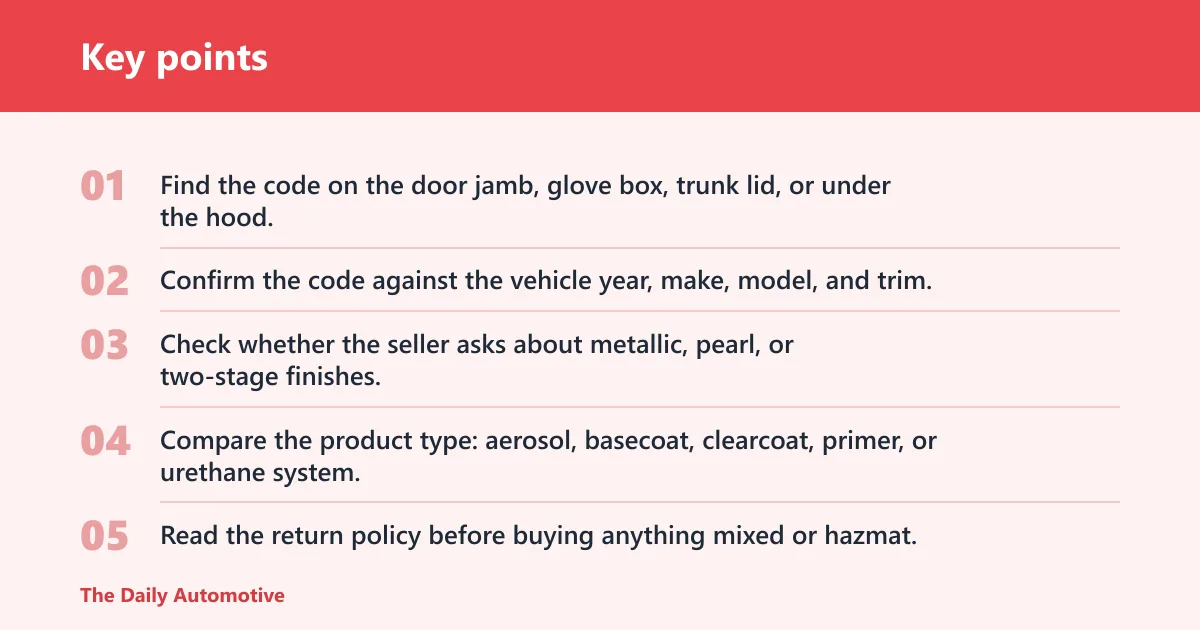
- Find the code on the door jamb, glove box, trunk lid, or under the hood.
- Confirm the code against the vehicle year, make, model, and trim.
- Check whether the seller asks about metallic, pearl, or two-stage finishes.
- Compare the product type: aerosol, basecoat, clearcoat, primer, or urethane system.
- Read the return policy before buying anything mixed or hazmat.
Why code-based ordering still needs a finish check
The code gets you close, but the car’s finish may have aged, faded, or been repainted before. Sun exposure can shift color, especially on horizontal panels. On older vehicles, the best result often comes from matching the code and then testing a small panel before you commit to a full area.
What to do if the code is missing or discontinued
If the code label is gone, start with a dealer, the manufacturer’s build data, or a specialty supplier that can search by vehicle details and formula history. If the color is discontinued, ask whether the seller offers a mixed-to-match option or a modern closest formula. For aged finishes, be ready to blend into adjacent panels or respray a larger section.
Where can you buy car paint online?
You can buy car paint from auto parts retailers, specialty auto body suppliers, approved distributors, and some dealer channels. AutoZone, O’Reilly Auto Parts, and NAPA are practical for quick pickup and simple repair products, while specialty suppliers such as AutomotiveTouchup, TCP Global, Eastwood, and PaintScratch are better fits when you need formula support or a broader paint range.
Auto parts retailers
AutoZone, O’Reilly Auto Parts, and NAPA are practical for consumer-friendly repairs, especially when you want quick pickup or a simple aerosol kit. Their strength is speed and access. Their weak spot is depth: they are usually better for common repair products than for custom-mixed, pro-grade paint systems.
Specialty auto body suppliers
Specialty suppliers are usually better when you need mixed-to-match options, technical data sheets, or help choosing between basecoat and urethane. AutomotiveTouchup and PaintScratch are the most straightforward examples here for code-based ordering, while TCP Global and Eastwood fit better when you need broader system choices and pro-style products. That support matters more than a flashy storefront.
Manufacturer-approved distributors
Manufacturer-approved distributors are the best fit when OEM-grade finishes, warranty coverage, and brand authorization matter. Dealer or approved distributor supply can be OEM and factory-matched. That matters for newer vehicles, lease return work, and repairs where the owner wants a factory-aligned system instead of a generic match.
Marketplaces and why they carry more risk
Marketplaces can look convenient, but the listing quality varies too much for a blind buy. The seller may not clearly identify the paint system, hardener, or compatibility with your vehicle code. If you use a marketplace at all, treat seller verification, return rules, and photo quality as part of the purchase decision, not an afterthought.
What are the best online stores for car paint?
The best online stores are the ones that match the repair size and the type of finish you need. AutomotiveTouchup and PaintScratch are strong starting points for code-based touch-ups. TCP Global and Eastwood are better fits when you need a broader product range for panel work or larger refinishing jobs. AutoZone, O’Reilly Auto Parts, and NAPA are the most practical options for quick pickup and simpler consumer repairs.
Best for touch-up bottles and aerosols
Look at auto parts retailers and code-based touch-up sellers when the damage is small. AutomotiveTouchup and PaintScratch fit this use case best because they are built around code matching and small repair needs. Paint for Cars says it has provided car paint and body supplies since 1998, and it lists Acrylic Enamel, Acrylic Urethane, and Acrylic Urethane Basecoat among its major paint types, which shows the gap between consumer kits and pro systems.
Best for technical support and custom mixing
Choose specialty auto body suppliers when you need formula lookup, technical data, or help deciding between paint families. TCP Global and Eastwood are the clearer examples here because they are more useful when you are comparing product systems instead of just ordering a code-matched bottle. They are often the better option for panel blends and partial resprays because they support product pairing and can explain what reducer or hardener goes with a given system. That support matters more than a flashy storefront.
Best for OEM-grade systems and larger jobs
Choose approved distributor channels when the repair needs brand-specific coverage and a true factory-style system. These sellers are the right answer for larger refinishing work, especially if the vehicle is new enough that authenticity and compatibility matter more than price alone. For a whole vehicle repaint, this is usually the safest place to start.
Paint systems: which one should you order?
Do not buy the same type of paint for every job. Aerosol touch-up paint fits minor repairs. Basecoat and clearcoat fit panel work and many factory finishes. Urethane systems fit durable full repaints, but they demand correct mixing ratios and proper ventilation. Primer is the layer that helps adhesion and corrosion protection before color goes on.
Aerosol touch-up paint for minor damage
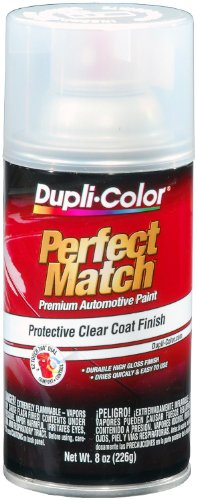
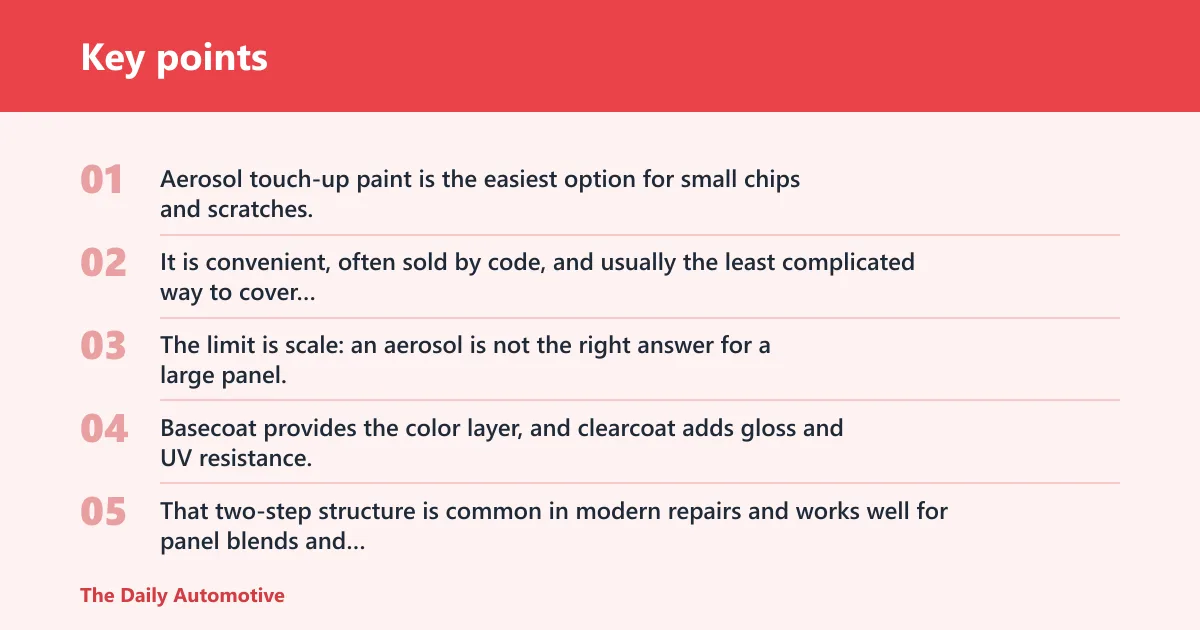
Aerosol touch-up paint is the easiest option for small chips and scratches. It is convenient, often sold by code, and usually the least complicated way to cover exposed metal or primer. The limit is scale: an aerosol is not the right answer for a large panel, especially if the surrounding paint has aged.
Basecoat and clearcoat for panel repair
Basecoat provides the color layer, and clearcoat adds gloss and UV resistance. That two-step structure is common in modern repairs and works well for panel blends and bumper refinishing. TCP Global and Eastwood are useful here because they carry the kinds of related products that make a basecoat-and-clearcoat job easier to assemble from one source.
Urethane systems for durable full resprays
Urethane systems are usually a better fit for full repaints because they are durable and suited to more demanding finish work. They are also less forgiving. Mixing ratios matter, safety gear matters, and ventilation matters. If the listing does not clearly state the ratio, activator, and compatibility, do not assume the system will work with what is already in your garage.
Primer, reducer, and hardener basics
Primer comes first when the panel needs adhesion or corrosion protection. Reducer changes spray behavior and flow in some systems. Hardener or activator helps the coating cure properly. The important buying point is simple: make sure the seller lists these components clearly, because a basecoat kit without the matching reducer or a urethane kit without the right hardener is incomplete.
Choose AutoZone, O’Reilly, NAPA, or a specialty supplier
Choose auto parts retailers if you want speed, simple kits, and an easy in-store pickup path. Choose specialty suppliers if you need formulas, support, and a larger paint range. Choose approved distributors if you want OEM-grade coverage and stronger authorization. The best seller is the one that matches your repair size and your tolerance for shipping risk.
Choose auto parts retailers if you need fast pickup and simple kits
Use AutoZone, O’Reilly Auto Parts, or NAPA when you need a touch-up bottle, aerosol, or quick repair paint and want the option of same-day pickup. These stores are often the most convenient for minor damage. They are less ideal for complex formula work or a full repaint system with multiple components.
Choose specialty suppliers if you need formulas and support
Pick a specialty supplier when the paint code is known but the finish is not straightforward. AutomotiveTouchup, TCP Global, Eastwood, and PaintScratch are better fits when you need mixed-to-match orders, technical sheets, or help selecting the correct system. They are also more likely to tell you when a code match still needs a blend into adjacent panels because the finish has aged.
Choose manufacturer distributors if you want pro-grade coverage
Go with approved distributors when the job needs OEM-grade paint, brand compatibility, or warranty-sensitive work. This is the strongest path for larger jobs and higher-stakes repairs. It is also the least forgiving on shipping limits and return rules, so verify everything before ordering.
Paint store review table
Here is the practical comparison many buyers need before checkout. The main trade-off is simple: convenience versus precision. The farther you move from touch-up, the more support, formula control, and hazmat handling matter.
| Store type | Color-match accuracy | Product range | Support level | Return policy and shipping restrictions | Best-for scenario |
|---|---|---|---|---|---|
| Auto parts retailer | Good for code-based aerosols and bottles | Basic consumer kits | Moderate | Usually clearer for simple items; hazmat limits still apply | Small chips and quick fixes |
| Specialty auto body supplier | High when the seller uses formula lookup | Broad pro-grade selection | High | More non-returnable items once mixed; hazmat shipping is common | Panel blends and custom orders |
| Manufacturer-approved distributor | Very high for factory-matched systems | Brand-specific pro systems | High | Often strict on returns and shipping | OEM-grade work and larger repairs |
| Marketplace seller | Variable | Variable | Low to variable | Highest risk if the listing is vague | Only with careful verification |
What to check before ordering automotive paint online
Check the paint code, the product type, the seller’s authorization, and the return policy before you pay. Confirm whether the item is a consumer kit or a pro-grade system. Review shipping restrictions, hazmat handling, and any non-returnable status. Then compare the total landed cost, not just the sticker price, because reducers, hardeners, and freight can change the real total quickly.
Frequently asked questions
Where do I buy car paint by code?
Start with sellers that ask for the factory paint code and can cross-check the vehicle details. The code is often on the driver’s side door jamb, and it may also be in the glove box, trunk lid, or under the hood. Code-based ordering is the safest starting point for exact color matching.
Is it better to buy car paint from a dealer or online?
Dealer or approved distributor paint is usually a strong choice if you want OEM-matched material and factory compatibility. Online sellers can be better for price comparison, wider product range, and finding specialty systems. For a newer car or warranty-sensitive job, dealer or approved distributor supply is usually the safer path.
How do I match my car paint code before ordering?
Locate the paint code on the vehicle, confirm the code with the seller, and check whether the finish is metallic, pearl, or two-stage. If the car is older, faded, or previously repainted, the code alone may not be enough. Ask for formula help or plan a blend into adjacent panels.
What type of car paint should I buy for a touch-up?
For small chips and scratches, aerosol touch-up paint or a small code-matched bottle is usually the right choice. Basecoat and clearcoat are better for larger panels, and urethane systems are better for full repaints. If the repair area is tiny, do not overspend on a full pro system.
What should I check before ordering automotive paint online?
Check the paint code, the seller’s authorization, the product type, and the return policy. Confirm whether reducers, hardeners, and primer are included or need to be ordered separately. Review shipping limits and hazmat rules before checkout, because some coatings are non-returnable once mixed or shipped.
Products related to this article
Sponsored / affiliate links. As an Amazon Associate I earn from qualifying purchases. I may earn additional commission from eligible campaigns.