Do All Cars Come With A Jack? Essential Answer
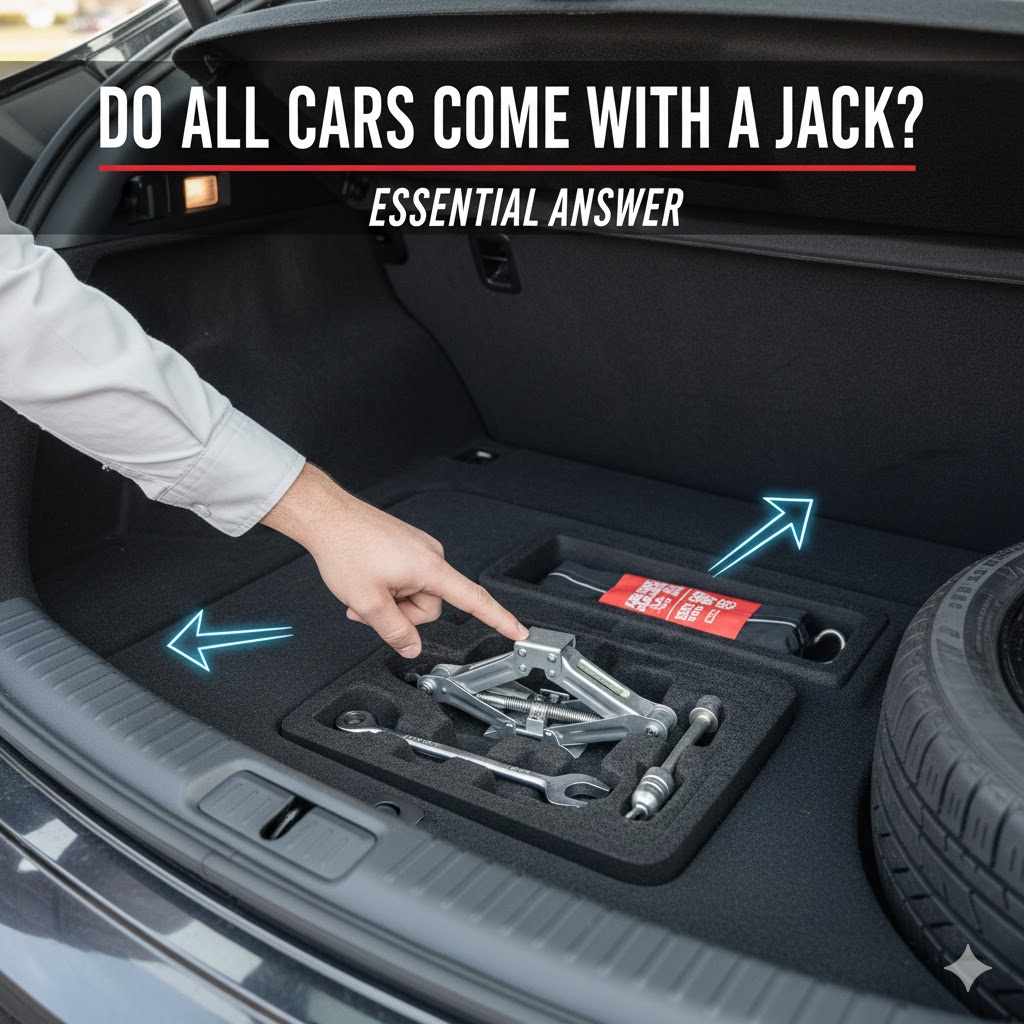
Generally, yes, most new and used cars sold in the US come standard with a basic scissor or bottle jack. However, this isn’t guaranteed for every vehicle, especially some electric cars or performance models. Always check your trunk or spare tire compartment to confirm what your specific car includes for emergencies.
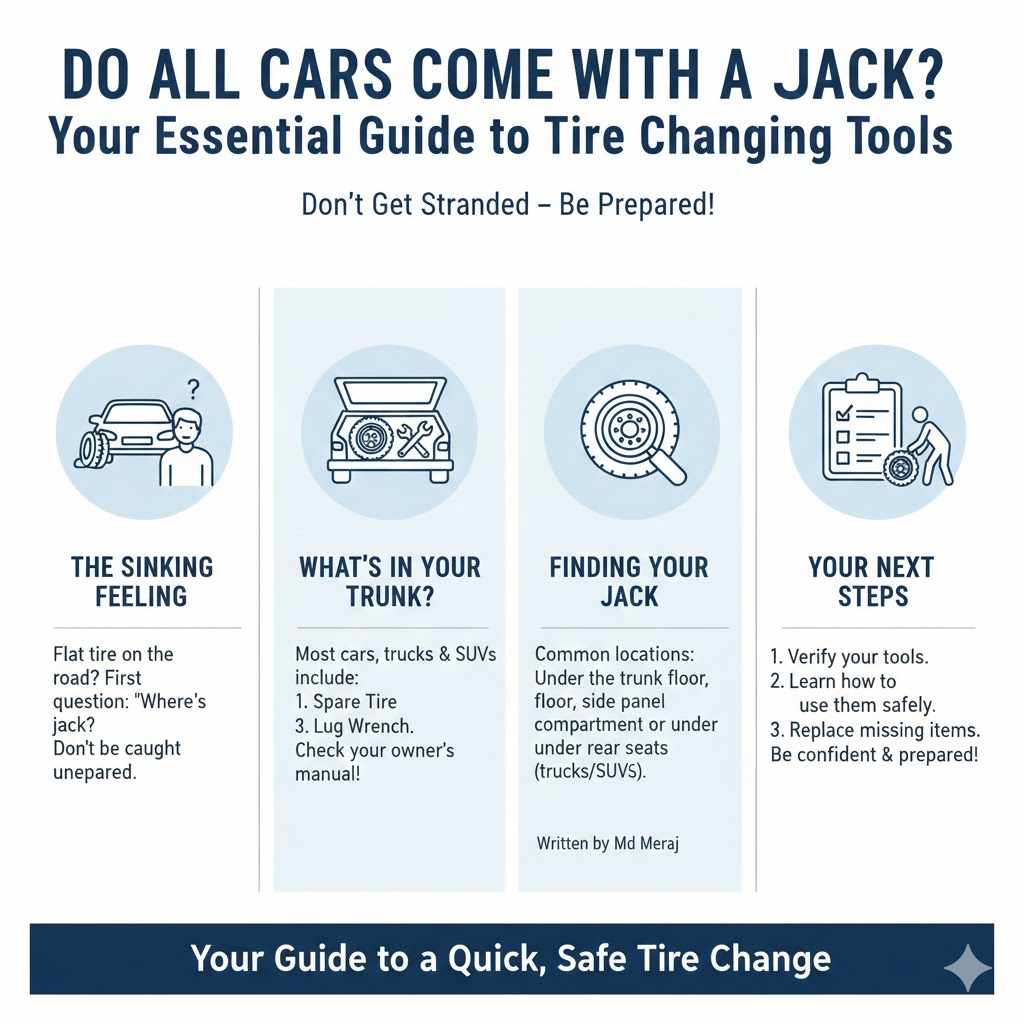
Do All Cars Come With A Jack? Your Essential Guide to Tire Changing Tools
That sinking feeling when you see a flat tire on the side of the road is tough. You need to fix it fast, but the very first question pops up: “Do I even have a jack?” It’s a frustrating moment when you are stranded, and the answer seems hidden in the owner’s manual. You don’t need to be a mechanic to handle a tire change, but you do need the right tools.
I’m Md Meraj, and I want to make sure you feel confident about your car’s emergency gear. This guide cuts through the confusion. We will look at what vehicles include a jack, where to find it, and what to do if yours is missing. Let’s get you prepared so you can handle a flat tire with ease and safety.
The Simple Answer: What the Law Says (And What Manufacturers Do)
This is the core question: Do all cars come with a jack? For most standard passenger cars, trucks, and SUVs sold in the United States, the answer is generally yes. Why? Because a spare tire (or tire repair kit) is useless without the tool needed to lift the car for installation.
While there isn’t a strict federal law mandating the inclusion of a jack for every single vehicle type, safety standards and consumer expectations drive manufacturers to include one. A car sold new in the U.S. is almost always equipped with a basic lifting tool if it has a spare tire.
When Manufacturers Might Skip the Jack
However, this tradition is changing, especially with newer vehicle technology. You might find a jack is missing in a few specific categories:
- Performance Vehicles: High-performance sports cars often skip the spare tire and jack entirely to save weight and improve handling. They usually come with a tire inflator kit instead.
- Electric Vehicles (EVs): Many EVs (like some Tesla models) do not include a conventional spare tire because the battery platform takes up the traditional spare tire well space. They rely solely on sealant/inflator kits.
- Run-Flat Tires: If your car comes standard with Run-Flat Tires (RFTs), the manufacturer assumes you don’t need a spare. If you don’t have a spare, you won’t have a jack.
- Very Old or Imported Vehicles: Older cars, or certain niche models imported directly without U.S. compliance, might have arrived without the complete tool kit.
The key takeaway is: Assume you should have one, but always physically check your vehicle!
How to Find Your Car’s Jack: A Step-by-Step Location Guide
Finding the jack can feel like a scavenger hunt, especially in larger SUVs or vehicles with complex cargo areas. Don’t panic if you don’t see it immediately under the main trunk floor.
Follow these steps to locate the lifting equipment in your vehicle:
- Remove the Trunk Floor Cover: Lift the main carpeted panel in your trunk. This often exposes the spare tire well.
- Check Under the Spare Tire: In many sedans and smaller SUVs, the jack is strapped or nested directly next to or underneath the spare tire itself. You may need to unscrew a retaining bolt to lift the spare tire out of the way.
- Look in Side Compartments: In many modern SUVs (like crossovers), the jack is tucked into a small compartment accessible by lifting a side panel in the cargo area, often near the wheel well. These compartments might have a small plastic latch or handle.
- Check Under the Seats (Rarely): In some older or smaller hatchback models, the jack might be stored under the rear passenger seats. Lift the seat cushion up from the front edge to check.
- Examine Under the Front Hood (Very Rare): For certain large trucks or older European models, tools might be stored in a designated area near the battery under the hood. Check your owner’s manual if the trunk yields nothing.
Pro Tip: Once you find it, familiarize yourself with how it secures back into its spot. You don’t want to be fumbling for it during a nighttime emergency!
Understanding the Different Types of Car Jacks
Not all jacks are created equal. The type of jack included with your car is usually chosen for simplicity and space-saving, but knowing the differences helps you use it safely.
1. Scissor Jack (Most Common)
This is the standard jack found in most passenger cars. It uses a screw mechanism that, when turned, causes the two arms of the scissor to move together, lifting the vehicle.
- Pros: Lightweight, compact, generally easy to operate with the provided lug wrench.
- Cons: Slow to lift, requires some physical effort, and has a lower weight capacity than bottle jacks.
2. Bottle Jack (Common in Trucks/SUVs)
These look like a thick cylinder with a screw mechanism extending from the top. They use hydraulic fluid to lift heavy loads.
- Pros: Excellent stability, higher weight capacity, great for trucks or vehicles that sit higher off the ground.
- Cons: Heavier and bulkier than scissor jacks, requires more space to store and operate.
3. Screw Jack (Less Common Today)
Similar to a scissor jack but sometimes designed differently (often found in older domestic vehicles). Operation is similar—turning a large screw to achieve lift.
What About Repair Kits (No Jack Included)?
If your car came only with a tire sealant and compressor kit, you cannot change the tire yourself. This kit is designed only to temporarily inflate a small puncture. For a total sidewall blowout or major damage, you will need roadside assistance. It is highly recommended that drivers of these vehicles purchase a compatible aftermarket jack.
For reference on safety guidelines for vehicle lifting, always consult resources like those provided by the National Highway Traffic Safety Administration (NHTSA) when planning any roadside repair. The NHTSA website offers vital safety information for all drivers.
Essential Tools That Must Accompany Your Jack
A jack by itself is useless if you can’t remove the lug nuts holding your wheel in place. When checking your tool kit, ensure you have these accompanying items:
| Tool Name | Purpose | Why It’s Essential |
|---|---|---|
| Lug Wrench | To loosen and tighten the lug nuts on the wheel. | This is the lever you use to apply the force needed to break the lug nuts free. |
| Owner’s Manual | Shows the exact jack points on your frame. | Using the wrong spot can seriously damage your car’s body or suspension. |
| Wheel Chocks | Blocks placed behind the wheels that remain on the ground. | Prevents the car from rolling while it is lifted—a crucial safety step. |
| Gloves | To keep hands clean and provide better grip. | Protects your hands from grease and sharp edges. |
Roadside Safety: Where to Place the Jack Correctly
This is perhaps the most critical part of using a jack—lifting the car in the right spot. Lifting your vehicle in the wrong place can bend the frame, damage plastic trim, or cause the car to fall off the jack, leading to serious injury or massive repair bills.
Finding Your Vehicle’s Jack Points
Your car manufacturer has designated specific, reinforced areas on the frame or pinch welds designed to safely bear the vehicle’s weight. Never guess!
Always refer to your Owner’s Manual for the exact jack points for your specific model.
However, generally speaking, here are the common locations:
- Frame Rails (Trucks/Older Cars): Look underneath the vehicle along the main metal beams running from front to back.
- Pinch Welds (Most Modern Cars): These are the seams of metal where the body panels meet, located just behind the front wheels and just in front of the rear wheels. There is often a small notch or arrow marking the precise spot for the jack head.
- Subframe Points (Some AWD/EVs): Occasionally, the jack point may be on a reinforced part of the suspension or subframe assembly, especially if there is no easy-to-access pinch weld.
Safety Check: Before you start cranking the jack, ensure the ground beneath the car is firm, flat, and level. Soft dirt, sand, or steep inclines are recipes for disaster. A piece of sturdy, flat wood placed under the jack base can help distribute the weight on slightly softer surfaces.
What If My Car Did Not Come With a Jack? (The Backup Plan)
If you checked every spot and confirmed your vehicle (perhaps a new EV or a performance model) did not include a jack, don’t worry. You have options to prepare for that flat tire situation.
Option 1: Purchase the OEM Jack Kit
If your car was supposed to have a jack but it was missing when you bought it used, contact a dealership parts department. You can often buy the exact factory-approved jack kit specifically designed for your vehicle.
Option 2: Buy an Aftermarket Jack
If your car uses a sealant kit (no spare), or if you want a more robust tool than the factory scissor jack, purchase a high-quality aftermarket jack.
Choosing the Right Aftermarket Jack
When shopping, you need to consider two main ratings:
- Weight Capacity: The jack’s capacity must be greater than the weight of your vehicle. Check your vehicle’s Gross Vehicle Weight Rating (GVWR) found on the sticker inside the driver’s door jamb. Buy a jack rated for at least 1.5 times your vehicle’s weight for safety.
- Lifting Height: Ensure the jack can lift your car high enough so the flat tire clears the ground completely. Large SUVs and trucks need a “high-lift” jack.
For everyday use, a good quality hydraulic bottle jack is often sturdier and easier to use than a basic scissor jack. For expert advice on tool selection and quality standards, you can review consumer product testing guides, such as those frequently published by organizations like Consumer Reports, which often test lifting devices for safety and durability.
Option 3: Rely on Roadside Assistance
If you are worried about changing the tire yourself or simply don’t want to carry the equipment, ensure you have comprehensive roadside assistance through your insurance, AAA, or a service like OnStar. This is the safest alternative if you are unsure about the procedure or lack the proper tools.
Practical Tips for Maintaining Your Jack and Tool Kit
Having the tools is one thing; ensuring they work years later is another. Since these tools often sit unused for a decade, they need periodic inspection.
Jack Maintenance Checklist
- Check for Rust: Metal tools, especially scissor jacks, can rust in damp trunk environments. Wipe down any rust spots and apply a light coat of silicone spray or grease to the screw threads to keep them turning smoothly.
- Inspect the Rubber Pad: Many jacks have a rubber pad on top to protect the car’s frame. If this is cracked or missing, you must replace it or use a small wooden block between the jack head and the car frame (always check the manual first).
- Test It Annually: Once a year, take the jack out, lift a corner of your car safely (following all safety procedures!), let it sit for a moment, and then lower it. This ensures the mechanism is functioning and you remember the process.
- Keep Components Together: Ensure the lug wrench, jack handle, and any necessary mounting pins are stored exactly where you found them. Losing one piece renders the entire kit useless.
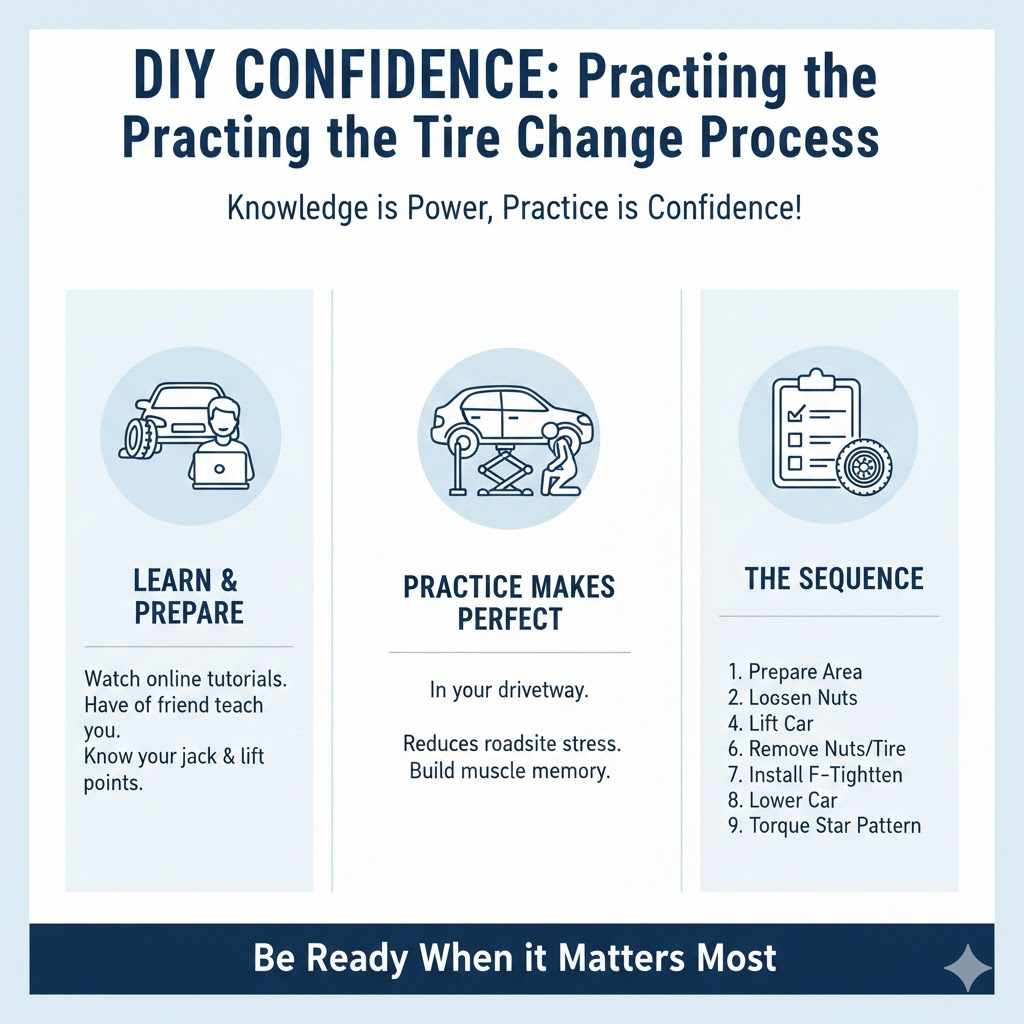
DIY Confidence: Practicing the Tire Change Process
Knowledge is power, but practice is confidence. If you have found your jack and confirmed you have all the necessary parts, take the next step: practice!
If you are unsure about the process, watch a few reputable online tutorials or have a friend who knows how to change a tire walk you through the steps in your driveway. Knowing exactly how the jack operates and where the proper lift points are before you are stressed on the roadside makes all the difference.
Remember the sequence: Prepare the area, loosen the nuts while the car is on the ground, position the jack correctly, lift the car, fully remove the nuts and tire, install the spare, tighten the nuts by hand, lower the car, and finally, torque the nuts in a star pattern.
Frequently Asked Questions (FAQ) About Car Jacks
Q1: If I buy a used car, how can I be sure the jack is included?
A: You must physically inspect the trunk, spare tire well, and side storage compartments before purchasing. Do not rely solely on the seller’s word; if you cannot find it, assume it is missing and factor the cost of a new jack into your final price negotiation.
Q2: Are tire inflator kits a good replacement for a jack and spare tire?
A: No, they are not a replacement. Inflator kits are only for temporary sealing of small tread punctures. They cannot fix sidewall damage or large gashes. If you have only a sealant kit, you should always carry an appropriate aftermarket jack.
Q3: Can I use a jack from a different car model?
A: You can use a jack from a similar vehicle, but you must verify two things: 1) The weight capacity is high enough for your car, and 2) The head of the jack is compatible with your specific vehicle’s jacking points (pinch welds or frame). Mixing and matching can be unsafe.
Q4: Why is my scissor jack so hard to turn?
A: Scissor jacks get stiff over time, especially if they are old or slightly rusted. Apply a small amount of penetrating oil or silicone spray to the screw threads. You might also need a longer handle or leverage bar, but always turn slowly and steadily.
Q5: Should I use the jack supplied with the car to lift the whole vehicle for maintenance?
A: Absolutely not. Factory-supplied jacks are designed only for temporary, on-the-spot roadside tire changes. For any extended maintenance, or if you need to work significantly under the vehicle, you must use high-quality jack stands rated for the load.
Q6: What is the difference between a jack and a jack stand?
A: A jack lifts the car; a jack stand holds the car up safely once it is lifted. Never trust a jack to hold the car steady while you work underneath it; always use properly rated jack stands in conjunction with a jack for safety.
Conclusion: Your Confidence in Carrying the Right Tools
So, do all cars come with a jack? In the majority of cases, yes, they do, provided they come with a spare tire. However, as vehicle technology evolves, that standard is shifting toward sealant kits for weight savings.
Your responsibility as a driver is simple: Don’t leave it to chance. Take a moment today—before you ever need it—to pop that trunk, find your tools, and confirm your vehicle is ready for an emergency. Knowing exactly where your jack is, how it works, and where to place it on your vehicle’s frame will turn a stressful roadside breakdown into a manageable, albeit annoying, task. Stay prepared, drive safe, and enjoy the peace of mind that comes with being ready for anything!