What Does TC Stand For in a Car? A Practical Diagnostic Guide
You’re driving on a wet highway, hit a patch of standing water, and feel the gas pedal pulse under your foot. A yellow light with squiggly lines flashes on the dash. That’s your traction control system working. Most drivers see that light and have no idea what it’s actually doing, or whether they should be worried.
This guide explains what TC stands for, how the system really works, and how to read the warning light like a pro. You’ll learn when to leave it on, when to turn it off, and how to avoid paying a mechanic for a problem you can fix yourself. By the end, you’ll know exactly what to do the next time that light appears.
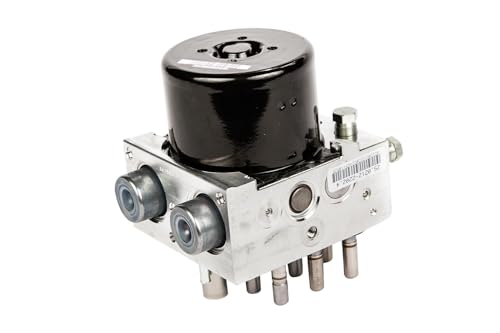
GM GENUINE PARTS
GM Genuine Parts 23156466 Electronic Traction Control…
- GM-recommended replacement part for your GM vehicle’s original factory component
- Offering the quality, reliability, and durability of GM OE
- Manufactured with GM Original Equipment specification for fit, form, and function
If you drive a GM vehicle and the traction control light stays on due to a failed brake pressure module, a direct replacement like the GM Genuine Parts 23156466 module restores factory performance. It’s an OEM part, so it matches the original fit and function exactly. That’s a solid fix for a common failure point, not a band-aid.
What Does TC Stand For? The Simple Definition
TC stands for traction control. It’s an electronic system that stops your drive wheels from spinning when you accelerate on slick surfaces. Think of it as a digital foot that lifts off the gas pedal for you, but faster and more precisely than any human can react.
The system uses the same hardware as your anti-lock braking system (ABS). That’s why the TC light and ABS light often share a dashboard indicator. When one has a problem, the other usually gets involved too.
Traction control first appeared in production cars in the late 1980s, and it became mandatory on all new passenger vehicles in the United States starting with the 2026 model year. So if your car was built after that, you have it, whether you know it or not.
How Traction Control Works (Without the Jargon)
Traction control is not magic. It’s a closed-loop system that compares wheel speed to vehicle speed and intervenes when something doesn’t add up. Here’s the breakdown of what happens in the milliseconds after you lose grip.
The Role of Wheel Speed Sensors
Every wheel has a sensor that measures how fast it’s rotating. The system reads these sensors dozens of times per second. When you accelerate normally, all four wheels spin at roughly the same rate. But when one wheel loses grip, it spins much faster than the others.
That speed difference is the trigger. The moment the computer sees one wheel spinning significantly faster than the rest, it knows traction is lost. On most systems, a difference of just 10-15% between wheels is enough to activate intervention.
These sensors are magnetic or hall-effect units mounted near the brake rotor. They’re exposed to road grime, salt, and water, which is why they fail more often than most other sensors on the car.
How the System Reduces Power and Applies Brakes
Once a spinning wheel is detected, the system does two things. First, it cuts engine power. It can close the throttle, retard ignition timing, or reduce fuel delivery. In modern cars, this happens in milliseconds, and you’ll feel it as a slight hesitation or a pulsing sensation in the pedal.
Second, it applies the brake to the spinning wheel. This is the same hydraulic hardware used by ABS. The brake pressure is applied independently to each wheel, which is how the system can stabilize a car mid-corner without locking up the brakes.
In an all-wheel-drive vehicle, traction control works differently than in a two-wheel-drive car. AWD systems can also transfer torque from a slipping wheel to a wheel with grip. This is called torque vectoring, and it’s a more advanced evolution of basic traction control. It doesn’t just reduce power; it actively sends power to the tires that can use it.
The system is not perfect. On loose surfaces like gravel or deep snow, a little wheel spin is actually helpful for maintaining momentum. That’s why most cars have a button to turn it off.
Decoding the TC Light: Flashing vs. Solid
The traction control light on your dash tells you two different things depending on whether it’s flashing or steady. Most drivers panic at either one, but they mean completely different situations.
Flashing Light (System is Active)
A flashing TC light means the system is currently working. It’s intervening to stop wheel spin. This is normal behavior on wet roads, snow, or gravel. You don’t need to do anything except ease off the accelerator slightly.
If the light flashes briefly and goes out, that’s the system doing its job. It’s not a warning. It’s information. Think of it like the check engine light flashing only during a misfire, but for traction.
When you see this, pay attention to road conditions. The system is telling you the surface is slicker than you thought. Slow down and give yourself more stopping distance.
Solid Light (System Malfunction)
A solid TC light that stays on means the system has detected a fault and has shut itself off. This is a warning. Traction control is disabled until the problem is fixed.
You can still drive the car, but you won’t have traction control assistance. On dry pavement, that’s usually fine. On snow or ice, you need to be much more careful with the throttle.
A solid light often comes with the ABS light illuminated as well. That combination points to a shared component failure, usually a wheel speed sensor or the ABS module itself.
When to Turn TC Off (And When to Leave It On)
There’s a button on your dash with a car icon and squiggly lines underneath. Pressing it disables traction control. Most drivers never touch it, and that’s fine for daily commuting. But there are specific situations where turning it off is the right call.
Driving in Deep Snow or Mud
In deep snow, traction control can actually work against you. The system cuts power the moment a wheel spins, which can stall your forward momentum. In snow, you often need wheel spin to dig down to a firmer surface and maintain motion.
Same story in mud or sand. Rock crawlers and off-road enthusiasts routinely disable traction control to allow the wheels to spin freely and clear out the treads. If you’re stuck in snow or mud, turning off TC and gently rocking the vehicle often works better than leaving it on.
Once you’re moving on a clear road, turn it back on. There’s no reason to drive without it on pavement.
Using a Spare Tire or Tire Chains
Your temporary spare tire is smaller than your regular tires. That means it rotates faster than the other wheels, even in a straight line. The traction control computer sees that as a speed difference and may falsely activate the brakes.
Many owners manuals recommend disabling traction control when driving on a spare. The same applies to tire chains, which change the effective diameter of the wheel and can cause false readings.
If the TC light starts flashing on dry pavement while you’re driving straight, check whether you have a spare tire installed. That’s a common cause of false activation.
Why Your TC Light Comes On: Common Culprits
If you have a solid TC light, the system is not working. Here are the most common reasons why, in order of likelihood.
Faulty Sensors or Wiring
Wheel speed sensors are the most common failure point. They sit close to the brake rotor, exposed to heat, dirt, and moisture. A sensor can fail completely, or its wiring can chafe and short out.
Diagnosing this is straightforward. A scan tool will tell you which wheel sensor is reporting an inconsistent signal. The sensor itself costs between $30 and $150 for most vehicles, plus an hour of labor if you don’t do it yourself.
Sometimes the problem is simpler. A corroded connector or a broken wire near the strut can cause the same symptom. Inspect the wiring before replacing the sensor.
Low Tire Pressure or Uneven Tread Wear
Here’s a scenario that fools a lot of drivers. One tire is 10 psi lower than the others. It has a slightly smaller rolling radius, so it spins a bit faster. The TC computer sees that as wheel slip and triggers the light.
Mismatched tires cause the same problem. If you replaced one tire instead of a pair, the new tire has deeper tread and a larger diameter than the worn one. The system can’t tell the difference between a worn tire and a slipping wheel.
Check tire pressure first. It takes two minutes and costs nothing. Also look at tread depth on all four tires. If one is significantly more worn, that’s your culprit.
ABS or Stability Control Issues
Traction control shares the ABS module and hydraulic pump. If the ABS module fails, traction control goes down with it. The same applies to the electronic stability control (ESC) system, which builds on traction control and ABS to correct understeer and oversteer.
These modules are more expensive to replace, often running $400 to $800 for the part alone, plus labor. On older vehicles, a failed ABS module is sometimes not worth fixing, but newer cars won’t pass inspection without it.
TC vs. ABS vs. ESC: What’s the Difference?
These three systems are related but distinct. Here’s a comparison to clear up the confusion.
| System | What It Does | When It Activates | Hardware |
|---|---|---|---|
| Traction Control (TC) | Stops drive wheels from spinning during acceleration | When a wheel spins faster than others | Wheel speed sensors, ABS pump, engine control |
| Anti-lock Braking (ABS) | Prevents wheels from locking during hard braking | When a wheel stops rotating while the car is moving | Wheel speed sensors, hydraulic pump, brake lines |
| Electronic Stability Control (ESC) | Corrects understeer and oversteer by braking individual wheels | When the car’s yaw differs from the driver’s steering input | TC plus steering angle sensor, yaw rate sensor |
ESC is the most advanced of the three. It uses additional sensors to detect if the car is rotating around its vertical axis. If the rear end starts to slide out, ESC brakes the outside front wheel to pull the car back in line. Traction control alone can’t do that.
All three systems are mandatory on new cars in the US. They share the same warning lights, which is why a failure in one often triggers lights for all of them.
How Much Does It Cost to Fix a TC Problem?
Costs vary widely depending on the root cause. Here are realistic ranges based on common failures, including parts and labor.
- Wheel speed sensor replacement: $100 to $250 per sensor. Most failures are a single sensor, but corrosion can affect multiple.
- Wiring repair: $80 to $200. If the wire is chafed or the connector is corroded, a simple splice or new connector fixes it.
- ABS module rebuild or replacement: $400 to $900. Rebuilt units are cheaper than new ones, but availability varies by make and model.
- Tire pressure adjustment or tire replacement: $0 to $200. If uneven tire wear is the cause, you may need a new tire or a pair.
- Diagnostic scan at a shop: $80 to $150. Some parts stores read codes for free, but they may not clear ABS codes.
Ignoring a solid TC light is not a good idea. The system is off, and if you hit a slick patch, you’ll have no assistance. Worse, a failing wheel speed sensor can cause the ABS to activate at the wrong time, which can extend your stopping distance on dry pavement.
One note: if the light is flashing while you’re driving in a straight line on dry roads, that’s a false activation. Check tire pressure and tire size before paying for diagnostics. That’s an easy self-check that saves you money.
Frequently Asked Questions
Can I drive with the traction control light on?
Yes, but only if it’s a solid light. That means the system is disabled, not broken in a way that affects normal driving. You’ll have no traction control, so drive cautiously on wet or snowy roads. If the light is flashing, the system is working, and you should ease off the gas.
Why does my TC light come on when I accelerate hard?
That’s the system working as intended. Hard acceleration on dry pavement can still break traction, especially in a powerful front-wheel-drive car. The light flashes to show intervention. If it happens every time you accelerate normally, you have a false activation problem, usually from tire pressure or tread wear.
Will a wheel speed sensor cause my transmission to shift weird?
In some cars, yes. The transmission uses wheel speed data for shift timing and torque converter lockup. A faulty sensor can cause harsh shifts, delayed shifts, or the transmission to go into limp mode. This is more common in older vehicles that share sensor data between systems.
Does turning off TC hurt my car?
No. The button exists for that purpose. Turning it off doesn’t damage anything. It just disables the intervention. The only risk is driving without the safety net on a slick surface. Turn it back on when the conditions change.
Why is my TC light on after a tire rotation?
Usually it’s a relearn issue. Some vehicles require a sensor relearn procedure after rotating tires, especially if the tire pressure monitoring system (TPMS) uses wheel-mounted sensors. Check your owner’s manual for the relearn procedure, or drive a few miles to see if the light resets itself.
Final Verdict: Is Traction Control Worth It?
Traction control is one of those features you don’t think about until you need it, and then you’re glad it’s there. It’s not a replacement for winter tires or careful driving, but it provides a genuine safety margin on slick roads. The system is reliable, and most failures are cheap to fix if you diagnose them early.
Here’s what to remember:
- TC stands for traction control, and it stops wheel spin during acceleration.
- A flashing light means the system is working. A solid light means it’s broken.
- Check tire pressure and tread depth before paying for diagnostics. False activation is common.
- Turn TC off in deep snow, mud, or when using a spare tire or chains.
- Wheel speed sensors are the most common failure point and cost under $250 to replace.
- TC, ABS, and ESC are separate systems that share hardware. One failure can light up all three.
- If you drive a GM vehicle and need a direct replacement part, the GM Genuine Parts module is a reliable option worth checking.
You don’t need to be a mechanic to handle most traction control issues. A basic OBD2 scanner, a tire pressure gauge, and a little knowledge go a long way. The next time that light comes on, you’ll know exactly what it’s telling you.
For more car acronym explanations, check out what GT stands for on cars or the meaning behind the B in BMW.
Products related to this article
Sponsored / affiliate links. As an Amazon Associate I earn from qualifying purchases. I may earn additional commission from eligible campaigns.