Do Car Dealers Accept Physical Cash? What to Know
Buying a car can be a big deal, and sometimes you wonder about the payment. A common question is, Do Car Dealers Accept Physical Cash? What to Know.
For many, especially those new to car buying, this can seem a bit tricky. You might wonder if dealers prefer cards or checks, or if a big wad of cash is even an option. Don’t worry, we’re here to clear things up.
We’ll break it all down step-by-step so you know exactly what to expect.
Can You Pay For A Car With Cash
When you’re thinking about buying a car, one of the first things that might cross your mind is how you’ll actually pay for it. For many years, cash has been a standard way to handle transactions. However, when it comes to big purchases like a vehicle, things can get a little more involved.
This section explores the general idea of using physical cash to buy a car from a dealership and what factors usually come into play.
The Basics of Cash Payments
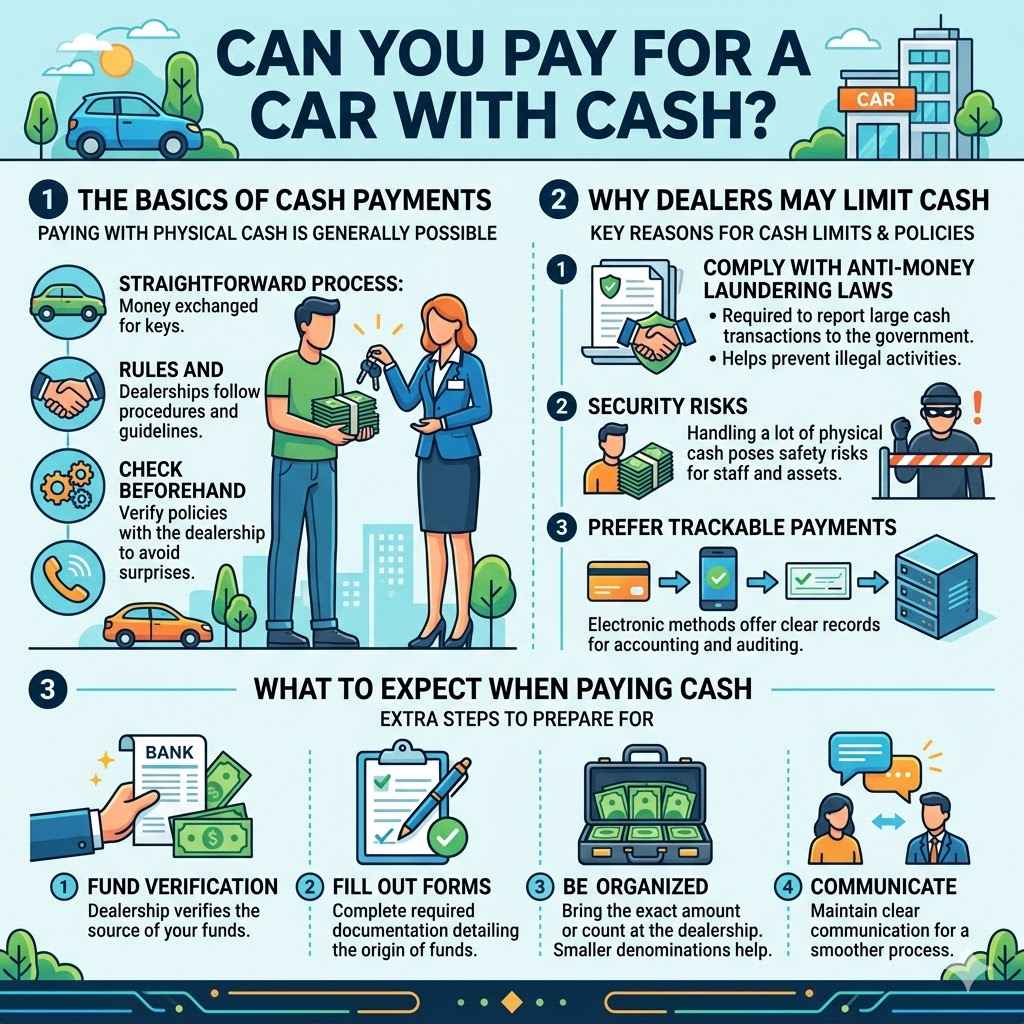
Paying for a car with physical cash is generally possible at most dealerships. It’s a straightforward way to make a purchase. You bring the money, they hand over the keys.
However, it’s not always as simple as just walking in with a suitcase full of bills. There are rules and policies that dealerships must follow, especially when large sums of money are involved. This is partly to protect both the buyer and the seller.
Dealers are accustomed to handling various payment methods, including cash. They have systems in place to manage these transactions. However, some dealerships might have limits on how much cash they can accept at once, or they might require you to follow specific procedures.
It’s always a good idea to check with the dealership beforehand to avoid any surprises on the day you plan to buy your car.
Why Dealers May Limit Cash
There are several reasons why a car dealership might have policies about accepting large amounts of cash. One of the main reasons is to comply with anti-money laundering laws. These laws require businesses to report large cash transactions to the government.
This helps prevent illegal activities. Dealers need to ensure they are following all legal requirements.
Another reason is security. Handling a lot of physical cash can be risky. Dealerships need to protect their employees and their assets.
They might also prefer other payment methods because they are easier to track and process. Electronic payments or checks offer a clear record of the transaction, which can be simpler for their accounting and auditing processes. This doesn’t mean they won’t take cash, but it can sometimes involve extra steps.
What to Expect When Paying Cash
If you plan to pay for your car in cash, be prepared for a few extra steps. The dealership will likely need to verify the source of your funds. This is a standard procedure to meet legal requirements.
They might ask you to fill out a form detailing where the money came from. This is not meant to be intrusive; it’s a part of their compliance with financial regulations.
You might also need to bring the exact amount or be ready to count the cash at the dealership. For very large sums, they might have specific procedures for receiving and verifying the money. It’s also wise to have the cash in smaller denominations if possible, although most dealers can handle large bills.
Being organized and communicative with the sales team will make the process much smoother.
Do Car Dealers Accept Physical Cash? What to Know About Limits
When it comes to making a significant purchase like a car, understanding payment limits is key. This section focuses on the practical aspects of cash payments at car dealerships, particularly concerning any financial limits that might be in place. We will explore why these limits exist and what you can do to prepare.
Federal Reporting Requirements
In the United States, federal law requires that financial institutions and certain other businesses report cash transactions that exceed $10,000. This is part of the Bank Secrecy Act, designed to prevent money laundering and other financial crimes. For car dealerships, this means they must file a Currency Transaction Report (CTR) with the Internal Revenue Service (IRS) for any cash transaction of $10,000 or more.
This reporting requirement does not mean dealerships cannot accept cash payments over $10,000. It simply means they have a legal obligation to report it. The forms are filed by the dealership, not by the customer.
The customer does not need to do anything special other than provide any requested information about the source of the funds, as per the dealership’s policy.
Dealership Specific Policies
Beyond federal reporting requirements, individual dealerships may have their own internal policies regarding cash payments. Some dealerships might choose to limit the amount of cash they accept, even if it’s below the $10,000 federal reporting threshold. This could be due to security concerns, the cost of transporting and depositing large sums of cash, or a preference for electronic transactions.
For example, a dealership might have a policy of not accepting more than $5,000 or $10,000 in cash for a single vehicle purchase. This is entirely their prerogative as a private business. They are allowed to set their own payment policies as long as they comply with all federal and state laws.
If a dealership has such a limit, they should clearly state it to potential buyers.
It is always best to confirm the dealership’s cash payment policy directly with them before visiting. You can do this by calling their sales department. Asking upfront about their cash acceptance limits and any procedures involved will save you time and potential disappointment.
Structuring Large Cash Payments
If you plan to pay for a car with a large sum of cash, and the dealership has policies or limits that might be an issue, you may be able to structure your payment. This involves using a combination of payment methods. For instance, you could use cash for a portion of the purchase price and finance the rest, or use a cashier’s check for a significant amount and cash for the remainder.
Another approach could be to pay a substantial down payment in cash, up to the dealership’s accepted limit, and then finance the balance of the car’s price. This can still allow you to use a significant amount of your cash savings while working within the dealership’s operational guidelines. It’s a practical way to manage the purchase without exceeding the dealer’s comfort level or legal reporting requirements for cash.
When discussing payment structuring, be open with the sales manager. They can often suggest flexible solutions that work for both parties. They understand that customers have different financial situations and payment preferences.
Their goal is to make a sale, and they are usually willing to work with you to find a payment plan that suits your needs and their policies.
Do Car Dealers Accept Physical Cash? What to Know About Verification
When you’re paying for a car, especially with physical cash, dealers need to be sure the money is legitimate. This section explains why verification is important and what it typically involves. Knowing this will help you feel prepared and comfortable with the process.
Verifying Authenticity of Currency
Car dealerships, like any business handling large amounts of cash, have a responsibility to ensure the money they receive is genuine. Counterfeit currency is a serious problem, and businesses are expected to take steps to prevent its acceptance. This is why a dealership might take extra time to examine the bills you pay with.
They might use special pens that detect counterfeit money by reacting differently to genuine and fake bills. Some may also have machines that can scan bills for security features. Employees are often trained to spot common signs of counterfeiting.
This verification process is not about distrusting you; it’s a standard business practice to protect themselves from financial loss and legal issues.
Source of Funds Documentation
In addition to verifying the authenticity of the currency itself, dealerships may also need to inquire about the source of your funds, especially for transactions over $10,000. This is driven by regulations like the Bank Secrecy Act in the U.S., which aims to combat money laundering. They need to have a record of where the money came from.
This documentation process might involve filling out a form that asks for details about the origin of the cash. For example, if the cash came from savings, they might ask for confirmation of that. If it was from a sale of an asset, they might request supporting documents.
It’s important for buyers to understand that this is a regulatory requirement, not an accusation.
Protecting Against Fraud
The procedures for cash verification and source of funds documentation are crucial for protecting both the dealership and the customer. For the dealership, it safeguards them from accepting counterfeit money or engaging in transactions that could be linked to illegal activities. This protects their reputation and avoids potential legal penalties.
For the customer, these procedures help ensure that their transaction is legitimate and transparent. If you are paying with legitimately earned money, these steps will simply confirm that. It provides an extra layer of security to the purchase, making sure everything is above board.
Being cooperative and providing the requested information can lead to a smoother and faster car buying experience.
Do Car Dealers Accept Physical Cash? What to Know About Alternatives
While cash is an option, there are other ways to pay for a car. This section looks at these alternatives, helping you decide what works best for you and the dealership.
Cashier’s Checks and Certified Checks
A cashier’s check is a payment method guaranteed by a bank. You purchase it from your bank using funds from your account. The bank then issues the check, ensuring the funds are available.
This is often preferred over personal checks because it’s seen as more secure and guaranteed.
Certified checks are similar. They are personal checks that your bank has verified and guaranteed. The bank puts a hold on the funds in your account to ensure they are available.
Both cashier’s checks and certified checks are widely accepted by car dealerships for full or partial payments. They offer a good balance between using funds from your bank account and providing security to the seller.
Personal Checks and Bank Drafts
Personal checks are less commonly accepted for the full price of a car, especially by larger dealerships. This is because personal checks can sometimes bounce if there aren’t enough funds in the account. Dealerships might accept them for smaller amounts, like a deposit, but often require verification or a waiting period for the funds to clear.
Bank drafts are another secure payment option. They are similar to cashier’s checks and are issued by a bank. The bank guarantees the payment.
They are a reliable way to transfer funds for a significant purchase like a car and are generally well-received by dealerships.
Financing and Auto Loans
Most car buyers opt for financing or auto loans. This means borrowing money from a bank, credit union, or the dealership’s finance department to cover the cost of the car. You then repay the loan over time with interest.
This is a very common and convenient method, especially for expensive vehicles.
Dealerships work closely with various lenders, making the financing process often straightforward. They can help you compare rates and terms from different financial institutions. Auto loans allow you to drive away in your new car without needing to have the full purchase price in cash or checks immediately available.
Wire Transfers
Wire transfers are an electronic method of sending money from one bank account to another. They are fast and secure, making them a viable option for car purchases. Many dealerships accept wire transfers, especially for out-of-state buyers or when a large sum needs to be transferred quickly.
To use a wire transfer, you will need the dealership’s bank account details, including the routing number and account number. You can initiate the transfer from your bank. It’s important to confirm the exact details with the dealership to ensure the money goes to the correct account.
Wire transfers can sometimes have associated fees.
Do Car Dealers Accept Physical Cash? What to Know About Making the Purchase
You’ve explored how car dealers handle cash and what alternatives are available. Now, let’s look at the practical steps to make your car purchase as smooth as possible, especially if cash is involved.
Communicate Your Payment Method Early
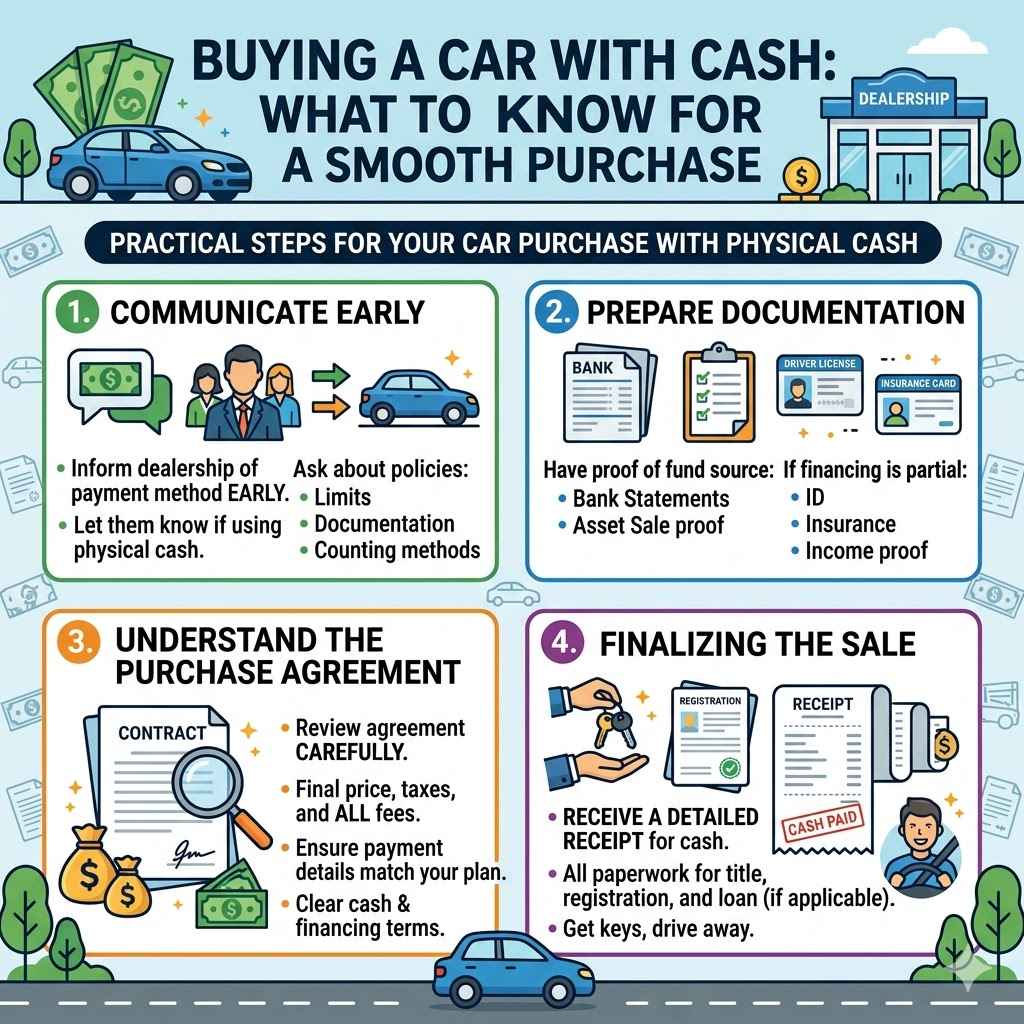
The most crucial step is to tell the dealership how you plan to pay as early as possible in the process. This includes letting them know if you intend to pay with cash, a significant portion in cash, or if you will be financing. Early communication helps the sales team prepare and manage expectations.
If you plan to use cash, ask them directly about their policies. Inquire about any limits on cash amounts they accept, what documentation they might need regarding the source of funds, and how they prefer to handle the physical counting and verification of the money. This proactive approach prevents last-minute issues and misunderstandings.
Prepare Necessary Documentation
If you are paying a substantial amount with cash, be ready to provide documentation about the source of those funds. This could include bank statements showing withdrawals or savings, or proof of sale for an asset if the cash came from that. While not every transaction will require this, being prepared can speed things up.
If you are using financing, have your identification and any required financial documents ready. Dealerships often have on-site finance managers who can help you complete loan applications quickly. Having your driver’s license, proof of insurance, and possibly proof of income can make the process much more efficient.
Understand the Purchase Agreement
Before signing anything, carefully review the purchase agreement. This document details the final price of the car, including all fees and taxes, and outlines the agreed-upon payment method. Make sure the payment details accurately reflect your plan, whether it’s cash, financing, or a combination.
If you are paying with cash, ensure the purchase agreement clearly states the total cash amount you are providing. If you are financing a portion, verify that the financed amount is correct and that any cash down payment is clearly specified. Don’t hesitate to ask for clarification on any part of the agreement you don’t fully understand.
Finalizing the Sale
Once all paperwork is signed and payment is processed, the dealership will finalize the sale. This typically involves handing over the keys, registration, and any other necessary documents. If you paid in cash, ensure you receive a detailed receipt for the full amount paid.
If you are financing, the dealership will handle the transfer of funds to them and provide you with your copy of the loan agreement. They will also explain the next steps for title and registration. The goal is for you to drive away in your new car with all necessary paperwork in order and a clear understanding of your payment obligations.
Frequently Asked Questions
Question: Can I pay the entire price of a car with cash?
Answer: Yes, many car dealerships will accept full payment in physical cash. However, due to federal reporting requirements for cash transactions over $10,000 and their own internal policies, there might be limits or specific procedures they follow. It’s best to confirm with the dealership beforehand.
Question: What if the dealership has a cash limit?
Answer: If a dealership has a cash limit, you can usually use a combination of payment methods. This might involve paying the maximum cash amount they accept as a down payment and then financing the rest of the car’s price with an auto loan.
Question: Do I need to provide proof of where the cash came from?
Answer: For cash transactions over $10,000, dealerships are required by law to report the transaction and may ask for documentation regarding the source of funds to comply with anti-money laundering regulations. Be prepared to provide reasonable proof if asked.
Question: Are there any benefits to paying with cash?
Answer: Paying with cash means you avoid interest charges associated with auto loans and can sometimes simplify the buying process, especially if you’re paying a smaller amount. It also means you won’t have monthly car payments. However, you might miss out on building credit history through loan payments.
Question: What are the best alternatives to paying with physical cash?
Answer: Excellent alternatives to cash include cashier’s checks, certified checks, bank drafts, wire transfers, and auto loans. These methods are often preferred by dealerships for their security and ease of processing.
Summary
Yes, car dealers generally accept physical cash. You should know about potential limits and verification requirements. Confirming payment methods early with the dealer is key.
Prepare documentation if needed. Using alternatives like cashier’s checks or auto loans is also common. This ensures a smooth purchase.