Do Car Salesmen Get A Base Salary: Essential Guide
Do car salesmen get a base salary? Yes, many do, though the exact structure can vary. Some earn a modest base plus commission, while others are purely commission-based. Understanding this is key to navigating car buying and knowing how salespeople are motivated.
Ever wondered how car salespeople make their money? It’s a question that pops up when you’re eyeing that shiny new car and trying to get the best deal. You might think they live solely on high-pressure tactics and closing every sale, but the reality is often more complex – and it directly impacts your negotiation power. Understanding their pay structure can help you feel more in control and less “on the spot” during your car shopping journey. This guide will break down exactly how car salesmen are compensated, so you can approach the dealership with confidence.
We’ll dive into the different pay models, what motivates a salesperson, and how you can use this knowledge to your advantage without feeling like you’re playing a game. Think of this as your friendly roadmap to understanding the sales floor.
Understanding the Car Salesman’s Paycheck
The automotive sales industry isn’t a one-size-fits-all when it comes to pay. Just like other sales jobs, car salespeople can be compensated in several ways. These compensation models directly influence their daily motivations and how they interact with customers. It’s less about individual greed and more about a structured system designed to drive sales. Knowing these systems helps demystify the sales process and allows you to have more informed conversations.
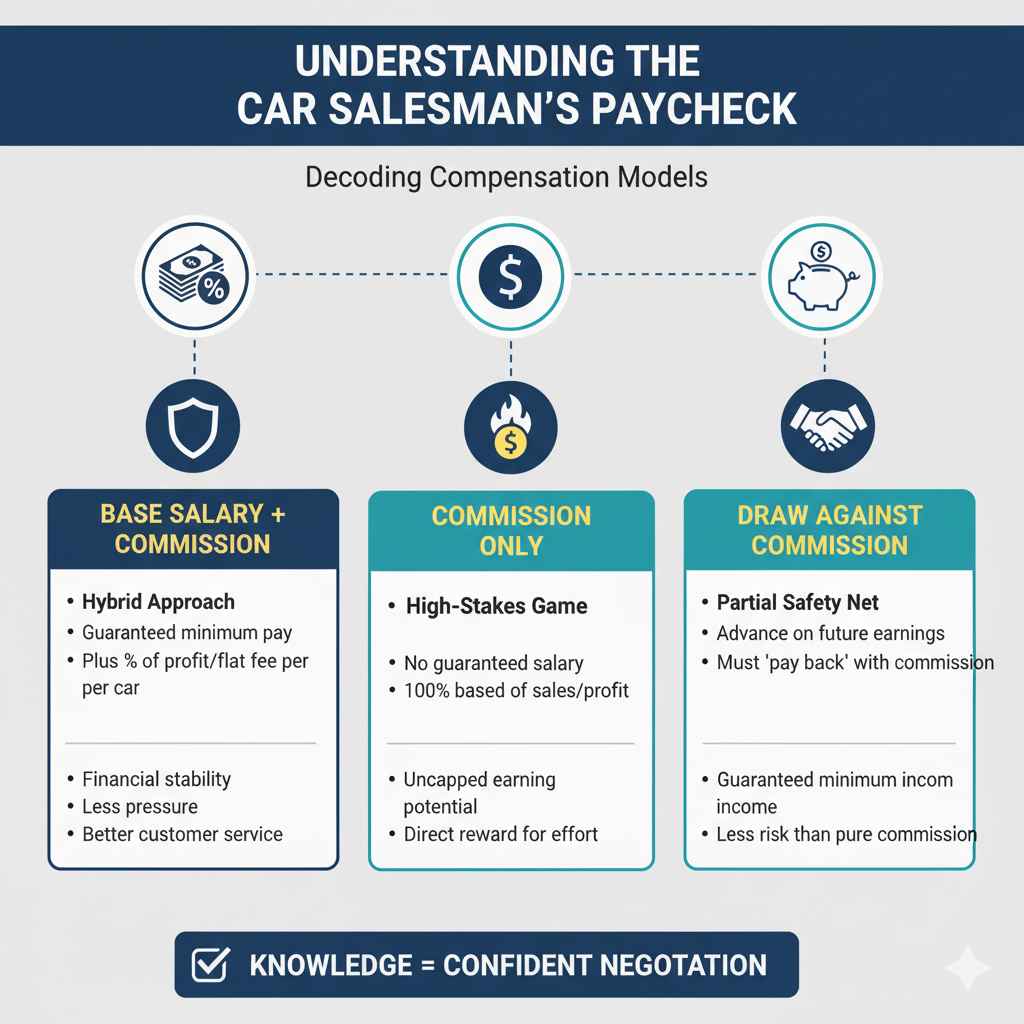
The three main ways car salespeople are paid are:
- Base Salary + Commission: A guaranteed minimum pay plus extra earnings based on sales.
- Commission Only: Earnings are entirely dependent on the number of cars sold and the profit made.
- Draw Against Commission: A guaranteed minimum amount is advanced, which is then paid back from future commissions.
Let’s explore each of these in more detail.
1. Base Salary Plus Commission: The Hybrid Approach
This is a popular model for both dealerships and salespeople because it offers a degree of financial security while still providing strong incentives to sell. A salesperson working under this structure receives a regular paycheck, covering a set number of hours or a fixed monthly amount. This base salary acts as a safety net, ensuring they have income even during slower sales periods or if they haven’t yet closed a deal.
On top of this base, they earn commission. Commission is typically a percentage of the profit made on a vehicle sale, or sometimes a flat amount per vehicle sold. The dealership’s profit margin on a car varies greatly depending on factors like the vehicle model, its popularity, current inventory levels, and negotiation. Higher profit sales mean higher commissions for the salesperson.
Pros for the Salesperson:
- Financial stability (less risk).
- Can focus on building relationships and providing good service without immediate sales pressure.
- Motivation to sell more to boost earnings significantly.
Pros for the Dealership:
- Employees are more likely to stay long-term.
- Encourages better customer service as salespeople are not desperate to close every deal.
- Can attract a wider range of talent.
Considerations for the Buyer: When dealing with a salesperson on a base salary plus commission, they’re likely to be motivated by both closing the deal and maximizing the profit on it. However, their base salary means they might be less aggressive than a commission-only salesperson, potentially making for a more relaxed experience.
2. Commission Only: The High-Stakes Game
In a commission-only structure, car salespeople earn only when they sell a car. There is no guaranteed base salary. Their entire income is derived from the commission earned on each sale. This means if they don’t sell anything, they don’t earn anything. This model is often seen in high-volume dealerships or for less experienced salespeople where the dealership wants to minimize risk.
The commission itself can be calculated in a few ways:
- Percentage of the Gross Profit: The salesperson gets a percentage of the profit the dealership makes on the car. This is the most common method.
- Fixed Amount per Unit: A set dollar amount for each car sold, regardless of profit.
- Tiered Commission: The percentage or amount per unit increases as the salesperson sells more vehicles within a given period (e.g., sell 5 cars and get X%, sell 10 cars and get Y%).
Pros for the Salesperson:
- Potentially uncapped earning potential if they are skilled and work hard.
- Direct correlation between effort and reward.
Pros for the Dealership:
- Minimal payroll overhead.
- Salespeople are highly motivated to sell as much as possible.
- Reduces risks associated with paying a salary to underperforming staff.
Considerations for the Buyer: A commission-only salesperson may be more inclined to push for a sale, potentially using more aggressive tactics. They are hyper-focused on closing the deal to earn their livelihood. Be prepared for potentially more persistent negotiation and be firm about your needs and budget.
3. Draw Against Commission: A Partial Safety Net
This structure is a bit of a middle ground. A salesperson receives a regular “draw,” which is essentially an advance against their future commissions. This draw acts like a temporary base salary, providing some income security. However, this money isn’t “free.” The salesperson must earn enough commission through sales to “pay back” the draw. If their commissions exceed the total amount of draws they’ve received, they then keep the difference as their actual earnings.
For example, a salesperson might have a draw of $2,000 per month. If they sell cars and earn $3,000 in commission, they receive the extra $1,000. If they only earn $1,500 in commission, they still keep that $1,500, but the dealership essentially “loans” them the remaining $500 from the next month’s potential earnings. This system ensures they don’t go home with nothing, but it also means their earning potential is tied directly to performance, just like pure commission.
Pros for the Salesperson:
- Provides a guaranteed minimum income.
- Less pressure than commission-only in slow periods.
Pros for the Dealership:
- Can attract new talent by offering some security.
- Still strongly incentivizes sales performance.
Considerations for the Buyer: The salesperson is motivated to sell and earn commission to cover their draw and then profit. Their approach might be somewhere between a base+commission and commission-only salesperson – they want the sale, but they also have a floor they need to hit.
Factors Influencing a Salesperson’s Pay Structure
Not all dealerships operate the same way. The compensation model for car salespeople is influenced by several factors:
- Dealership Size and Policy: Larger, established dealerships may offer more stable base salaries and benefits to attract and retain talent. Smaller, independent lots might lean towards commission-only to keep overhead low.
- Market Conditions: In a hot car market with high demand, dealerships might offer more commission-heavy structures because sales are easier to achieve. In slower markets, they might offer more base pay to keep salespeople engaged.
- Salesperson Experience: New or less experienced salespeople might start with a draw or a lower base plus commission, while seasoned veterans might negotiate higher commission rates or a better base salary.
- Manufacturer Incentives: Sometimes, the car manufacturer offers bonuses or incentives to dealerships for selling specific models or achieving sales targets, which can trickle down to salespeople’s pay.
- Brand Reputation: Luxury brands or dealerships with a strong reputation might offer more attractive compensation packages to ensure their sales staff represent the brand effectively.
How Commission is Calculated: The Nitty-Gritty
Understanding how a salesperson actually earns their money on a deal can be enlightening. While the exact figures are usually proprietary to the dealership, the general principles are consistent.
The Profit Center: Where the Money Comes From
A car deal isn’t just about the sticker price. Dealerships and salespeople earn commissions from several profit centers:
- Vehicle Sale Profit: This is the primary profit center. It’s the difference between what the dealership paid for the car (invoice price from the manufacturer) and what they sold it to you for. The negotiation you do on the selling price directly impacts this profit.
- Financing and Insurance (F&I) Department: When you finance a car or purchase add-ons like extended warranties, GAP insurance, or tire protection plans, the F&I manager earns a commission. Salespeople may also get a small portion of this profit if they originate the F&I sale.
- Trade-In Value: If you trade in your old car, the dealership buys it from you at wholesale value and sells it on their used lot at retail. The difference is profit, and a portion might influence the salesperson’s commission.
- Service Department Contracts: Some dealerships offer service or maintenance plans, and salespeople might receive a small bonus for selling these.
The salesperson’s commission is typically a percentage of the front-end gross profit (vehicle sale profit) and sometimes a small bonus from other profit centers. The average commission per vehicle sale for a car salesperson in the U.S. can range significantly, from a few hundred dollars to over a thousand dollars, depending on the pay plan and the deal.
For instance, if a car has a gross profit of $3,000 and the salesperson earns a 25% commission on gross profit, they would make $750 on that sale. If they also sell an extended warranty for $1,200 (which might have a profit of $400) and get 10% of that profit, they’d earn an additional $40.
The Role of the Sales Manager and “The Desk”
In most dealerships, the salesperson isn’t the final decision-maker on pricing. Once you agree on a price with the salesperson, they often take that information to a sales manager – this is commonly referred to as “going to the desk.” The sales manager is responsible for overseeing the sales team, approving deals, and managing the dealership’s profit. They will review the deal, potentially adjust the price based on inventory needs, current incentives, or profit targets, and then communicate the final offer back to the salesperson.
This step is crucial because the sales manager often has a better understanding of the overall dealership’s financial picture and can make more strategic pricing decisions. The salesperson’s commission is usually based on the profit after the sales manager has finalized the deal.
Can You Negotiate the Salesperson’s Commission?
While you can’t directly negotiate how much a salesperson makes on your deal, you can certainly negotiate the total price of the car. The lower you can get the price of the car, the lower their commission will be. However, understanding their pay structure is more about leveraging it to your advantage, not necessarily trying to cut into their earnings. Your goal is to get the best possible price for yourself.
Tips for a Smoother Negotiation:
- Do Your Research: Know the market value of the cars you’re interested in and what similar dealerships are offering. Websites like Kelley Blue Book (KBB), Edmunds, and NADAGuides are excellent resources for this.
- Be Informed About Incentives: Check the manufacturer’s website and reputable automotive review sites for current manufacturer rebates, incentives, and special financing offers.
- Focus on the “Out-the-Door” Price: This includes the vehicle price, all taxes, fees, and any add-ons. Don’t get sidetracked by monthly payment discussions until you’ve agreed on the total price.
- Be Prepared to Walk Away: This is your strongest negotiating tool. If the deal isn’t right, don’t be afraid to leave. A good salesperson will understand, and you might even get a call back with a better offer.
- Be Polite and Respectful: Salespeople are people, too. A friendly, respectful approach often yields better results than an aggressive one.
The Impact of Your Negotiation on the Salesperson
When you negotiate effectively and secure a low “out-the-door” price, you are directly impacting the salesperson’s commission. If the dealership is making less profit on the car, the salesperson’s cut will be smaller. However, most salespeople understand this is part of the job. They are trained to navigate negotiations and aim to sell as many cars as possible, even if the profit per car is lower.
However, there’s a delicate balance. If you push too hard for the absolute lowest price to the point where there’s very little profit (or even a loss, which rarely happens intentionally), the dealership might not approve the sale. Their goal is to make a profit, and while they’ll work with you, they also need to cover costs and be a profitable business.
A Look at Dealership Profit Structures (Illustrative Example)
Here’s a simplified look at how a dealership might break down the profit on a car. Remember, this is highly variable.
| Profit Center | Potential Profit Range | Salesperson Commission (Example) | Notes |
|---|---|---|---|
| New Vehicle Front-End Gross Profit | $500 – $5,000+ | 15% – 35% of Gross Profit | Negotiated selling price vs. invoice price. |
| Used Vehicle Trade-In Gross Profit | $500 – $3,000+ | Commission based on dealership policy (can be flat or percentage) | Difference between trade-in value and used car lot retail price. |
| F&I: Extended Warranties & Add-ons | $300 – $1,500+ (per product) | 5% – 20% of Gross Profit (on F&I products) | Salesperson may get a portion of this if they originate the sale. F&I manager earns the majority. |
| Lease Deals | Varies based on contract | Often a flat fee or lower percentage than cash sales. | Profit margins can be tighter. |
Important Note: The listed “Salesperson Commission” is illustrative. Actual percentages and structures are set by individual dealerships and can vary significantly. A salesperson might get a bonus for hitting monthly sales targets, which can add to their overall earnings.
The Psychology of the Dealership and the Salesperson
Understanding the dealership’s business model is crucial. They are in the business of selling cars and making a profit. The salesperson is an integral part of that business. Their compensation is designed to motivate them to sell cars for the dealership. It’s a symbiotic relationship.
Salespeople are trained to build rapport, understand customer needs, and guide them towards a purchase. If they have a base salary, they might have more patience. If they are commission-only, they have a strong, immediate financial incentive. Your ability to understand this and remain calm and informed is key to a positive car-buying experience. Remember, the salesperson wants to make a sale, but you want to make a smart purchase. Both are achievable.
Is the Salesperson Paid Per Hour or the Sale?
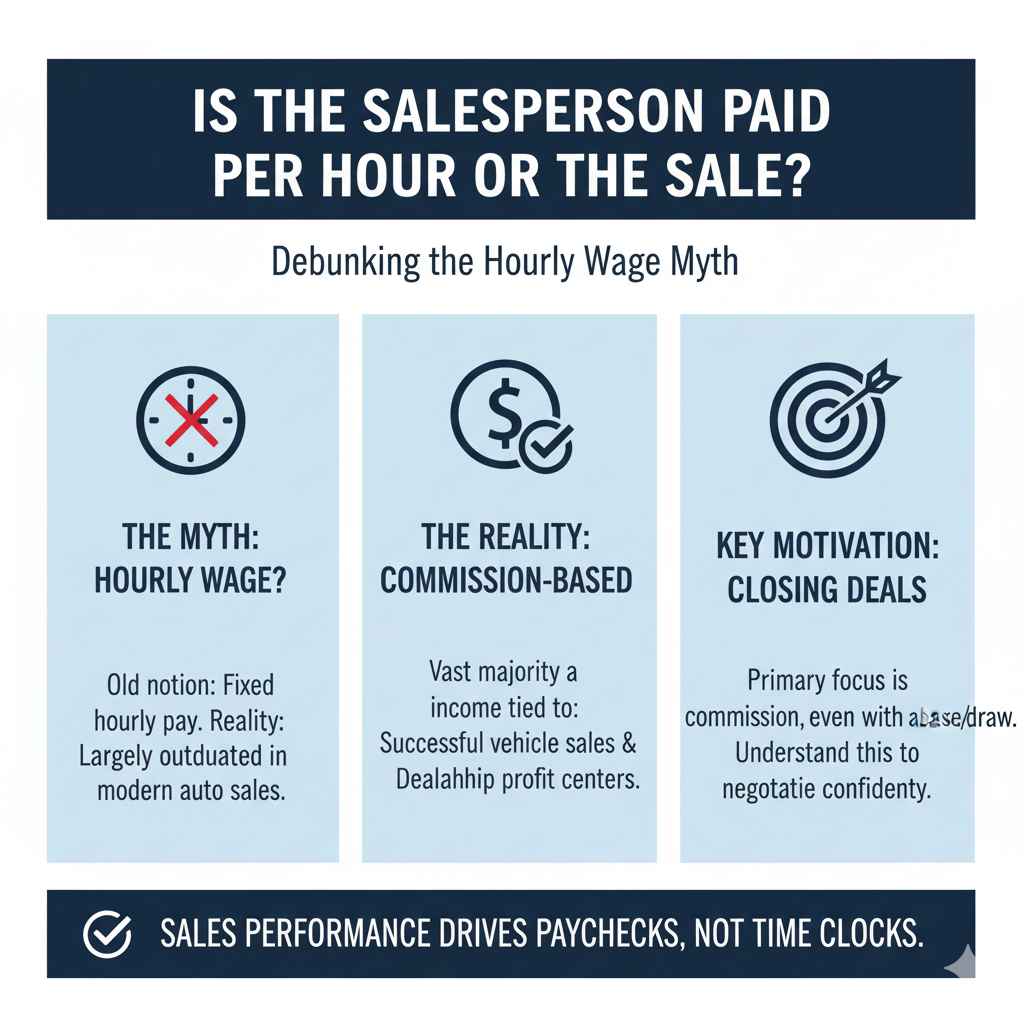
As we’ve discussed, it’s usually a combination or solely based on the sale. The old notion of a car salesman earning a fixed hourly wage is largely a myth in today’s automotive industry. While some might have a very small hourly stipend as part of a larger draw or base, the vast majority of their income is directly tied to successful vehicle sales and related profit centers within the dealership.
Even if they technically have a base or draw, their primary focus and motivation will always be driven by the commission they earn from closing deals. This is why understanding their pay structure is so valuable; it tells you what drives their actions on the showroom floor.
Frequently Asked Questions (FAQ)
Q1: So, do all car salesmen get paid a base salary?
A1: Not all of them do. While many dealerships offer a base salary to provide some financial security, others rely purely on commission. Some may offer a draw against commission, which is a guaranteed minimum advance. It really depends on the dealership’s pay plan and policies.
Q2: If a car salesman has a base salary, does that mean they make less commission?
A2: Not necessarily. A base salary is often lower than what a successful commission-only salesperson might earn. The base salary is the guaranteed portion, and the commission is the variable part that can significantly boost their total earnings.