Do Cars Have a Black Box? What to Know
Thinking about Do Cars Have a Black Box? What to Know can seem a bit confusing at first. It’s like asking if your toaster has a secret diary!
Many people wonder if cars really have these special recorders like airplanes do. This guide will make it super simple. We’ll break down everything you need to know, step by step, so you can feel confident about what’s going on with your car’s data.
What Is A Car Black Box Like
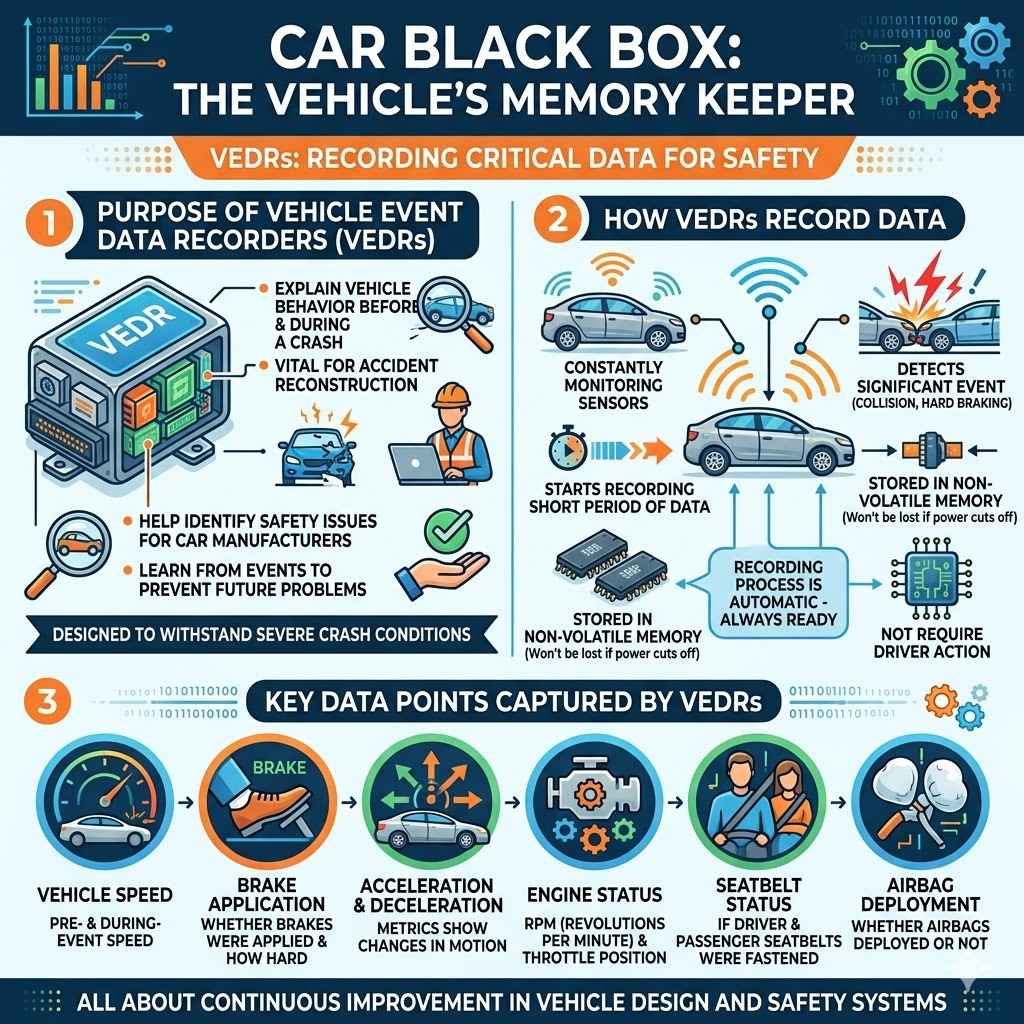
Cars have a special system that is often compared to an airplane’s black box. This system records important information about your car’s performance and driving conditions. It’s designed to help understand what happened before, during, and after a crash.
This data can be very useful for accident reconstruction and improving car safety. Think of it as a car’s memory keeper for critical moments.
Purpose Of Vehicle Event Data Recorders
The main reason these recorders exist is to gather data that can explain vehicle behavior. They capture details like how fast the car was going, if the brakes were applied, and if the seatbelts were fastened. This information is vital for car manufacturers to identify potential safety issues and make cars even safer.
It also helps investigators understand accident causes.
Vehicle Event Data Recorders, or VEDRs, are built to withstand severe crash conditions. They protect the recorded data so it can be retrieved and analyzed. This technology plays a big role in making cars safer for everyone on the road.
It’s all about learning from events to prevent future problems.
How VEDRs Record Data
VEDRs constantly monitor various sensors within the vehicle. When a significant event, like hard braking or a collision, occurs, the system starts recording a short period of data. This data is stored in a non-volatile memory, meaning it won’t be lost if the power is cut off, like during a crash.
The recording process is automatic. It doesn’t require any action from the driver. The system is always ready to capture information when it detects certain parameters being met.
This ensures that crucial moments are never missed, providing a clear picture of the vehicle’s state.
Key Data Points Captured By VEDRs
- Vehicle Speed The speed of the car just before and during an event is a key piece of data. This helps determine if the car was speeding or driving at a safe speed.
- Brake Application VEDRs record whether the brakes were applied and how hard. This shows if the driver attempted to stop or slow down.
- Acceleration and Deceleration These metrics show how quickly the car was speeding up or slowing down. This is important for understanding changes in motion.
- Engine Status Information about engine RPM (revolutions per minute) and throttle position can be recorded. This indicates how the engine was performing.
- Seatbelt Status Whether the driver and passenger seatbelts were fastened is also recorded. This is a critical safety indicator.
- Airbag Deployment Data on whether airbags deployed or not is captured. This directly relates to the severity of an impact.
The data gathered by VEDRs is incredibly detailed. It paints a clear picture of the vehicle’s actions leading up to and during an incident. This information helps engineers understand how safety systems performed.
It’s all about continuous improvement in vehicle design.
Do Cars Have A Black Box What To Know About Legalities
The question of Do Cars Have a Black Box? What to Know also involves understanding the laws and regulations surrounding this technology. The presence and use of these data recorders are subject to different rules in various places.
It’s important to know your rights and what data is being collected and how it can be used.
In some regions, laws require certain types of vehicles to be equipped with VEDRs. For others, it might be optional or a feature that car manufacturers choose to include. Understanding these legal aspects is key to knowing what data your car might be recording and who can access it.
Government Regulations On VEDRs
Many countries have started implementing regulations for VEDRs, especially for newer vehicles. These regulations often specify what data must be recorded and for how long. The goal is usually to enhance road safety and aid accident investigations.
For instance, some countries mandate that VEDRs capture specific pre-crash data for at least five seconds before an incident. This is to provide a consistent snapshot of events leading up to a crash. These rules are often updated as technology advances and our understanding of road safety improves.
Privacy Concerns And Data Access
A common concern with VEDRs is data privacy. Who owns the data recorded by your car? Can it be accessed by insurance companies, law enforcement, or others without your explicit consent?
In many places, laws are in place to protect the privacy of data collected by VEDRs. Typically, access by third parties requires a court order or consent from the vehicle owner. However, rules can vary, and it’s wise to be aware of the specific regulations in your area.
Understanding these privacy aspects is crucial for vehicle owners.
Owner’s Rights And Data Ownership
Generally, the data recorded by your car’s VEDR is considered to be owned by you, the vehicle owner. You have the right to know what data is being collected and how it is being used. Some manufacturers provide tools or interfaces that allow owners to access this data.
However, there are exceptions. Law enforcement agencies might be able to obtain this data under specific legal circumstances, such as during a criminal investigation. Insurance companies might also request access, often as part of a claim process, but this usually requires your agreement.
Examples Of VEDR Data Usage
- Accident Reconstruction Law enforcement and accident investigators use VEDR data to understand the sequence of events leading to a crash. This can help determine fault and responsibility more accurately.
- Vehicle Safety Improvement Manufacturers analyze aggregated VEDR data from crashes to identify common failure points or areas where safety systems can be improved. This leads to better car designs in the future.
- Legal Disputes In civil lawsuits related to car accidents, VEDR data can serve as crucial evidence. It can support or refute claims made by drivers or passengers.
- Recalls and Investigations If a vehicle defect is suspected, VEDR data can help manufacturers pinpoint the cause and determine the scope of a recall.
One real-life scenario involved a major highway pile-up. Investigators were able to use the VEDR data from multiple vehicles. This data clearly showed that one driver had repeatedly braked sharply and erratically before the main collision.
This information was critical in understanding the chain of events that led to the multi-car accident.
Another case involved a pedestrian fatality. VEDR data from the striking vehicle indicated that the driver had applied the brakes hard just before impact. This detail helped investigators confirm the driver’s account of attempting to avoid the accident, influencing the outcome of their investigation.
Do Cars Have A Black Box What To Know About Location And Access
When people ask, Do Cars Have a Black Box? What to Know, they often wonder where this device is located in their car and how it’s accessed. Unlike the prominent, often brightly colored black boxes in airplanes, car data recorders are usually more discreet and integrated into the vehicle’s systems.
Finding the exact location can vary by car model and manufacturer. However, understanding the general placement and how data is retrieved can be helpful. It’s not typically a separate, easily removable box you can just pull out.
Where Is The Black Box Located In A Car
The “black box” in a car, technically called a Vehicle Event Data Recorder (VEDR) or Supplemental Restraint System (SRS) module, is usually not a single, easily identifiable unit. Instead, the recording functions are often part of the car’s main computer modules, particularly the Airbag Control Module (ACM) or Engine Control Module (ECM).
These modules are typically located in protected areas of the vehicle. Common spots include under the dashboard, behind the center console, or under the driver’s or passenger’s seat. They are designed to be somewhat shielded from direct impact to preserve the data they hold.
How Is Data Accessed From A Car’s Black Box
Accessing the data from a car’s VEDR is not a simple DIY task. It requires specialized equipment and software. This is because the data is stored in a proprietary format by the vehicle manufacturer.
To retrieve the information, technicians or investigators use a Vehicle Data Retrieval Tool. This tool connects to the car’s On-Board Diagnostics (OBD-II) port, which is usually located under the dashboard near the steering wheel. The software then communicates with the relevant modules to download the recorded data.
Common Access Points For Data Retrieval
The OBD-II port is the primary interface for accessing data from most modern vehicles. This standardized port allows technicians to communicate with various vehicle control modules for diagnostics and data retrieval.
In some cases, if the VEDR module itself is damaged, it might need to be removed from the vehicle and sent to a specialized lab for data recovery. This is a more complex process and is typically reserved for situations where standard retrieval is not possible.
Examples Of Data Retrieval Scenarios
Imagine a car accident where the cause is unclear. A police investigator arrives at the scene and, with the owner’s permission or a warrant, connects a data retrieval tool to the car’s OBD-II port. Within minutes, they can download data showing speed, braking, and steering inputs from the moments before the crash.
Another scenario could be a vehicle owner who suspects a malfunction led to a near-miss. They might take their car to a dealership or a specialist mechanic. The mechanic uses the OBD-II port to pull diagnostic trouble codes and event data, which can help diagnose the issue and prevent future problems.
Who Can Access Car Data
- Law Enforcement Police departments often have trained personnel and equipment to retrieve VEDR data for accident investigations and criminal inquiries.
- Insurance Companies Insurers may request VEDR data as part of a claim investigation, but this typically requires the policyholder’s consent.
- Vehicle Manufacturers Auto companies can access this data for product development, safety research, and to address warranty claims or recalls.
- Vehicle Owners Depending on the manufacturer and model, owners may have limited access to some data through specific apps or diagnostic tools.
- Specialized Forensic Experts In complex legal cases, forensic engineers may be hired to retrieve and analyze VEDR data.
A study by the National Highway Traffic Safety Administration (NHTSA) found that over 99% of new passenger vehicles sold in a particular year were equipped with VEDRs. This highlights how widespread the technology has become, making data access a relevant topic for many drivers.
Another statistic shows that data retrieval from VEDRs has been instrumental in over 80% of serious accident investigations, providing objective evidence to reconstruct events accurately. This underscores the importance of these devices in enhancing road safety and accountability.
Do Cars Have A Black Box What To Know About The Future
As technology advances, the capabilities and presence of car “black boxes” are also evolving. The question Do Cars Have a Black Box? What to Know will continue to be relevant as these systems become more sophisticated.
The future promises even more detailed data collection and integration with other vehicle technologies.
What’s coming next for these event data recorders? We can expect them to play an even larger role in how we understand driving, safety, and vehicle performance. The trend is towards smarter, more interconnected systems.
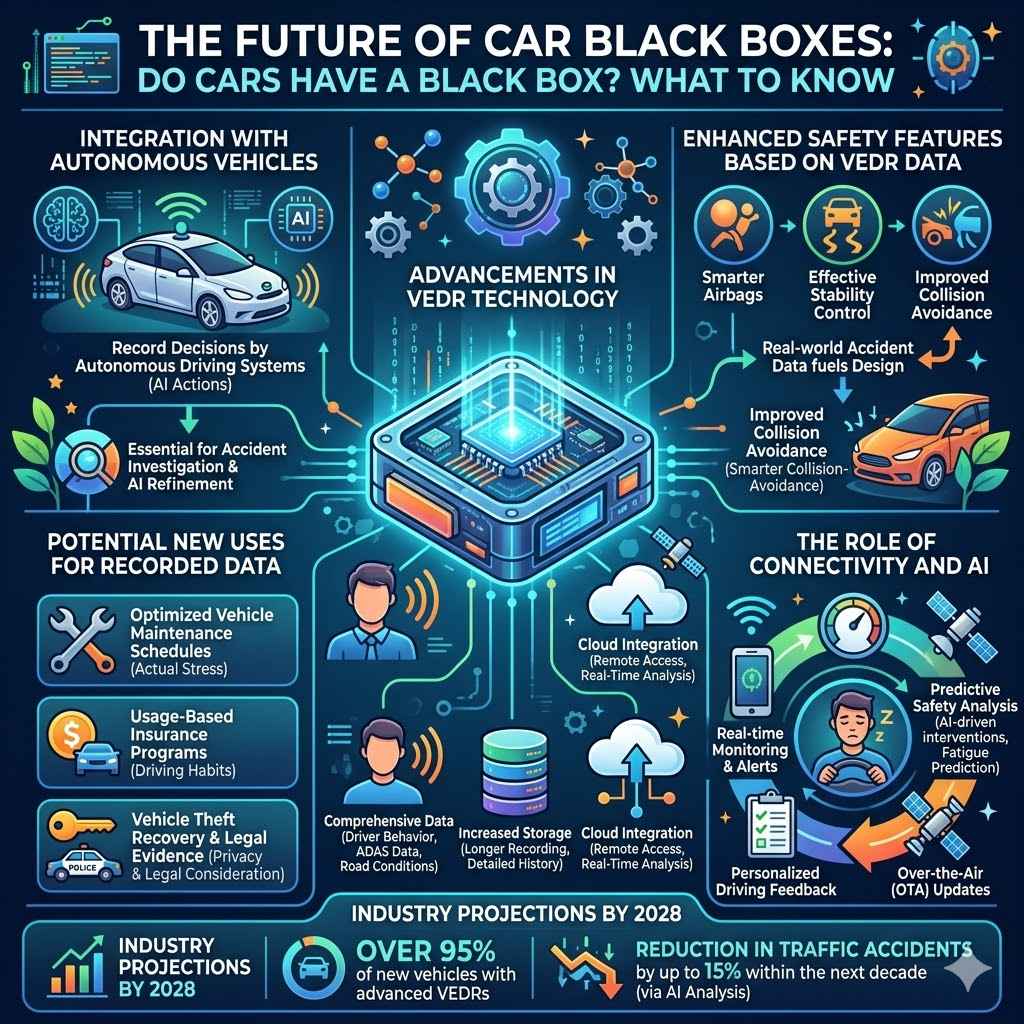
Advancements In VEDR Technology
Future VEDRs are likely to capture more comprehensive data points. This could include driver behavior monitoring, more precise environmental sensing (like road conditions and weather), and even data from advanced driver-assistance systems (ADAS) like lane keeping assist and adaptive cruise control.
The storage capacity of these devices will also increase, allowing for longer recording periods and more detailed historical data. Integration with cloud-based systems is also a strong possibility, enabling remote data access and analysis in real-time.
Integration With Autonomous Vehicles
For self-driving cars, VEDRs will be even more critical. They will need to record not only the vehicle’s actions but also the decisions made by the autonomous driving system. This will be essential for accident investigation and for refining the artificial intelligence that controls these vehicles.
The data from autonomous vehicles will provide unparalleled insights into the challenges of self-driving technology and help ensure its safe deployment. Understanding how these systems perform in various situations is paramount.
Enhanced Safety Features Based On VEDR Data
The data collected by VEDRs directly fuels the development of enhanced safety features. By analyzing real-world accident data, engineers can identify weaknesses and design smarter airbags, more effective stability control systems, and improved collision avoidance technologies.
For example, understanding how drivers react in specific emergency situations can lead to features that better anticipate and assist drivers, or even take control when necessary to prevent accidents. This continuous feedback loop is key to automotive safety progress.
Potential New Uses For Recorded Data
Beyond accident investigation, VEDR data could be used in new ways. For instance, it could help optimize vehicle maintenance schedules based on actual driving stress. It might also play a role in usage-based insurance programs, where premiums are adjusted based on driving habits.
There’s also potential for VEDR data to assist in vehicle theft recovery or to provide evidence in disputes over traffic violations, although these uses would need careful consideration of privacy implications and legal frameworks.
The Role Of Connectivity And AI
- Real-time Monitoring With increased connectivity, VEDRs could potentially send alerts or data to remote servers or authorities in the event of a severe accident.
- Predictive Safety Analysis Artificial intelligence can analyze VEDR data to predict potential safety issues or driver fatigue, prompting timely interventions.
- Personalized Driving Feedback Owners might receive detailed feedback on their driving habits, helping them to become safer and more efficient drivers.
- Over-the-Air Updates AI could analyze data trends to identify areas for improvement, leading to software updates that enhance safety features remotely.
A recent projection by industry analysts suggests that by 2028, over 95% of all new vehicles sold globally will be equipped with advanced VEDRs capable of capturing and transmitting extensive data. This trend is driven by safety regulations and consumer demand for smarter vehicles.
Furthermore, research indicates that AI-driven analysis of VEDR data could lead to a reduction in traffic accidents by as much as 15% within the next decade, by enabling more proactive safety interventions and better system design.
Frequently Asked Questions
Question: Do all cars have a black box
Answer: Most new cars sold today are equipped with a device that functions like a black box, often called a Vehicle Event Data Recorder (VEDR). Older cars might not have this feature, or it might be less sophisticated.
Question: What information does a car’s black box record
Answer: It typically records data such as vehicle speed, brake application, acceleration, seatbelt status, and airbag deployment in the moments leading up to and during a crash.
Question: Can I access the data from my car’s black box myself
Answer: Generally, no. Accessing this data requires specialized tools and software that are usually only available to trained technicians, law enforcement, or accident investigators.
Question: Is the data from my car’s black box private
Answer: Privacy laws vary by location, but typically your VEDR data is considered yours. Access by third parties like insurance companies or law enforcement often requires your consent or a court order.
Question: What happens to the data after a car crash
Answer: The data is downloaded by investigators or relevant parties. It is then used for accident reconstruction, safety analysis, or legal proceedings.
Conclusion
Cars do have a system that acts like a black box, recording vital information. These Vehicle Event Data Recorders capture crucial details about your car’s performance. This helps understand accidents and improve safety.
Knowing about their location and how data is accessed provides clarity. The future promises even more advanced capabilities for these essential safety devices.