Does a Car Leak Water When Heat Is On? Explained
It’s a little puzzling when you see water dripping from your car, especially when the heat is on. Many car owners wonder Does a Car Leak Water When Heat Is On? Explained and why it happens.
It can seem tricky, but it’s actually quite normal and often a sign that your car’s heating system is working right. We’ll walk through exactly why this happens with simple steps so you can feel confident.
Why Your Car Leaks Water When The Heat Is On
Seeing water under your car when the heater is running can be confusing, but it’s usually a normal part of how your car’s climate control system works. This phenomenon is directly linked to the air conditioning system, even when you’re using the heater. Understanding this connection makes the dripping water seem less alarming and more like a helpful indicator.
We’ll break down the science behind this common occurrence in a way that’s easy to grasp.
The Air Conditioning System’s Role
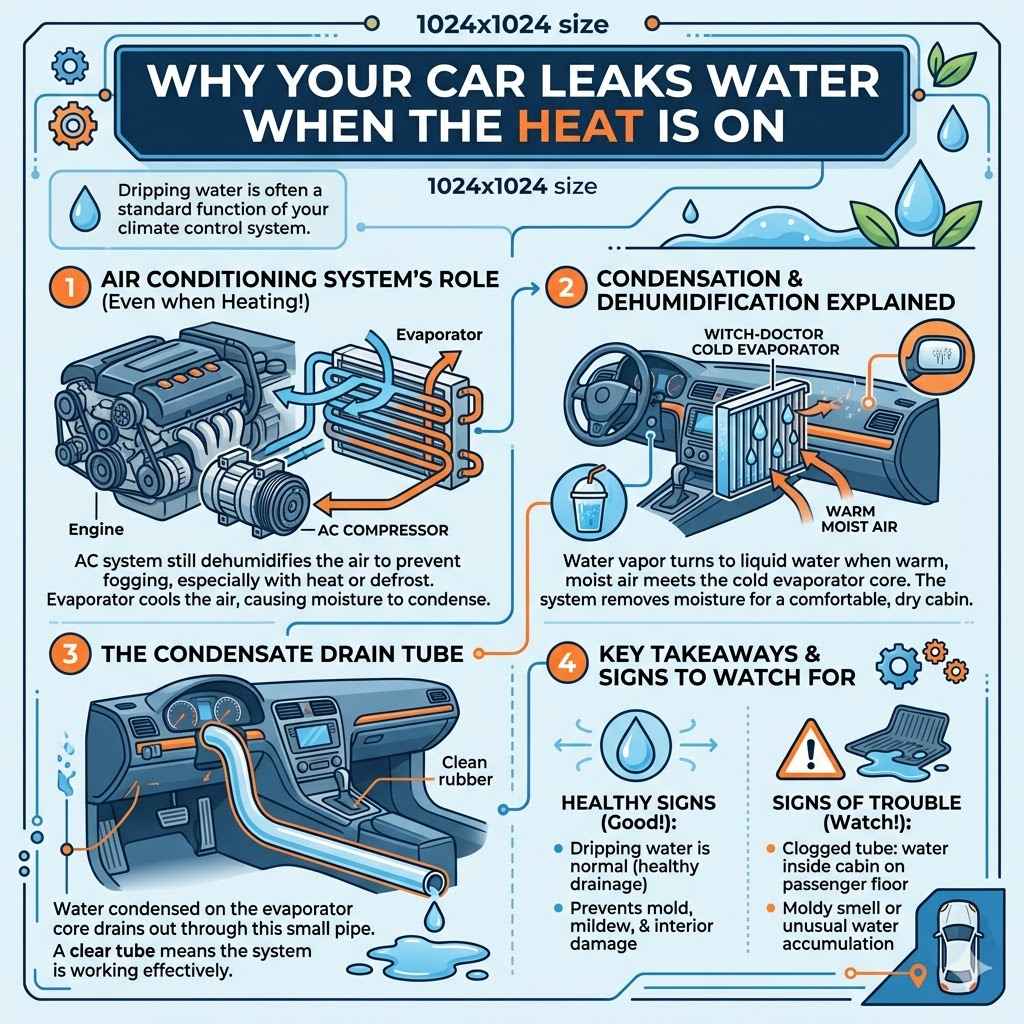
The car’s air conditioning (AC) system works by removing moisture from the air. When you turn on the heat, especially if the AC was recently used or if the air is humid, the AC system still plays a part in dehumidifying the air. This process involves a part called the evaporator, which cools the air.
As the air passes over the cold evaporator coil, water vapor from the air condenses into liquid water. This is the same way a cold drink “sweats” on a warm day. This condensed water is then meant to drain out of the vehicle through a small tube called a condensate drain tube.
When this tube is clear and functioning properly, you’ll see this water dripping underneath your car. This is a healthy sign that your AC is doing its job and that the drainage system is clear, preventing water from backing up into your car’s cabin.
The evaporator core is like a mini-refrigerator inside your car’s dashboard. It’s designed to cool down the air that gets blown into the cabin. As the warm, moist air from outside or inside your car passes over the very cold evaporator fins, the water vapor in that air changes from a gas into liquid water.
This is called condensation. Think of it like seeing fog on a bathroom mirror after a hot shower; the warm, moist air hits the cooler surface of the mirror and turns into tiny water droplets. In your car, these droplets collect and drip off the evaporator.
So, even when you’re trying to warm up your car, the AC system might still be running in the background, or its components are still involved in the process of managing air temperature and humidity. This is particularly true for modern climate control systems that can automatically engage the AC compressor to dehumidify the air when you select the defrost setting or when the system detects high humidity. This ensures your windows don’t fog up, which is a key safety feature.
The water you see dripping is precisely this condensation being expelled as it should be.
Condensation and Dehumidification Explained
Condensation is the process where water vapor in the air turns into liquid water. This happens when warm, moist air comes into contact with a cooler surface. In your car’s climate control system, the evaporator coil, which is part of the air conditioning circuit, gets very cold.
When the air from the car’s interior or from outside passes over this cold coil, the moisture in the air cools down and changes into liquid water droplets. This is the same principle that causes dew to form on grass overnight or water droplets to form on the outside of a cold glass of iced tea on a warm day.
Dehumidification is the removal of moisture from the air. The car’s air conditioning system is very effective at dehumidifying. By cooling the air, it forces the water vapor within it to condense.
This is why using your AC can make the air in your car feel drier and more comfortable, especially in humid weather. Even when you are using the heater, the system might still engage the AC compressor briefly to dehumidify the air. This helps prevent your windows from fogging up, especially on the inside, which is crucial for safe driving.
Therefore, the water you see dripping is a direct result of this dehumidification process working as intended.
This process is especially noticeable when you first start your car with the heat on after it’s been sitting in a humid environment. The system works to condition the air, and the condensation will occur. As the car warms up and the system reaches its equilibrium, the dripping might lessen or stop, but it can reappear if humidity levels change or if the system cycles.
The Condensate Drain Tube
Every car with an air conditioning system has a condensate drain tube. This is a small pipe, usually made of rubber or plastic, that allows the water condensed on the evaporator core to exit the vehicle. It typically runs from the evaporator housing, through the firewall (the barrier between the engine compartment and the passenger cabin), and hangs down underneath the car.
The water drips out of the end of this tube. You’ll often see a small puddle of water directly underneath where the passenger side of the car is located, especially after running the AC or when the heating system is engaged in humid conditions.
The purpose of the condensate drain tube is to prevent water from backing up inside the car. If this tube becomes clogged with debris, such as leaves, dirt, or insects, the condensed water cannot drain properly. This can lead to water accumulating inside the cabin, potentially causing mold, mildew, and damage to the interior.
If you notice water inside your car, on the passenger side floor, for example, a clogged drain tube is often the culprit. Cleaning or clearing this tube is a common maintenance task.
The size and location of the drain tube can vary slightly between different car makes and models, but its function remains the same. It’s a vital component for the proper operation of your car’s climate control system. When it’s clear, the water you see dripping is a good sign.
It means your system is effectively removing moisture from the air, contributing to a more comfortable and fog-free driving experience.
Common Scenarios Where Water Leakage Occurs
Understanding when and why you might see water dripping helps demystify the process. Several common situations can trigger this normal water drainage from your vehicle’s climate control system. Knowing these scenarios can help you identify if what you’re seeing is a sign of a healthy car or if something might need a closer look.
Post-AC Use Dripping
Even after you’ve turned off the air conditioning, you might notice water dripping under your car for a while. This is perfectly normal. The evaporator coil inside your car’s climate control system stays cold for some time after the AC is switched off.
As warm, moist air from the environment passes over this still-cool coil, condensation continues to form. This condensed water will then drain out through the condensate drain tube as it accumulates.
This is especially true on hot and humid days. The longer the AC was running, the more moisture it removed from the air, and the more water is available to condense and drain. Think of it like a cold bottle of soda; it continues to “sweat” for a while even after you bring it inside to a cooler environment.
The dripping might taper off as the evaporator coil warms up to ambient temperature, but it’s a clear indication that the system did its job removing humidity.
The amount of dripping can also depend on how much the AC was used and the ambient humidity. If you drove for a long time with the AC on full blast on a very humid day, you’re likely to see a more significant puddle afterwards. This lingering drip is a positive sign that your AC system is working efficiently to dehumidify the cabin.
Defrost Setting Activation
When you engage the defrost setting on your car, whether for the front windshield or rear window, the system often automatically activates the air conditioning. This might seem counterintuitive when you’re trying to clear fog or frost, but the AC’s primary function in this scenario is dehumidification. By running the AC, the system dries out the air that is blown onto the windows.
Dry air is much more effective at removing moisture (fog) and preventing ice from forming compared to moist air.
As the AC dehumidifies the air, condensation occurs on the cold evaporator coil. This condensed water then drains out of the vehicle through the condensate drain tube. So, seeing water drip when using your defrost setting is a sign that your climate control system is working as designed to keep your windows clear and ensure safe visibility.
It’s a crucial safety feature that relies on the AC’s dehumidifying capabilities, leading to the expected water leakage.
Many modern cars have intelligent climate control systems that can automatically blend heating and cooling to achieve the optimal temperature and humidity for defrosting. This means the AC compressor might engage even if you’ve selected a high temperature setting. The goal is to get dry, warm air onto the glass as quickly as possible.
The water you see is a byproduct of this effective moisture removal.
Normal Operation in Humid Weather
Even when you’re not actively using the defrost or AC, but the climate control system is on and it’s humid outside, you may still notice water dripping. This is because the car’s system is constantly working to maintain a comfortable cabin environment. In humid conditions, the system will often engage the AC compressor to remove excess moisture from the incoming air, regardless of whether you are heating or cooling the cabin.
This is an ongoing process to prevent the air inside the car from becoming stuffy and to keep windows from fogging up. The evaporator coil will continue to cool the air and condense moisture, which then drains out. The more humid it is, the more the system will work to dehumidify, and thus, the more water you are likely to see dripping.
It’s a natural consequence of the system managing the air quality and comfort within your vehicle under these conditions.
This continuous dehumidification is a key aspect of a well-functioning climate control system. It ensures that even if the outside air is damp, the air inside your car remains pleasant and your visibility is unobstructed. So, a steady drip during humid weather, when the climate control is active, is typically a good sign.
Troubleshooting Potential Issues Related to Water Leaks
While water dripping from your car when the heat is on is often normal, there are times when it can indicate a problem. If you notice excessive water inside the cabin, unusual smells, or a complete lack of dripping when you expect it, it’s time to investigate further.
Clogged Condensate Drain Tube
One of the most common reasons for water-related issues in a car’s climate control system is a clogged condensate drain tube. As mentioned earlier, this tube allows the water condensed on the evaporator core to exit the vehicle. If it becomes blocked with debris like leaves, dirt, or even mold growth, the water has nowhere to go but back into the car’s interior.
Symptoms of a clogged drain tube include a musty or moldy smell inside the car, wet carpets or floor mats (especially on the passenger side), and sometimes even visible water pooling in the footwells. In more severe cases, water can seep into other areas of the car, causing damage to electrical components or the body. It’s important to address this issue promptly to prevent further problems.
Clearing the tube usually involves using compressed air or a flexible rod to dislodge the blockage.
The drain tube can get clogged over time as dirt and organic matter accumulate. It’s a good idea to have it checked periodically, especially if you live in an area with lots of trees or debris. A mechanic can easily locate and clear the tube, often in just a few minutes.
This simple maintenance can save you from much larger repair bills down the line.
Leaking Heater Core
A leaking heater core is another potential cause of water or fluid leaks, but this is typically different from the condensation drip. The heater core is part of the engine’s cooling system and uses hot engine coolant to warm the air blown into the cabin. If the heater core leaks, you’ll usually see a sweet-smelling, colored fluid (typically green, orange, or pink, depending on the coolant type) inside the car, often on the passenger side floor.
You might also notice a foggy or steamy windshield that is difficult to clear.
Unlike the clear water from condensation, heater core leaks involve the engine’s coolant. This is a serious issue because it can lead to the engine overheating and significant damage. If you suspect a leaking heater core, you should stop driving the car and have it inspected by a mechanic immediately.
Repairing a heater core often involves a significant amount of labor, as it’s usually located behind the dashboard.
The symptoms are quite distinct. Condensation is just water. Heater core leaks involve engine coolant, which has a specific smell and color.
It’s crucial to differentiate between these two types of leaks. If you’re unsure, it’s always best to err on the side of caution and get it checked by a professional.
Evaporator Core Issues
While the evaporator core is designed to condense water, issues with the core itself can sometimes lead to leaks. If the evaporator core is damaged or corroded, it might develop small cracks or holes, allowing coolant from the AC system to leak out or for the condensed water to escape in unintended ways. However, this is less common than a clogged drain tube.
Another possibility is that the seals around the evaporator housing might degrade over time. If these seals fail, water that is condensed can leak into the cabin instead of being directed to the drain tube. These types of leaks can be more difficult to pinpoint and may require removing parts of the dashboard to access and repair.
Modern AC systems are complex, and while leaks are not an everyday occurrence, they can happen. If you suspect an issue with the evaporator core or its housing, it’s best to consult a qualified automotive technician. They have the tools and expertise to diagnose and repair these more intricate problems related to the AC system’s core components.
Comparing Normal Dripping to Problematic Leaks
It’s important for car owners to be able to distinguish between the normal, harmless water dripping from their vehicle and a potentially serious leak. The key differences lie in the type of fluid, its location, smell, and the amount.
Fluid Characteristics
Normal dripping from the AC system results in clear water. This is pure H2O that has condensed from the air. It has no smell and leaves no residue if it dries.
On the other hand, if you see a colored, sweet-smelling fluid, this indicates an engine coolant leak, most likely from the heater core or a related hose. Coolant comes in various colors, such as green, pink, orange, or yellow, and it has a distinctive sweet odor, which can be a strong clue that it’s not just water.
A leak from the heater core will involve engine coolant, which is toxic and should not be handled directly without protection. If you spill it, it feels slippery. Water from condensation, however, is just like tap water.
The smell is a very important indicator. If it smells sweet or chemical-like, it’s not just water. If it smells musty or moldy, that points towards water pooling inside the cabin due to a blockage rather than a leak of a different substance.
Pay attention to the color and smell of any fluid you find under or in your car. This information is crucial for diagnosing the problem correctly. Always use gloves and exercise caution when dealing with unknown fluids under your car.
Location and Volume of Leakage
Normal condensation drips typically occur underneath the passenger side of the vehicle, near the middle or slightly towards the front. The amount of water can vary, from a small puddle to a continuous drip on a very humid day, but it’s usually confined to a specific area. If you notice water pooling on the passenger side floor inside the car, it strongly suggests a clogged condensate drain tube.
Leaks from the heater core, however, are often found on the passenger side floorboard inside the cabin and can be quite substantial, saturating the carpet. If you see fluid dripping from other areas of the car, such as near the engine or from the wheels, it could indicate different types of leaks, such as oil or transmission fluid, which are entirely unrelated to the climate control system.
A complete absence of dripping when you expect it (e.g., on a humid day with the AC or defrost running) could also point to a problem, such as a severely blocked drain tube preventing any water from exiting, or perhaps a more serious issue within the AC system itself. Always observe where the fluid is coming from and how much is leaking.
Table: Distinguishing Normal Dripping from Problematic Leaks
| Characteristic | Normal Dripping (AC Condensation) | Problematic Leak (e.g., Heater Core) |
|---|---|---|
| Fluid Type | Clear water | Colored fluid (e.g., green, pink, orange) |
| Smell | Odorless | Sweet, chemical-like smell |
| Location Under Car | Typically passenger side, mid-front | Can vary, may not be a consistent drip |
| Location Inside Car | Usually none, or slight dampness from condensation outside | Wet floorboards, especially passenger side; dampness can be significant |
| Volume | Varies from small puddle to steady drip | Can be a significant amount, saturating carpets |
| Taste (DO NOT TASTE) | Like tap water | Do not taste, but known to be toxic |
Maintaining Your Car’s Climate Control System
Regular maintenance of your car’s climate control system is essential for ensuring it functions correctly and to prevent potential issues that could lead to leaks. Simple checks can save you a lot of trouble and expense in the long run.
Regular Inspections of Climate Components
Periodically inspect the visible components of your car’s climate control system. This includes looking under the car for the condensate drain tube. Ensure it appears clear and that water is dripping from it when the AC or defrost is running on a humid day.
You can often see where the drain tube exits the firewall. If it looks like it might be blocked or is not dripping as expected, it’s worth investigating further.
Also, pay attention to any unusual smells inside the car, especially musty or moldy odors, which can indicate trapped moisture. If you notice these, it’s a good idea to have the system checked for blockages or leaks. A visual inspection of the AC system components, if accessible, can sometimes reveal obvious signs of damage or wear.
Professional inspections during routine car maintenance appointments are also beneficial. Technicians can check the overall health of the AC system, including refrigerant levels and the condition of hoses and seals, which can help catch potential problems before they escalate into leaks.
Cleaning the Condensate Drain Tube
The condensate drain tube can become clogged over time. If you notice a lack of dripping or suspect a blockage, you can try clearing it yourself. First, locate the drain tube under the car.
You might need to consult your car’s manual or do a quick online search for its specific location. Once found, you can often use a can of compressed air to blow out any debris. Insert the nozzle of the compressed air can into the drain tube and give it a few short bursts.
Alternatively, a flexible wire or a thin rod can be used carefully to dislodge blockages. Be gentle to avoid damaging the tube. If you’re uncomfortable doing this yourself, a mechanic can perform this task quickly and efficiently.
Keeping the drain tube clear is one of the most effective ways to prevent water from accumulating inside your car’s cabin.
This simple maintenance task is often overlooked but is crucial for the proper functioning of your climate control system. It ensures that moisture removed from the air can exit the vehicle freely, preventing unpleasant odors and potential water damage.
Cabin Air Filter Replacement
The cabin air filter is responsible for filtering the air that enters your car’s interior. When it becomes clogged with dirt, dust, leaves, and other debris, it can restrict airflow. This restriction can affect the efficiency of your climate control system and, in some cases, contribute to moisture buildup in the system.
A dirty cabin air filter can also lead to reduced heating and cooling performance, and it can harbor mold and bacteria, contributing to unpleasant odors inside the car.
Replacing the cabin air filter regularly, usually every 12,000 to 15,000 miles or once a year, can significantly improve the air quality inside your vehicle and help your climate control system operate more effectively. A clean filter allows for proper airflow, which aids in the efficient removal of moisture by the AC system, thus promoting proper drainage and reducing the chances of internal moisture buildup.
Consult your car’s owner’s manual for the recommended replacement interval and the correct type of cabin air filter for your vehicle. Many filters are designed for easy DIY replacement, saving you money on labor costs at a repair shop.

Conclusion
Seeing water drip from your car when the heat is on is usually a sign of a healthy air conditioning system at work. This clear water is simply condensation that has been removed from the air to keep your cabin comfortable and your windows fog-free. The system is designed to drain this moisture away.
If you ever notice colored fluids, sweet smells, or water pooling inside your car, it’s time to have it checked by a professional. By understanding the normal processes and knowing what to look for, you can ensure your car’s climate control system runs smoothly.
Frequently Asked Questions
Question: Is it normal for my car to leak water when I use the heater?
Answer: Yes, it is often normal for your car to leak clear water when the heat is on. This is usually due to the air conditioning system’s role in dehumidifying the air, which can still occur even when heating. The water is condensed moisture draining from the evaporator core.
Question: What does it mean if the water leaking from my car smells sweet?
Answer: A sweet-smelling fluid is usually an indicator of an engine coolant leak, likely from the heater core. This is not normal condensation and requires immediate attention from a mechanic, as coolant is essential for your engine’s operation.
Question: Where does the water leak from my car usually appear?
Answer: The normal condensation drip typically appears underneath the passenger side of the car, towards the middle or front. If you find water pooling inside the car, especially on the passenger floor, it often means the condensate drain tube is clogged.
Question: How can I tell if my car has a clogged drain tube?
Answer: Signs of a clogged drain tube include a musty or moldy smell inside the car, wet carpets or floor mats, and sometimes a lack of expected water dripping from underneath the vehicle. You might also notice water inside the cabin.
Question: Should I worry if my car stops leaking water altogether?
Answer: If you normally see water dripping under your car during certain conditions (like humid weather or after AC use) and it suddenly stops, it could indicate a problem, such as a severely clogged drain tube preventing water from escaping, or an issue with the AC system itself. It’s a good idea to have it checked.
Summary
Seeing water drip from your car when the heat is on is usually normal. It’s the result of your car’s air conditioning system dehumidifying the air. This clear water drains away naturally.
If you see colored fluids or smell sweet odors, it’s a problem. Always check for wet floors inside. Keeping the drain tube clear and your cabin filter clean helps prevent issues.