Why Does My Mondeo Say Battery Saver Is Off
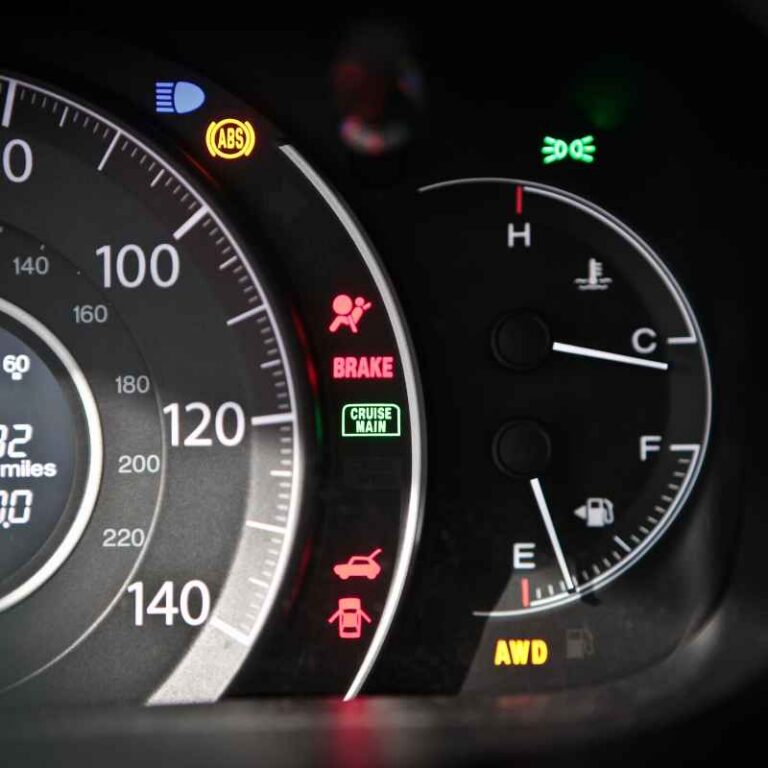
“Battery Saver is Off” usually means the Ford’s body control module has stopped cutting accessory power because the battery is low. If the engine runs and charging voltage is 13.5 to 14.8 volts, the message is often normal. If the battery sits below about 12.2 volts or drops under about 9.6 volts while cranking, there may be a battery or charging fault. Leave it alone, and you can end up with a no-start or a dead battery after a short stop. Here’s how to tell normal behavior from a weak battery, alternator issue, or sensor problem in under 10 minutes.
What does Battery Saver is Off mean?


On a Mondeo, this message usually means the car has stopped limiting electrical loads because battery state of charge is low or the charging system is not keeping up. That is a battery-management warning, not a random software glitch. Sometimes it appears after brief use and clears once the battery recovers.
When it can be normal
Short trips, cold starts, heated screens, blower use, and frequent lock-unlock cycles can leave the 12V battery below target. In that case, the system may turn off the saver function to preserve starting power rather than cutting accessories further. If the warning disappears after a proper charge, the car may be doing exactly what it was designed to do.
When it points to a fault
If the message returns often, stays on with the engine running, or comes with slow cranking, dim lights, or stop-start not working, treat it as a charging-system issue until you prove otherwise. A weak battery is common, but the alternator, battery monitoring sensor, or wiring can also be at fault.
Why does it appear after short trips?
Short-trip driving is a common trigger because the alternator may not have enough time to replace the energy used for starting and accessories. Repeated starts, low-speed running, and short idle periods all leave less time for recovery. Diesel Mondeos and stop-start cars are more sensitive because they ask more from the battery.
Cold starts and repeated crank events
A 12V car battery loses useful capacity in cold weather, and a cold engine needs more current to crank. Add several starts in one morning, and the battery can fall into a low-charge state quickly. A common pattern is a car that starts fine once, then complains after the second or third journey of the day.
Diesel and stop-start battery load
Diesel Mondeos often use a higher-demand battery setup, and stop-start models rely on the battery being in good shape before the system will allow engine shut-off at junctions. If state of charge is low, the car may disable stop-start first and display Battery Saver is Off later.
Mondeo battery saver decision table
| Symptom | Likely cause | Quick check | Next action |
|---|---|---|---|
| Slow cranking, dim lights, warning after short trips | Weak 12V battery | Measure battery at rest: below 12.2 volts is low; below 12.4 volts is only partly charged. Watch for 9.6 volts or less while cranking. | Charge fully and load-test the battery. Replace if it fails the test or is old and repeatedly low. |
| Warning stays on while driving, battery light may also appear | Alternator undercharging | Check charging voltage with engine running. A healthy system is usually 13.5 to 14.8 volts at the battery terminals. | Stop long trips if voltage stays under about 13.2 volts. Book charging-system diagnosis before the car strands you. |
| Warning with odd stop-start behavior, no clear battery weakness | Battery sensor fault | Scan for battery-monitoring or voltage-related fault codes. Compare live battery data with a simple voltage reading. | Have the sensor and its wiring checked. Relearn or reset procedures may be needed after repair. |
| Stop-start refuses to activate, no other symptoms | Stop-start disabled | Check whether the battery is low, the cabin climate load is high, or the engine is still cold. | This is often normal. Charge the battery first, then recheck after a few drives. |
| Remote range is poor, but the car starts and charges normally | Key fob battery unrelated | Replace the coin-cell only if the remote range is weak or the key warning appears. | Do not expect a key battery to fix a charging warning. |
Is the 12V battery weak?
The 12V battery is the first thing to check, especially after short trips, cold starts, or repeated low-charge events. It is the most common failure point on many Mondeos, particularly diesel and stop-start cars. If the battery is old, slow to crank, or has needed charging more than once, suspect the battery until a proper test says otherwise.
Simple checks you can do
- Look at cranking speed. A sluggish starter often points to low battery reserve.
- Check resting voltage after the car has been off long enough to settle. About 12.6 volts is full; 12.2 volts is weak; 12.0 volts or less is deeply discharged.
- Watch voltage while cranking. If it falls under 9.6 volts, the battery is struggling.
- Note the age. Many batteries are tired by four to six years, and heavy stop-start use can shorten that.
When a battery test is enough
If the battery passes a proper load test, holds charge after overnight rest, and the charging voltage is in range, replacement may not be needed. If it fails load testing or keeps dropping after a full charge, replacement is the sensible move. Do not replace parts on guesswork.
Say your Mondeo starts on the first turn in the morning, then throws Battery Saver is Off after a 15-minute school run and the rear demister was on. That pattern fits a battery that never recovered from the previous trip, not necessarily a failed alternator.
Could the alternator or sensor be at fault?
Yes. The alternator charging system keeps the battery charged while the engine runs, and an undercharging alternator can mimic a battery warning. So can a bad battery monitoring sensor, especially if the module sees implausible readings. A diagnostic scan tool helps separate the fault paths instead of guessing.
Charging-voltage targets to check
With the engine off, battery voltage at rest should usually be about 12.6 volts on a healthy, fully charged 12V battery. With the engine running, most Mondeos should sit around 13.5 to 14.8 volts at the battery terminals. If it stays near 12 volts while running, the battery is not being charged properly.
If the engine is running but voltage is below about 13.2 volts, the system may be undercharging. If it jumps too high, roughly above 14.8 volts for long periods, overcharging can also damage the battery and electronics.
Battery monitoring sensor faults
Many Mondeos use a battery monitoring sensor that tracks state of charge and helps manage stop-start. If the sensor or its wiring is wrong, the car can think the battery is weak when it is not, or miss a real problem. Stored fault codes and live data are the cleanest way to confirm that.
A scan tool can show battery-voltage codes, charging-system codes, and sensor-related faults. That matters because one warning can hide three different repairs: a worn battery, an alternator fault, or a sensor issue.
Will a key fob battery fix it?
No. The Ford Mondeo key fob battery is separate from the car’s main 12V battery. A weak key battery can cause poor remote range, key-not-detected messages, or annoying convenience issues, but it will not usually trigger a Battery Saver is Off warning. These faults get mixed up because both mention “battery.”
What the key battery affects
It affects locking, unlocking, and sometimes passive entry behavior. If the remote works poorly but the car starts normally and the charging voltage is good, the fob battery is the likely fix. If the car has a charging warning, look at the vehicle battery and charging system instead.
When should you stop driving?
Stop driving if the battery warning is joined by a charging light, repeated stalling, hard steering, or a battery voltage that will not rise above about 13.2 volts with the engine running. In that case, the car may be running on battery alone and could stop once reserve power is gone.
Charge first, then diagnose
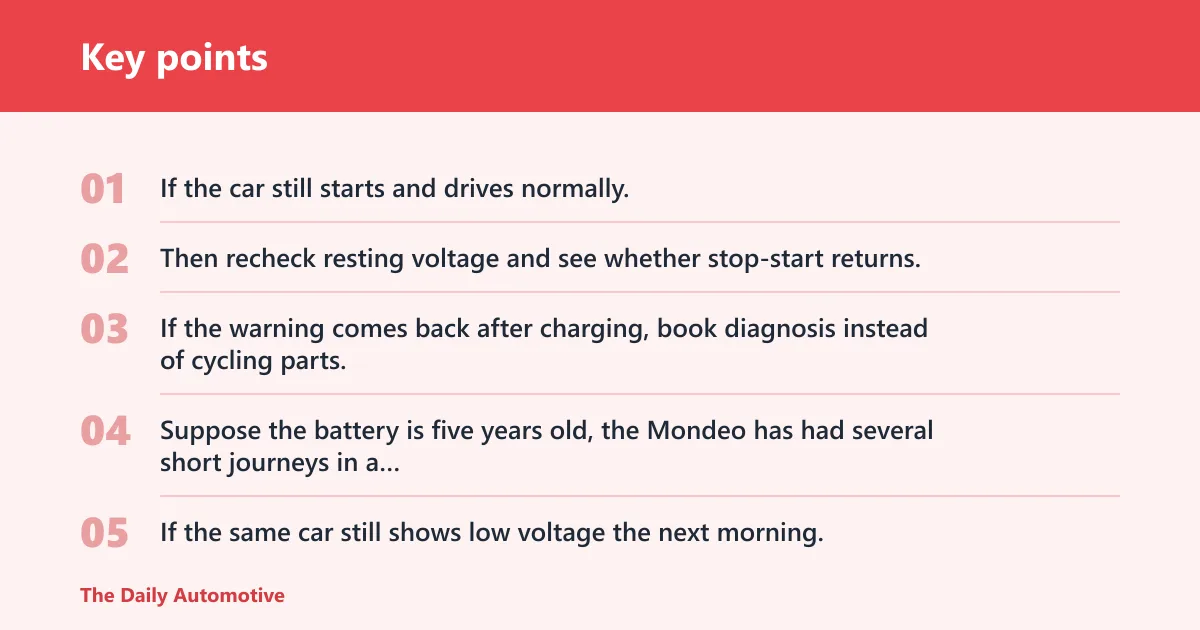
If the car still starts and drives normally, a full battery charge is often the right first step. Then recheck resting voltage and see whether stop-start returns. If the warning comes back after charging, book diagnosis instead of cycling parts.
Suppose the battery is five years old, the Mondeo has had several short journeys in a row, and stop-start has been disabled for a week. A full charge may restore normal operation. If the same car still shows low voltage the next morning, the battery or alternator needs a closer look.
When to book replacement or diagnosis
Book battery replacement if the battery fails load testing, will not hold charge, or repeatedly drops below about 12.2 volts after being charged. Book alternator or sensor diagnosis if charging voltage is outside the normal range, if a scan tool stores charging-related faults, or if the warning appears with no obvious battery weakness.
Ford Mondeo battery replacement cost varies by engine and model year. The battery itself, any coding or reset work, and diagnostic labour can each change the final bill. Expect the price to be higher on stop-start and diesel models, where battery specification and registration work can matter more.
Frequently asked questions
Why does my Mondeo say battery saver is off?
It usually means the car has detected low battery reserve or a charging-system problem and has stopped cutting accessory power. Short trips, cold starts, or a weak battery are common causes. If charging voltage and battery state are both healthy, the message should be treated as abnormal and checked.
Can a weak car battery trigger a battery saver message?
Yes. A weak 12V battery is one of the most common reasons for this warning, especially if the car cranks slowly, has needed jump-starting, or has a resting voltage below 12.2 volts. If it fails a load test, replacement is usually justified.
Does a battery saver warning mean the alternator is failing?
Not always. The alternator is only one part of the system. A weak battery, loose connection, or faulty battery monitoring sensor can produce a similar message. The best quick check is charging voltage with the engine running; below 13.5 volts deserves attention.
Can stop-start stop working if the battery is low?
Yes. That is normal behavior on many Mondeos. Stop-start will often be disabled when state of charge is low, when the engine is cold, or when electrical demand is high. If the battery is healthy and charged, stop-start should usually return on its own.
Will changing the key fob battery fix a battery saver message?
No. The key fob battery only affects the remote or key convenience functions. It does not power the car’s electrical system and will not fix a charging warning. Replace the fob battery only if remote range or key detection is poor.
How do I check whether my Mondeo battery needs replacing?
Check resting voltage, cranking voltage, and battery age, then confirm with a load test. A battery below 12.2 volts at rest, below 9.6 volts while cranking, or one that fails a load test is suspect. Repeated low-charge events are another strong sign.
Products related to this article
Sponsored / affiliate links. As an Amazon Associate I earn from qualifying purchases. I may earn additional commission from eligible campaigns.