Does Car Air Con Work When on Heat Setting? Pro Advice
Many drivers wonder: Does Car Air Con Work When on Heat Setting? Pro Advice is something people search for when the weather gets tricky. It’s a common question because the names “air conditioning” and “heater” seem like opposites.
You might think AC is just for cooling, right? It can feel confusing, but we’ll break it down simply. You’ll learn exactly how your car’s climate system works for both hot and cold air.
Get ready for a straightforward explanation and a step-by-step guide so you can control your car’s comfort with confidence. We’ll cover how your car makes heat and cool air.
Understanding Your Car’s Climate Control
This section explains how your car’s heating and cooling systems are more connected than you might think. Many people believe the air conditioning (AC) system is only for making things cold. This is a common misunderstanding that can lead to confusion when trying to get warm air from the vents.
We will explore the basic components and processes that allow your car to produce both hot and cold air, dispelling the myth that the AC unit itself only cools. You’ll learn that the climate control system in your car is a clever piece of engineering designed for year-round comfort. This involves understanding the difference between the AC compressor and the heater core, and how they interact with the vehicle’s fan system.
The AC System and Cold Air
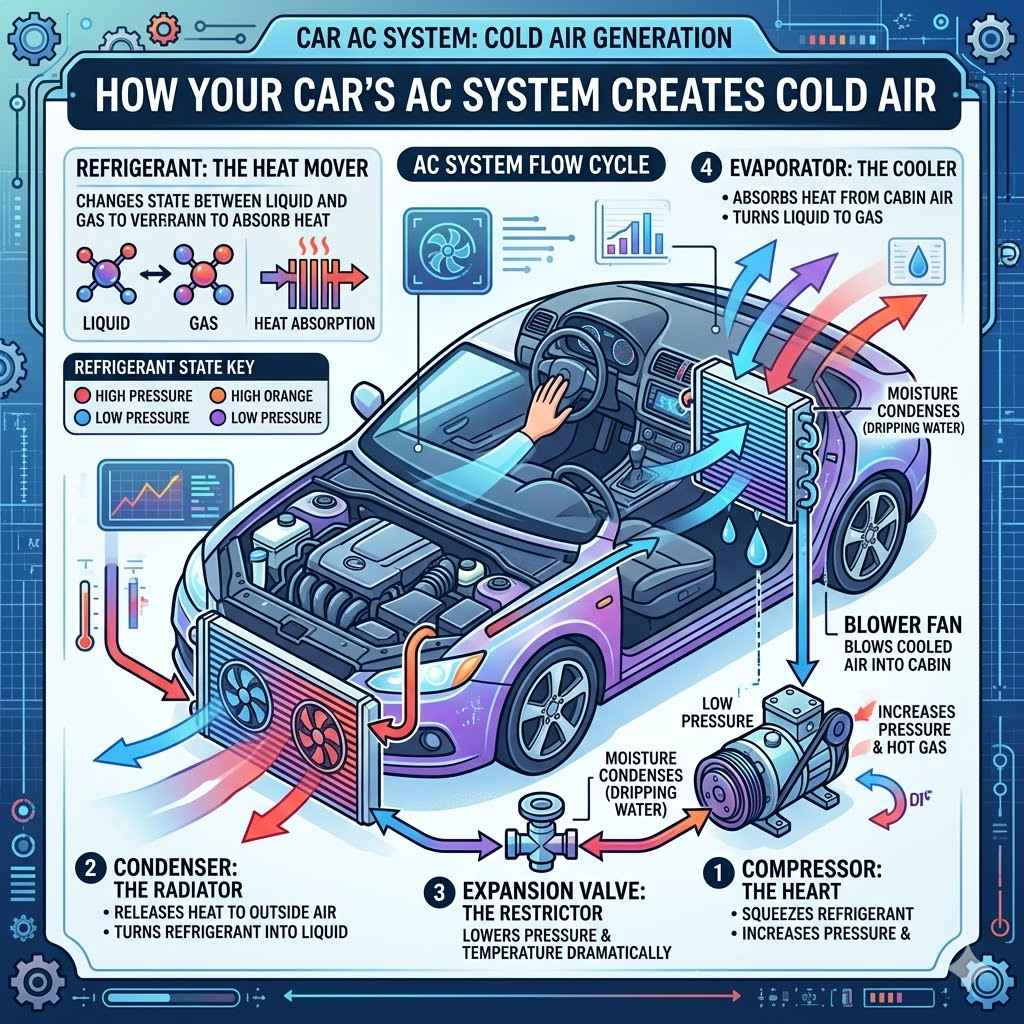
Your car’s air conditioning system is designed to remove heat from the cabin. It works like a refrigerator, using a special fluid called refrigerant. This refrigerant circulates through different parts of the system.
The compressor squeezes the refrigerant, making it hot. Then, it goes to the condenser, usually in front of your car, where it cools down and turns into a liquid. Next, it passes through an expansion valve, which lowers its pressure and temperature dramatically.
Finally, this cold, low-pressure refrigerant flows through the evaporator, located inside your dashboard. As warm cabin air blows over the cold evaporator, it cools down, and moisture condenses on it, which is why you sometimes see water dripping from under your car. This cooled air is then blown into the cabin.
How Refrigerant Moves Heat
Refrigerant is the key player in making your car cold. It’s a special chemical that can easily change from a liquid to a gas and back again. When it’s a liquid under high pressure, it’s warm.
When it changes to a gas under low pressure, it absorbs heat from its surroundings. This absorption process is what cools the air blown into your car. The cycle repeats continuously, effectively moving heat from inside your car to the outside.
The Role of the Compressor
The air conditioning compressor is like the heart of the AC system. It’s driven by a belt connected to the engine. Its main job is to pump the refrigerant through the system.
It increases the pressure of the refrigerant, which in turn raises its temperature. This pressurized, hot gas then moves on to the next stage of the cooling process, where it can release its heat. Without a working compressor, the refrigerant cannot circulate properly, and the system will not produce cold air.
Condenser and Evaporator Explained
The condenser is like a radiator for your AC system. It’s usually found at the front of the car, behind the main radiator. Its purpose is to release the heat absorbed by the refrigerant from the cabin into the outside air.
The evaporator, on the other hand, is located inside the car. It’s where the magic of cooling the cabin air happens. As warm air from the car’s interior is pushed through the evaporator, the refrigerant inside absorbs the heat, making the air much cooler before it’s blown back into the car.
The Heater Core and Warm Air
Your car’s heater works in a completely different way than the AC, but it uses some of the same airflow paths. Instead of a refrigerant circuit, it uses hot coolant from the engine. When your engine runs, it produces a lot of heat.
A special liquid called coolant circulates through the engine to keep it from overheating. A portion of this hot coolant is diverted to a small radiator-like component called the heater core, which is also located inside your dashboard, near the evaporator. When you turn on the heat, a fan blows air across the hot heater core.
This air gets warmed up by the hot coolant and is then pushed into the cabin.
How Engine Coolant Heats the Cabin
Engine coolant, also known as antifreeze, is a mixture of water and chemicals that circulates through your engine. It absorbs heat from the combustion process, preventing the engine from getting too hot. When you select the heat setting on your climate control, your car redirects some of this hot coolant to the heater core.
The heater core is a compact radiator that sits behind the dashboard. Hot coolant flows through its tiny tubes, warming them up. Then, the car’s blower fan pushes air across these hot tubes, transferring the heat to the air, which is then sent into the passenger cabin.
The Role of the Heater Core
The heater core is a crucial part of your car’s heating system. It’s essentially a miniature radiator that transfers heat from the engine coolant to the air that circulates into the car’s cabin. Think of it as a heat exchanger.
Hot coolant flows through its passages, and the blower motor pushes air across its fins. This process warms the air before it reaches your face, providing you with warmth on cold days. If the heater core is damaged or blocked, you won’t get any heat inside your car.
Blower Motor and Airflow Control
The blower motor is the fan that pushes air through your car’s ventilation system, whether you’re getting cold air from the AC or warm air from the heater core. You control its speed with the fan setting on your climate control panel. This motor is responsible for circulating the air throughout the cabin.
When you turn on your climate control, the blower motor engages and draws air from either the outside or the inside of your car, depending on your settings. It then directs this air across the relevant heat exchanger (evaporator for cooling or heater core for heating) before expelling it through the vents.
Connecting the Systems Does Car Air Con Work When on Heat Setting? Pro Advice
This is where we answer the core question. Your car’s climate control system is designed so that the blower motor can push air across either the AC evaporator (for cooling) or the heater core (for heating), or a blend of both. Even when the AC system itself is off, the blower motor can still draw air across the heater core to produce heat.
The confusion often arises because the button or dial for “AC” often controls the compressor. So, if you have the AC button pressed (and the system is charged and working), the compressor will engage and cool the air. If you want heat, you typically turn off the AC button, select a temperature higher than the outside air, and the system will direct air across the heater core.
Why You Might Get Warm Air Without the AC Button On
When the AC button is off, the compressor does not run. This means the refrigerant circuit is not actively cooling the air. However, the engine is still running and producing heat.
The hot coolant flows to the heater core. When you set your temperature control to a warm setting, the blower motor pushes air across the heater core. This air absorbs heat from the coolant and is then sent to the cabin.
Therefore, you get warm air even with the AC system disengaged. The system is cleverly designed to use the engine’s waste heat for comfortable cabin temperatures.
The “Blend Door” Mechanism
A key component that allows for both heating and cooling is the blend door. This is a flap inside your dashboard that controls the mix of air directed through the evaporator and the heater core. When you select a cold temperature, the blend door directs most or all of the airflow through the evaporator (which is cooled by the AC system).
When you select a warm temperature, it directs the airflow through the heater core. It can also direct air through both simultaneously to achieve intermediate temperatures. This mechanism is what allows you to fine-tune your cabin temperature precisely.
Temperature Settings and Air Mixture
Your climate control panel allows you to select a desired temperature. This selection tells the car’s computer or mechanical controls how to position the blend door. For instance, if you set the temperature to a low setting, the blend door will position itself to allow maximum airflow over the cold evaporator and minimal airflow over the heater core.
If you set it to a high temperature, the blend door will shift to allow maximum airflow over the hot heater core and minimal airflow over the evaporator. This blend door is fundamental to how your car achieves different temperatures.
Common Issues and Troubleshooting
Sometimes, even with a properly functioning AC system, you might encounter problems getting the right temperature. This could be due to issues with the blend door, a clogged heater core, a faulty blower motor, or low refrigerant levels if you’re trying to get cold air. Understanding how the system works helps pinpoint potential problems.
For example, if you get no heat but the engine is hot, the heater core or its related coolant lines might be blocked. If you get no cold air but the AC button is on, it could be a refrigerant issue or a faulty compressor.
No Heat When Engine is Hot
If your engine is running at its normal operating temperature, but you’re not getting any heat in the cabin, the most common culprit is a blocked heater core. Over time, sediment and debris can build up inside the small tubes of the heater core, restricting the flow of hot coolant. Another possibility is a problem with the coolant circulation itself, perhaps a faulty water pump or a clogged thermostat.
Air pockets in the cooling system can also prevent hot coolant from reaching the heater core effectively. This is a serious issue as it can also affect the engine’s ability to stay cool.
AC Not Cooling But Heater Works
If your heater works perfectly but your air conditioning doesn’t blow cold air, it usually points to an issue with the AC system itself. The most common causes are low refrigerant levels, a malfunctioning AC compressor, or a problem with the condenser or evaporator. Low refrigerant is often due to a leak somewhere in the system.
If the compressor isn’t engaging when the AC button is pressed, it could be an electrical issue or a problem with the compressor clutch. A dirty or damaged condenser can also prevent efficient heat transfer to the outside air.
Strange Smells from Vents
Unpleasant smells coming from your car’s vents can be caused by a few things. If you smell a musty or mildewy odor, it’s often due to moisture trapped in the evaporator or ductwork, which can lead to mold growth. A sweet smell might indicate a coolant leak, potentially from the heater core.
A burning smell could signal an electrical issue or a problem with the blower motor. Regular cabin air filter replacement can help prevent some of these odors by trapping dust and debris.
When to Seek Professional Help
While some minor troubleshooting can be done by a car owner, complex climate control issues are best left to professionals. If you’re experiencing a complete lack of heating or cooling, suspect a refrigerant leak (which requires specialized equipment and handling), or notice unusual noises from the system, it’s time to visit a qualified mechanic. They have the tools and expertise to diagnose and repair issues with the AC system, heater core, blend doors, and other critical components safely and effectively.
Attempting complex repairs without the right knowledge can lead to further damage or personal injury.
Real-Life Scenarios and Examples
Understanding these systems becomes clearer with real examples. Imagine a situation where it’s a chilly morning, and your car’s cabin is freezing. You turn the dial to the hottest setting and press the fan button.
Warm air starts to blow. This happens because the engine has warmed up, sending hot coolant to the heater core, and the fan is blowing air across it. Now, consider a hot summer afternoon.
You press the AC button, set the temperature to cold, and feel cool air. This is the refrigerant cycle in action, actively removing heat from the cabin air. The systems work independently to achieve your desired comfort level.
Scenario 1: The Unexpected Frosty Drive
Sarah was driving to work on a surprisingly cold autumn morning. She set her car’s climate control to the highest heat setting. Warm air began to flow immediately, making her comfortable.
She didn’t think about her AC at all; her car was simply using the engine’s heat. This is a standard function of the heater core, using hot engine coolant to warm the air before it reaches the cabin. Her car’s AC system, the part that makes cold air, was not active because the AC button was off and the temperature was set for heat.
Scenario 2: The Summer Heatwave Solution
John was stuck in traffic during a heatwave. He turned on his car’s air conditioning. He pressed the AC button, set the temperature to its lowest setting, and the fan speed to high.
Within minutes, cool air was blowing into his car, making the drive bearable. This was thanks to the AC compressor, condenser, and evaporator working together to remove heat and humidity from the cabin air, all while the engine was running.
Scenario 3: The Confusing Dual Function
Maria was trying to defog her windshield on a cool, damp morning. She turned on her climate control and set it to the defrost setting. She noticed that even though she wanted to clear the condensation, the air blowing felt cool at first, then gradually warmed up.
This happens because the defrost setting often activates the AC system (even if the temperature is set to warm) to dehumidify the air. The blend door then mixes this dry, cool air with warm air from the heater core to efficiently remove moisture without making the cabin too cold. This demonstrates how the systems can work in conjunction.
Factors Affecting Performance
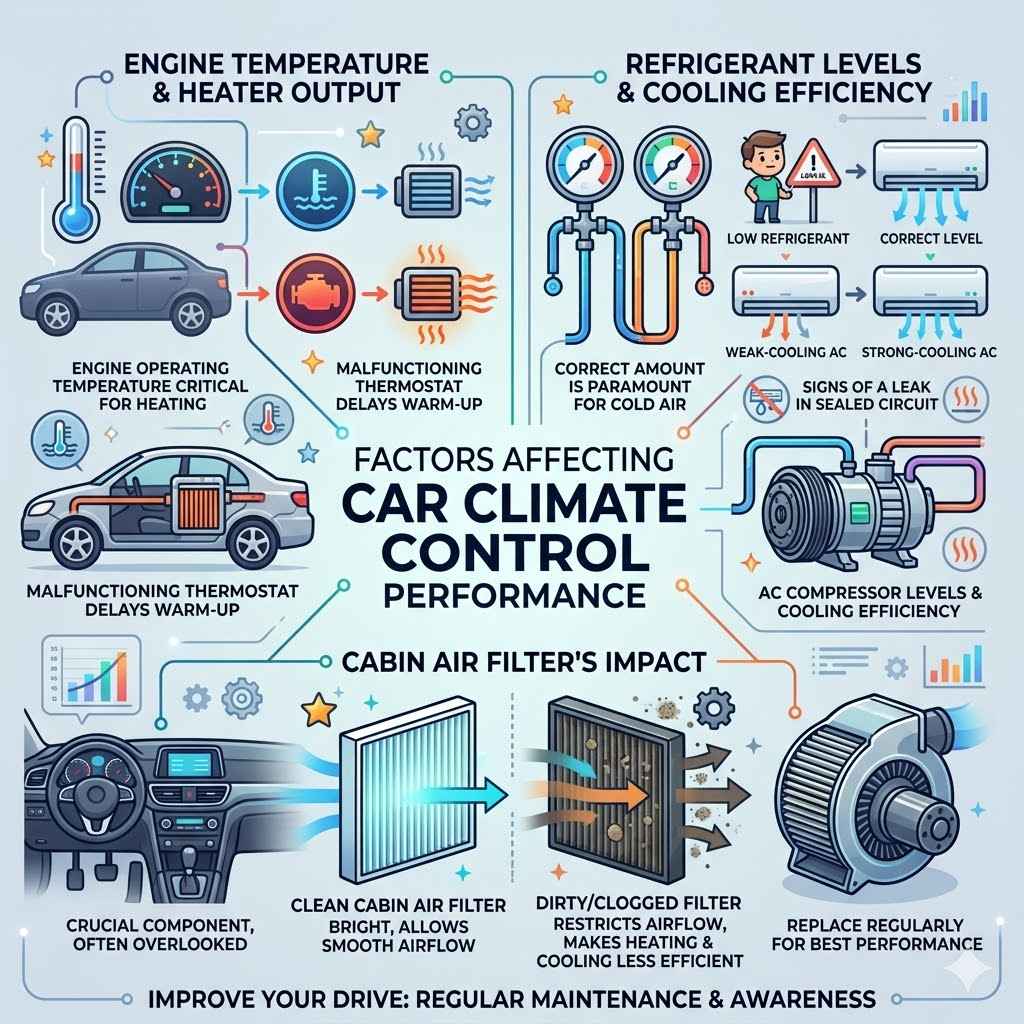
Several factors influence how well your car’s climate control system performs, whether it’s heating or cooling. Engine operating temperature is critical for heating. If your engine isn’t getting hot enough (e.g., on short trips in very cold weather or due to a faulty thermostat), your heater won’t be as effective.
For cooling, the amount of refrigerant in the system is paramount. Even a small leak can significantly reduce cooling performance. The cleanliness of the cabin air filter also plays a role; a dirty filter restricts airflow, making both heating and cooling less efficient and potentially causing the blower motor to work harder.
Engine Temperature and Heater Output
The effectiveness of your car’s heating system is directly tied to the engine’s operating temperature. When your engine is running, it generates a lot of heat. This heat is transferred to the coolant that circulates through it.
If your engine is cold, like when you first start the car on a frigid day, the coolant will also be cold. Therefore, the heater core will receive cooler coolant, and the air blown into the cabin will not be as warm. As the engine warms up to its optimal operating temperature, the coolant becomes hotter, and your heater will produce much more intense warmth.
A car that takes a very long time to warm up might have a malfunctioning thermostat, which is supposed to regulate engine temperature.
Refrigerant Levels and Cooling Efficiency
For your air conditioning system to produce cold air, it needs the correct amount of refrigerant. Refrigerant is the medium that absorbs heat from the cabin and releases it outside. If the refrigerant level is too low, the system cannot effectively transfer heat.
This is usually a sign of a leak somewhere in the AC’s sealed circuit. Over time, even a well-maintained AC system can lose a small amount of refrigerant, but a significant drop indicates a problem that needs to be addressed. A system that is overcharged with refrigerant can also lead to poor performance and potential damage.
Cabin Air Filter’s Impact
The cabin air filter is a crucial component that often gets overlooked. Its job is to clean the air that enters your car’s cabin, removing dust, pollen, and other pollutants. When this filter becomes clogged with debris, it significantly restricts airflow.
This means that even if your heater or AC system is working perfectly, less air will be blown into the cabin, making it feel like the system isn’t performing well. A dirty cabin air filter can also contribute to musty smells and reduce the overall efficiency of your climate control. Replacing it regularly is a simple maintenance task that makes a big difference.
Frequently Asked Questions
Question: Can I use my car’s AC button in the winter for better defrosting
Answer: Yes, often turning on the AC button, even when the temperature is set to warm, can help defrost your windshield faster. The AC system dehumidifies the air, and drier air is more effective at clearing condensation and frost than humid air.
Question: What is the difference between the AC button and the temperature dial
Answer: The AC button typically engages or disengages the air conditioning compressor, which is responsible for making the air cold. The temperature dial controls the blend door, which mixes air from the heater core and the AC evaporator to achieve your desired temperature.
Question: If my car is blowing cold air when I want heat, what could be wrong
Answer: This often indicates a problem with the blend door mechanism not directing air to the heater core, or a blocked heater core preventing hot coolant from flowing through it. It could also be an issue with the car’s climate control system that manages these functions.
Question: Is it bad for my car to constantly run the AC in the summer
Answer: Running the AC constantly in the summer is normal and what it’s designed for. However, it does put a slight extra load on the engine and can increase fuel consumption. Ensure your AC system is well-maintained for optimal efficiency.
Question: Does my car use more gas when the heater is on
Answer: No, your car does not use significantly more gas when the heater is on. The heater uses hot coolant from the engine, which is a byproduct of normal combustion. It doesn’t require extra fuel to generate heat, unlike the AC system which has a compressor that uses engine power.
Conclusion
Your car’s climate control system is designed to provide comfort in any weather. The air conditioning system cools by removing heat using refrigerant. The heating system uses hot engine coolant directed through the heater core.
The AC button usually controls the cooling compressor, while temperature settings and blend doors manage airflow for heating or cooling. Understanding this helps you know Does Car Air Con Work When on Heat Setting? Pro Advice means the systems are separate but work with the same airflow.
You can get warm air without AC, and cold air requires the AC to be active. Simple checks like air filters and coolant levels ensure optimal performance.